Industry Pushes Back Against EU-Specific Battery Rules, Criticizing Simultaneous Cost and Supply Pressures Amid Dependence on Chinese Supply Chains

Anne-Marie Nicholson is a fearless reporter covering international markets and global economic shifts. With a background in international relations, she provides a nuanced perspective on trade policies, foreign investments, and macroeconomic developments. Quick-witted and always on the move, she delivers hard-hitting stories that connect the dots in an ever-changing global economy.
Authored On
Modified
EU moves to tighten battery regulations, increasing industry burdens
Corporate bankruptcies and canceled factory projects disrupt expansion of EU sourcing
Chinese battery companies target supply gaps through local joint production
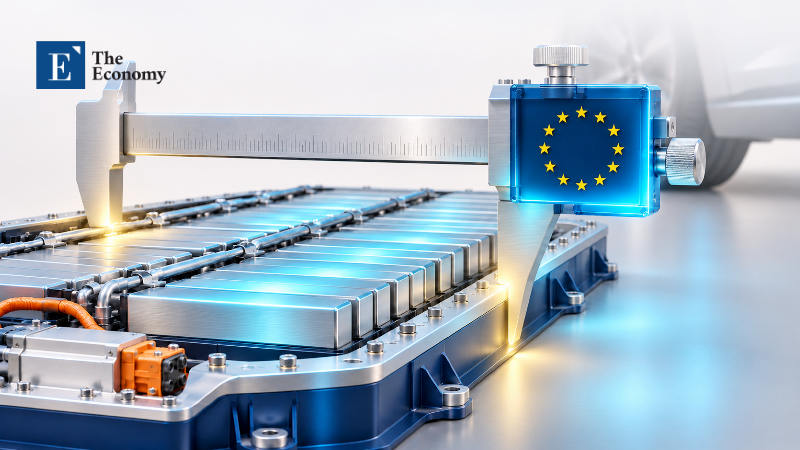
Europe's battery industry is pushing back against tighter European Union (EU) battery regulations. Major associations have joined forces over concerns that revised hazardous-substance labeling standards will increase the burden on businesses, while warnings have also emerged that production capacity cannot keep pace with regulatory requirements under policies favoring EU-made products. Northvolt's bankruptcy and ACC's cancellation of factory projects have disrupted plans to increase European battery supplies. Meanwhile, Chinese companies are expanding their production footprint in Europe and partnering with local automakers, increasingly gaining control over the battery supply chain.
12 European Battery Associations Mount Joint Opposition
According to European energy publication Energy-Storage.news on the 4th, local time, Europe's battery and energy storage industries sent a joint letter to the European Commission opposing revisions to the EU's hazardous-substance labeling standards for batteries. The letter, delivered to the Commission on the 2nd, was signed by 12 associations, including rechargeable battery industry group RECHARGE, the Association of European Automotive and Industrial Battery Manufacturers (EUROBAT), Energy Storage Europe, and Flow Batteries Europe. Groups representing the electric vehicle, home appliance, garden machinery, and power tool industries also joined. With consumer battery and metals and materials associations participating as well, battery manufacturers, companies making battery-powered products, and raw material suppliers have mounted a joint response.
The industry jointly raised its objections with senior Commission officials responsible for EU industrial, economic, and environmental policy. The letter was addressed to Stéphane Séjourné, Executive Vice-President for Prosperity and Industrial Strategy; Valdis Dombrovskis, Commissioner for Economy; and Jessika Roswall, Commissioner for Environment. The Commission's Secretary-General and Ireland, which holds the rotating presidency of the Council of the EU, were also copied. In the letter, the associations stressed that the Commission is responsible for correcting the course of negotiations over battery substance labeling standards and urged it to consult with the Council and the European Parliament before the legislative process concludes. The letter also included a comparative table tracing changes to the Commission's proposal and the Council's negotiating text, along with supplementary materials outlining the industry's views on each version.
Battery Hazardous-Substance Classification Criteria Under Scrutiny
The dispute centers on the scope of hazardous-substance labeling obligations under the EU Batteries Regulation. Adopted in 2023, the regulation requires relevant information to be displayed so that consumers can check a battery's composition and characteristics when buying or discarding it, and waste management companies can properly handle used batteries. Article 13 and the annexes specify that labels must identify hazardous substances contained in batteries, alongside information such as the manufacturer, capacity, and chemical composition. Hazardous substances other than mercury, cadmium, and lead are also subject to disclosure, while cadmium and lead require separate chemical symbols when their content exceeds specified thresholds. Hazardous-substance information is considered necessary for collecting and sorting end-of-life batteries and determining appropriate treatment methods. The rules cover electric vehicle, industrial, and portable batteries, among others, including batteries sold embedded in other products.
The controversy arose when the Commission incorporated separate hazard classification criteria, in addition to the existing chemicals regulation's candidate list of substances of very high concern (SVHC), into the selection of substances subject to labeling. The Commission's proposal defined the substances covered by referring to both the Registration, Evaluation, Authorisation and Restriction of Chemicals (REACH) regulation and the Classification, Labelling and Packaging (CLP) regulation. In their joint letter, industry groups estimated that battery manufacturers and suppliers would need to identify, track, and verify 3,000 substances. They argued that suppliers' work would become more complicated because the composition information required for the same raw material would differ depending on whether it was intended for batteries or other products. The associations stressed that the burden would fall particularly heavily on businesses operating across multiple industries and countries, as well as small and medium-sized enterprises. They also criticized the absence of an impact assessment demonstrating the environmental and health benefits of expanding the labeling scope.
Table 1. EU Battery Hazardous-Substance Labeling Obligations and Points of Contention
| Category | Key Items | Details |
|---|---|---|
| Current Regulation | Purpose of Labeling | Enables consumers to check composition and characteristics Provides information needed to collect, sort, and treat waste batteries |
| Information Disclosed | Manufacturer, capacity, chemical composition, hazardous substances, etc. Hazardous substances other than mercury, cadmium, and lead are also subject to disclosure | |
| Separate Chemical Symbols | Required when cadmium or lead content exceeds specified thresholds | |
| Scope of Application | Electric vehicle, industrial, portable, and other batteries Includes batteries sold embedded in other products | |
| Commission Proposal | Definition of Substances Subject to Labeling | References both the Registration, Evaluation, Authorisation and Restriction of Chemicals (REACH) regulation and the Classification, Labelling and Packaging (CLP) regulation Incorporates separate hazard classification criteria in addition to the candidate list of substances of very high concern (SVHC) |
| Industry Opposition | Substance Management Burden | An estimated 3,000 substances would require identification, tracking, and verification by manufacturers and suppliers |
| More Complex Supply Chain Operations | Required composition information differs for the same raw material depending on whether it is intended for batteries Industry argues burdens would fall disproportionately on businesses trading across multiple industries and countries, as well as small and medium-sized enterprises | |
| Insufficient Evidence of Benefits | Criticism over the absence of an impact assessment demonstrating the environmental and health benefits of expanding the labeling scope |
Supply Chain Warnings Ahead of Tighter EU Sourcing Requirements
European industries also have diverging interests over policies favoring EU-made products being pursued alongside the labeling revisions. The Industrial Accelerator Act (IAA), unveiled by the Commission in March, seeks to establish automotive and battery production capacity in Europe by imposing local production requirements on public procurement and subsidies. Under the Commission's proposal, batteries would initially need to source 3 key components, including cells, from within the EU after the law takes effect. The requirement would later tighten to 5 components, including cathode active materials and battery management systems. In response, the European Automobile Manufacturers' Association (ACEA) released a study in September examining whether the regional supply chain was ready to meet these requirements. The study projected that even if European battery cell output rose to 306 gigawatt-hours (GWh) by 2032, supply would fall short of demand in all three scenarios defined by the scope of regulatory application. It also estimated that if the law took effect in 2028, battery shortages would prevent approximately 3 million vehicles from qualifying for preferential treatment for EU-made products.
The supply chain for materials needed to expand battery cell production is also fragile. The researchers projected that regional shortages of cathode and anode materials would persist until 2038–2040, even under low-demand assumptions. A mismatch between factory expansion plans and market demand was also identified as an obstacle to increasing supply. Of the 18 large-scale battery factories planned in Europe, 13 focus on nickel-manganese-cobalt (NMC) batteries, leaving insufficient production capacity to meet growing demand for low-cost lithium iron phosphate (LFP) batteries, a segment dominated by China. The researchers emphasized that new factories also face financing, permitting, and construction delay risks, making it uncertain whether announced capacity will translate into actual supply.
ACC Factory Projects Scrapped Following Northvolt Bankruptcy
Financial difficulties at European battery companies are also holding back the expansion of regional supply. Sweden's Northvolt, once a symbol of Europe's pursuit of battery self-sufficiency, lost a major order from key customer BMW after production problems prevented it from meeting delivery deadlines. Financial difficulties followed, and the company filed for bankruptcy in March last year. Its core production plant in Skellefteå and research and development (R&D) facility in Västerås were sold to U.S. battery company Lyten in February this year. With Northvolt's plans to supply European automakers ending in bankruptcy and asset sales, the resumption of production and further investment now depend on the new owner.
Joint efforts by European automakers to expand battery production facilities have also encountered setbacks. ACC, a joint venture of Stellantis, Mercedes-Benz, and TotalEnergies, had planned to build a supply chain through large factories in France, Germany, and Italy. However, its projects in Kaiserslautern, Germany, and Termoli, Italy, were suspended in 2024 and never resumed. In February this year, an Italian metalworkers' union said ACC management had informed it that both projects would be definitively canceled. Their cancellation has scaled back ACC's plan to establish mass battery production across France, Germany, and Italy. IndustriAll European Trade Union said the thousands of jobs expected from the new factories would also fail to materialize.
Table 2. Chinese Battery Companies' European Production Expansion and Market Position
| Category | Key Indicators and Projects | Details |
|---|---|---|
| Local Production | CATL's Debrecen Plant in Hungary | Trial operation of 2 cell production lines began on September 22 Annual capacity of 100 GWh upon completion of the entire project Supply hub for major European automakers |
| CATL–Stellantis Joint Venture Plant in Spain | LFP battery plant with annual capacity of up to 50 GWh under construction in Zaragoza Located near Stellantis' vehicle production facility Each company holds a 50% stake | |
| Battery Usage (January–August This Year) | Total EV Battery Usage in Europe | 180GWh Up 29.6% year on year |
| CATL | 80.5 GWh, up 30.3% year on year 44.8% share of the European market | |
| Other Chinese Companies | Year-on-Year Growth in Usage BYD 65.5%·SVOLT 83.8%·CALB 96.9% | |
| LFP Batteries | 33.6 GWh, up 109.7% year on year 18.7% of total European usage |
Chinese Battery Influence Grows Through Expansion of Local Factories
As Europe's ambitions for battery self-sufficiency falter, China's largest battery maker, CATL (Contemporary Amperex Technology), has established itself as a key supplier to European automakers. On September 22, CATL began trial operations on two lines at the first cell production facility at its Debrecen plant in Hungary. Once the entire project is completed, it will be CATL's largest production base outside China, with annual capacity of 100 GWh. The site has been producing battery modules since autumn 2024, and cumulative module output stood at 537,000 when the cell trial operations were announced. CATL identified major European automakers with electric vehicle production facilities in Hungary as its intended customers. Chinese capital and manufacturing technology are thus deeply involved in efforts to expand Europe's battery production base.
CATL is also expanding production facilities in Spain in partnership with Stellantis. The two companies are building an LFP battery plant in Zaragoza with annual capacity of up to 50 GWh. The joint venture plant will be located near Stellantis' vehicle production facility, with each company holding half the equity. Stellantis, which had sought to secure its own battery supply through ACC, is now also pursuing joint production with a Chinese company. European automakers are becoming increasingly dependent on Chinese capital and manufacturing technology as they seek to secure battery supplies.
Chinese companies' growing presence in Europe is also reflected in actual battery usage. According to market research firm SNE Research, EV battery usage in Europe reached 180 GWh in January–August this year, up 29.6% from a year earlier. CATL battery usage rose 30.3% to 80.5 GWh, giving it a market share of 44.8%. Usage of batteries from BYD, SVOLT, and CALB also increased by 65.5%, 83.8%, and 96.9%, respectively, broadening Chinese companies' supply presence. LFP battery usage, in particular, surged 109.7% to 33.6 GWh, accounting for 18.7% of the total. Growing demand for LFP batteries used in lower-cost electric vehicles is benefiting Chinese companies that have developed the technology as a core business.
Anne-Marie Nicholson is a fearless reporter covering international markets and global economic shifts. With a background in international relations, she provides a nuanced perspective on trade policies, foreign investments, and macroeconomic developments. Quick-witted and always on the move, she delivers hard-hitting stories that connect the dots in an ever-changing global economy.
Similar Post