Trump Vows to End Aid to Israel, Easing Middle East Burden to Focus on China and the Arctic

Matthew Reuter is a senior economic correspondent at The Economy, where he covers global financial markets, emerging technologies, and cross-border trade dynamics. With over a decade of experience reporting from major financial hubs—including London, New York, and Hong Kong—Matthew has developed a reputation for breaking complex economic stories into sharp, accessible narratives. Before joining The Economy, he worked at a leading European financial daily, where his investigative reporting on post-crisis banking reforms earned him recognition from the European Press Association. A graduate of the London School of Economics, Matthew holds dual degrees in economics and international relations. He is particularly interested in how data science and AI are reshaping market analysis and policymaking, often blending quantitative insights into his articles. Outside journalism, Matthew frequently moderates panels at global finance summits and guest lectures on financial journalism at top universities.
Authored On
Modified
Declining dependence on Middle Eastern crude weakens incentives for military intervention
Ending aid and encouraging self-funded armament to share regional security responsibilities
Plans to reallocate resources to deter China and secure Arctic shipping routes
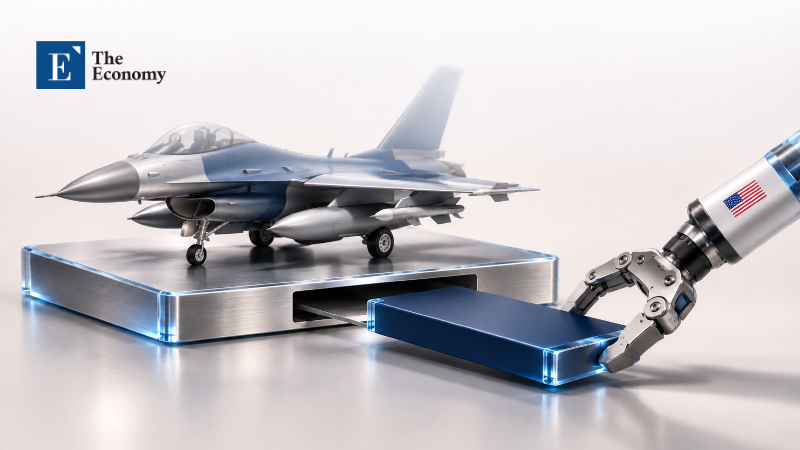
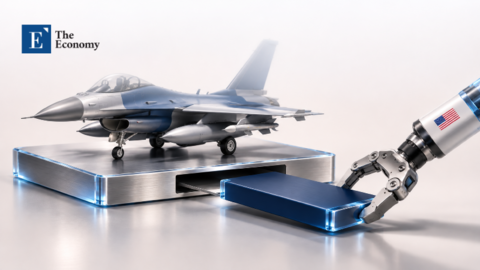
The United States has signaled a change in how it supports the security of its Middle Eastern allies. It plans to end annual military aid to Israel and encourage countries in the region to strengthen their defenses by purchasing U.S. weapons with their own funds. The move is seen as an effort to share the burden of Middle East defense with local countries while securing the forces and funding the United States needs to counter China and secure Arctic shipping routes and resources. For the United States, now a net energy exporter, declining dependence on Middle Eastern crude oil also provides grounds for narrowing the scope of military intervention.
Trump Announces End to Military Aid to Israel
According to Reuters on the 3rd (all dates hereafter are local time), U.S. President Donald Trump said he would end the USD 4 billion in annual military aid to Israel at the end of this year. In an interview with Fox News that day, Trump explained that he had agreed with Israeli Prime Minister Benjamin Netanyahu several months earlier to end the assistance, and said no funds would be disbursed starting next year. Trump intends to continue selling U.S. weapons to Israel after the aid ends. However, he did not disclose the specific assistance programs to be terminated or the procedures for implementing the decision.
U.S. military aid to Israel evolved from large-scale emergency assistance in the 1970s into a system of long-term, 10-year commitments beginning in the late 1990s. According to the Congressional Research Service (CRS), Congress approved USD 2.2 billion in emergency military assistance during the 1973 Arab-Israeli War, which was allocated the following year as grants and military loans. The first 10-year memorandum of understanding (MOU), signed under the Bill Clinton administration, included assistance plans for fiscal years 1999–2008 and a schedule for phasing out economic aid while expanding military aid. The George W. Bush administration signed a second MOU in 2007, setting total military aid for fiscal years 2009–2018 at USD 30 billion.
The current military aid framework rests on the third MOU, signed by the Barack Obama administration in 2016. It provides a total of USD 38 billion for fiscal years 2019–2028, with an annual commitment of USD 3.8 billion. Of that amount, USD 3.3 billion is allocated each year to Foreign Military Financing for purchases of weapons and military equipment, while USD 500 million goes to missile defense programs. The assistance is scheduled to end in September 2028, and actual annual funding has been appropriated through congressional spending legislation.
Reducing Military Aid and Encouraging Allies to Defend Themselves
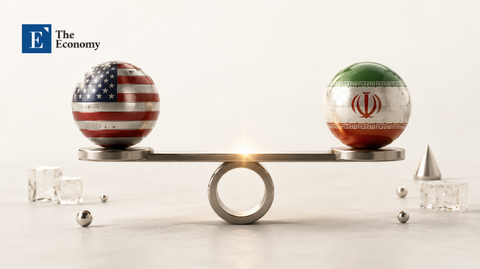
The plan to terminate the long-term aid commitment early aligns with a policy of reducing the U.S. financial burden for Middle East security. In its National Defense Strategy (NDS), released in January this year, the United States explicitly assigned primary responsibility for deterring and defending against Iran and Iran-backed armed groups to regional allies and partners. The plan is to encourage countries in the region to respond collectively by strengthening Israel's own defense capabilities and expanding security cooperation with Gulf states. While maintaining its ability to take military action to protect its interests, the United States is demanding that allies shoulder more of the funding and forces needed for their own defense. The announcement that aid will end is also seen as a move to scale back the practice of using U.S. government funds to cover Middle Eastern allies' security costs.
Cooperation with Gulf states is also emphasizing arrangements in which local governments pay for weapons purchases and base operations. During his visit to Saudi Arabia in May last year, Trump agreed to defense cooperation that included USD 142 billion in arms sales. The agreement covers equipment and services from U.S. defense companies in areas including air and missile defense, maritime security, and communications. A statement of intent on security cooperation signed with Qatar during the same trip also included plans for more than USD 38 billion in potential investments in cost-sharing for Al Udeid Air Base and expanded air defense and maritime security capabilities. In effect, the scope of cooperation has broadened to encourage Middle Eastern countries to acquire U.S. weapons with their own funds and contribute to maintaining U.S. military bases.
Easing the Middle East Burden to Free Up Forces to Counter China
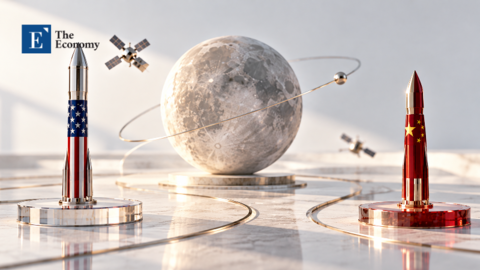
The strategy of assigning a greater role to Middle Eastern allies also reflects a calculation that military resources should be prioritized for countering China. This year's NDS identifies deterring China in the Indo-Pacific as a core task after defending the U.S. homeland. Specifically, it calls for building a defensive network along the first island chain, stretching from the Japanese archipelago through Taiwan to the Philippines, to block China's military expansion. The aim is to prevent China from dominating the Indo-Pacific and threatening the security and economic interests of the United States and its allies. To that end, it explicitly sets out a division of responsibilities: allies are to take the lead in responding to threats in other regions while the United States focuses on its homeland and China, with U.S. support limited in scope.
Concerns that the depletion of military resources in the Middle East is straining readiness to confront China also arose during this year's war with Iran. In a July analysis, the U.S.-based Center for Strategic and International Studies (CSIS) estimated that large-scale use of interceptor missiles to repel Iranian attacks had reduced Patriot stocks to fewer than 1,000 missiles and Terminal High Altitude Area Defense (THAAD) interceptor stocks to about 250. The researchers assessed that ammunition consumption posed a risk to the U.S. military's short- and medium-term readiness for a war with China in the Western Pacific. Additional spending is also unavoidable to replenish ammunition expended in the Middle East and secure stockpiles for operations elsewhere. To procure ammunition, the Trump administration requested USD 95 billion in its fiscal year 2027 defense budget proposal and USD 21 billion in a supplemental war funding proposal.
Table 1. U.S. Strategy to Concentrate Military Power on China and Depletion of Military Resources in the Middle East
| Category | Key Item | Main Details |
|---|---|---|
| Military strategy | Priorities | Focus on defending the U.S. homeland and deterring China in the Indo-Pacific |
| First island chain defensive network | Build a defensive network linking Japan, Taiwan, and the Philippines Block China's military expansion and regional dominance | |
| Expanded role for allies | Allies lead responses to threats in other regions, including the Middle East Limit the scope of U.S. support | |
| Depletion of military resources in the Middle East | Interceptor missile stocks | Fewer than 1,000 Patriot missiles and about 250 THAAD interceptors CSIS estimate from July this year |
| Strain on readiness to confront China | Ammunition consumption constrains short- and medium-term readiness for war in the Western Pacific | |
| Ammunition procurement budget | Amounts requested by the administration | USD 95 billion in the fiscal year 2027 defense budget proposal USD 21 billion in the supplemental war funding proposal |
Expanding the U.S. Presence in the Arctic on the Back of Energy Independence
The Arctic is among the regions where the United States plans to reinforce its military presence. A prominent example is securing military and commercial access to strategic Arctic locations such as Greenland, an objective the Trump administration included in this year's NDS. As China and Russia increase joint maritime and air patrols in the Arctic, the U.S. Coast Guard (USCG) completed the award of contracts for 11 new icebreakers in February. The icebreakers, scheduled for delivery beginning in 2028, are to be tasked with protecting Arctic shipping routes and energy and mineral resources while countering the expansion of foreign influence. The move is seen as an effort to secure an advantage over shipping routes and resources in the Arctic, alongside the defensive network aimed at China in the Indo-Pacific.
Changes in energy supply conditions are also contributing to the U.S. reallocation of resources devoted to the Middle East. According to the U.S. Energy Information Administration (EIA), U.S. net energy exports rose 20% last year from the previous year to a record high. Supported by expanded domestic production and liquefied natural gas (LNG) export facilities, natural gas exports have quadrupled from their 2015 level. By contrast, net crude oil imports from Persian Gulf countries fell from 677,000 barrels a day in 2020 to 490,000 barrels a day last year. The National Security Strategy (NSS) released by the White House last December also assessed that expanded domestic energy production would weaken the historical reasons for focusing on the Middle East.
U.S. Calculations Shift After Years of Heavy Military Spending to Secure Middle Eastern Oil
Venezuelan crude oil and Alaskan natural gas are being cited as additional sources of supply that could reduce dependence on Middle Eastern energy. The agreement with Venezuela that Trump announced in August centers on securing long-term access to oil fields for U.S. companies and crude oil supplies bound for the United States. The plan is to restore local production with private U.S. capital and increase crude supplies for U.S. refineries. In Alaska, a project is underway to connect northern gas fields with the southern export port of Nikiski and supply 20 million metric tons of LNG annually to overseas markets. The first exports are targeted for 2031. Once operational, the project would expand U.S. LNG supply routes to East Asia without passing through the Strait of Hormuz.
If energy supply chains diversify and Iran's military threat also weakens, the United States will have more room to reduce the burden of a long-term military presence in the Middle East. Last year's U.S. NSS emphasized the achievements of airstrikes on Iranian nuclear facilities while setting out a principle of avoiding decades-long nation-building wars. This reflected caution about committing enormous sums to prolonged deployments and reconstruction after military strikes. It listed the core security interests the United States would uphold as passage through the Strait of Hormuz and the Red Sea, preventing hostile forces from controlling Gulf energy resources, blocking terrorism against the United States, and ensuring Israel's security. The approach is seen as an effort to focus direct intervention on protecting core U.S. interests while leaving the recurring costs of maintaining regional order to local countries.
Matthew Reuter is a senior economic correspondent at The Economy, where he covers global financial markets, emerging technologies, and cross-border trade dynamics. With over a decade of experience reporting from major financial hubs—including London, New York, and Hong Kong—Matthew has developed a reputation for breaking complex economic stories into sharp, accessible narratives. Before joining The Economy, he worked at a leading European financial daily, where his investigative reporting on post-crisis banking reforms earned him recognition from the European Press Association. A graduate of the London School of Economics, Matthew holds dual degrees in economics and international relations. He is particularly interested in how data science and AI are reshaping market analysis and policymaking, often blending quantitative insights into his articles. Outside journalism, Matthew frequently moderates panels at global finance summits and guest lectures on financial journalism at top universities.
Similar Post