“Domestic Demand Freezes, Export Opportunities Narrow”: China Faces a Structural Economic Crisis as Consumption Recovery Remains Elusive Despite Massive Stimulus and High-Tech Investment

Oliver Griffin is a policy and tech reporter at The Economy, focusing on the intersection of artificial intelligence, government regulation, and macroeconomic strategy. Based in Dublin, Oliver has reported extensively on European Union policy shifts and their ripple effects across global markets. Prior to joining The Economy, he covered technology policy for an international think tank, producing research cited by major institutions, including the OECD and IMF. Oliver studied political economy at Trinity College Dublin and later completed a master’s in data journalism at Columbia University. His reporting blends field interviews with rigorous statistical analysis, offering readers a nuanced understanding of how policy decisions shape industries and everyday lives. Beyond his newsroom work, Oliver contributes op-eds on ethics in AI and has been a guest commentator on BBC World and CNBC Europe.
Authored On
Modified
China’s consumption slump drags on amid mounting pressures from a property downturn and a cooling job market
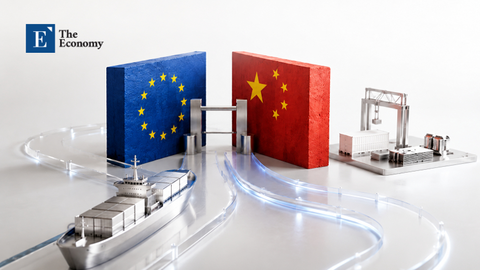
Chinese companies turn overseas, but rising trade barriers in major economies pose a wild card
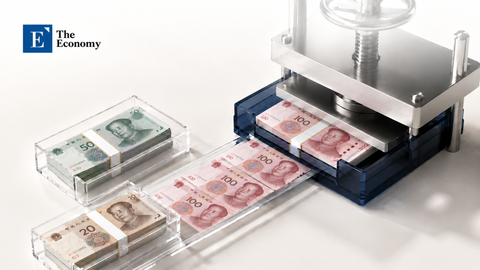
Government liquidity injections and advanced manufacturing investment fall short of dispelling uncertainty
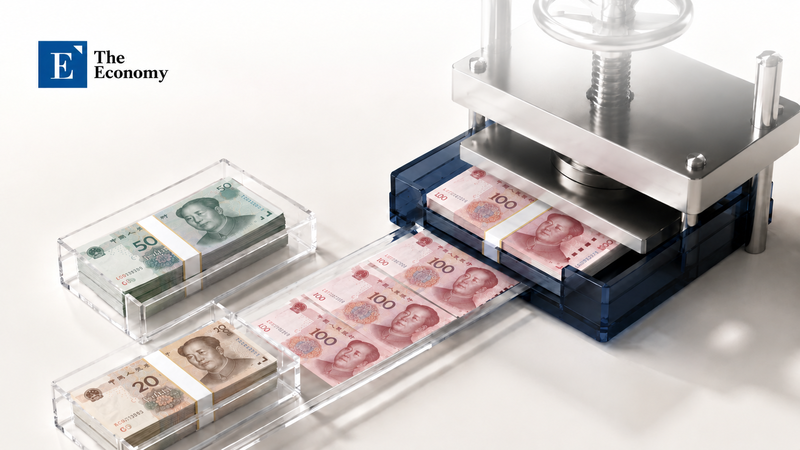
China’s domestic demand slump is deepening by the day. A combination of a property downturn, job insecurity among young people, and low birth rates and population aging has sharply weakened households’ spending power. Meanwhile, companies, squeezed by cutthroat competition at home, are increasingly relying on overseas sales channels. Although the Chinese government is seeking to stimulate the economy through massive liquidity injections and investment in advanced manufacturing, market observers warn that a growth strategy centered on capital-intensive industries alone has limited capacity to revive both employment and consumption.
China’s Consumption Slump Deepens as Singles’ Day Sales Boost Fails to Materialize
According to Nikkei Asia and China’s National Bureau of Statistics (NBS) on the 16th (all dates hereafter are local time), China’s retail sales rose just 0.4% year on year last month. That fell short of both September’s growth rate of 1.1% and the market forecast of 0.8%. Total retail sales stood at CNY 4.6463 trillion, with goods sales growing just 0.3% and restaurant revenue rising only 0.7%. By category, automobile sales fell 21.4%, gold and jewelry sales dropped 28.7%, and sales of construction and interior finishing materials declined 11.2%. Clothing and footwear (-2.0%) and furniture (-2.6%) also recorded declines. Some categories, including telecommunications equipment (6.5%), pharmaceuticals (3.7%), and cosmetics (2.8%), maintained growth, but these gains were insufficient to offset the broader weakness in consumption.
This contraction in consumption was also clearly evident during Singles’ Day, China’s largest shopping festival. According to Chinese market research firm Syntun, gross merchandise value (GMV) across major e-commerce platforms during the first phase of the event, held from the 7th to the 31st of last month, reached CNY 1.0263 trillion, up just 2.4% year on year. That was a notably weak result compared with last year’s Singles’ Day sales growth of 14.2%. By category, demand for daily necessities was relatively stronger than demand for expensive durable goods. Home appliances’ share of GMV fell from 16.1% in the same period last year to 15.7% this year, while the share of smartphones and digital devices declined from 14.3% to 13.9%. Furniture and construction materials also fell from 5.8% to 5.5%. By contrast, the shares of food and beverages and personal hygiene and beauty products rose by 0.4 percentage points and 0.2 percentage points, respectively.
Property and Employment Insecurity Weigh on Household Spending
Several factors underlie China’s deepening consumption slump. First, the property market, once a key engine of the Chinese economy, has remained mired in a downturn for years, sharply eroding the spending power of households whose principal asset is their home. New home prices in China’s 70 major cities fell 2.4% year on year last month, marking the 40th consecutive month of declines. Property development investment fell about 22% year on year from January through October, while home sales dropped 14.1%. In an economic report released last month, the World Bank (WB) also estimated that China’s real home prices had fallen about 23% from their 2021 peak, while home sales remained at roughly 40% of their peak level.
Job insecurity among young people is another major obstacle to a recovery in consumption. As of August, China’s urban unemployment rate for people aged 16–24 who were not enrolled in school stood at 18.9%, up 1 percentage point from the previous month’s 17.9%. This was the highest level since Chinese authorities revised their statistical methodology in 2023. One market expert noted, “With traditional industries such as real estate and construction losing their ability to create jobs, it remains unclear whether capital-intensive industries such as artificial intelligence (AI), robotics, and advanced semiconductors can provide enough new jobs.” The expert added, “Uncertainty over future income is constraining young people’s consumption and long-term spending decisions.”
Low Birth Rates and Population Aging Weaken the Long-Term Consumption Base
These problems have also contributed to declines in marriage and childbirth. According to statistics from China’s Ministry of Civil Affairs, 4.648 million couples registered marriages from January through September this year, down about 9.8% from 5.152 million couples in the same period last year. This was the lowest level in 18 years. Births are also falling sharply. China’s annual number of births, which reached 18 million in 2016, shrank to 7.92 million last year, while the total population declined for the fourth consecutive year. Fewer marriages and births dampen demand for housing, home appliances, furniture, and childcare products in the short term, while reducing the working-age population and the number of consumers in the long term.
Rapid population aging and the financial burden of pensions are also structural risks weighing on China’s domestic market. An International Monetary Fund (IMF) report released in February, “Population Aging and Pension Reform in China,” projected that the country’s population aged 20–60 would fall by about 226 million, from 840 million in 2024 to 614 million in 2050. Accordingly, pension spending was estimated to rise from 5.4% to 11.9% of gross domestic product (GDP) over the same period. These figures account for the effects of the retirement-age reform that began taking effect last year. The IMF pointed to inadequate social protection and uncertainty surrounding employment and income as factors encouraging households to maintain high saving rates.
Table 1. Main Causes of China’s Consumption Slump
| Category | Key Indicators | Impact on Consumption |
|---|---|---|
| Property downturn | Prolonged decline in home prices; falling property investment and home sales | Reduced household asset values and spending power |
| Youth employment insecurity | Weaker job creation in traditional industries, Rising youth unemployment | Reduced consumption and long-term spending due to uncertainty over future income |
| Declining marriages and births | Simultaneous declines in marriage registrations and births | Reduced demand for housing, home appliances, and childcare products; a weaker long-term consumer base |
| Population aging and social security burdens | A shrinking working-age population and a projected increase in pension spending | Higher savings and restrained consumption due to retirement insecurity |
Chinese Industry’s Growing Reliance on Exports
These conditions are hurting not only households but also industry. As shrinking domestic demand intensifies cutthroat competition and erodes profitability, companies are becoming noticeably more dependent on overseas markets. The electric vehicle industry is a prime example. According to global investment bank JPMorgan, Chinese automakers earn an average net profit of just CNY 5,000 per vehicle in the domestic market, compared with CNY 20,000 overseas. This explains why Chinese electric vehicle makers have recently been aggressively expanding overseas sales volumes. Indeed, cumulative sales at BYD, China’s largest electric vehicle maker, fell 3.94% year on year from January through September this year, but its overseas sales surged 92.66% to 1.333 million vehicles. Geely Automobile’s exports also rose 169% over the same period to 797,670 vehicles.
However, expanding exports is unlikely to provide a fundamental way out of the current situation. Major trading partners wary of an influx of low-priced Chinese products are raising tariffs and tightening import restrictions. This trend is particularly pronounced in the steel industry. As Chinese steelmakers increase overseas sales to offset losses caused by weak domestic demand, countries have responded with a wave of trade restrictions. For example, the United States has imposed a 50% tariff on major imported steel products since April. Canada also imposes an additional 25% tariff on certain Chinese steel products and a 50% tariff on imports exceeding its quota. Since July, the European Union (EU) has reduced its annual duty-free steel import quota to about 18.35 million metric tons and raised the tariff on volumes above that quota from 25% to 50%.
Chinese Government Moves to Stimulate Domestic Demand
As the domestic demand slump persists, the Chinese government is stepping up efforts to stimulate the economy. For example, on the 27th of last month, the People’s Bank of China injected CNY 412 billion in seven-day funds and CNY 1 trillion in overnight funds through reverse repurchase agreements (reverse repos). Excluding maturing funds, the net injection reached CNY 1.01 trillion, the largest daily amount on record, while the yield on China’s five-year government bonds fell to 1.340%. However, these measures focus on stabilizing short-term money markets, and it remains unclear whether they can encourage sustained increases in household consumption and corporate investment. International institutions, including the IMF, have also recommended additional fiscal stimulus that directly supports household consumption, alongside monetary easing, to revive China’s domestic demand.
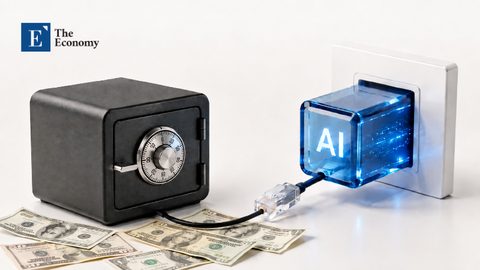
Advanced manufacturing, which the Chinese government has designated as a new growth engine, is also drawing criticism for its limited ability to support employment and consumption. According to an SCMP report last month, Robin Xing, Morgan Stanley’s chief China economist, projected that China would generate USD 12 trillion in new industrial investment by 2035, centered on advanced manufacturing sectors such as AI, robotics, and semiconductors. Of that total, USD 6 trillion would go toward upgrading existing industrial facilities, including robotics, industrial software, and power grids, while the remaining USD 6 trillion would be invested in expanding production capacity in high-tech industries such as semiconductors. The problem is that advanced manufacturing devotes a large share of capital investment to automated equipment and advanced technologies, making it difficult to create jobs on the same scale as real estate, construction, or labor-intensive manufacturing, even if the relevant markets grow. In particular, broader adoption of robots and AI to improve productivity is likely to limit the job-creation effect.
Oliver Griffin is a policy and tech reporter at The Economy, focusing on the intersection of artificial intelligence, government regulation, and macroeconomic strategy. Based in Dublin, Oliver has reported extensively on European Union policy shifts and their ripple effects across global markets. Prior to joining The Economy, he covered technology policy for an international think tank, producing research cited by major institutions, including the OECD and IMF. Oliver studied political economy at Trinity College Dublin and later completed a master’s in data journalism at Columbia University. His reporting blends field interviews with rigorous statistical analysis, offering readers a nuanced understanding of how policy decisions shape industries and everyday lives. Beyond his newsroom work, Oliver contributes op-eds on ethics in AI and has been a guest commentator on BBC World and CNBC Europe.
Similar Post