From Advanced Materials to AI and Semiconductors: U.S. Sanctions Accelerate China’s Technological Self-Reliance, Emerging as a Key Variable in the AI-Era Battle for Dominance

As one of the youngest members of the team, Tyler Hansbrough is a rising star in financial journalism. His fresh perspective and analytical approach bring a modern edge to business reporting. Whether he’s covering stock market trends or dissecting corporate earnings, his sharp insights resonate with the new generation of investors.
Authored On
Modified
China’s AI industry expands adoption of domestically produced semiconductors from companies such as Huawei
Self-sufficiency accelerates across materials sectors including semiconductor wafers and silicon-28
As South Korea and Taiwan emerge as major beneficiaries of the AI-driven race for technological supremacy, questions mount over China’s future position
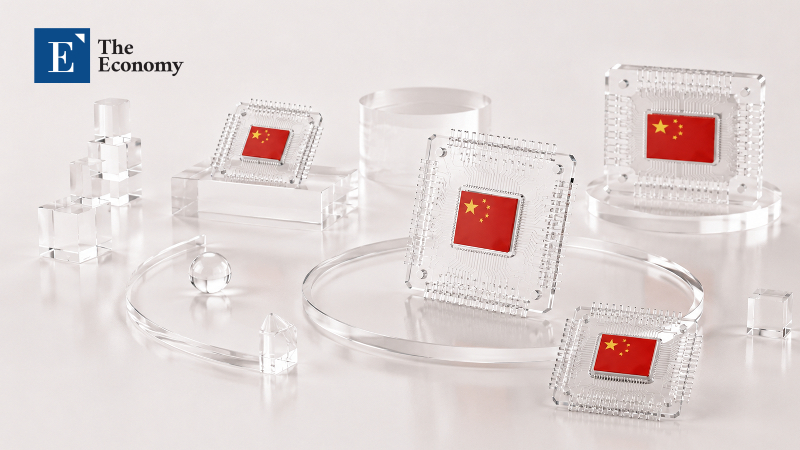
Chinese artificial intelligence (AI) companies are rapidly increasing their adoption of domestically produced semiconductors. With U.S. restrictions effectively curtailing access to advanced chips from Western firms such as Nvidia, the market influence of local players including Huawei and Moore Threads is expanding at a remarkable pace. This push toward supply-chain and technological independence is increasingly evident across China’s broader advanced-industries landscape, extending well beyond the AI sector.
Shifting Strategies Among Chinese AI Companies
According to the South China Morning Post (SCMP) on June 17, major Chinese AI research institutes and technology companies have recently begun relying on domestic chips throughout the entire model-development process in an effort to reduce dependence on Nvidia and other Western suppliers. One notable example is GLM-Image, an image-generation model jointly developed by generative AI startup Zhipu AI and Huawei Technologies and released as open source in January. The model completed its full training cycle using Huawei’s Ascend Atlas 800T A2 servers powered by Ascend 910 AI accelerators, alongside Huawei’s proprietary MindSpore deep-learning framework. Both the hardware and software stacks were sourced entirely from China.
On-device AI startup ModelBest has likewise adopted Huawei’s CANN architecture as the training foundation for its ultra-lightweight BitCPM-CANN small-language-model series. CANN serves as Huawei’s AI computing software platform and is positioned as an alternative to Nvidia’s CUDA. Huawei has also collaborated with a research team at the Shenzhen Loop Laboratory on a post-training project involving DeepSeek’s V4 Pro model, one of China’s leading AI startups. The project centers on conducting full-parameter fine-tuning using a computing cluster equipped with at least 1,000 units of Huawei’s next-generation Ascend 910C AI chips.
Meituan, China’s major food-delivery and lifestyle-services platform, is also expanding its use of domestic computing infrastructure through its proprietary Longcat-2.0-Preview model. The company has been conducting closed testing of the model since April and stated that both pre-training and inference were carried out entirely on domestic computing clusters. While it did not disclose the specific chip manufacturer, Meituan said between 50,000 and 60,000 Chinese-made AI chips were deployed during the training phase alone. Similar developments are emerging in academia. Earlier this month, a research team at Peking University unveiled EvoPhys-World, a 5D physical-space simulation world model. Training for the model utilized Moore Threads’ MTT S5000 graphics processing units (GPUs) and the company’s proprietary MUSA software platform. MUSA was developed as a domestic GPU computing platform designed to replace CUDA.
China’s Drive to Reduce Dependence on the West
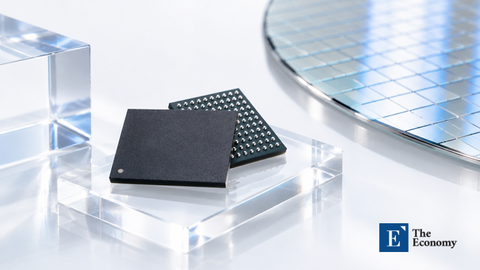
This movement toward supply-chain independence is becoming increasingly visible across China’s advanced-industrial ecosystem. Semiconductor wafers represent a prominent example. BOE, China’s largest display manufacturer, plans to begin mass production in the second half of this year at its 12-inch (300mm) wafer fabrication facility currently under construction in Beijing. Twelve-inch wafers deliver more than twice the productivity of conventional eight-inch wafers and are widely used in manufacturing high-performance products, including AI chips. BOE intends to focus production on display driver integrated circuits (DDIs), power management integrated circuits (PMICs), and automotive microcontroller units (MCUs) for next-generation display panels.
China Star Optoelectronics Technology (CSOT), the display subsidiary of TCL, the world’s second-largest television manufacturer, entered the market in March through its acquisition of compound-semiconductor chipmaker Prima. Prima possesses infrastructure capable of mass-producing compound-semiconductor chips for mini- and micro-LED applications based on materials such as gallium nitride (GaN). Visionox, China’s third-largest display manufacturer, is currently operating a glass-substrate production project in Jiangsu Province backed by an investment of approximately $750 million. The company reportedly placed substantial orders in April for optical and X-ray inspection equipment to improve yields on its pilot production line. Glass substrates are regarded as a critical next-generation material for AI semiconductors due to their ability to support finer circuit designs while minimizing warpage compared with conventional organic materials.
China has also succeeded in the mass production of silicon-28, an ultra-high-purity isotope essential for silicon-based quantum computing. China National Nuclear Corporation (CNNC), the state-owned nuclear enterprise, recently announced that its Institute of Physical Chemistry Engineering (IPCE) had successfully achieved mass production of silicon-28 with isotope purity exceeding 99.99%. This marks the first time China has independently produced the material at scale. Until now, production capabilities for silicon-28 had been largely confined to a limited number of companies in the United States and Europe. Zhang Hongmin, director of IPCE and leader of the project, told China Central Television (CCTV) that researchers separated the three silicon isotopes, concentrating silicon-28 in one stream while directing silicon-29 and silicon-30 into another. He added that the localization of ultra-high-purity silicon-28 could have broad applications extending beyond quantum computing to advanced semiconductor manufacturing, sophisticated navigation systems, and precision measurement technologies.
China’s presence is also becoming increasingly visible in the photonic semiconductor market. Photonic semiconductors utilize light to convert electrical signals and are employed in optical communications, displays, and sensors, offering advantages in ultra-high-speed, low-latency data transmission. While leading foreign companies continue to dominate advanced photonic chip production, Chinese firms are pursuing technological breakthroughs by simultaneously manufacturing high-power continuous-wave (CW) optical sources and advanced electro-absorption modulated laser (EML) chips, areas with comparatively lower technical barriers. Localization has reportedly already been achieved in portions of the mid- and low-end product segments.

Diverging Views on the Future Technology Power Balance
Opinions remain divided regarding China’s technological self-sufficiency drive. One school of thought argues that China’s current capabilities remain insufficient to surpass technological leaders such as South Korea and Taiwan. In a report published on June 16, The New York Times (NYT) stated that the AI boom is reshaping the global map of technological power. In particular, South Korea and Taiwan have established themselves as leaders in the production of cutting-edge memory chips. The newspaper further noted that China has been largely sidelined from the semiconductor boom. While China emerged as the world’s manufacturing powerhouse during the hardware boom two decades ago, its position has weakened in recent years amid U.S. tariffs and extensive restrictions targeting Chinese industries.
An opposing view also exists. According to this perspective, Washington’s aggressive pressure campaign may have restricted Chinese companies’ access to advanced technologies in the short term, but it has simultaneously strengthened Beijing’s determination to achieve technological self-reliance over the longer horizon. China has, in fact, invested heavily in advanced industries for years. A representative example is the third phase of the National Integrated Circuit Industry Investment Fund—commonly known as the “Big Fund III”—launched in 2024 with a capital pool of approximately $47.8 billion. Policy direction has followed the same trajectory. China has identified scientific and technological self-sufficiency as a central pillar of its long-term national strategy, while semiconductors, AI, and foundational research capabilities are expected to remain priority areas in the next Five-Year Plan. Advanced technologies have effectively been elevated to matters of supply-chain security and national competitiveness.
The Chinese government’s commitment to this strategy has been highlighted once again in recent developments. According to reports from The Guardian and other international media outlets on June 9, the National Development and Reform Commission (NDRC) and other key government agencies finalized a blueprint for a nationwide “integrated computing hub” that will consolidate fragmented computing resources under centralized state management. The project’s defining characteristic is the complete exclusion of U.S. technology. Beijing has mandated that more than 80% of core hardware—including AI chips—within newly established data centers must be sourced from domestic companies such as Huawei. The policy amounts to a declaration of technological self-reliance that would effectively push U.S. semiconductor firms including Nvidia and AMD out of the Chinese market. State-owned telecommunications operators such as China Mobile and China Telecom will oversee the operation and networking of data centers nationwide, while the enormous funding required for the initiative will be provided directly by the central government.
As one of the youngest members of the team, Tyler Hansbrough is a rising star in financial journalism. His fresh perspective and analytical approach bring a modern edge to business reporting. Whether he’s covering stock market trends or dissecting corporate earnings, his sharp insights resonate with the new generation of investors.
- Previous "From Political Taboo to Strategic Fault Line" China's 3T Recast Amid Great-Power Rivalry, With U.S. Containment and Structural Constraints Eroding Momentum for a New Global Order
- Next Gold Allocations Rise as Central Banks Accelerate De-Dollarization, China Pushes Yuan-Led Alternative Order
Similar Post