"Battle Over the Compensation Ratio" U.S.-Iran Clash Reignites Over Nuclear Inspections and Strait of Hormuz Transit Fees, Raising Fears of a Repeat of the Failed U.S.-North Korea Denuclearization Talks

As one of the youngest members of the team, Tyler Hansbrough is a rising star in financial journalism. His fresh perspective and analytical approach bring a modern edge to business reporting. Whether he’s covering stock market trends or dissecting corporate earnings, his sharp insights resonate with the new generation of investors.
Authored On
Modified
U.S. and Iran once again locked in escalating tensions over whether the IAEA will resume nuclear inspections in Iran
Debate persists over the reopening of the Strait of Hormuz, with Washington insisting on free passage while Tehran seeks to impose charges
Experts warn that the sharp divergence in interests could recreate the same deadlock that doomed U.S.-North Korea denuclearization negotiations
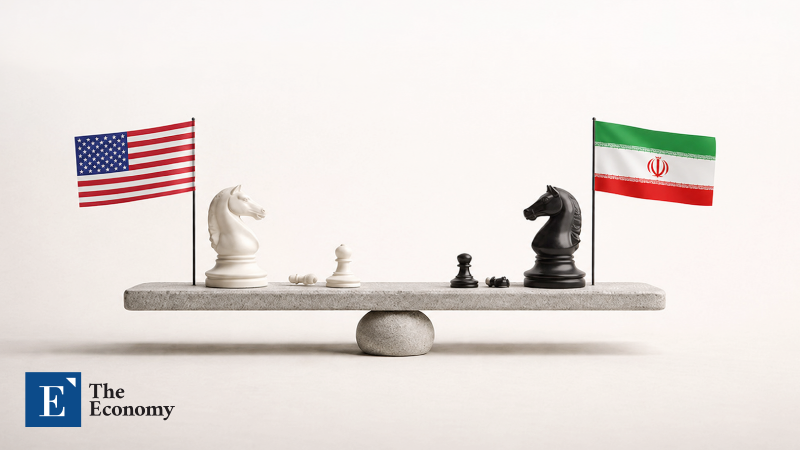
The United States and Iran have once again collided at the negotiating table. U.S. President Donald Trump is insisting that the International Atomic Energy Agency (IAEA) resume inspections of Iran's nuclear facilities and that American inspectors participate in the process, while Tehran maintains that no decision has yet been made on whether nuclear inspections will resume. The divide is equally evident in the dispute over transit fees through the Strait of Hormuz. The central question has become how far Iran is willing to accept an international nuclear monitoring regime and what level of economic compensation the United States is prepared to provide in return. As the two sides remain sharply divided, experts warn that negotiations could ultimately repeat the pitfalls of the failed U.S.-North Korea denuclearization process, which collapsed over disagreements regarding the scope of dismantlement and the scale of compensation.
Continued Standoff Over Nuclear Inspections
According to Fox News on June 24 (local time), Washington maintains that Iran agreed to accept IAEA inspections after both sides signed a postwar memorandum of understanding (MOU). In a telephone interview with reporter Trey Yingst, Trump said, "There is no need to rush inspectors into Iran, but when the IAEA enters the country to locate highly enriched uranium (HEU), American inspectors will accompany them." A day earlier, speaking to reporters at the White House, Trump also stressed that "the IAEA inspection team will enter Iran's nuclear facilities at the appropriate time."
The IAEA also lent support to the U.S. interpretation. Speaking at a press conference in Fukushima, Japan, on June 24, IAEA Director General Rafael Grossi stated that the MOU signed by the leaders of the United States and Iran explicitly stipulates that Iran's nuclear materials and nuclear facilities will be subject to IAEA oversight. "Oversight requires inspections," Grossi said. "Whether that happens the day after tomorrow, in a week, or in ten days is not fundamentally important. The inspections will take place." Since the outbreak of the war, however, the IAEA has been unable to independently verify the quantity, location, and storage conditions of Iran's stockpile of highly enriched uranium because access to the country's key enrichment facilities has been restricted.
Iran, however, has categorically rejected that interpretation. The issue of nuclear inspections has emerged as the first major point of friction in implementing the postwar MOU. Iranian Foreign Ministry spokesperson Esmaeil Baghaei denied reports that Tehran had agreed to resume IAEA inspections, saying, "Whether inspections resume will be determined during future postwar negotiations and according to their outcome." Deputy Foreign Minister Kazem Gharibabadi likewise wrote on social media platform X that "there has been no contact with the IAEA," adding, "These matters will be reviewed and decided only within the framework of a final agreement, and only after the other side lifts all sanctions and measures." Tehran is therefore treating nuclear inspections not as an automatic obligation under the ceasefire agreement, but as a negotiated condition tied to sanctions relief and a comprehensive final settlement.
Conflicting Interests Over the Strait of Hormuz
The differences surrounding the Strait of Hormuz also remain unresolved. The United States argues that the MOU guarantees free passage through the strait for at least 60 days and that the same principle should be incorporated into a final agreement. Washington maintains that because the Strait of Hormuz is an international waterway, no individual country has the authority to impose transit charges. Iran, by contrast, argues that while it may waive such fees during the 60-day negotiation period, it should be entitled to charge vessels passing through the strait afterward. Tehran is attempting to redefine such payments not as transit tolls but as fees for managing the waterway, ensuring security, and providing navigational services.
The intensity of the dispute reflects the fundamentally different interests of the two countries. For Iran, abandoning its nuclear program or placing its nuclear capabilities under a long-term monitoring regime represents an enormous strategic risk equivalent to surrendering a core pillar of regime security and negotiating leverage. One diplomatic source explained, "The price for Iran giving up its nuclear program must be far greater than a simple ceasefire. It requires substantial economic compensation. Tehran's options include collecting transit or maritime service fees in the Strait of Hormuz, or foregoing those fees in exchange for restoring normal oil exports and securing a much larger stream of revenue."
The implications extend well beyond Washington and Tehran, affecting oil-producing countries across the Middle East. While reopening the Strait of Hormuz and restoring Iranian crude exports would benefit the global economy and American consumers, they would create significant challenges for oil producers seeking to maintain higher prices. Saudi Arabia, Iraq, and Kuwait have already faced export disruptions caused by the Iran war and the closure of the Strait of Hormuz. At the same time, the gap between actual production capacity and official output targets within OPEC+ has continued to widen. If shipping through the strait normalizes and Iranian crude fully returns to global markets, OPEC+ could once again face mounting pressure to balance price stabilization against preserving market share.
The Fundamental Challenge of Nuclear Negotiations
Meanwhile, Washington's primary objective extends beyond economic considerations to reshaping the broader diplomatic landscape. Although Trump cited multiple goals during the Iran war—including Iran's nuclear and missile programs, ending support for Iran-backed armed groups, and even regime change—the core of the agreement that ultimately emerged centered on achieving a verifiable reduction of Iran's nuclear capabilities. In other words, from the U.S. perspective, the current negotiations may represent not the conclusion of the war itself but a shift in strategy toward accomplishing the first phase of its military objectives. If Washington succeeds in securing IAEA inspections of Iran's nuclear materials and facilities, the dilution of highly enriched uranium, and a long-term monitoring regime, it will have achieved a substantial portion of those objectives.
Another major U.S. target is the global energy market. Under the MOU, Washington has suspended sanctions on Iranian crude exports for 60 days. The move is widely viewed as extending beyond securing additional supply or stabilizing international oil prices, reflecting a broader strategy to undermine the discounted purchasing arrangement China developed during the sanctions period. According to the Associated Press, Iran generated more than $46 billion in oil export revenue in 2024, while China—its largest buyer—was able to purchase Iranian crude below market prices in exchange for ignoring Western sanctions. If U.S. sanctions are eased, China's pricing advantage as the dominant discounted buyer of Iranian oil could weaken significantly, potentially triggering a strategic backlash against Beijing.
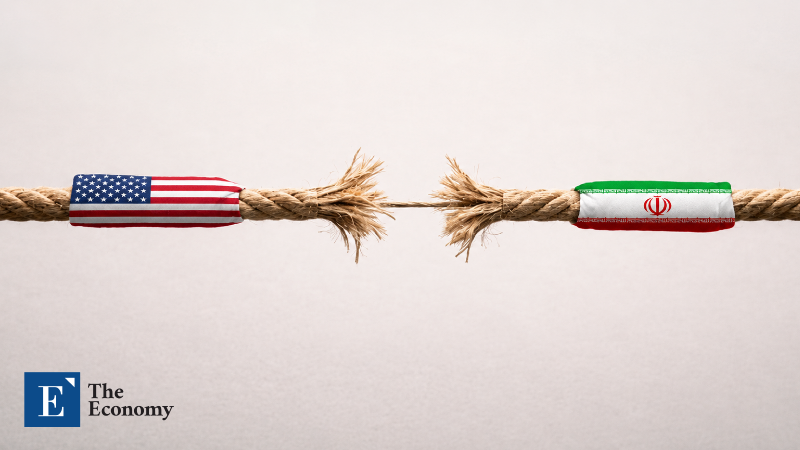
Whether Washington's broader strategy can ultimately be implemented remains uncertain. The real challenge of nuclear diplomacy lies not in drafting an agreement but in resolving the practical issues of declarations, verification, and reciprocal implementation measures. The failed U.S.-North Korea denuclearization process offers a clear precedent. The 1994 Agreed Framework required North Korea to freeze its Yongbyon nuclear facilities under IAEA monitoring, but it ultimately collapsed amid delays in providing light-water reactors, mutual distrust, and allegations surrounding highly enriched uranium. Likewise, the 2005 Six-Party Talks Joint Statement—which committed North Korea to abandoning all nuclear weapons and existing nuclear programs and returning to the Nuclear Non-Proliferation Treaty (NPT) and the IAEA—failed because the parties could not overcome disputes over the sequencing of declarations, verification, and sanctions relief. Even the 2018 Singapore summit between Trump and North Korean leader Kim Jong Un produced little more than a broad joint statement.
The second U.S.-North Korea summit in Hanoi, Vietnam, in February 2019 likewise ended without a meaningful breakthrough. North Korea proposed dismantling the Yongbyon nuclear complex, but Washington regarded the offer as insufficient to eliminate the country's overall nuclear capabilities. The dispute subsequently shifted to the scope of sanctions relief. After the summit, Trump said he could not accept Pyongyang's demand for comprehensive sanctions removal, while North Korea countered that it had requested only partial relief from certain United Nations (UN) sanctions affecting civilian livelihoods. The summit ultimately concluded without an agreement. Speaking at the NRCC Annual Dinner later that April, Trump recalled telling Kim, "You're not ready to make a deal." That precedent serves as a significant warning for the current U.S.-Iran negotiations. As long as Washington demands nuclear dismantlement and a permanent monitoring regime while Tehran insists on compensation in return, the negotiations are likely to encounter the same fundamental obstacle: determining how much of the nuclear program must be dismantled and how much compensation should be provided in exchange.
As one of the youngest members of the team, Tyler Hansbrough is a rising star in financial journalism. His fresh perspective and analytical approach bring a modern edge to business reporting. Whether he’s covering stock market trends or dissecting corporate earnings, his sharp insights resonate with the new generation of investors.
Similar Post