"Driver Error vs. Manufacturer Negligence" Surge in Driver-Assistance Crashes Reignites Liability Debate as Tesla Faces Special Investigation

Matthew Reuter is a senior economic correspondent at The Economy, where he covers global financial markets, emerging technologies, and cross-border trade dynamics. With over a decade of experience reporting from major financial hubs—including London, New York, and Hong Kong—Matthew has developed a reputation for breaking complex economic stories into sharp, accessible narratives. Before joining The Economy, he worked at a leading European financial daily, where his investigative reporting on post-crisis banking reforms earned him recognition from the European Press Association. A graduate of the London School of Economics, Matthew holds dual degrees in economics and international relations. He is particularly interested in how data science and AI are reshaping market analysis and policymaking, often blending quantitative insights into his articles. Outside journalism, Matthew frequently moderates panels at global finance summits and guest lectures on financial journalism at top universities.
Authored On
Modified
NHTSA launches special investigation into fatal Tesla Model 3 crash into residential home
Sudden-acceleration cases once largely attributed to driver error now increasingly raising questions over vehicle design and warning systems
Driver-assistance crashes mounting in China as well, with robotaxi failures even triggering large-scale traffic disruptions
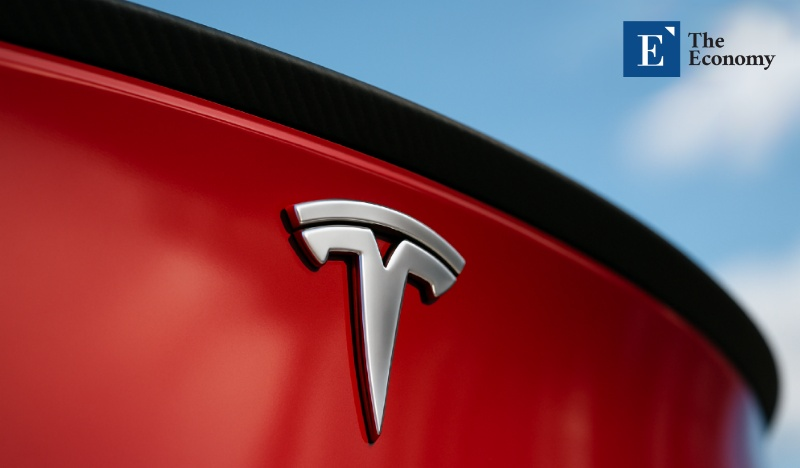
The U.S. transportation safety regulator has launched a special investigation into a fatal Tesla Model 3 crash, bringing renewed attention to the question of where responsibility for driver-assistance systems ultimately lies. The dispute centers on whether the accident should be attributed to the driver's pedal operation or to shortcomings in the vehicle's detection, warning, and driver-monitoring systems. Similar accidents and legal controversies have increasingly emerged not only in the United States but across other major markets, including China.
Tesla Driver-Assistance Litigation
CNBC reported on June 22 (local time) that the U.S. National Highway Traffic Safety Administration (NHTSA) has opened a special crash investigation into a Tesla Model 3 that slammed into a home in Katy, Texas. The accident occurred on June 19 when the Model 3 veered off the roadway and crashed into a residence in a suburban neighborhood, killing 76-year-old Martha Avila, who was inside the home after being trapped beneath debris from the vehicle. Her family said the residence was left uninhabitable following the crash and that they have since been staying in a hotel. According to authorities in Harris County, Texas, driver Michael Butler cooperated with investigators at the scene and stated that Tesla's partially automated driver-assistance system was engaged at the time of the crash. Whether the system was actually operating, however, has yet to be confirmed.
On June 24, the victim's family filed a wrongful death lawsuit in Harris County District Court against both Tesla and the driver. The complaint alleges design defects and failure to provide adequate warnings by Tesla, while also asserting negligence and gross negligence claims against the driver. According to the family, the vehicle failed to properly detect the house located at the end of the roadway and did not adequately monitor whether the driver remained engaged. They further argue that Tesla failed to sufficiently warn owners about the limitations of its driver-assistance system and contend that the possibility of unintended acceleration cannot be ruled out.
Tesla Chief Executive Officer Elon Musk responded shortly after reports of the crash by posting on X, formerly Twitter, that he found the accident difficult to understand. According to Musk, Tesla's supervised Full Self-Driving (FSD) system is fundamentally designed to travel slowly on residential streets, making the high-speed nature of the crash inconsistent with expected system behavior. Ashok Elluswamy, Tesla's vice president overseeing Autopilot, also wrote on X that "the driver fully depressed the accelerator pedal, manually disengaging the autonomous driving function," adding that the vehicle reached approximately 73 mph before impact and that the accelerator remained depressed even after the collision. Those assertions, however, have not been independently verified.
Precedents in Driver-Assistance Crash Rulings
Until now, sudden-acceleration cases resembling the current incident have generally concluded with findings of driver error. One of the most notable examples came in 2021, when NHTSA reviewed a petition seeking a recall of roughly 660,000 Tesla Model S, Model X, and Model 3 vehicles produced since 2013. Although the petition cited 232 alleged sudden-acceleration incidents, NHTSA concluded after analyzing available crash data and vehicle records that it found no evidence linking the accidents to defects in the accelerator pedal, motor control system, or braking system. Instead, the agency determined that the crashes resulted from driver pedal misapplication. That conclusion was supported by Event Data Recorder (EDR) information and vehicle log data. NHTSA found that in 97% of the alleged sudden-acceleration cases it reviewed, the accelerator pedal had been depressed by at least 85%.
That regulatory approach has continued in subsequent years. In March, NHTSA also denied another recall petition involving approximately 2.2 million Tesla vehicles produced since 2013. Petitioners argued that one-pedal driving and regenerative braking increased the risk of unintended acceleration, but NHTSA countered that one-pedal driving is widely used throughout the electric vehicle industry and that vehicle data showed the cars responded appropriately to driver inputs. Court rulings have largely followed a similar pattern. For example, in October 2023, a California jury in Riverside County rejected claims that defects in Tesla's Autopilot system caused a fatal crash involving a 2019 Model 3. In that case, the vehicle left the highway and struck a tree, killing the driver and seriously injuring two passengers.
More recently, however, courts have increasingly recognized circumstances in which automakers bear partial responsibility. In August last year, a federal jury in Florida concluded that Tesla shared responsibility for a fatal 2019 Autopilot crash in Key Largo. The Model S driver, operating with Autopilot engaged, failed to recognize that the roadway had ended and struck two individuals standing near a parked sport utility vehicle (SUV). One person was killed and another suffered serious injuries. The jury found the driver responsible for two-thirds of the fault but also determined that Tesla's driver-assistance technology failed to provide sufficient warnings regarding driver inattention and the end of the roadway. Crucially, the ruling did not hinge on whether the vehicle accelerated on its own. Instead, it focused on how Autopilot managed roadway suitability and the driver's duty to remain attentive. In other words, Tesla driver-assistance litigation has increasingly divided into two distinct legal theories: claims alleging that the vehicle accelerated independently without driver intent, and claims asserting that driver-assistance systems fostered excessive driver reliance or failed to provide adequate warnings about hazardous situations due to deficiencies in system design and warning mechanisms.
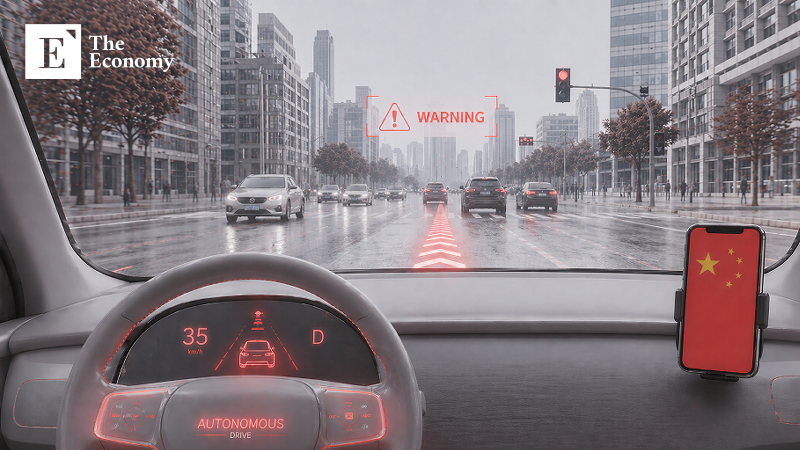
Driver-Assistance Risks Sweep Across Chinese Roads
Controversies surrounding driver-assistance systems are not confined to the United States and have become increasingly visible worldwide, particularly in China. In August 2021, a Nio ES8 driver was killed on the Shenhai Expressway in Fujian Province after the vehicle, operating with its Navigate on Pilot (NOP) driver-assistance system engaged, collided with a road maintenance vehicle ahead. In August 2022, a Xpeng P7 crashed into a stationary vehicle on a highway in Ningbo, Zhejiang Province, killing one person. Reports indicated that the vehicle's lane-centering function had been activated at the time.
In April 2024, an Aito M7, a brand developed in partnership with Huawei, struck a vehicle ahead on an expressway in Yuncheng, Shanxi Province, before catching fire and killing three occupants. In March last year, a Xiaomi SU7 was involved in a fatal accident in a highway construction zone on the Deshang Expressway in Anhui Province. According to Xiaomi, the vehicle had been traveling in driver-assistance mode until it detected an obstacle in the construction area, after which warning alerts and deceleration were initiated. The driver subsequently took over control, but the vehicle crashed into a concrete traffic barrier at approximately 60 mph just seconds later. All three occupants were killed. The accident fueled criticism that China's electric vehicle industry had effectively marketed Level 2 driver-assistance systems as though they were fully autonomous driving technology, prompting calls for regulators to impose stricter controls over related marketing language and driver-responsibility disclosures.
In early April, Wuhan also witnessed a large-scale disruption involving Baidu's Apollo Go robotaxi service, during which numerous vehicles simultaneously ceased operating. According to an official statement from local police, authorities received multiple reports that Baidu robotaxis had abruptly stopped in the middle of roadways because of a system malfunction. Some vehicles came to a halt on expressways and major arterial roads, obstructing traffic flow and reportedly contributing to rear-end collisions. More than 1,000 fully driverless Apollo Go robotaxis operate in Wuhan, with at least 100 vehicles believed to have been affected by the incident. Videos widely circulated on Chinese social media showed numerous robotaxis immobilized on public roads, blocking passing traffic. Although the vehicles were equipped with manual door-release functions, passengers reportedly found it difficult to exit safely because of heavy rush-hour traffic. No injuries were reported.
Matthew Reuter is a senior economic correspondent at The Economy, where he covers global financial markets, emerging technologies, and cross-border trade dynamics. With over a decade of experience reporting from major financial hubs—including London, New York, and Hong Kong—Matthew has developed a reputation for breaking complex economic stories into sharp, accessible narratives. Before joining The Economy, he worked at a leading European financial daily, where his investigative reporting on post-crisis banking reforms earned him recognition from the European Press Association. A graduate of the London School of Economics, Matthew holds dual degrees in economics and international relations. He is particularly interested in how data science and AI are reshaping market analysis and policymaking, often blending quantitative insights into his articles. Outside journalism, Matthew frequently moderates panels at global finance summits and guest lectures on financial journalism at top universities.
Similar Post