“From Wildfires to Infrastructure Failures”: Europe’s Vulnerability to Climate Shocks Laid Bare as Ageing Infrastructure and Political Divisions Deepen Heatwave Damage

Oliver Griffin is a policy and tech reporter at The Economy, focusing on the intersection of artificial intelligence, government regulation, and macroeconomic strategy. Based in Dublin, Oliver has reported extensively on European Union policy shifts and their ripple effects across global markets. Prior to joining The Economy, he covered technology policy for an international think tank, producing research cited by major institutions, including the OECD and IMF. Oliver studied political economy at Trinity College Dublin and later completed a master’s in data journalism at Columbia University. His reporting blends field interviews with rigorous statistical analysis, offering readers a nuanced understanding of how policy decisions shape industries and everyday lives. Beyond his newsroom work, Oliver contributes op-eds on ethics in AI and has been a guest commentator on BBC World and CNBC Europe.
Authored On
Modified
France and Spain Evacuate Hundreds of Thousands as Heatwave-Fuelled Wildfires Spread
Europe’s Inadequate Heatwave Response Strains Infrastructure and Drives Rising Death Toll
Strict Regulations and Political Divisions Hold Back Air-Conditioner Adoption
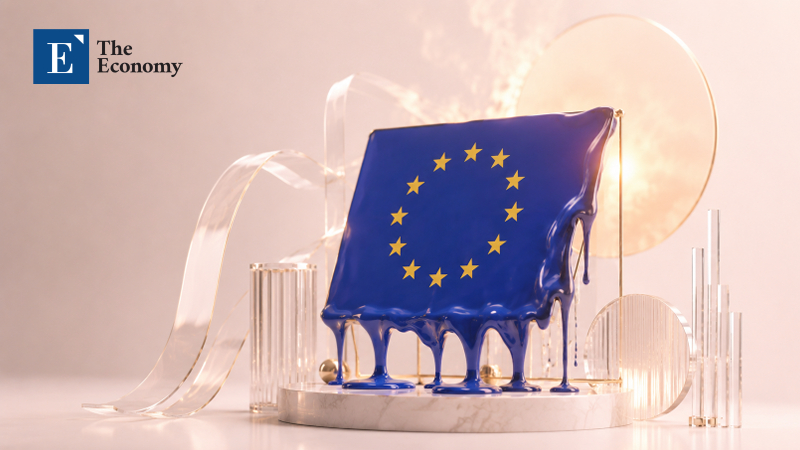
France and Spain are facing extensive wildfire damage. Record-breaking heat sweeping across southwestern Europe is not only disrupting the region’s social infrastructure systems but is also increasingly serving as the trigger for large-scale disasters. Europe’s acute vulnerability to extreme weather has been attributed to weakened response capacity caused by ageing infrastructure, as well as political disputes over expanding air-conditioner adoption.
Wildfire Threat Engulfs Europe
CNN reported on the 26th that the cumulative number of people evacuated because of wildfires in France and Spain had surpassed 300,000. In France, fires breaking out simultaneously across the southwestern departments of Gironde and Landes are currently spreading beyond control. Authorities in Gironde ordered an additional 55,000 people to evacuate from villages near Bordeaux alone, bringing the cumulative number of evacuees to more than 220,000. Local fire authorities said at least 68 firefighters were injured while battling the blazes on the front lines. French Prime Minister Sébastien Lecornu wrote on X, formerly Twitter, that “around 30 wildfires have erupted simultaneously across the country, burning nearly 100,000 hectares,” calling the scale “unprecedented.”
West of Madrid, Spain’s capital, two major wildfires merged in strong winds on the afternoon of the 26th, causing widespread disruption. More than 70,000 people were evacuated from Madrid’s outskirts and central districts alone, while evacuation orders were also issued for eight municipalities near Toledo. Authorities urged residents to remain indoors and wear masks, while the Spanish government declared its first-ever national state of emergency over the fires. In Manises, near Valencia, one person died in a wildfire, prompting local authorities to declare two days of mourning. Prime Minister Pedro Sánchez said that 130,000 hectares had already been reduced to ashes in Spain this year.
Record Heatwave Provides the Spark
These major wildfires are viewed less as isolated disasters than as the outcome of abnormal heat and drought that have repeatedly struck Europe since spring. Europe received above-average rainfall from last winter through early spring, encouraging the growth of surface vegetation such as grass and shrubs. As temperatures rose sharply and precipitation declined across southwestern Europe from May, that vegetation rapidly dried out and became an extensive fuel source for spreading fires. So-called flash droughts, in which moisture in the soil evaporates rapidly under high temperatures and intense sunlight, causing drought conditions to intensify within weeks, also emerged across broad areas.
The heatwave intensified further last month. A strong high-pressure system stalled over Europe for an extended period, blocking cloud cover and rainfall while continuously funnelling hot air from North Africa and the Sahara into Western Europe and the Mediterranean coast. By late last month, temperatures near 40 degrees Celsius persisted in Spain, Portugal, France, Italy and Germany, while Western Europe recorded its hottest June on record. This month, the accumulated risk factors erupted into major fires across the region, with some European countries even observing fire-induced pyrocumulonimbus clouds—phenomena in which wildfires generate powerful updrafts and lightning that can ignite new blazes.
Social Disruption Mounts Across the Region
The heatwave is placing enormous stress on Europe’s social infrastructure, including transport, power and healthcare systems. In Germany last month, ageing concrete roads experienced widespread “blowups,” in which pavement buckles or cracks after failing to withstand extreme heat. Lane closures and speed restrictions were imposed across sections of the Autobahn. Germany’s rail network also struggled to maintain normal operations. Steel tracks exposed to high temperatures can expand and buckle, while electrical and electronic signalling equipment and cooling systems face a heightened risk of failure when temperatures exceed their design limits. Power-sector infrastructure has also come under pressure. French utility EDF has been adjusting nuclear generation levels as river and estuary water temperatures rise, seeking to minimise ecosystem disruption from cooling-water discharge. Since early this month, output at the Blayais nuclear power plant has declined because of rising temperatures in the Gironde River, while three reactors at the Nogent, Bugey and Golfech nuclear plants were temporarily shut down in mid-month.
Public services are also buckling under the heat. In France last month, more than 1,350 schools with inadequate cooling facilities either closed or shortened class hours, while some schools in the United Kingdom also adjusted their operating schedules. With most European schools now on summer break, hospitals, care homes, fire brigades and emergency responders have moved to the front line of the crisis. Prolonged high temperatures increase cases of dehydration and heat exhaustion, while emergency-room transfers also rise sharply among elderly people and patients with chronic illnesses, including cardiovascular and respiratory conditions. Hospitals and care facilities lacking adequate cooling systems also struggle to manage the body temperatures of inpatients, while ambulance crews and firefighters must contend simultaneously with wildfire suppression and heat-related medical emergencies.
Inadequate Climate Adaptation Measures
Europe has sustained such extensive heatwave damage because its cities and social infrastructure have not adapted to the pace of rising temperatures. According to the World Meteorological Organization and the European Union’s Copernicus Climate Change Service, Europe’s temperature rise over the past 30 years has averaged about 0.56 degrees Celsius per decade—roughly twice the global average. Yet Europe’s housing, schools, railways, roads and power facilities were largely designed for the milder climate of the past. Homes in central and northern Europe, in particular, were long built to prioritise winter heating and heat-loss prevention rather than summer cooling. When heatwaves persist, heat accumulated indoors cannot dissipate adequately, causing indoor temperatures to exceed those outside and sharply increasing health risks for people without access to cooling.
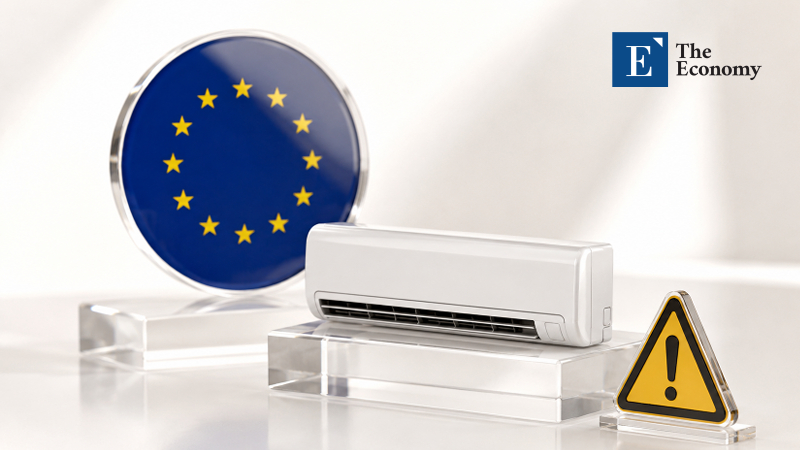
Low air-conditioner penetration is another factor exacerbating the crisis. With historically short and mild summers, Europe has not regarded household cooling as an essential amenity, while high electricity costs and stringent climate policies across national governments have also constrained the spread of air conditioning. Installing cooling equipment is not always straightforward under existing regulations. In central Paris and areas near cultural heritage sites, where historic façades must be preserved, installing outdoor units on building exteriors or rooftops may require approval from condominium management bodies or local authorities. As the threat from heatwaves has become more visible, however, adoption has begun to accelerate, particularly for lower-cost Chinese-made air conditioners. Earlier this month, China’s state-run English-language newspaper Global Times reported that sales of TCL air conditioners in Northern Europe and France had surged more than 300% from a year earlier, while rising 100% in Spain.
Air-Conditioner Expansion Emerges as a Political Flashpoint
The ideological battle over air conditioning is also cited as a factor weakening Europe’s ability to respond to heatwaves. In France, for instance, the easing of air-conditioner regulations is rapidly becoming a major issue in the presidential election scheduled for April next year. Jean-Philippe Tanguy, a lawmaker from France’s far-right National Rally party, recently argued that a large-scale air-conditioner installation programme should have been implemented after the 2003 heatwave. “Unfortunately, in France, [air-conditioner use] has been an ideological taboo imposed by the left for far too long,” he said. The Financial Times assessed that conservatives are using arguments in support of air conditioning as a populist strategy aimed at what they describe as excessive green policies implemented by President Emmanuel Macron and the European Union. By contrast, Jean-Luc Mélenchon, leader of the far-left France Unbowed party, has argued that nationwide air-conditioner deployment would be a misguided solution that worsens the climate crisis, proposing expanded green space and improved building insulation as alternatives.
Political tensions over air conditioning are also unfolding in Germany. Mark Bernhard, construction policy spokesperson for the far-right Alternative for Germany party, which currently leads German opinion polls, said that “climate hysteria,” including energy-efficiency ratings, had produced construction policies that obstruct air-conditioner installation and consequently increased heat-related deaths. He pledged to prevent citizens from being “sacrificed on the altar of climate ideology.” The far-left Green Party, meanwhile, acknowledges the need to expand air-conditioner adoption but maintains that subsidies should be provided only when rooftop solar panels are installed. Decarbonisation campaigns and large-scale street-tree planting programmes have also been proposed as alternatives.
Oliver Griffin is a policy and tech reporter at The Economy, focusing on the intersection of artificial intelligence, government regulation, and macroeconomic strategy. Based in Dublin, Oliver has reported extensively on European Union policy shifts and their ripple effects across global markets. Prior to joining The Economy, he covered technology policy for an international think tank, producing research cited by major institutions, including the OECD and IMF. Oliver studied political economy at Trinity College Dublin and later completed a master’s in data journalism at Columbia University. His reporting blends field interviews with rigorous statistical analysis, offering readers a nuanced understanding of how policy decisions shape industries and everyday lives. Beyond his newsroom work, Oliver contributes op-eds on ethics in AI and has been a guest commentator on BBC World and CNBC Europe.
Similar Post