“Passenger Growth No Longer Guarantees a Duty-Free Boom”: Incheon Airport Claims World No. 1 Spot for First Time, Yet Duty-Free Spending per Customer Falls for Third Straight Year

Anne-Marie Nicholson is a fearless reporter covering international markets and global economic shifts. With a background in international relations, she provides a nuanced perspective on trade policies, foreign investments, and macroeconomic developments. Quick-witted and always on the move, she delivers hard-hitting stories that connect the dots in an ever-changing global economy.
Authored On
Modified
38.39 Million International Passengers in H1, Incheon Airport Claims Global No. 1 Spot for First Time
Duty-Free Sales Miss Tourism Boom as Foreign Visitor Spending Per Capita Continues Three-Year Slide
Per-Passenger Rent Model Near $6.42 Collapses, Forcing Overhaul of Airport Commercial Revenue
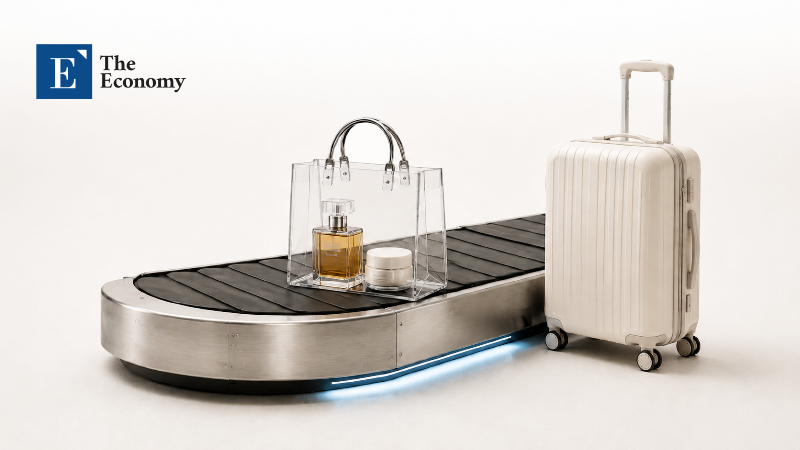
Incheon International Airport handled 38.39 million international passengers in the first half of this year, ranking first worldwide for the first time since its opening. The war in Iran redirected Europe-bound transfer demand through the airport, while South Korea’s inbound tourism market enjoyed a boom. Yet average duty-free spending by foreign customers declined for a third consecutive year, widening the divergence between passenger traffic and commercial revenue. Following Shilla Duty Free and Shinsegae Duty Free’s decisions to relinquish their concessions, rents in the subsequent tender fell by roughly 40%, forcing Incheon Airport to overhaul the revenue model that had long converted passenger growth into duty-free rental income.
Incheon Airport Takes Global No. 1 Spot for International Traffic Amid Fallout from Iran War
According to Incheon International Airport Corporation on August 19, the airport handled 38.39 million international passengers in the first half of this year. The figure placed it first in the global rankings compiled by Airports Council International (ACI), marking its highest position since opening. London Heathrow Airport ranked second with 37.79 million passengers, followed by Singapore Changi Airport with 34.53 million. International passenger volume is a key indicator of an airport’s global competitiveness.
As of July 7, cumulative passenger traffic had surpassed 1 billion. Incheon reached the milestone 25 years and three months after opening, faster than Germany’s Munich Airport at 33 years and 10 months, Changi Airport at 35 years and five months, Japan’s Narita Airport at 39 years and two months, and Dubai International Airport in the United Arab Emirates (UAE) at 58 years and two months. Incheon Airport currently hosts 101 airlines connecting 183 cities across 53 countries. Its international passenger network covers 158 cities, exceeding Hong Kong’s 139, Shanghai Pudong’s 92, and Narita’s 86, while matching Changi Airport.
Incheon Airport’s ascent to first place globally in international passenger traffic appears to reflect its capture of demand displaced from major hubs such as Dubai and Heathrow, where passenger growth slowed amid instability in the Middle East following the US invasion of Iran. Incheon’s international passenger volume rose 6.3% in the first half from 36.12 million during the same period last year. Transfer traffic posted particularly strong growth amid the war. The number of transfer passengers increased 18.1% to 4.245 million from 3.596 million a year earlier. Transfer traffic on European routes surged 63.2% year on year to 214,000.
Broader Tourism Spending Base
Growth in foreign passenger traffic, led by visitors from China and Japan, also lifted the airport’s performance. Foreign nationals accounted for 39.3% of passengers in the first half, above the full-year share of 35.2% in 2025. The proportion climbed to a record 44.4% in the second quarter. Interest generated by K-pop, television dramas, and films spread into demand for Korean beauty products, food, fashion, and travel to South Korea, driving short-haul inbound traffic from China and Japan.
The breadth of tourism spending also expanded. Foreign visitors’ credit card spending on tourism reached approximately $7.17 billion in the first half, up 50.8% year on year. Card spending in June alone totaled about $1.47 billion, an increase of 66.4% from a year earlier. Foreign arrivals through regional airports rose 42.5% in June, while the share of visitors traveling outside the Seoul metropolitan area increased from 31.4% in the second quarter of last year to 34.2% this year. Growth in air passenger traffic consequently spread into accommodations, food services, transportation, and regional tourism.
Table 1. Domestic Duty-Free Spending Indicators for Foreign and South Korean Customers
| Category | Purchase Value | Year-on-Year Change | Customers | Year-on-Year Change | Purchase Value per Customer |
|---|---|---|---|---|---|
| Foreign Customers, June 2026 | $655 million | Up 11.6% | 1,279,200 | Up 31.9% | $512 (Down 15.4%) |
| South Korean Customers, June 2026 | $151 million | Down 19.8% | 1,196,800 | Down 23.3% | $126 (Slight increase) |
| Foreign Customers, H1 2026 | $3.57 billion | — | 6,644,900 | — | $537 (Down about 20%) |
| South Korean Customers, H1 2026 | $1.06 billion | Down 12.0% | 8.41 million | Down 11.5% | $126 |
Duty-Free Spending per Customer Plunges for Third Consecutive Year
Despite the tourism boom, spending intensity at airport duty-free stores weakened. According to the Korea Duty Free Shops Association, sales at domestic duty-free stores reached approximately $806 million in June, up 4% year on year. Foreign customers drove the increase. Their purchases rose 11.6% to about $655 million, while purchases by South Korean customers fell 19.8% to roughly $151 million. Foreign customers accounted for 81.3% of total sales.
Average spending per customer continued to decline despite the increase in aggregate purchases. The number of foreign customers rose 31.9% year on year to 1,279,200 in June, far outpacing growth in purchase value. Average spending per foreign customer nevertheless fell 15.4% to about $512. During the same period, the number of South Korean customers declined 23.3% to 1,196,800, while average spending per domestic customer edged higher.
Average spending per foreign customer has steadily declined from approximately $1,312 in 2023 to $850 in 2024 and $610 in 2025. Foreign customers spent about $3.57 billion in the first half of this year across 6,644,900 transactions, reducing average spending per customer to roughly $537. That represented a decline of about 20% from approximately $671 in the first half of last year, showing that individual spending contracted even as tourist numbers increased. Demand from South Korean customers weakened further. Domestic sales fell 12% year on year to approximately $1.06 billion in the first half, while the number of customers declined 11.5% to 8.41 million. Duty-free sales contracted despite a 2.7% increase in outbound South Korean travelers to 14.96 million during the same period.
Inverse Relationship Between Inbound Tourism and Duty-Free Spending
Extending the comparison to the pre-pandemic period makes the erosion of duty-free demand even more pronounced. The number of foreign duty-free customers in the first half of this year was 30.9% lower than during the same period in 2019, while sales per customer fell 41.8%. With both indicators declining simultaneously, foreign duty-free sales shrank to 40.2% of their 2019 level. This ran directly counter to a 26.9% increase in inbound visitors, eroding the validity of the long-standing formula that linked rising arrivals directly to stronger duty-free demand.
Full-year results from last year also confirmed the persistence of declining spending per customer. The number of duty-free shoppers nationwide increased 3.0% year on year to 29.48 million, while sales fell 11.8% to approximately $8.95 billion. That amounted to just 50.4% of the approximately $17.74 billion recorded in 2019 before the pandemic. The number of foreign customers increased from 9.33 million to 10.92 million, yet sales to foreigners retreated 16% to about $6.66 billion. With inbound tourism and duty-free spending moving in opposite directions, the decoupling between the tourism and duty-free markets is becoming entrenched.
Duty-Free Stores Lose Ground on the Shopping Map
Experts say the duty-free industry has entered a phase in which lower spending per customer must be treated as a permanent baseline. The decline cannot be explained solely by the economic cycle. Foreign tourists’ shopping routes have already changed markedly from the pre-pandemic period. According to a Korea Institute for Industrial Economics and Trade survey, airport and downtown duty-free stores, which ranked among the five leading shopping destinations in 2018 and 2019, were absent from the top five in the 2024 survey. Duty-free stores’ share of spending by Chinese tourists also plunged from 63% in 2019 to 13% in 2024. Spending once concentrated on luxury goods and cosmetics has dispersed across Olive Young, Daiso, and department stores, while expanding into medical services, dining, and regional commercial districts. Duty-free operators must therefore recalibrate their profit models around a lower level of spending per customer.
As the spending baseline declined, the cost burden on duty-free operators at Incheon Airport surged. Rent collected by Incheon Airport from duty-free stores increased 4.6-fold from approximately $100 million in 2022 to about $460 million in 2024, while domestic duty-free market sales contracted from roughly $12.13 billion to around $9.99 billion over the same period. The current rent formula is tied to neither the number of duty-free customers nor actual sales. It multiplies the total number of departing passengers by the per-passenger rate submitted by the operator during bidding. Because passengers who make no purchases are included in the calculation, operators face heavier rent burdens as the airport becomes busier.
Accumulated losses escalated into a rental dispute last year. Shinsegae Duty Free filed for a rent adjustment with the Incheon District Court on April 29, and Shilla Duty Free initiated the same procedure on May 8. Samil PwC, appointed by the court to conduct an appraisal, concluded on August 7 that rents in a new tender would likely settle at around 60% of the existing contract level. The assessment matched the two companies’ request for a 40% reduction. Incheon International Airport Corporation declined to modify the existing contracts, causing the mediation to collapse on August 28. Shilla decided to relinquish its concession on September 18, followed by Shinsegae on October 30. Each company accepted termination penalties of approximately $136 million. In the tender conducted early this year, Lotte Duty Free bid about $3.82 per passenger and Hyundai Duty Free approximately $3.85, both around 60% of the previous contract level. With the court-appointed appraisal and market bids reaching the same conclusion, the per-passenger rent model of roughly $6.42 lost its commercial viability.
Incheon Airport Faces Unavoidable Revenue Overhaul
The roughly 40% decline in per-passenger rent for prime duty-free zones following the new tender has made an overhaul of Incheon Airport’s revenue base unavoidable. Incheon International Airport Corporation reported consolidated revenue of approximately $1.88 billion and operating profit of about $529 million in 2024. Non-aeronautical revenue accounted for 63% of total revenue, or roughly $1.19 billion. Applying the previously reported duty-free rental income to consolidated revenue produces a share of 24.5%. The price of a revenue stream that has generated roughly one-quarter of the corporation’s sales has fallen sharply. A 40% decline in the per-passenger rate would require passenger traffic to increase 66.7% to maintain the same rental income. The current pace of passenger growth is insufficient to offset the lower rate.
Incheon Airport’s dependence on commercial revenue also stands out in comparison with other major international airports. According to ACI, non-aeronautical revenue as a share of total revenue at Asia-Pacific airports declined from 49% in 2019 to 42% in 2023, placing Incheon Airport 21 percentage points above the latest regional average. Passenger traffic across the region remained 11% below its 2019 level during the same period, while non-aeronautical revenue fell 31%. Retail leasing’s share of non-aeronautical revenue also contracted from 44% to 33%. Commercial revenue continued to lag behind passenger recovery in 2024. Non-aeronautical revenue across Asia-Pacific and Middle Eastern airports remained 22.8% below its 2019 level, with retail accounting for 38.8% and food and beverage services for 2.1%. With income from other commercial facilities unlikely to compensate for declining duty-free rents, Incheon Airport will need to develop a business model that attracts more transfer passengers and converts spending during layovers into a new revenue stream.
Anne-Marie Nicholson is a fearless reporter covering international markets and global economic shifts. With a background in international relations, she provides a nuanced perspective on trade policies, foreign investments, and macroeconomic developments. Quick-witted and always on the move, she delivers hard-hitting stories that connect the dots in an ever-changing global economy.
- Previous US Long-Term Treasury Yields Breach Key Psychological Barriers as Yen Defense, Protracted War and Sweeping Tax Cuts Deliver Triple Shock
- Next “German Benchmark Remains a Distant Goal”: Government Unveils Zero-Tuition Plan for Regional National Universities, Raising Equity Concerns Among Private Institutions and Questions Over Educational Competitiveness
Similar Post