“Choke Off Iran’s Financial Lifelines”: US Pressures UAE, but Risks to Dubai’s Economy and Wider Escalation Complicate Full Alignment

As one of the youngest members of the team, Tyler Hansbrough is a rising star in financial journalism. His fresh perspective and analytical approach bring a modern edge to business reporting. Whether he’s covering stock market trends or dissecting corporate earnings, his sharp insights resonate with the new generation of investors.
Authored On
Modified
UAE curtails trade and commercial ties with Iran in line with US demands
“Dubai would collapse”: Complete cutoff difficult given economic and security interests
Iran maintains hard-line response to US pressure, with Europe also in its sights
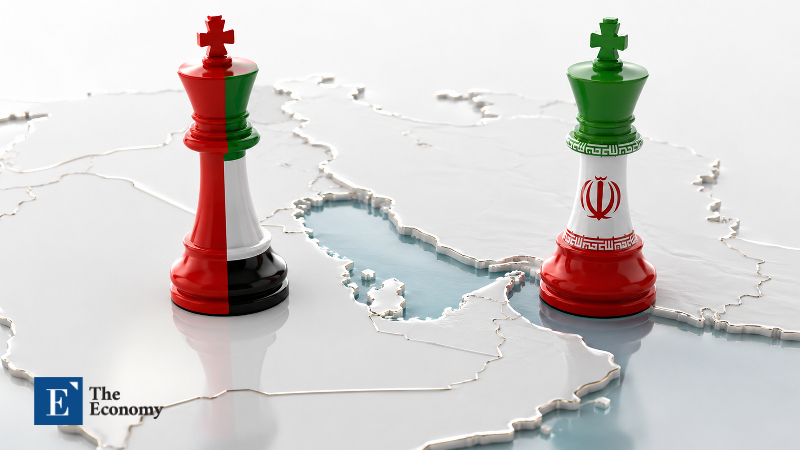
US President Donald Trump has begun pressing the United Arab Emirates (UAE) to join Washington’s pressure campaign against Iran. The aim is to disrupt the financial and trade networks Iran operates through the UAE and weaken Tehran’s ability to secure foreign currency. Experts say that although the UAE is moving in step with US demands, it remains highly unlikely to sever all transactions with Iran. That is because tighter sanctions would increase both the risk of renewed military tensions emanating from Iran and the prospect of damage to the UAE’s Dubai-centered non-oil economy.
US Takes Aim at UAE-Iran Relations
On the 20th (local time; all dates hereafter), The Wall Street Journal (WSJ) reported that the Trump administration had been urging the UAE in recent weeks to crack down on Iranian financial networks. Washington reportedly told Emirati officials that blocking financial flows linked to Iran’s Islamic Revolutionary Guard Corps (IRGC) could exert greater economic pressure on Tehran than a US Navy blockade of Iranian ports. The assessment reflects the UAE’s role as a critical trade and financial conduit for Iran. According to the World Trade Organization (WTO), the UAE supplied Iran with $21 billion worth of goods in 2024, accounting for more than 30% of the country’s total imports and surpassing China to become its largest import partner.
Numerous Iranian companies and individuals also launder funds through the UAE. According to the US Treasury Department, an estimated $9 billion that passed through correspondent accounts at US banks in 2024 was linked to Iran’s informal financial activities. UAE companies were involved in 62% of those funds, and most of the entities were based in Dubai. The UAE is also highly likely to be closely connected to Iran’s oil exports. To circumvent Western sanctions, Iran has relied on a “shadow fleet” of aging tankers whose ownership structures and shipping routes are concealed, and a significant number of those vessels are controlled by UAE-based companies. Payments for oil transactions are also frequently routed through front companies established in the UAE.
The UAE’s Response
The UAE has moved in step with the US pressure campaign against Iran. Most notably, it announced on the 18th that it would suspend all trade and commercial exchanges and financial transactions with Iran until further notice. The measure goes beyond selectively blocking designated sanctions targets or suspicious transactions, amounting instead to a de facto freeze on economic relations encompassing legitimate commerce. The move followed recent direct Iranian threats against the UAE’s maritime logistics and energy transportation systems. On the 8th, the UAE government strongly criticized Tehran, stating that “Iran launched a missile attack on a vessel linked to the Abu Dhabi National Oil Company (ADNOC) while it was passing through the Strait of Hormuz” and that “the IRGC is using the strait as an instrument of economic coercion.”
Questions remain, however, over how long such measures can be sustained. The UAE’s latest response is closer to a phased pressure campaign than an immediate economic rupture. According to the WSJ, Emirati authorities will initially restrict cargo shipments bound for Iran and expand enforcement against designated companies and financial networks only if IRGC attacks continue. This mirrors the sanctions policy the UAE adopted against Iran in the early stages of the war. At the time, the UAE also halted direct cargo shipments to Iran and canceled visas issued to some Iranian nationals. Once tensions eased, however, it partially restored trade and air services and allowed approximately 20,000 Iranian residents of the UAE who had been stranded overseas to return.
Military Tensions Emanating From Iran Persist
Economic and security interests underpin the UAE’s cautious stance on sanctions against Iran. If the United States sharply constricts Iran’s financial networks, hard-liners within Iran are likely to view the move as a direct threat to the country’s war-fighting capacity and escalate their military response. The IRGC has repeatedly launched attacks against US military facilities in Iraq, Syria and the Gulf whenever Washington has applied military or economic pressure. Late last month, it also made clear that it would continue calibrating its military response to the intensity of US pressure.
Recent assessments suggest that the scope of Iranian attacks could expand beyond the Middle East into Europe. Citing multiple individuals close to the Iranian regime, the Financial Times (FT) reported on the 19th that Iran’s military was considering strikes against US military facilities in Southeastern Europe, including Bulgaria. Bulgaria recently granted US tanker aircraft access to Bezmer Air Base. In this regard, one diplomatic expert said, “The IRGC has warned that overseas military bases used in US attacks could be considered legitimate targets,” adding, “There is now a growing possibility that the scope of retaliation, previously confined to US military bases in the Middle East, could widen substantially.”
Dubai Enters the Iran War’s Blast Radius
As long as these military tensions persist, ports, vessels, tourist destinations and other economic infrastructure across the Gulf, including in the UAE, could become targets of further Iranian attacks at any time. This could prove particularly devastating for Dubai, whose image as a “stable global hub” has already been severely damaged since the war began. As recently as last year, Dubai’s tourism sector was thriving, attracting a record 19.59 million international visitors and posting an average hotel occupancy rate of 80.7%.
The situation changed abruptly after Iran launched successive retaliatory airstrikes across the Gulf following US and Israeli attacks on Iran in February. Dubai’s core tourism and logistics infrastructure sustained a series of blows. Parts of Dubai International Airport’s terminals were damaged, causing injuries, while the airport’s closure left tens of thousands of passengers stranded. Fires and structural damage caused by falling debris from intercepted drones were also reported at the Burj Al Arab, Dubai’s iconic luxury hotel; Palm Jumeirah, the artificial island densely packed with upscale hotels and residences; and Jebel Ali Port, Dubai’s principal logistics hub.
Table 1. Impact of the Iran War on Dubai’s Tourism Industry
| Category | Key Details |
|---|---|
| Immediately before the war | International tourist arrivals and hotel occupancy rates reached record highs |
| Infrastructure damage | Damage sustained by core tourism and logistics facilities, including the airport, luxury hotels, Palm Jumeirah and Jebel Ali Port |
| Contraction in tourism demand | Hotel occupancy rates and room prices plunged, while revenue per available room fell sharply |
| Government response | Tourism-sector support measures introduced and visitor-attraction programs launched |
| Long-term risks | Prolonged military tensions could constrain Dubai’s ability to restore its image as a “stable global hub” |
Dubai’s Tourism Industry Suffers a “Devastating Blow”
As geopolitical risks became tangible, tourism demand in Dubai contracted sharply. According to hotel data provider CoStar and other sources, hotel occupancy in Dubai briefly plunged to around 20% in mid-March. Room rates also declined markedly, prompting some hotels to expand discounted staycation packages for UAE residents to offset the loss of international visitors. Occupancy temporarily rebounded in May during the Eid al-Adha holiday, but fell back to around 50% in June. That same month, the average daily rate (ADR) posted a double-digit year-on-year decline, while revenue per available room (RevPAR) fell by nearly 40%.
Against this backdrop, Dubai authorities unveiled a $681 million support package to help revive the tourism industry and last month launched the “A Dubai Invite” program, which effectively mobilizes residents as tourism ambassadors. Under the initiative, UAE residents who invite friends or family members from overseas to Dubai receive benefits worth up to $817 covering hotel accommodations, food and beverages, and admission to tourist attractions. The program drew more than 10,000 applications within 48 hours of its launch, prompting authorities to expand the scale of support three times in response to demand.
As one of the youngest members of the team, Tyler Hansbrough is a rising star in financial journalism. His fresh perspective and analytical approach bring a modern edge to business reporting. Whether he’s covering stock market trends or dissecting corporate earnings, his sharp insights resonate with the new generation of investors.
Similar Post