“Revive Domestic Demand by Revitalizing Rural Areas”: China’s Years-Long Regional Development Push Fails to Halt Growth Slowdown and Industrial Crisis

Aoife Brennan is a contributing writer for The Economy, with a focus on education, youth, and societal change. Based in Limerick, she holds a degree in political communication from Queen’s University Belfast. Aoife’s work draws connections between cultural narratives and public discourse in Europe and Asia.
Authored On
Modified
China Turns to Lower-Tier Markets to Spur Domestic Consumption
Similar Policies Have Accumulated Since 2018, Yet Economic Indicators Remain Sluggish
Growth Forecasts Slip into the 4% Range as Industrial Sectors Sound the Alarm
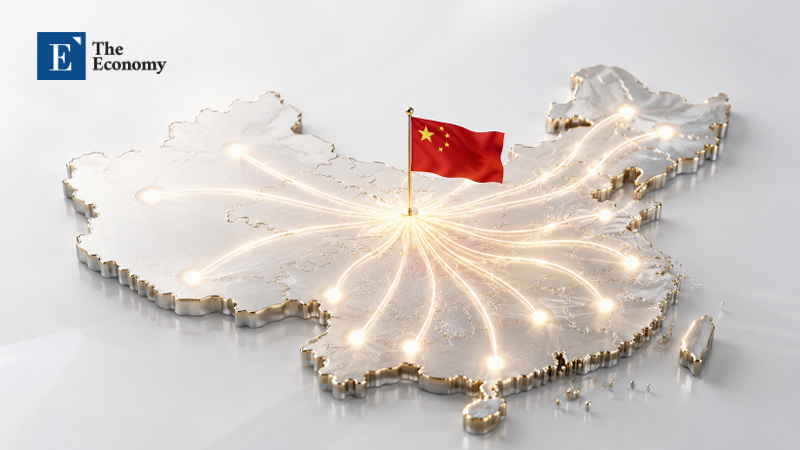
The Chinese government has unveiled guidelines aimed at revitalizing commercial activity in rural areas and small, lower-tier cities. With the severe slowdown in consumption and prolonged weakness in domestic demand showing little sign of abating, Beijing is seeking to tap the remaining spending capacity outside major metropolitan areas and cultivate a new engine of domestic growth. Market observers, however, say the measures alone are unlikely to reverse China’s economic malaise in the near term. Despite years of policies designed to expand rural infrastructure and stimulate consumption, neither the country’s economic indicators nor conditions across its industrial sectors have shown meaningful improvement.
China’s Strategy to Develop Lower-Tier Markets
According to a report by Hong Kong’s South China Morning Post on Aug. 21, nine Chinese government bodies—including the Ministry of Commerce, the National Development and Reform Commission, and the Ministry of Finance—recently issued joint guidelines aimed at stimulating consumption in so-called “lower-tier markets,” encompassing counties, townships, lower-tier cities, and rural communities. The guidelines call for renovating aging department stores and shopping centers, expanding branded chain stores, discount outlets, and fresh-food e-commerce stores, and modernizing township commercial centers, agricultural produce markets, and local bazaars. They also propose expanding standardized convenience stores and integrated parcel-delivery and logistics hubs at the village level to narrow the distribution gap between major cities and rural areas, while actively encouraging prominent domestic and international brands to open their first stores in individual regions within lower-tier markets.
The Chinese government plans to expand the “one license, multiple premises” system, allowing chain operators with multiple outlets in the same county to run several business locations under a single business registration. Licensing and approval procedures involving fire safety and market supervision will also be streamlined. On the supply side, the government will promote the simultaneous launch of new products in qualifying county-level markets and major cities, while pursuing a policy of ensuring that products of the same brand and specifications are sold at the same quality in urban and rural areas. In addition, distributors opening new chain stores in county-level regions may qualify for government-guaranteed start-up loans and interest subsidies, while land-supply restrictions governing logistics, warehousing, and cold-chain facilities will be eased. The conversion of existing assets—including idle government buildings and vacant rural homes and land—into commercial and care facilities will also be permitted.
Institutional Measures to Promote Urbanization
Efforts to elevate rural and county-level areas into a new engine of domestic growth have been under way for several years. The full-fledged push began with the Strategic Plan for Rural Revitalization unveiled in 2018. At the time, China’s leadership designated the upgrading of rural industries, infrastructure, and public services, along with the freer movement of labor, land, and capital between urban and rural areas, as a long-term national strategy. The plan envisioned transforming rural areas into self-sustaining economic and residential zones by expanding rural roads and logistics networks, improving public services, and attracting private capital. Beginning the following year, Beijing also accelerated reforms to the hukou, or household-registration, system to encourage rural residents to settle in cities. In 2019, the National Development and Reform Commission ordered the complete removal of hukou acquisition restrictions in cities with permanent populations of 1 million to 3 million and a substantial easing of settlement requirements in cities with populations of 3 million to 5 million. Measures were also introduced in 2020 and 2021 to lower barriers to hukou-linked public services such as education, health care, and housing.
In 2022, the General Office of the Chinese Communist Party Central Committee and the General Office of the State Council issued the Opinions on Promoting Urbanization with County Seats as Important Carriers, outlining plans to expand industrial parks and employment opportunities in county seats while strengthening essential infrastructure such as hospitals, schools, and housing. The new-type urbanization implementation plan released the same year included further easing hukou restrictions in small and midsized cities and allowing rural migrants who relocated to urban areas to retain their existing land rights in the countryside. Beginning in 2023, China formally integrated its urbanization policy with a strategy to cultivate consumer markets. Under the Three-Year Action Plan for County-Level Commerce (2023–2025), nine government bodies, including the Ministry of Commerce, pledged to expand county-level logistics centers, township commercial facilities, and rural convenience stores, while extending rural sales networks for hypermarkets, new-energy vehicles, and smart home appliances. In 2024, the Five-Year Action Plan for a People-Centered New-Type Urbanization Strategy established the specific goal of raising the urbanization rate, based on the permanent resident population, to nearly 70%.
Table 1. China’s Policies to Revitalize Rural and County-Level Areas
| Year | Major Policy | Core Provisions |
|---|---|---|
| 2018 | Strategic Plan for Rural Revitalization | Expand rural industries, infrastructure, and public services and facilitate resource flows between urban and rural areas |
| 2019–2021 | Hukou Reform | Ease settlement restrictions in small and midsized cities and improve access to public services such as education, health care, and housing |
| 2022 | County Seat-Centered Urbanization Policy | Expand industrial parks, employment, and residential infrastructure in county seats while preserving rural land rights for migrant farmers |
| 2023–2025 | Three-Year Action Plan for County-Level Commerce | Expand logistics centers, commercial facilities, and convenience stores and extend rural sales networks for automobiles and home appliances |
| 2024 onward | People-Centered New-Type Urbanization Strategy | Raise the urbanization rate to nearly 70% |
Entrenched Weakness in Domestic Demand
The Chinese government’s push to revitalize commercial activity in lower-tier cities is intended to break the country’s chronic domestic-demand slump. China’s domestic downturn began in earnest around 2021, when the property market started to falter. Confidence across the sector was shaken after the government introduced the so-called “three red lines” policy in 2020 to restrict borrowing by property developers, followed by the eruption of a liquidity crisis at major developer China Evergrande Group the following year. Home sales, new construction starts, and property development investment subsequently declined, while falling housing prices eroded household wealth and noticeably weakened consumer sentiment.
The consumption slump deepened further in 2022 amid the COVID-19 pandemic. Restrictions on movement in major cities and widespread business closures sharply curtailed spending on services. Consumption briefly rebounded in early 2023 following the end of the zero-COVID policy, but the recovery proved short-lived. The prolonged property downturn, persistent employment insecurity, and weakening wage growth reinforced households’ preference for saving. Between 2023 and 2025, weak domestic demand increasingly became a prolonged structural phenomenon rather than a conventional cyclical downturn, accompanied by mounting deflationary pressure.
Economic Downturn Persists
Recent indicators offer little evidence of a decisive turnaround. According to China’s National Bureau of Statistics, total retail sales of consumer goods rose just 0.6% year over year last month, while cumulative growth for the January–July period stood at only 1.2%. Nationwide fixed-asset investment fell 6.7% year over year over the same period, while property development investment continued to post a double-digit decline. The consumer price index rose 0.5% from a year earlier last month but fell 0.1% from the previous month.
Against this backdrop, China has become increasingly dependent on exports to offset weak domestic demand. With production capacity continuing to exceed domestic consumption, manufacturers have accelerated so-called “push exports,” expanding overseas sales even at lower prices. The problem is that export strength alone is effectively insufficient to safeguard economic growth as long as the domestic-demand slump persists. Major institutions expect China’s economic growth rate to fall from 5.0% last year into the 4% range this year. The International Monetary Fund last month forecast real gross domestic product growth of 4.6% for China this year, while the World Bank issued a lower projection of 4.4%.
Alarm Spreads Across Chinese Industry
The crisis is evident not only in headline growth indicators but also across China’s industrial landscape, where business closures and restructuring are gathering pace in multiple sectors. According to Chinese commercial-district data provider Jihai Brand Monitoring, approximately 2.055 million restaurants ceased operations in China between December last year and June this year, while about 1.649 million new outlets opened. As a result, the total number of restaurants fell by roughly 410,000, from about 8.39 million to 7.98 million. A similar trend is visible in the automotive industry. In China’s Shandong province, a major BYD dealership suspended operations last year, leading to the closure of at least 20 stores. Restructuring has also continued at financially vulnerable electric-vehicle manufacturers, including Baidu-backed WM Motor and Evergrande New Energy Vehicle.
In the financial sector, the removal of troubled institutions through mergers or the termination of their legal status is accelerating. According to Reuters, at least 290 rural banks and credit cooperatives in China were absorbed into larger regional banks in 2024, while at least 350 banking licenses were revoked between January and November last year. Actual bankruptcies have also emerged. In April, a local court ordered the consolidated bankruptcy liquidation of the headquarters of Zhongzhi Enterprise Group—a shadow-banking conglomerate that had provided substantial financing to property developers—and 316 affiliated entities. Its affiliated trust company, Zhongrong International Trust, also received approval from financial regulators last month to initiate bankruptcy proceedings.
Aoife Brennan is a contributing writer for The Economy, with a focus on education, youth, and societal change. Based in Limerick, she holds a degree in political communication from Queen’s University Belfast. Aoife’s work draws connections between cultural narratives and public discourse in Europe and Asia.
Similar Post