“Powered by Domestic Growth and State Support, C-Beauty Goes Global” — K-Beauty’s Golden Age in China Draws to a Close

Matthew Reuter is a senior economic correspondent at The Economy, where he covers global financial markets, emerging technologies, and cross-border trade dynamics. With over a decade of experience reporting from major financial hubs—including London, New York, and Hong Kong—Matthew has developed a reputation for breaking complex economic stories into sharp, accessible narratives. Before joining The Economy, he worked at a leading European financial daily, where his investigative reporting on post-crisis banking reforms earned him recognition from the European Press Association. A graduate of the London School of Economics, Matthew holds dual degrees in economics and international relations. He is particularly interested in how data science and AI are reshaping market analysis and policymaking, often blending quantitative insights into his articles. Outside journalism, Matthew frequently moderates panels at global finance summits and guest lectures on financial journalism at top universities.
Authored On
Modified
Chinese cosmetics companies accelerate global expansion
Robust domestic demand secures funding as institutional support strengthens
K-beauty loses ground in China and pivots toward Europe and North America
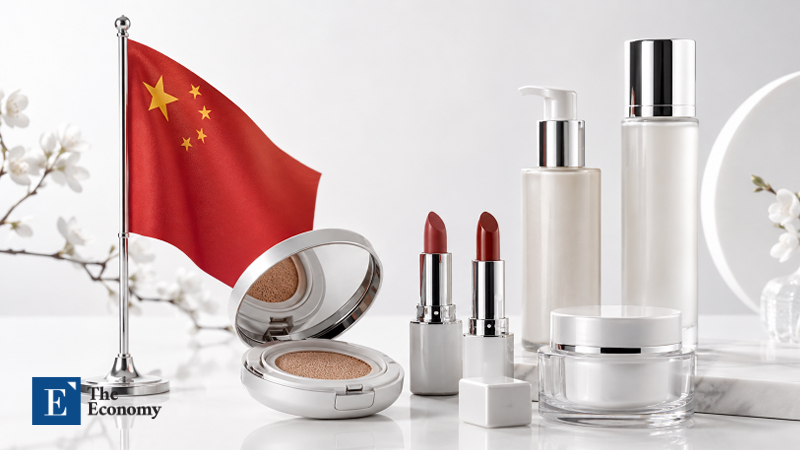
Proya, China’s largest cosmetics company, is making its first foray into the U.S. brick-and-mortar market. After establishing a foothold through online sales, the company is partnering with major U.S. beauty retailer Ulta Beauty to broaden its reach among local consumers. This aggressive expansion is evident across a growing number of Chinese beauty brands. A vibrant domestic cosmetics market and stronger institutional support from the government have emerged as major drivers of their growth.
Proya’s U.S. Market Strategy
Citing multiple sources, The Wall Street Journal reported on Aug. 17, local time, that Proya plans to begin selling two of its skincare lines through approximately 400 Ulta Beauty stores and the retailer’s online shop in November. The move marks Proya’s first entry into a U.S. brick-and-mortar distribution network after relying exclusively on online channels, including its own U.S. website and Amazon. Ulta Beauty is the largest specialty beauty retailer in the United States, carrying more than 30,000 products from over 600 beauty and wellness brands. As of May, it operated 1,521 stores across all 50 states.
The move forms part of Proya’s global expansion strategy. The company has established a “Double-Ten” plan aimed at becoming one of the world’s 10 largest cosmetics companies within the next decade and has expanded its offline distribution network primarily across Southeast Asia. One prominent example was its first large-scale offline promotional campaign at Mid Valley Megamall in Kuala Lumpur, conducted in partnership with Malaysian health and beauty retail giant Guardian. Proya has also pursued equity investments to strengthen its international business platform. In May, it acquired a stake in Chinese color cosmetics brand Flower Knows, which already operates in the United States, Japan, South Korea and Southeast Asia, raising its ownership to 51%.
C-Beauty Steps Up Its Global Push
Numerous Chinese cosmetics brands are aggressively targeting overseas markets alongside Proya. Florasis, for example, has leveraged traditional Chinese aesthetics to enter premium markets in Japan and Europe. Its strategy involves establishing an overseas sales base through online channels such as Amazon, Shopee and Lazada before expanding into upscale brick-and-mortar retail venues in major cities, including Paris and Tokyo. Judydoll similarly built its overseas customer base through online platforms such as Shopee and TikTok Shop before accelerating its entry into offline markets last year. In December, it entered approximately 12,000 FamilyMart stores in Japan, becoming the first Chinese color cosmetics brand to penetrate the country’s convenience-store channel.
Perfect Diary established sales channels across Southeast Asian markets, including Vietnam, Singapore, Malaysia and the Philippines, through Shopee in 2020 and emerged as a leading brand in the online cosmetics markets of all four countries within roughly a year. Around the same period, its parent company, Yatsen Holding, expanded its global business platform by acquiring French premium skincare brand Galénic and British luxury skincare brand Eve Lom. In March, Yatsen unveiled another financing plan that identified global supply-chain integration, overseas market expansion and strategic mergers and acquisitions as key uses of the proceeds.
Table 1. Overseas Expansion Strategies of Chinese Cosmetics Companies
| Company | Key Overseas Expansion Strategies |
|---|---|
| Proya | Expanding offline distribution networks in the United States and Southeast Asia; acquiring a stake in Flower Knows |
| Florasis | Establishing a sales base through online channels before entering premium offline markets in Japan and Europe |
| Judydoll | Building brand recognition through Shopee and TikTok Shop before expanding into offline channels, including FamilyMart stores in Japan |
| Yatsen Holding (Perfect Diary) | Targeting Southeast Asia’s online market; expanding its global platform through acquisitions of European cosmetics brands and supply-chain integration |
Robust Growth in the Domestic Market
C-beauty’s overseas offensive is underpinned by capabilities accumulated in the domestic market. Companies that have secured economies of scale, brand recognition and product development expertise at home are extending their capital deployment into global markets. China’s cosmetics retail market has maintained conspicuous growth despite the prolonged economic downturn. According to China’s National Bureau of Statistics, retail sales of cosmetics reached approximately $4.20 billion in July, up 6.8% from a year earlier. Cumulative sales from January through July rose 6.3% to approximately $40.16 billion.
Over the same period, total retail sales of consumer goods increased by just 0.6% in July and 1.2% cumulatively from January through July, while retail sales of goods rose only 0.5% and 1.1%, respectively. The cosmetics market retained clear momentum even as broader domestic consumption weakened. Chinese institutions have also highlighted the trend. In its first-quarter consumer-market analysis, the Ministry of Commerce said cosmetics retail sales had increased 5.9% year on year and classified cosmetics, along with gold, silver and jewelry, as consumption-upgrade products recording particularly strong demand. The China National Commercial Information Center likewise identified cosmetics as a relatively fast-growing consumer category, citing a 6.3% increase in retail sales during the first half and a 12.6% surge in June.
Beijing’s Policy Support Takes Shape
The Chinese government is also moving to support the growth of the domestic cosmetics industry. Last month, the National Medical Products Administration (NMPA) issued the “Announcement on Matters Concerning Cosmetics Licensing and Registration (No. 70 of 2026),” pledging regulatory improvements to promote innovation and high-quality development across the industry. Under the announcement, overseas brands launching new products in China for the first time globally or simultaneously with other countries will no longer need to submit documentation proving that the products are already sold in the country of production or the registrant’s home country. Companies may also submit design mock-ups of packaging used in the country of production instead of finished products, easing the burden associated with launches.
Barriers related to product testing and ingredients have also been lowered. Certain special-use cosmetics and general cosmetics containing new ingredients will be exempt from submitting toxicity-test data if they meet specified conditions. Requirements to submit ingredient safety-information documents and ingredient registration codes during the licensing and registration of cosmetics and toothpaste have also been abolished. Similar formulations sold under the same brand may share microbiological, physicochemical, toxicological and human-safety test data from a representative product. Regulations governing production-site changes and efficacy assessments have also been revised. When imported products shift production to China or Chinese-made products move production overseas, companies may reuse existing toxicity-test data and safety and efficacy assessments if the product name and formulation remain unchanged. Companies selling products with other efficacy claims—excluding freckle reduction and whitening, sun protection and hair-loss prevention—may also select their own efficacy-assessment methods based on scientific evidence, including industry standards, international standards or proprietary verification methods.
K-Beauty’s Influence Plummets
As C-beauty’s presence continues to expand, K-beauty companies are rapidly losing ground in the Chinese market. South Korean cosmetics brands—including Amorepacific’s Sulwhasoo, Laneige and Innisfree and LG Household & Health Care’s The History of Whoo—once expanded rapidly in China on the back of the Korean Wave and demand from Chinese tourists and daigou resellers. In 2021, when K-beauty’s dependence on China reached its peak, shipments to the country accounted for 53.0% of South Korea’s total cosmetics exports. Over recent years, however, boycotts of South Korean products and reduced exposure to Korean popular culture have weakened consumer preferences for K-beauty products. The COVID-19 pandemic also eroded the duty-free sales model centered on Chinese tourists and daigou resellers. Chinese domestic brands rapidly filled the resulting market gap, propelled by social-media marketing and a surge in patriotic consumption.
The revenue structures of South Korean cosmetics companies have shifted sharply amid these developments. Amorepacific’s sales in Greater China fell 27% year on year in 2024, while revenue in the Americas exceeded Greater China sales for the first time. The reversal reflected Amorepacific’s diversification of its growth base across the United States, Europe and Japan. LG Household & Health Care has likewise recalibrated its strategy to reduce reliance on China. In the second quarter, its North American sales surged 47.3% year on year to approximately $147 million, surpassing its China revenue of approximately $126 million—down 5% from a year earlier—for the first time. “Amorepacific and LG Household & Health Care are both maintaining their China operations, but China no longer serves as the dominant pillar of their overseas growth strategies as it once did,” a market analyst said. “They are restructuring their Chinese businesses around profitability while diversifying their growth platforms across the United States, Europe and other markets.”
Matthew Reuter is a senior economic correspondent at The Economy, where he covers global financial markets, emerging technologies, and cross-border trade dynamics. With over a decade of experience reporting from major financial hubs—including London, New York, and Hong Kong—Matthew has developed a reputation for breaking complex economic stories into sharp, accessible narratives. Before joining The Economy, he worked at a leading European financial daily, where his investigative reporting on post-crisis banking reforms earned him recognition from the European Press Association. A graduate of the London School of Economics, Matthew holds dual degrees in economics and international relations. He is particularly interested in how data science and AI are reshaping market analysis and policymaking, often blending quantitative insights into his articles. Outside journalism, Matthew frequently moderates panels at global finance summits and guest lectures on financial journalism at top universities.
Similar Post