“Even Tariff Barriers May Prove Ineffective”: China Gains Ground in Europe’s Vehicle and Parts Markets, Spurring Calls for an Industrial Strategy Shift

As one of the youngest members of the team, Tyler Hansbrough is a rising star in financial journalism. His fresh perspective and analytical approach bring a modern edge to business reporting. Whether he’s covering stock market trends or dissecting corporate earnings, his sharp insights resonate with the new generation of investors.
Authored On
Modified
Chinese automakers use price advantages to gain ground across Europe’s automotive supply chain
EU counters with steep tariffs and preferences for regional production, pressuring UK to join
Limits of protectionism in closing cost gaps fuel calls to reshape Europe’s industrial strategy
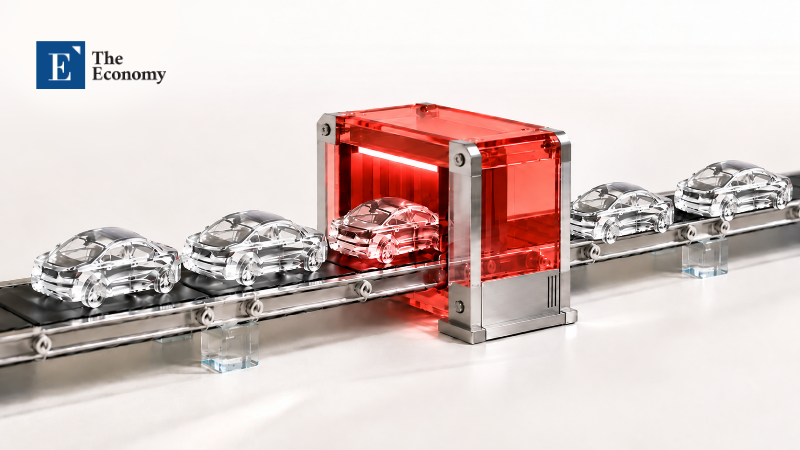
Chinese-made cars are rapidly expanding their presence in the European market. China-based companies have used their price competitiveness to gain a foothold across local supply chains, from finished vehicles to parts. In response, the European Union (EU) and the United Kingdom are raising trade barriers, including higher tariffs and stricter regional production and sourcing requirements. Market observers, however, say trade restrictions alone are unlikely to eliminate China’s broad structural cost advantages in the short term.
Chinese Cars Race Ahead in Europe
According to a report by British daily the Mirror on the 15th (all dates hereafter local time), Chinese-brand vehicles accounted for 32,972 of the 152,730 passenger cars newly registered in the UK last month. Registrations surged approximately 119.1% from 15,051 a year earlier, while their market share more than doubled from 10.4% to 21.6%. By brand, MG, owned by China’s SAIC Motor, led with 7,837 registrations, followed by Chery’s Jaecoo with 6,089 and BYD with 6,065. In contrast, UK registrations for all non-Chinese brands fell 7.8% over the same period.
The growing presence of Chinese-made cars extends beyond the UK to the European Union (EU). According to the European Automobile Manufacturers’ Association (ACEA), four major Chinese automakers—BYD, SAIC, Chery and Leapmotor—accounted for 7.1% of the 8,517,059 passenger cars newly registered in the EU from January through September this year, nearly double their 3.6% share a year earlier. BYD sold 206,002 vehicles during the period, lifting its share from 1.0% to 2.4%, while Chery’s share rose from 0.5% to 1.6%.
Overwhelming Price Competitiveness as a Key Advantage
Chinese automakers’ rapid gains in Europe are underpinned by price competitiveness that far outstrips that of established manufacturers. According to global automotive market research firm JATO Dynamics, Chinese-brand vehicles in Europe were priced approximately 9–10% below competing models from established automakers as of July. The Center for European Policy Analysis (CEPA) also noted that while European manufacturers’ electric vehicles have an average starting price of EUR 50,000 in the region, BYD’s electric vehicles cost just EUR 30,000–45,000.
The price gap becomes even clearer when individual models are compared. An analysis published in July by British automotive magazine Auto Express found that the cash purchase price of Chery’s Jaecoo 7 plug-in hybrid (PHEV) sport utility vehicle (SUV) was approximately GBP 10,000 lower than those of comparably equipped Hyundai Tucson and Volkswagen Tiguan models. Even when the vehicles were sold after three years and 30,000 miles (approximately 48,000 km), the Jaecoo 7’s effective ownership cost was GBP 3,000–6,000 lower than those of competing models.
Table 1. Chinese Automakers’ Competitiveness in the European Market
| Category | Details | Key Points |
|---|---|---|
| Price competitiveness | Market average | Chinese-brand vehicles are priced approximately 9–10% below competing models from established automakers on average |
| Parts supply chain | Local investment | Chinese companies have entered local supply chains by acquiring or investing in more than 130 European parts suppliers |
| Trade structure | European companies’ reliance on Chinese-made parts is rising, with EU imports of Chinese parts increasing and exports to China declining |
Expanding Influence Across Parts Supply Chains
China’s influence extends beyond finished vehicles to automotive parts supply chains. According to consultancy Rhodium Group, Chinese companies have acquired or invested in more than 130 parts suppliers in major European automotive manufacturing countries, including Germany and France, since the mid-2000s. Investment targets have included manufacturers of gaskets for high-performance engines, autonomous driving systems and communications antennas. Rather than simply increasing exports, Chinese companies have aggressively strengthened their position by entering local industrial ecosystems directly.
Chinese companies subsequently supplied parts at prices approximately 30–35% below those of European-made products, prompting local automakers to increase their use of Chinese-made products to cut production costs. As a result, EU imports of Chinese automotive parts rose by EUR 4 billion (approximately USD 4.52 billion, 66%) between 2021 and 2025, while automotive parts exports to China fell approximately 50% over the same period. The EU’s automotive parts trade balance with China consequently shifted from a EUR 4.6 billion surplus in 2019 to a EUR 4.9 billion deficit last year.
Will the UK Step Up Measures Against China?
As China’s automotive industry intensifies its push into Europe, European authorities are tightening trade regulations to protect the region’s automotive sector. Since October 2024, the EU has imposed countervailing duties of 7.8–35.3% on Chinese-made battery electric vehicles, on top of the existing 10% import tariff. The measures reflect its assessment that Chinese government subsidies have exposed European automakers to unfair price competition. In March, the European Commission also proposed the Industrial Accelerator Act (IAA) to promote regional manufacturing, stepping up its pursuit of the so-called “Made in Europe” policy. The plan aims to reduce dependence on Chinese-made products by strengthening requirements for European-made components and regional production in strategic industries, including electric vehicles, and applying those criteria to public procurement and subsidies.
The UK, which has so far applied only a basic 10% tariff to Chinese-made cars, may also introduce additional trade restrictions. Last month, British daily The Times reported that the UK government was considering import tariffs of up to 45.3% on Chinese-made electric vehicles, a level similar to the EU’s. This follows the EU’s decision to link higher tariffs on Chinese-made cars to the UK’s participation in its Made in Europe policy. The EU’s position is that unless the UK imposes additional tariffs on Chinese-made electric vehicles, British-made vehicles and parts could be excluded from preferential treatment for regional production and sourcing. That would deal a significant blow to the UK, which exports approximately 60% of its domestically produced cars to the EU.
Calls Grow to Leverage Chinese Supply Chains
Some market observers, however, question the effectiveness of such trade barriers. They argue that if Europe restricts imports of Chinese-made parts and batteries and replaces them with regional production, vehicle production costs and consumer prices could rise, further weakening competitiveness. According to the International Energy Agency’s (IEA) Global EV Outlook 2026, battery production costs in Europe are estimated to be up to 50% higher than in China. China has lowered manufacturing costs through vertically integrated supply chains spanning raw material processing, battery materials and cell production; large-scale production facilities; and high levels of automation.
This has prompted calls for Europe’s automotive industry to move away from head-to-head competition with China and redefine its role in global supply chains. On the 16th, Jens Eskelund, president of the European Union Chamber of Commerce in China (EUCCC), stressed that European companies should acknowledge China’s manufacturing competitiveness and shift toward integrating directly into local supply chains. This approach would involve using Chinese-made batteries and parts, along with production infrastructure, to lower costs while focusing resources on areas where European companies can differentiate themselves, such as premium brand strength, vehicle design and safety technology, and software integration. Eskelund also warned that if current trends continue, European manufacturers risk abandoning direct competition with Chinese companies before 2030.
As one of the youngest members of the team, Tyler Hansbrough is a rising star in financial journalism. His fresh perspective and analytical approach bring a modern edge to business reporting. Whether he’s covering stock market trends or dissecting corporate earnings, his sharp insights resonate with the new generation of investors.