“China’s Rapid Automotive Growth Puts Japan at Risk”: As the Global Market Shifts, After-Sales Capabilities Become Decisive Beyond Price Competition

Aoife Brennan is a contributing writer for The Economy, with a focus on education, youth, and societal change. Based in Limerick, she holds a degree in political communication from Queen’s University Belfast. Aoife’s work draws connections between cultural narratives and public discourse in Europe and Asia.
Authored On
Modified
Sales forecasts for major Japanese automakers slide as Chinese rivals race ahead
“Must weather financial difficulties”: Restructuring sweeps Japan’s auto industry
As the global auto market shifts toward China, trust in after-sales support is key
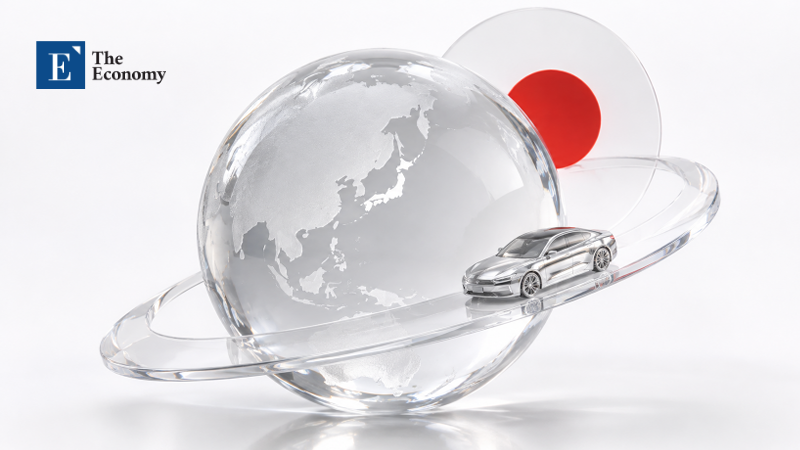
Japanese automakers’ influence in the global market is waning. As Chinese brands expand their shares in key markets on the strength of competitive pricing, demand for Japanese cars is declining in relative terms. Facing a crisis as their market positions weaken, Japanese companies including Honda and Nissan have begun restructuring to cut costs and improve profitability by reducing production facilities, withdrawing investments, and cutting jobs.
Japanese Automakers Lower Sales Forecasts
According to a report published on the 20th by Japanese business publication Nikkei Asia, based on an analysis of the latest quarterly results and guidance from Japan’s 7 major automakers, their combined global sales forecast for fiscal 2026 (April 2026–March 2027) stood at 23.82 million vehicles, down 1% from the previous year. This contrasts with the 2% growth projected in May and marks the lowest level since fiscal 2022, when shortages of automotive semiconductors disrupted production and sales totaled 23.34 million vehicles. Specifically, 5 of the 7 companies lowered their annual sales targets. Mitsubishi Motors made the largest reduction, cutting its target by 11% to 760,000 vehicles, while Honda, Nissan, and Toyota Group also lowered their forecasts by 7%, 5%, and 2%, respectively.
China is the primary source of the deteriorating performance. From April to September this year, Honda’s sales in China plunged 48% year on year to 161,372 vehicles, Nissan’s fell 46% to 182,854, and Toyota’s declined 25% to 684,903. Consequently, Honda cut its annual China sales forecast by 230,000 vehicles, while Nissan projected an approximately 40% contraction in annual sales. This sales slump is also spreading rapidly across Southeast Asia, a traditional stronghold for Japanese automakers. Mitsubishi Motors, which is particularly dependent on the Southeast Asian market, lowered its annual sales forecast for the region by approximately 20%.
Chinese Cars Make Gains in Europe and South Korea
Japanese automakers are also rapidly losing ground in Europe. According to a Bloomberg report on the 26th of last month citing market research firm Dataforce, new registrations of Chinese-brand cars in Europe approximately doubled year on year in the third quarter of this year, with their market share approaching 12.7%. This represents a striking advance considering that their share was only around 1% just 5 years ago. By contrast, Japanese brands held a share of just 11.9% over the same period. This was the first time Chinese manufacturers surpassed Japanese manufacturers in quarterly market share in Europe.
A similar trend is emerging in South Korea. According to the Korea Automobile Importers & Distributors Association (KAIDA), new registrations of Chinese-brand passenger cars in South Korea totaled 20,186 from January to September this year, surpassing Japanese brands’ 20,177 by 9 vehicles. This was the first time since recordkeeping began that Chinese brands exceeded Japanese brands in cumulative registrations in South Korea. Among Chinese brands, BYD accounted for the vast majority with 20,137 vehicles, while Geely-affiliated Zeekr recorded 49. Among Japanese brands, Lexus registered 11,197 vehicles, Toyota 8,513, and Honda 467.
Chinese Cars’ Price Advantage
Price competitiveness is widely considered the primary driver of Chinese automakers’ growth. For example, the base version of BYD’s 2026 Qin Plus DM-i compact plug-in hybrid sedan officially sells for CNY 79,800 in China, approximately 37% less than the base version of Toyota’s comparable Corolla hybrid sedan (CNY 126,800). A similar gap exists among compact sport utility vehicles (SUVs). The base version of BYD’s 2026 Song Pro DM-i costs CNY 102,800, while the base hybrid version of Toyota’s RAV4 Rongfang costs CNY 169,800, approximately 65% more.
This price competitiveness stems from large-scale production facilities and vertically integrated component supply chains. According to the International Energy Agency (IEA), approximately 40% of the gap in electric vehicle manufacturing costs comes from powertrain costs. China has significantly reduced related spending by establishing a domestic supply chain encompassing △ battery raw material refining △ cathode and anode material production △ battery cell manufacturing △ final vehicle assembly. The use of relatively inexpensive lithium iron phosphate (LFP) batteries has also helped lower production costs, while Chinese government subsidies, low-interest financing, and intense price competition in the domestic market have encouraged manufacturers to improve production efficiency.
Table 1. Restructuring at Major Japanese Automakers
| Company | Restructuring Area | Key Details |
|---|---|---|
| Honda | Reduced EV investment | Indefinitely suspended plans to build EV and battery plants worth CAD 15 billion in Ontario, Canada |
| Halted new vehicle development | Halted development and commercialization of 3 EV models scheduled for launch in North America | |
| Nissan | Reduced production facilities | Reduce global production plants from 17 → 10 by fiscal 2027 |
| Adjusted production capacity | Reduce annual production capacity by approximately 29% (3.5 million vehicles → 2.5 million vehicles) | |
| Workforce reduction | Cut 20,000 jobs from a global workforce of approximately 149,000 | |
| Investment and business reorganization | Cancel construction of the Kitakyushu LFP battery plant, consolidate R&D sites, and reorganize the component supply chain | |
| Financial targets | Cut annual costs by JPY 500 billion and turn automotive operating profit and free cash flow positive |
Restructuring Accelerates Across Japan’s Auto Industry
While Chinese automakers continue to gain ground, Japanese automakers are facing financial difficulties. This has prompted a succession of restructuring measures, including reductions in production facilities, job cuts, and the withdrawal of new investments. In May, Honda indefinitely suspended plans to build EV and battery plants worth CAD 15 billion (approximately USD 10.7 billion) in Ontario, Canada. The company had initially planned to produce 240,000 EVs annually at the facility starting in 2028, but revised its strategy in light of △ slowing North American EV demand △ reduced U.S. subsidies △ trade uncertainty. In March, Honda also halted development and commercialization of 3 EV models that had been scheduled for launch in North America.
Under its Re:Nissan turnaround plan announced in May last year, Nissan plans to reduce its global vehicle production plants from 17 to 10 by fiscal 2027 and cut 20,000 jobs from its total workforce of approximately 149,000. Through these measures, the company aims to reduce annual fixed and variable costs by approximately JPY 500 billion and turn its automotive operating profit and free cash flow positive. It will also cut annual production capacity by approximately 29%, from 3.5 million vehicles in fiscal 2024 to 2.5 million in fiscal 2027. In addition, Nissan has canceled construction of a planned LFP battery plant in Kitakyushu, Japan, and begun consolidating R&D sites and reorganizing its component suppliers.
Chinese Companies’ After-Sales Capabilities Put to the Test
Against this backdrop, market analysts argue that for China to fully overtake Japan, it must go beyond simply increasing vehicle sales and strengthen capabilities across its entire after-sales support ecosystem. The viability of many Chinese automotive brands is currently uncertain as intense price competition erodes profitability. Global consulting firm AlixPartners has projected that only 15 of China’s 129 EV and plug-in hybrid brands will remain financially viable by 2030.
The problem is that a brand’s market exit or bankruptcy can lead to the discontinuation of maintenance and repair services after vehicles have been sold. Indeed, after Chinese EV maker Aiways went bankrupt amid financial difficulties, consumers in Europe struggled to obtain parts and software support. Major Chinese automakers are therefore proactively accelerating the expansion of overseas service centers and parts supply chains to bolster consumer confidence. According to China’s state-run Xinhua News Agency, BYD and Xpeng have established service centers across Europe, the Middle East, and Latin America, offering integrated services spanning vehicle sales, maintenance, and repairs. Guangzhou Automobile Group (GAC) has established regional parts warehouses in Europe, Thailand, and Panama, stocking more than 3,000 types of parts at each warehouse and cutting vehicle repair times in half.
Aoife Brennan is a contributing writer for The Economy, with a focus on education, youth, and societal change. Based in Limerick, she holds a degree in political communication from Queen’s University Belfast. Aoife’s work draws connections between cultural narratives and public discourse in Europe and Asia.