“Build and Face Resident Backlash, Stop and Risk Losing Dominance”: U.S. Data Center Investment Dilemma Tests Technological Supremacy and Financial Market Stability

As one of the youngest members of the team, Tyler Hansbrough is a rising star in financial journalism. His fresh perspective and analytical approach bring a modern edge to business reporting. Whether he’s covering stock market trends or dissecting corporate earnings, his sharp insights resonate with the new generation of investors.
Authored On
Modified
U.S. and European data center industries hit obstacles amid opposition and collective action across society
Social costs are immense, from heavy electricity and water consumption to ecosystem damage
Slowing investment remains difficult given the rivalry for dominance and potential financial market shocks
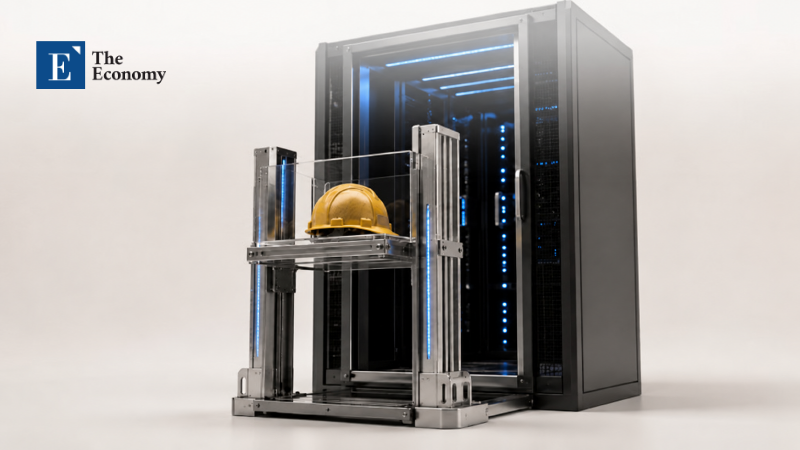
Some Amazon employees have come out against the expansion of AI data center construction. As concerns about job losses from the spread of AI and its environmental burden mount, calls to restrict data center development are growing, particularly in Western countries. Experts, however, predict that with AI infrastructure emerging as a strategic asset that determines national competitiveness and security, it will be virtually impossible for the United States and other major Western countries to slow investment in the near term.
Opposition to Data Center Development Spreads in the U.S.
According to the Financial Times (FT) on the 22nd (all dates hereafter are local time), Amazon Employees for Climate Justice (AECJ), an employee group, is demanding that management slow data center development and broaden discussions on AI use. AECJ was founded about 10 years ago to urge Amazon to address climate change and has recently expanded its activities into AI-related issues. Twelve current and former employees associated with AECJ who spoke with the FT cited concerns about AI-driven job losses and a growing environmental burden as reasons for opposing data center expansion.
Such opposition to data center construction extends beyond Amazon and can be seen across the United States. For example, of 41 data center-related referendum measures put to voters in 10 states alongside the midterm elections on the 3rd, 40 resulted in restrictions on data center development. A total of five measures imposing outright bans on data center construction passed in California, Florida and Ohio, while 12 partial bans passed in Kansas, Maine and Ohio. In Maine, three measures suspending new data center development for six months won voter support. In addition, Democratic candidates who explicitly pledged moratoriums on data center development secured victories in the gubernatorial elections in Texas and Georgia.
Collective Opposition Also Mounts
Residents have also staged a series of collective actions targeting such projects. On the 26th of last month, hundreds of residents crowded into city hall in Hermantown, Minnesota, ahead of a final approval vote on Google's large-scale data center construction project. Protesters chanted slogans against the project for about two hours, and the city council ultimately postponed the scheduled vote. On the 1st, protesters from No Data Center 502, a group opposing data center construction in Louisville, Kentucky, marched about 3.2 kilometers to Mayor Craig Greenberg's home, demanding the withdrawal of plans for a large-scale data center. On the 12th, the Kansas City Council in Missouri unanimously rejected plans to build a 20-story data center downtown amid resident opposition. The council received about 500 written objections to the project.
These anti-data center movements are also becoming more organized in Europe. On the 6th and 7th, around 100 civic and environmental groups from 15 European countries took joint action under the banner “Stop Dirty Data Centres,” calling for a halt to large-scale data center construction. According to the French daily Le Monde, about 90 related events took place across Europe over the two days. Opponents marched through the streets of Dublin, Ireland, while about 100 protesters gathered outside parliament in Warsaw, Poland. Civic marches and rallies were also held in France, particularly at sites earmarked for large-scale data centers. In Amsterdam, the Netherlands, around 100 protesters entered a Microsoft data center construction site, and some participants were arrested by police.
Electricity Consumption and Carbon Emissions Come Into Focus
Several factors lie behind the deterioration in public perceptions of data centers. Electricity consumption is a major concern. Data centers consume enormous amounts of electricity to run high-performance chips that perform large-scale computations and cooling equipment that removes heat generated by servers. According to the International Energy Agency (IEA), global data center electricity consumption reached 485 terawatt-hours (TWh) last year, a sharp increase of 17% from the previous year. This far exceeded the 3% growth in overall global electricity demand over the same period. The IEA projected that data center electricity consumption would rise to 950 TWh by 2030, with consumption by AI-specific data centers roughly tripling from 2025 levels.
Carbon emissions and air pollution are also fueling opposition to data centers. According to a paper by Harvard University researchers published in the international journal Nature Sustainability on the 16th, electricity consumption at 403 hyperscale data centers in the United States generated 25.7 million metric tons of carbon dioxide between May 2024 and April of last year, equivalent to Denmark's annual carbon dioxide emissions. This reflects data centers' heavy reliance on fossil fuel generation to secure a stable power supply. IEA figures show that coal accounted for about 30% of the electricity supplied to data centers worldwide in 2024, followed by renewables at 27%, natural gas at 26% and nuclear power at 15%.
Concerns Grow Over Deteriorating Living Conditions
There are also considerable concerns about water depletion caused by enormous water consumption. Evaporative cooling systems, which are widely used in data centers, require a continuous water supply because they work by absorbing heat as water evaporates. The IEA estimated that global data center operations and related supply chains consumed a total of 885 billion liters of water last year, including 240 billion liters consumed directly inside data centers. It also noted that about 30% of the capacity of data centers operating or planned worldwide is concentrated in areas facing high water stress.
Large-scale site development also poses significant risks of ecosystem damage and worsening living conditions for nearby residents. Building supporting infrastructure such as substations, transmission lines and power generation facilities can damage forests, farmland and wetlands and shrink wildlife habitats. In a report released in 2024, the Virginia legislature's Joint Legislative Audit and Review Commission (JLARC) noted that the loss of green space and expansion of impervious surfaces associated with data center construction could cause habitat loss, increased stormwater runoff, soil erosion and reduced groundwater recharge. Noise pollution becomes another concern once facilities begin operating, as cooling fans and air-conditioning equipment run around the clock, continuously emitting low-frequency noise. In Virginia, residents near some data centers have reported suffering from persistent noise levels of 40–59 decibels (dB).
Table 1. Social Concerns Surrounding Data Centers
| Area of Concern | Key Details |
|---|---|
| Electricity Consumption | Operation of servers, high-performance chips and cooling equipment drives a surge in electricity demand |
| Carbon Emissions | Heavy reliance on fossil fuels for electricity supply increases carbon emissions |
| Water Consumption | Cooling systems and electricity and semiconductor supply chains use large amounts of water |
| Ecosystem Damage | Development of sites and supporting facilities reduces forests and farmland and damages wildlife habitats |
| Noise Pollution | Cooling fans and air-conditioning equipment continuously generate low-frequency noise |
Fear of Ceding Dominance to China Deepens the Dilemma
Despite these problems, however, the United States and other major Western countries are unlikely to slow data center investment in the near term. AI competition has moved beyond the growth of individual companies to become a factor determining technological, economic and military dominance among nations. For the United States in particular, AI computing infrastructure is a strategic asset that will drive national competitiveness across advanced manufacturing, finance, intelligence analysis, defense and other sectors. On this point, one foreign affairs expert explained, “The U.S.-led international order established through two world wars and the Cold War has been sustained by America's economic, technological and military superiority,” adding, “If the United States slows AI investment, those advantages could weaken, potentially shaking the very foundations of its existing dominance.”
Industry figures have also been voicing concerns about these risks. Speaking at Semafor's “Silicon Valley and the World” event at the Rosewood Sand Hill in Menlo Park, California, on the 17th, Amazon CEO Andy Jassy said, “I cannot imagine a situation in which the United States stops building data centers and lets other countries, such as China, set the standards for the AI industry,” adding, “This would be a historic mistake by the United States, and one we would all regret for a long time.” AI cloud company CoreWeave also recently sent a letter to Texas Governor-elect Gina Hinojosa, who had pledged to halt data center approvals, asking her to ensure the completion of projects already permitted and to work together on standards for future development. The concern is that if companies that have expanded AI infrastructure through large-scale borrowing struggle to recoup their investments because data center construction is halted, the growth momentum and financing base of the broader U.S. AI industry could weaken.
As one of the youngest members of the team, Tyler Hansbrough is a rising star in financial journalism. His fresh perspective and analytical approach bring a modern edge to business reporting. Whether he’s covering stock market trends or dissecting corporate earnings, his sharp insights resonate with the new generation of investors.
Similar Post