“China Accelerates AI Self-Reliance Amid U.S. Export Controls”: Alibaba Expands China’s AI Market With Its Own Chips

Siobhán Delaney is a Dublin-based writer for The Economy, focusing on culture, education, and international affairs. With a background in media and communication from University College Dublin, she contributes to cross-regional coverage and translation-based commentary. Her work emphasizes clarity and balance, especially in contexts shaped by cultural difference and policy translation.
Authored On
Modified
Alibaba trains Qwen on Zhenwu as U.S. restrictions limit access to advanced chips
Opens computing infrastructure to Chinese companies to expand demand for its own chips
In-house tests show response speeds comparable to Nvidia’s H20 under some conditions
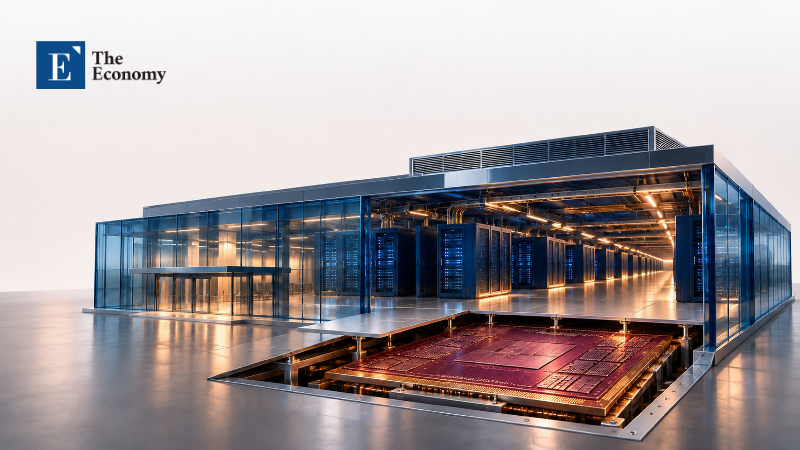
As the United States tightens restrictions on exports of advanced artificial intelligence (AI) chips to China, Alibaba, China’s largest technology company, is expanding the domestic market using its own chips. It has deployed its self-designed Zhenwu chips in its data centers to train its next-generation AI model, Qwen, and released dedicated software so Chinese companies can develop AI services on the same infrastructure. The move is seen as an effort to build an independent market by broadening the use of Zhenwu chips beyond training its own models to powering AI services at Chinese companies.
Chinese-Made Chips to Power Every Stage of Qwen Training
According to Nikkei Asia on the 19th (local time), Alibaba CEO Wu Yongming said during an earnings briefing that day that the company was training Qwen on chips developed by its semiconductor design subsidiary T-Head, also known as Pingtouge. Next year, it plans to use Chinese-made chips to support the entire process, from pretraining, in which a model learns from vast amounts of data, to post-training, which improves the accuracy of its answers. His remarks came as the United States restricted not only exports of advanced AI chips to China but also Chinese companies’ access to large-scale computing resources rented through overseas data centers. With even access to U.S.-made chips abroad becoming more limited, the remarks are seen as signaling an intention to secure the computing power needed to develop core models in-house.
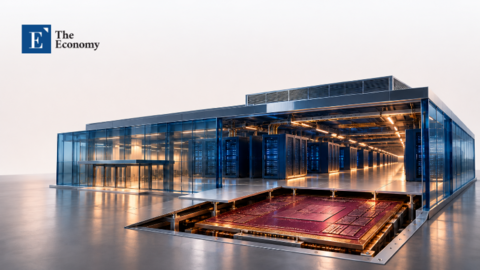
Alibaba’s first destination for its own chips was its cloud subsidiary’s data centers. When the Zhenwu 810E was unveiled in January, it was already being used in several Alibaba Cloud computing installations, each linking 10,000 accelerators. This setup distributes the calculations needed to train large AI models and generate answers across multiple chips. In August, the company opened infrastructure built around clusters of its successor chip, the Zhenwu M890, to cloud customers. According to Alibaba, this infrastructure even supports inference for large AI models with more than 2 trillion parameters—the variables a model learns during training.
T-Head Chips to Dominate Data Center Expansion
Mass production of the next-generation Zhenwu V900 chip is scheduled to begin in the first quarter of next year. Unveiled by T-Head in September, the V900 is designed to handle multiple computations simultaneously and is used for both AI model training and inference. Alibaba also plans to launch a server system in the same quarter that combines the V900 with its own semiconductors for inter-chip communication and data transfer and storage. The V900 chips will divide up the computational workload, while the other in-house semiconductors installed alongside them will exchange computation results between chips or transfer and store data.
Alibaba plans to source most of the additional AI chips it installs in its data centers from T-Head. CEO Wu Yongming predicted that China’s shortfall in AI computing supply relative to demand would be most severe in 2027–2028. Accordingly, T-Head’s flagship chips will be prioritized for training the next-generation Qwen and improving the performance of subsequent models. The company also intends to allocate T-Head chips for training when major partners develop their own models. Wu said Alibaba plans to sharply increase T-Head chip production next year to secure enough chips to train models for itself and its partners.
Table 1. Comparison of Nvidia CUDA and Alibaba T-Head SAIL
| Category | Nvidia CUDA | T-Head SAIL |
|---|---|---|
| Release Date | Released in 2006 | Released free of charge at the World Artificial Intelligence Conference in Shanghai in July 2026 |
| Key Features | Supports parallel GPU computing and provides code for frequently used operations | Runs AI programs on Zhenwu chips; source code also made available to overseas developers |
| Use of Existing Code | Switching to other companies’ chips entails the burden of modifying CUDA-based code | Existing code can be reused on Zhenwu chips with partial modifications. Plans to improve compatibility with major AI development tools |
Code Can Be Reused on Zhenwu Chips With Only Partial Modifications
Alongside increasing T-Head chip production, Alibaba is focusing on attracting external developers. For partners to receive Zhenwu chips and train their own models, the programs they already use must first run on the new chips. The tool most widely used by the AI development industry has been Nvidia’s parallel computing software, CUDA. Since introducing CUDA in 2006, Nvidia has supplied a range of development tools that allow graphics processing units (GPUs) to divide up the calculations needed for AI training. In particular, by distributing prewritten code for frequently used operations, it has spared developers the effort of implementing the same functions individually. However, as the number of programs developed using CUDA has grown, companies seeking to adopt other chipmakers’ products have faced the burden of adapting their accumulated code to a new environment.
Reducing this switching burden was also why T-Head released SAIL, software dedicated to Zhenwu chips, free of charge at the World Artificial Intelligence Conference in Shanghai in July. The release covered the entire software suite used to run AI programs on Zhenwu chips, with source code made available to overseas developers as well. According to T-Head Vice President Gao Hui, developers using SAIL can reuse existing code on Zhenwu chips by modifying only part of it. For partners that have already been training models on other chips, this reduces the amount of new code they need to write when adopting Zhenwu. Alongside the SAIL release, Alibaba plans to improve compatibility between Zhenwu chips and widely used AI development tools.
Even DeepSeek Models Run on a Single Zhenwu Server
Training large models with programs adapted for Zhenwu chips also requires computing infrastructure capable of running thousands of chips together. A prime example is the installation Alibaba built with Chinese telecom operator China Telecom at a data center in Shaoguan, Guangdong province, in April. The two companies linked 10,000 Zhenwu chips there to support training and inference for models with hundreds of billions of parameters. China Telecom operates the infrastructure, and the two companies identified healthcare and advanced materials research among the fields they would supply with computing resources. They also left room to increase the number of chips deployed at the Shaoguan installation to as many as 100,000 to accommodate future demand growth.
The Zhenwu chips at the Shaoguan data center also support AI models developed by outside companies. Alibaba Cloud has created a common programming interface compatible with major AI development tools so developers can migrate their existing programs to Zhenwu servers. A single server contains 1.5 terabytes (TB) of memory for AI computing. Alibaba said its specifications allow both its own Qwen 3.5 and Chinese AI company DeepSeek’s V3.2 to run on a single server without reducing their parameter counts. In Shaoguan, this infrastructure supplies companies in the electronic information and biopharmaceutical sectors with the computing resources needed for model training and inference, while also supporting efforts to tune model performance to each company’s operations.
Zhenwu 810E Matches Nvidia H20 in 8-Bit Inference
For companies planning to operate AI services at the Shaoguan data center, the response processing speed of Zhenwu chips matters. What drew the attention of the overseas semiconductor industry was that the Zhenwu 810E performed similarly to Nvidia’s H20, a chip designed for the Chinese market, on some inference tasks. Alibaba Cloud linked two chips of each type in separate setups and had the 72-billion-parameter Qwen 2.5 generate answers of the same length. In a dialogue test using 8-bit numerical representations for computation, both products processed about 360 tokens per second. When computational precision was increased to 16 bits on the same model, their throughput diverged: the H20 processed 565 tokens per second, while the Zhenwu 810E processed 414.
When introducing successor chips, Alibaba has benchmarked performance improvements against its own preceding models. In May, it said the M890 delivered three times the performance of the 810E, and when unveiling the V900 in September, it again cited a threefold improvement over the M890. The areas in which specific generational improvements have been disclosed are memory capacity, which is needed to run large models, and inter-chip communication speed. Memory per chip increased from 144 gigabytes (GB) on the M890 to 216GB on the V900, while the maximum amount of data exchanged between chips per second rose from 800GB to 1,200GB. However, the V900 presentation materials omitted the model name and test conditions used to measure the claimed “threefold performance” improvement. Alibaba also provided no specific figures on how much less time would be needed to process the same amount of data when training the next-generation Qwen.
Siobhán Delaney is a Dublin-based writer for The Economy, focusing on culture, education, and international affairs. With a background in media and communication from University College Dublin, she contributes to cross-regional coverage and translation-based commentary. Her work emphasizes clarity and balance, especially in contexts shaped by cultural difference and policy translation.