“Oil Producers Unable to Celebrate Despite Hormuz Reopening” Dual Pressure From Iran’s Return and Expanding Bypass Routes Threatens Middle East Economies

Anne-Marie Nicholson is a fearless reporter covering international markets and global economic shifts. With a background in international relations, she provides a nuanced perspective on trade policies, foreign investments, and macroeconomic developments. Quick-witted and always on the move, she delivers hard-hitting stories that connect the dots in an ever-changing global economy.
Authored On
Modified
Hormuz Strait Reopens Following Sudden U.S.-Iran Agreement
War-Driven Alternative Transport Networks Undermine Strait’s Monopoly Power
Return of Iranian Crude Signals Emergence of a Supply-Dominated Market

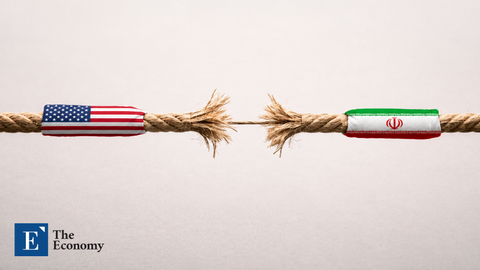
Although the Strait of Hormuz has reopened following a surprise ceasefire agreement between the United States and Iran, the Middle Eastern energy market has already entered a markedly different phase from the pre-war era. During the conflict, major regional oil producers rapidly expanded alternative export routes while Asian importers accelerated efforts to diversify supply sources, creating visible cracks in the strategic dominance long enjoyed by the Strait of Hormuz. While the reopening has eased immediate supply concerns, the restructuring of energy logistics networks, coupled with the anticipated return of Iranian crude exports, has pushed the Middle Eastern oil market into a new environment characterized by intensifying supply competition and weakening pricing power.
U.S.-Iran Peace MOU Signed, Hormuz Reopens Ahead of Schedule
On June 18 (local time), U.S. Vice President JD Vance told reporters at the White House that a 60-day negotiation period had begun to finalize details of the memorandum of understanding (MOU) signed the previous day. Addressing concerns that Iran could impose transit fees on vessels passing through the Strait of Hormuz in the future, Vance stated, “International waterways must remain freely accessible,” adding that “there will be no final agreement if the strait is not opened.”
U.S. President Donald Trump also welcomed the agreement’s implementation, writing on his social media platform Truth Social, “Oil is flowing.” Trump signed the MOU the previous day, agreeing alongside Israel to halt military operations against Iran that began in late February and initiate negotiations.
The signing ceremony had originally been scheduled for June 19 in Switzerland. However, according to diplomats from the mediating country and sources familiar with the matter, both sides had been engaged in intensive discussions to move the timeline forward in order to accelerate the reopening of the Strait of Hormuz. Sources said the absence of major disagreements over the reopening of the strait, the central issue in negotiations, was the primary factor behind the unexpectedly swift agreement.
Under the agreement, tankers stranded by the closure of the Strait of Hormuz have resumed operations. According to Bloomberg, vessels carrying approximately 10 million barrels of crude oil have either passed through or are preparing to transit the strait, while Saudi-owned tankers have resumed voyages for the first time since the outbreak of hostilities. Kuwait has announced plans to increase oil production, and Iran has stated that commercial shipping operations at its southern ports have returned to normal.
Following the reopening, the United Kingdom Maritime Trade Operations (UKMTO), the maritime security organization operated by the British Royal Navy, downgraded its threat assessment for the Strait of Hormuz from “Critical” to “Moderate,” marking the first reduction in nearly two months since the threat level was raised to the highest category in mid-April. The U.S. military also lifted maritime blockade measures against Iran. In a statement, U.S. Central Command (CENTCOM) said, “Under President Trump’s directive, all restrictions on maritime traffic to and from Iranian ports and coastal regions have been removed,” adding that it is no longer interfering with vessels transiting to Iranian ports in the Persian Gulf and Gulf of Oman.
Energy Logistics Map Redrawn, Hormuz Operating at 70% of Pre-War Importance
The latest conflict has nonetheless significantly weakened the Strait of Hormuz’s previously unrivaled strategic position. As Middle Eastern oil producers aggressively developed alternative transportation routes during the war, the region’s energy logistics landscape underwent a fundamental transformation. According to Goldman Sachs’ June 17 report titled “Seventy Percent of Pre-War Hormuz Flows Is the New One Hundred Percent,” roughly 20 million barrels per day of crude oil and petroleum products passed through the strait before the conflict. Returning Gulf oil exports to pre-war levels would require an additional 13 million barrels per day of traffic beyond current volumes. Yet visible crude shipments through the strait currently amount to only about 1.3 million barrels per day. Even when adding approximately 1.6 million barrels per day transported through so-called “dark voyages,” in which vessels switch off lights and Automatic Identification Systems (AIS) while crossing the Gulf of Oman, volumes remain far below pre-war levels.
By contrast, approximately 7.5 million barrels per day of crude oil are now being exported through routes bypassing Hormuz, including Saudi Arabia’s Red Sea port of Yanbu, the UAE’s Fujairah terminal, and Turkey’s Ceyhan port. The war accelerated efforts by Middle Eastern producers to reduce dependence on the strait. Saudi Arabia, the United Arab Emirates, and Iraq substantially increased utilization of infrastructure capable of bypassing the Strait of Hormuz, which had effectively been blocked by Iran during hostilities between Tehran and U.S.-Israeli forces.
Saudi Aramco expanded throughput on its East-West pipeline to move crude toward the Red Sea coast, while the UAE intensified use of pipeline connections linked to Fujairah, located outside the Strait of Hormuz. Iraq also redirected export volumes through pipelines connected to Turkey’s Ceyhan port. Earlier this month, the UAE unveiled an ambitious plan to dramatically expand ports along the Gulf of Oman and construct new facilities outside the Strait of Hormuz, with the stated objective of eliminating dependence on the waterway altogether. Goldman Sachs noted that some shipowners may remain reluctant to send vessels through the strait even after the U.S.-Iran agreement due to lingering security concerns.

Middle Eastern Producers Face Erosion of Pricing Power
The energy security strategies of importing nations have also shifted. The conflict reinforced the reality for many Asian economies that dependence on the Strait of Hormuz represents a direct economic vulnerability. As a result, countries such as South Korea and Japan combined strategic petroleum reserve releases with efforts to diversify supply sources, effectively launching a redesign of energy procurement systems heavily centered on the Middle East. This helps explain why governments remain cautious about fully reverting to previous supply arrangements despite the reopening of the strait.
South Korea has begun developing alternative supply chains utilizing the port of Yanbu while pursuing additional supply sources in Oman and North Africa. The severe disruptions experienced by the country’s refining and shipping industries during the effective closure of the Strait of Hormuz accelerated consensus around the need to diversify crude import structures. Japan, meanwhile, examined bypass supply routes through Fujairah during the conflict and advanced plans to increase imports of crude oil from the United States and Latin America. Tokyo concluded that prolonged disruption of the Strait of Hormuz could transform Middle Eastern energy dependence into a national security risk.
These developments are expected to create new pressures for Middle Eastern producers. Regional economies have long relied on the geopolitical leverage provided by the Strait of Hormuz to secure stable demand, yet procurement shifts established during the conflict are likely to persist even after the waterway’s reopening. South Korea and Japan rank among Asia’s largest importers of Middle Eastern crude. According to the International Energy Agency (IEA), more than 70% of South Korea’s crude oil imports originate from the Middle East, with a substantial portion transiting through the Strait of Hormuz. However, if alternative procurement routes established during the war remain in place, the pricing power of Middle Eastern crude will inevitably weaken.
The potential return of Iranian crude exports also adds downward pressure on oil prices. Under the MOU, the United States is expected to provide sanctions waivers allowing Iran to resume oil exports. While the measure offers economic relief for Tehran after years of severe damage caused by U.S. sanctions, the combination of expanding bypass infrastructure and renewed Iranian exports places Middle Eastern producers under dual pressure from intensifying supply competition and shrinking price premiums. Markets may therefore be entering a phase in which expanding supply and slowing demand occur simultaneously. While greater energy price stability could help moderate global inflationary pressures, the resulting environment may prove considerably less favorable for Middle Eastern oil-exporting economies.
Anne-Marie Nicholson is a fearless reporter covering international markets and global economic shifts. With a background in international relations, she provides a nuanced perspective on trade policies, foreign investments, and macroeconomic developments. Quick-witted and always on the move, she delivers hard-hitting stories that connect the dots in an ever-changing global economy.
Similar Post