“Oman Is a Littoral State Too”: Muscat and Tehran Advance Strait of Hormuz “Service Fee” Plan as Trump Threatens Military Action

As one of the youngest members of the team, Tyler Hansbrough is a rising star in financial journalism. His fresh perspective and analytical approach bring a modern edge to business reporting. Whether he’s covering stock market trends or dissecting corporate earnings, his sharp insights resonate with the new generation of investors.
Authored On
Modified
“Interfere and We Will Bomb You,” Trump Warns Oman
Iran and Oman Pursue Service Fees for Vessels Transiting the Strait of Hormuz
Maritime Order Depends on Littoral-State Management, Highlighting the Burden of Maintaining Security in the Strait
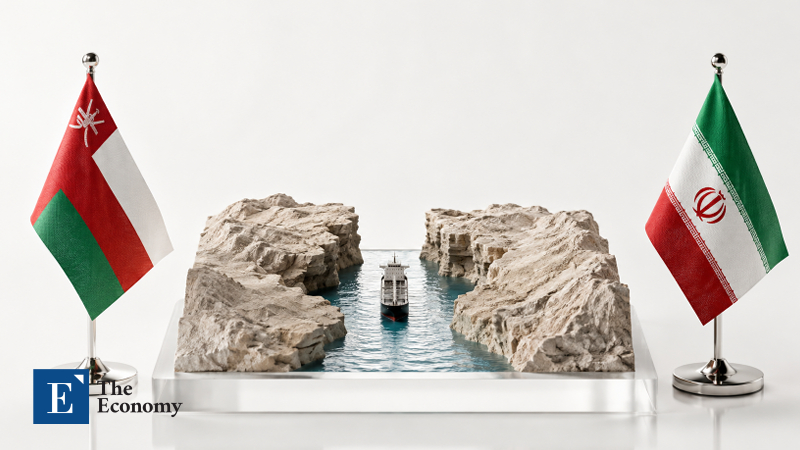
US President Donald Trump has issued a stark warning to Oman. As Muscat works with Tehran on a plan to charge service fees to vessels transiting the Strait of Hormuz, Trump has stepped up pressure by raising the prospect of military action. Experts, however, see little realistic prospect of Oman abandoning the joint-management negotiations with Iran. As a key littoral state bordering the Strait of Hormuz, Oman has long borne direct responsibility for vessel traffic management, maritime safety, and responses to accidents and pollution.
Trump Pressures Oman
On August 17, Trump said in a Fox News interview and during a question-and-answer session with White House reporters that “Iran must raise the white flag of surrender,” adding that he had no intention of extending the memorandum of understanding on ending the war with Tehran. His remarks amounted to an acknowledgment that negotiations between the two countries had reached an impasse, with the ceasefire agreement signed in June rendered effectively meaningless by renewed armed exchanges. Trump also delivered a profanity-laced warning to Oman, a US ally and mediator in the war with Iran, saying, “If Oman interferes, we will bomb it without mercy.”
The remarks appeared to target the service-fee plan being pursued by Iran and Oman in the Strait of Hormuz. Esmail Baghaei, spokesperson for Iran’s Foreign Ministry, said on August 3 that “Iran and Oman have exchanged maps showing routes through the Strait of Hormuz,” adding that the two countries were discussing “a single route allowing two-way traffic, rather than two or three separate routes.” Iranian officials told The New York Times at the time that vessels transiting the strait would not be charged a toll but would face a service fee to cover environmental impact management, security, and personnel deployment. They added that Iran and Oman would split the proceeds equally.
Iran-Oman Strait of Hormuz Management Plan
Both countries have continued to issue official statements on the matter. On August 8, Iranian Foreign Minister Abbas Araghchi said Iran was “very close to an agreement with Oman on a temporary shipping route.” His remarks indicated that the two sides had devised a plan to operate a temporary route until the legal and technical issues surrounding a permanent corridor could be resolved. Oman issued a Foreign Ministry statement the same day confirming that the navigation talks were proceeding in a “positive and constructive atmosphere.”
Iran announced on August 17 that negotiations had advanced another step. Baghaei said Iran and Oman had agreed on a map for the new transit route and were working to finalize a package combining the map with a joint statement. The two countries are reportedly working to resolve differences over how the new route through the Strait of Hormuz would be managed in practice, how service fees would be levied, and how the fee system would be linked to the strait’s full reopening. Iran is seeking substantive authority over the management of the strait and the provision of services, while Oman has maintained that the arrangement must reflect both the principle of freedom of navigation under international law and the interests of neighboring countries.
Oman as a Direct Stakeholder
Oman’s assertive role in issues surrounding the Strait of Hormuz reflects its status as a direct stakeholder as well as its position as a mediator between Iran and the United States. The strait lies between Iran to the north and Oman’s Musandam Peninsula to the south, with its narrowest point spanning only about 21 miles. Given that international law allows littoral states to establish territorial waters extending up to 12 nautical miles from their coastlines, virtually the entire strait adjoins waters under the jurisdiction of the two countries. Geography leaves vessels entering or leaving the Persian Gulf with little practical scope to use a separate high-seas route that avoids both Iranian and Omani waters.
The existing transit system in the Strait of Hormuz has also operated around these geographical constraints. The International Maritime Organization (IMO) applies a traffic separation scheme (TSS) in the strait to prevent vessel collisions and manage traffic flows. Under the TSS design, vessels entering or leaving the Persian Gulf must use routes running along the Iranian and Omani coasts. The operating arrangements are therefore difficult to alter through a unilateral decision by either country. This also explains why a joint statement issued by Oman and Iran in June described both countries equally as “littoral states of the Strait of Hormuz.”
Table 1. Oman’s Level of Involvement in the Strait of Hormuz
| Category | Key Details |
|---|---|
| Jurisdiction | Transit system centered on waters under Iranian and Omani jurisdiction |
| Management Responsibilities | Direct involvement in vessel traffic, maritime safety, and responses to accidents and pollution |
| Strategic Influence | Direct stakeholder in discussions over maritime order, navigation arrangements, and management costs |
Strait of Hormuz Order Under Strain
Oman also has practical grounds for seeking compensation for the cost of managing the strait. The IMO assigns operational responsibility for route management and maritime safety in the Strait of Hormuz to its littoral states. Oman has therefore played a direct role in managing vessel traffic, ensuring maritime safety, responding to accidents and pollution, and maintaining search-and-rescue systems for ships passing through the strait. The alternative routes currently established by Iran and Oman operate under a system in which Iranian authorities manage traffic in the northern corridor and Omani authorities oversee the southern corridor.
Recent instability in the Strait of Hormuz has intensified this management burden. Security threats, including naval mines, have made normal use of the existing TSS difficult. When large numbers of vessels were stranded in the Persian Gulf in June, a separate evacuation corridor had to be established. The IMO worked with Oman to create a vessel evacuation system, enabling 136 vessels and about 2,900 crew members to leave the strait between June 23 and 26. The IMO specifically highlighted Oman’s role in establishing the evacuation arrangement, explaining that cooperation from the littoral states was indispensable to the operation of a new route when the existing TSS was unavailable.
The Importance of Maritime Security
The spread of piracy around Somalia and the Gulf of Aden provides a prominent example of the importance of maintaining maritime security. Merchant-vessel hijackings and armed-approach incidents have proliferated off northern Somalia and in the Gulf of Aden this year. In April, pirates seized the tanker Honor 25 off northern Somalia. On April 26, pirates took control of the cement carrier Sword near Garacad in Puntland. Last month, the Tanzanian-flagged tanker Asana was hijacked about 65 nautical miles southwest of Mukalla, Yemen. On August 17, at least eight pirates boarded a cargo vessel off Somalia’s southern coast and seized control of the ship.
The resurgence reflects the dispersal of the international community’s maritime-security capabilities. The Financial Times reported in April that piracy had staged a marked comeback off Somalia after years of relative dormancy, identifying the diversion of international naval forces to other conflict zones in the Middle East as a principal cause. The Guardian similarly concluded that pirate groups had begun exploiting gaps in surveillance off Somalia as international naval forces deployed resources to counter the Houthis in the Red Sea and address other threats. The European Union (EU) Naval Force is conducting Operation Atalanta to counter these threats, while the multinational Combined Maritime Forces (CMF) is also patrolling waters around Somalia and the Gulf of Aden.
As one of the youngest members of the team, Tyler Hansbrough is a rising star in financial journalism. His fresh perspective and analytical approach bring a modern edge to business reporting. Whether he’s covering stock market trends or dissecting corporate earnings, his sharp insights resonate with the new generation of investors.
Similar Post