"Beyond Securing Power, the Race Is Turning Green": Renewable Energy Reshapes the Data Center Market as Investment and Regulation Accelerate

As one of the youngest members of the team, Tyler Hansbrough is a rising star in financial journalism. His fresh perspective and analytical approach bring a modern edge to business reporting. Whether he’s covering stock market trends or dissecting corporate earnings, his sharp insights resonate with the new generation of investors.
Authored On
Modified
Ulanqab in China’s Inner Mongolia Emerges as an AI Infrastructure Hub on the Back of Wind Power
Green Data Centers Proliferate Across the Market, Elevating the Importance of Renewable Energy
Governments Worldwide Tighten Environmental Regulations and Renewable Energy Policies for Data Centers
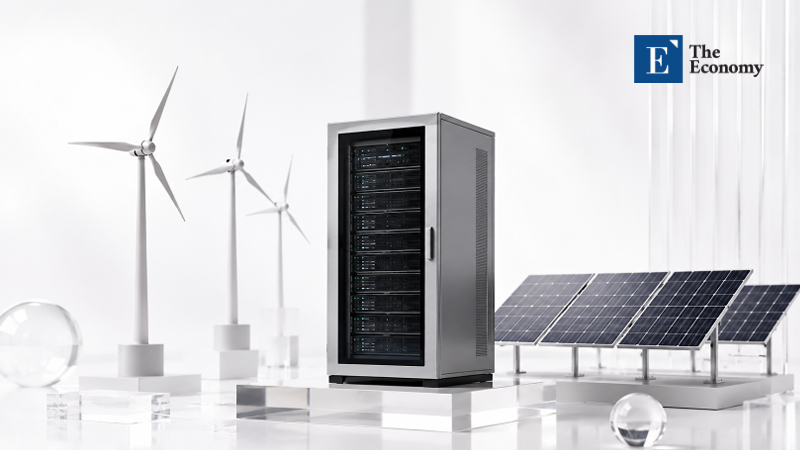
Ulanqab, a pastoral city in China’s Inner Mongolia Autonomous Region, is rapidly emerging as a capital of artificial intelligence (AI) computing. Local technology companies have launched a wave of AI computing infrastructure projects, drawn by the city’s abundant wind and solar resources and low electricity costs. The trend extends well beyond China and is taking hold across the global AI market. As major jurisdictions, including the European Union (EU), progressively tighten regulations governing data centers’ electricity and water consumption and carbon emissions, “green data centers” with greater renewable energy use and higher energy efficiency are rapidly gaining prominence.
AI Infrastructure Floods Into Ulanqab
According to a South China Morning Post (SCMP) report on the 24th, Envision Group, one of China’s leading renewable energy companies, recently brought the Galaxy Campus, a hyperscale AI computing facility in Ulanqab, into full operation. The 120,000-square-meter facility is designed to accommodate as many as 1 million AI accelerators and has a total planned power capacity exceeding 2 gigawatts (GW). That surpasses Colossus 2, the approximately 1.5 GW mega-data center operated by Elon Musk’s xAI in the US state of Tennessee, placing it among the world’s largest single-site facilities.
Envision Group is far from the only company building AI infrastructure in Ulanqab. On July 31, the SCMP also reported that RedNote, a major Chinese lifestyle social media platform, was planning to build a 600-megawatt (MW) data center either within Ulanqab or in the city’s western area. Excluding semiconductor procurement costs, the construction budget alone is estimated at $2.1 billion, and local recruitment for the project has reportedly already begun. RedNote is also considering a partnership with VNET, a major Chinese specialist data center operator, to facilitate the project’s implementation.
Clean Energy Becomes a Competitive Advantage
DeepSeek has likewise selected Ulanqab as a hub for its proprietary computing infrastructure and is pursuing a large-scale data center project there. According to Bloomberg, DeepSeek plans to secure as much as 1 GW of computing capacity in Ulanqab. It intends to construct a new data center and begin operating part of the facility between late 2027 and early 2028 while leasing additional computing capacity from local operators. In April, the company began recruiting Ulanqab-based server maintenance engineers and managers responsible for data center construction and delivery. More recently, it expanded recruitment to cover the full spectrum of data center design and construction, including electrical systems, heating, ventilation and air conditioning (HVAC), automation, energy, telecommunications and civil engineering.
The surge in demand for AI infrastructure construction in Ulanqab is underpinned by its overwhelmingly competitive electricity costs and energy efficiency. The region holds roughly 10% of China’s total wind energy resources, while approximately 67% of the city’s electricity consumption is supplied by clean energy sources such as wind and solar power. Electricity for data centers costs $0.05 per kilowatt-hour (kWh), only about half the rate in major eastern cities such as Beijing and Shanghai. Ulanqab’s cool, dry climate also allows data centers to use air-side free cooling with cold outdoor air rather than relying on costly mechanical air conditioning. Under these conditions, the power usage effectiveness (PUE) of Ulanqab’s major data center clusters remains below 1.15, well under China’s national average of 1.5. PUE is calculated by dividing a data center’s total electricity consumption by the electricity used by its IT equipment, with a figure closer to 1.0 indicating higher energy efficiency.
US Big Tech Adopts Similar Strategies
Efforts to integrate AI infrastructure with renewable energy generation are also spreading rapidly outside China. The concept of the “green data center” has begun to establish itself firmly in the market. A green data center is a facility designed to minimize the energy consumption and carbon emissions generated by data center operations. Such facilities reduce water consumption and waste heat while expanding renewable energy supply through long-term power purchase agreements (PPAs), on-site generation and other arrangements. More recently, data centers and renewable energy plants have increasingly been developed as effectively integrated infrastructure projects. Against this backdrop, the International Energy Agency (IEA) estimates that renewable sources currently account for only about 27% of the electricity supplied to data centers worldwide but projects that they will meet roughly half of data center electricity demand by 2030.
Big Tech companies at the forefront of the AI market are among the principal drivers of this shift. Since 2017, Google has purchased enough renewable energy annually to match the electricity consumed across its global operations. It is now working to operate all data centers and offices on carbon-free energy around the clock by 2030. Microsoft also achieved its target last year of matching 100% of the electricity consumed by its data centers, offices and other facilities worldwide with renewable energy purchases. The company has contracted nearly 40 GW of new renewable generation capacity to date, of which approximately 19 GW is operational. As of last year, Meta had signed clean and renewable energy supply agreements totaling more than 15 GW across six countries and was matching all electricity consumed by its data centers with clean and renewable energy. Amazon also supports more than 600 wind and solar projects worldwide and last year matched 100% of the electricity consumed across its global operations with renewable energy purchases.
Table 1. Renewable Energy Procurement by Global Big Tech Companies
| Company | Key Initiatives |
|---|---|
| Working to operate all facilities on carbon-free energy around the clock by 2030 | |
| Microsoft | Matching all electricity consumed by data centers and offices with renewable energy purchases and expanding new generation projects |
| Meta | Matching all data center electricity consumption with clean and renewable energy and signing supply agreements across multiple countries |
| Amazon | Matching all electricity consumption with renewable energy purchases and supporting wind and solar projects worldwide |
EU Data Center Regulation
The environmental protection drive in the AI infrastructure market is expected to accelerate further as countries worldwide rapidly tighten environmental regulations governing data centers. The EU is widely regarded as the jurisdiction moving fastest to raise regulatory barriers. It has begun introducing a framework designed to make the environmental performance of data centers more transparent. Under a draft common rating system for data centers released by the European Commission in March, electronic labels displaying data center sustainability assessment results would be issued automatically throughout the EU. The Commission intends to make it easier to compare the energy and resource efficiency of data centers in the same region and encourage businesses and public institutions to use environmental performance as a criterion when procuring cloud and data center services.
The ratings will incorporate multiple sustainability indicators beyond basic power efficiency. Data centers with similar electricity consumption could receive different ratings depending on their share of renewable energy procurement, cooling-water consumption and methods of utilizing waste heat. The regulations are expected to become considerably more stringent. The Commission has included a proposal to introduce Minimum Performance Standards for both new and existing data centers in its data center energy-efficiency package currently under development. If implemented, the measure could require data center operators not only to disclose environmental information but also to upgrade or replace facilities whose energy and resource efficiency falls below specified thresholds. The Commission described the framework as a means of “gradually phasing out inefficient technologies.”
China and Australia Also Focus on Environmental Risks
In China, the government is integrating renewable power generation and data centers into a single system. In May, state-owned power producer China Datang Corporation formally launched the country’s first large-scale direct renewable energy supply project for data centers in Zhongwei, in the northwestern Ningxia Hui Autonomous Region. The first phase will initially bring 500 MW of solar generation capacity online, followed by the addition of 1.5 GW of wind capacity by the end of the year. Datang plans to combine dedicated transmission lines with electricity-market transactions so that data centers directly consume locally generated solar and wind power, while adjusting computing workloads according to power generation and electricity demand.
Australia, meanwhile, is pressuring data center operators to assume responsibility for the strain their facilities place on electricity and water resources. Under the Australian AI Standard, plans for which were announced last month, operators of new large-scale data centers would be required either to invest directly in new generation facilities or to underwrite long-term power supply to minimize pressure on the electricity grid. Operators would also be required to pay all or an appropriate share of the costs associated with transmission networks and grid connections. Proposals have also emerged to link new generation investment with renewable energy, while requiring data centers to prioritize non-potable and recycled water in their cooling processes. Data center operators would bear the associated costs if water intake and supply facilities need to be expanded and would also be required to disclose water consumption and efficiency data on an ongoing basis.
Some countries, however, are moving against this trend. In June, for example, the South Korean government announced plans to pursue “three mega-projects” centered on semiconductors, physical AI and AI data centers. In cooperation with SK, GS, Naver and other companies, the government plans to build 8.4 GW of data centers nationwide by 2029 and expand SK’s data center capacity to 10 GW by 2035, creating a total of 18.4 GW of AI infrastructure. The government said it would deploy an appropriate mix of renewable energy, nuclear power and some fossil-fuel generation for the initiative while introducing a dedicated electricity tariff for AI data centers. In doing so, it signaled that the government would directly secure electricity supplies to support industrial development and even overhaul the tariff structure to provide data centers with cheaper power. This approach runs directly counter to that of other major countries, which require data center operators to establish their own power-grid and environmental protection frameworks.
As one of the youngest members of the team, Tyler Hansbrough is a rising star in financial journalism. His fresh perspective and analytical approach bring a modern edge to business reporting. Whether he’s covering stock market trends or dissecting corporate earnings, his sharp insights resonate with the new generation of investors.
- Previous “Is Iran Next After Russia?” U.S. Wields Dollar Hegemony to Intensify Economic Pressure, Raising Prospect of an Expanding Chinese Renminbi Bloc
- Next “Domestic Price War Unleashes Flood of New Models”: China’s Automakers Race Ahead as Safety Testing and After-Sales Networks Falter, Impeding Global Expansion
Similar Post