“Building AI and Rare-Earth Supply Chains Without China”: U.S. Champions Pax Silica as Japan Expands Cooperation With Resource-Rich Nations and Accelerates Indigenous Technology Development

Aoife Brennan is a contributing writer for The Economy, with a focus on education, youth, and societal change. Based in Limerick, she holds a degree in political communication from Queen’s University Belfast. Aoife’s work draws connections between cultural narratives and public discourse in Europe and Asia.
Authored On
Modified
U.S. Moves to Squeeze Chinese AI Out Through Pax Silica Coalition
Critical-Minerals Supply-Chain Diversification Drives Stronger Australia-Japan Alliance
Japan Accelerates Efforts to Secure Partner Countries and Develop Technology in Pursuit of Rare-Earth Self-Sufficiency
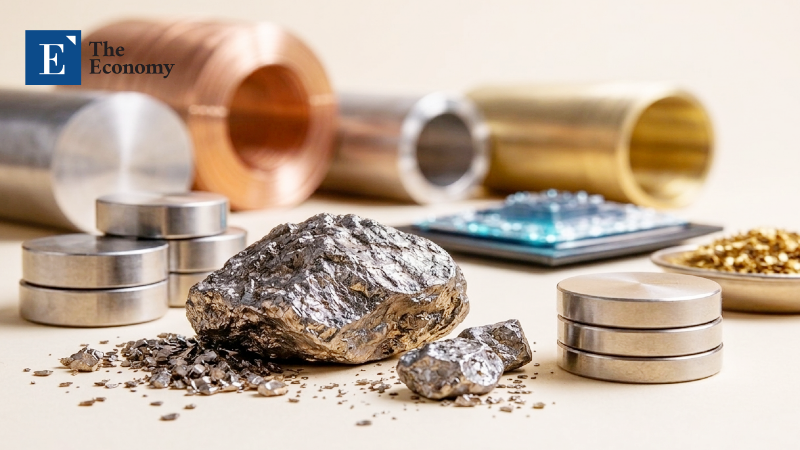
The United States is moving to strengthen the “Pax Silica” framework across artificial intelligence (AI), advanced semiconductors and critical minerals. In AI, Washington is restricting market access for Chinese models and companies, while in rare earths and critical minerals, it is reshaping the entire supply chain—from mining through refining and processing—around allied nations. Capitalizing on this trend, Japan is working with Australia to secure sources of rare earths and gallium, while accelerating resource development in Latin America and Africa and pursuing its own supply-chain diversification initiatives beyond the Pax Silica framework.
The U.S.-Led “Pax Silica” Framework
According to Hong Kong’s South China Morning Post on Aug. 26, Zheng Yongnian, dean of the School of Public Policy at the Chinese University of Hong Kong, recently criticized Washington’s policy in a video address to an academic forum hosted by the Institute of Public Policy at the South China University of Technology. “A series of security frameworks being advanced by Washington—including Pax Silica, semiconductor-chip alliances and critical-minerals alliances—are structurally doomed to fail because they were explicitly designed to exclude and contain a particular third country,” Zheng said. “If the U.S. government prohibits its companies from using low-cost, highly efficient Chinese AI models, that would constitute a clear act of self-harm, suppressing companies’ tangible development interests and innovation,” he added. “Ideological yardsticks cannot override the commercial logic governing the survival of markets and businesses.”
Pax Silica, referenced by Zheng, is an economic-security partnership for AI and advanced-technology supply chains launched by the United States last December. Its central objective is to reorganize the full AI industrial supply chain around the United States and its allies, encompassing △AI software, platforms and advanced foundation models △computing and semiconductors △data centers and telecommunications networks △advanced manufacturing △critical-mineral refining and processing △energy and logistics. The declaration issued at its launch called for reducing “excessive dependence,” building networks with trusted suppliers and jointly responding to nonmarket practices, overproduction and unfair dumping. These objectives are widely interpreted as being aimed squarely at China. The U.S. State Department subsequently designated Pax Silica as one of Washington’s flagship AI and supply-chain security initiatives and announced in March that it intended to establish a $250 million “Pax Silica Fund” to support critical-mineral mining and processing as well as infrastructure and manufacturing facilities related to semiconductor supply chains.
Moves to Exclude Chinese AI Continue
The partnership has recently moved toward establishing a separate AI economic bloc effectively decoupled from China. Reuters reported on Aug. 14, citing a draft internal U.S. State Department cable it had obtained, that Washington was considering asking the 35 countries that signed the U.S.-led Joint Statement on AI Opportunity to participate in efforts to counter China. Under the proposed approach, countries would be excluded from Pax Silica cooperation if they simultaneously participated in rival initiatives such as the China-led World AI Cooperation Organization (WAICO). The move is understood to have followed revelations that Kazakhstan, a key supplier of critical minerals to Pax Silica, had joined initiatives led by both the United States and China.
A succession of regulatory measures targeting Chinese AI companies and models has also reached the policy agenda. According to Axios and other foreign media outlets, the U.S. Commerce Department has been pursuing the addition of certain Chinese AI laboratories to the Entity List, its export-control blacklist. The White House has also reportedly considered imposing security requirements when U.S. companies host Chinese AI models or deploy them in their services, as well as restricting the government procurement and use of Chinese open-source models. At the same time, so-called “distillation”—whereby Chinese AI companies use the outputs of advanced U.S. models to improve their own—has emerged as another focus of U.S. government scrutiny.
Australia-Japan Rare-Earth Partnership
Efforts to restructure rare-earth and critical-mineral supply chains are also continuing. Based on the assessment that secure access to raw materials is a decisive factor in AI-industry competitiveness, an ecosystem centered on allied countries is taking shape. Major resource-rich nations, including Australia, are playing the largest role in this structure. Australia possesses abundant mineral resources needed for advanced industries, including rare earths, lithium, gallium, germanium, antimony and high-purity silica, and has participated as a core partner since Pax Silica’s inception. Australia is now working with other allied countries to expand domestic refining, processing and downstream capacity, moving away from the previous system under which it depended on China and other countries to refine many of its resources.
Japan has established a notable presence in this process. Japanese trading house Sojitz and the government-affiliated Japan Organization for Metals and Energy Security (JOGMEC) have invested more than $500 million in Australian rare-earth producer Lynas Rare Earths since 2011 through their joint venture JARE. In 2023, they injected an additional approximately $144 million to support heavy rare-earth separation and refining operations. In return, Japan secured a long-term agreement to receive up to 65% of the dysprosium and terbium produced by Lynas using feedstock from Australia’s Mount Weld mine. Separately, JOGMEC and Sojitz are working through another joint venture, JAGA, with U.S. aluminum producer Alcoa to construct production facilities at an alumina refinery in Western Australia.
Table 1. Diversification of Japan’s Critical-Mineral Supply Chain
| Region | Principal Partners | Strategy |
|---|---|---|
| Australia | Lynas Rare Earths and Alcoa | Secure heavy rare-earth volumes through investment and long-term offtake agreements and participate in the construction of local refining and processing facilities |
| Latin America | Inter-American Development Bank (IDB) | Co-invest in mining and logistics infrastructure and local processing industries |
| Namibia | Namibia Critical Metals | Establish a heavy rare-earth supply base by participating in the exploration and development of the Lofdal mine |
Japan Moves to Diversify Resource Suppliers
Japan is also accelerating efforts to strengthen its own critical-mineral supply chain outside Pax Silica. A prominent example is its cooperation with the Inter-American Development Bank (IDB). Latin America has major deposits of lithium, copper, nickel, rare earths and graphite, but more than 90% of the minerals extracted there have historically been refined and processed outside the region, including in China. To overcome this limitation, the IDB officially launched “IDB LAC Minerals” this year, an initiative dedicated to high-value-added critical-mineral supply chains within the region. Departing from the conventional development-finance model’s dependence on public-sector lending, the initiative is designed to lead public-private investment through IDB Invest, the group’s private-sector investment arm, and establish a critical-minerals financing pipeline of up to $12 billion by 2030. The Japanese government and the Japan International Cooperation Agency (JICA) have substantially expanded their co-financing framework with the IDB and are actively contributing to the creation of foundations for growth, including the development of local mine-logistics networks, compliance with environmental, social and governance (ESG) standards and the establishment of channels for dialogue with local communities.
Resource-rich African countries have also emerged as cooperation partners. Since 2020, JOGMEC and Canada’s Namibia Critical Metals have jointly explored Lofdal in the Kunene Region of northwestern Namibia, confirming that the area contains substantial deposits of heavy rare earths such as dysprosium and terbium. A prefeasibility study released in January projected that full-scale development of Lofdal could produce approximately 2,000 metric tons of total rare-earth oxides annually.
Private companies have also entered the business directly. Toyota Tsusho, the Toyota Group’s trading arm, was selected in March as a joint-development partner and acquired a portion of JOGMEC’s equity options in the Lofdal project. In June, it established a special-purpose company, TJ Namibia Rare Earths, to advance the project. Last month, JOGMEC invested up to approximately $34.4 million in the entity and plans to decide whether to proceed with final development within fiscal 2026 after assessing the project’s commercial viability.
Reliance on China Declines, but Independence Remains Elusive
Investment aimed at strengthening Japan’s indigenous technological capabilities is also continuing. The Japanese government is currently prioritizing the development of seabed rare earths off Minamitorishima in the Ogasawara Islands. It has revised the “K Program,” which supports technologies critical to economic security, to allow long-term assistance extending beyond five years, while committing several billion dollars to the Minamitorishima rare-earth development project alone. The government will also provide a dedicated vessel to lift rare-earth-bearing mud from the seabed and the port infrastructure required for transportation. The strategy is to support commercialization by having the government shoulder the enormous upfront costs. The Japan Atomic Energy Agency (JAEA) has also developed an adsorbent capable of selectively extracting and recovering rare earths from industrial wastewater containing mixtures of water and oil, opening an additional avenue for securing resources. JAEA plans to work with private companies to apply the technology to wastewater and waste oil from semiconductor factories and chemical plants.
Against this backdrop, the influence of Chinese rare earths is gradually receding. According to the U.S. think tank Center for Strategic and International Studies (CSIS), Japan’s dependence on China for rare earths has fallen from 90% in 2010 to around 60% today. After clashing with China over the Senkaku Islands in 2010, Japan also tripled its rare-earth stockpiling target from approximately 60 days of supply to 180 days. “Given its peacetime stockpiles, Japan should be able to withstand China’s recently intensified rare-earth pressure until at least the end of this year or early next year,” one market expert said. “However, this is only a short-term measure. If the situation becomes protracted, inventories and reserves decline and international prices rise, the crisis could deepen.” With Japan’s dependence on China for heavy rare earths such as dysprosium and terbium still approaching 100%, and its commercial viability and refining technology remaining far behind China’s, achieving supply-chain independence in the near term is considered virtually impossible.
Aoife Brennan is a contributing writer for The Economy, with a focus on education, youth, and societal change. Based in Limerick, she holds a degree in political communication from Queen’s University Belfast. Aoife’s work draws connections between cultural narratives and public discourse in Europe and Asia.
Similar Post