“Heat Wave and LNG Supply Chain Shocks” Send Japan’s Power Prices Soaring, Casting Further Uncertainty Over LNG Carrier Revival Plans

Aoife Brennan is a contributing writer for The Economy, with a focus on education, youth, and societal change. Based in Limerick, she holds a degree in political communication from Queen’s University Belfast. Aoife’s work draws connections between cultural narratives and public discourse in Europe and Asia.
Authored On
Modified
Japan’s power prices surge amid heat wave, with upward trend expected to persist in second half
Total reliance on imported LNG leaves country acutely exposed to Middle East supply chain risks
Japan’s LNG carrier revival plans face mounting uncertainty amid market turmoil
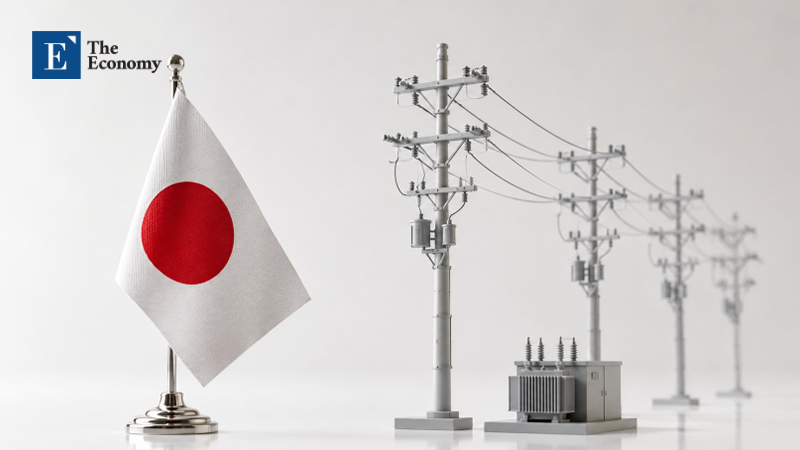
Electricity prices in Japan are rising sharply. A succession of heat waves has sent power demand for cooling soaring, creating visible market disruptions and increasing the likelihood that the upward trend will persist through the second half of the year. The surge is attributable to the convergence of Japan’s LNG-centric energy structure and supply risks emanating from the Middle East. Disruptions to the production and transportation of Middle Eastern LNG in the wake of the Iran war, coupled with rising global spot prices, are placing mounting strain on Japan’s energy supply chain, which is heavily dependent on imported fuels.
Japan’s Power Prices on the Rise
According to the Japan Electric Power Exchange (JEPX) on August 28, Japan’s nationwide next-day power price climbed to $0.16 per kilowatt-hour (kWh) on August 24, its highest level since January 2023. That represented a 20% increase from the previous week. The surge was driven by a sharp rise in electricity demand for cooling as an intense heat wave swept across Japan. Last month, Japan recorded temperatures of at least 40 degrees Celsius for five consecutive days for the first time since climate observations began, while temperatures in Hamamatsu, Shizuoka Prefecture, reached 41.1 degrees. More than 10,000 people were taken to hospitals with heatstroke over the course of that week alone, and the extreme heat has shown little sign of abating this month.
Analytical institutions expect the upward price trend to persist even after the summer ends. According to an International Energy Agency (IEA) analysis combining JEPX spot price trends with Tokyo-area electricity futures listed on the European Energy Exchange (EEX), Japan’s average wholesale electricity price is projected to climb to $105 per megawatt-hour (MWh) in the second half of this year. That would represent an increase of approximately 40% from the previous year, far exceeding the projected rise of about 25% in wholesale electricity prices across the European Union (EU) over the same period.
Structural Constraints in the Energy Supply Chain
Japan’s high dependence on foreign energy supplies lies behind the rise in electricity prices. Following the Fukushima nuclear disaster, Japan curtailed its use of nuclear power and expanded LNG-fired generation. Even now, as nuclear reactor restarts and renewable energy deployment gain momentum, LNG continues to account for a substantial share of the country’s power generation mix. The problem is that Japan imports virtually all of its LNG. To mitigate the risks inherent in this structure, Japan has steadily diversified its LNG supply chain beyond Australia to include the United States and the Middle East. A prominent example came in February, when JERA, Japan’s largest power producer, signed a 27-year contract with QatarEnergy to receive 3 million tonnes of LNG annually beginning in 2028.
However, the paralysis of shipping through the Strait of Hormuz amid this year’s war involving the United States, Israel and Iran has exposed the limits of that diversification strategy. According to the IEA, approximately 93% of Qatar’s LNG exports and 96% of exports from the United Arab Emirates (UAE) passed through the Strait of Hormuz last year. The combined volume amounted to nearly 19% of global LNG trade, approximately 90% of which was destined for Asian markets. This explains why energy supply shortages have become increasingly apparent across Asian countries since the outbreak of the Iran war. The IEA has also estimated that the volume of LNG effectively removed from the market by the closure of the Strait of Hormuz amounts to approximately 20% of global supply.
Coal-Fired Generation Is No Solution
Japan has fallen squarely within the direct impact zone of these geopolitical risks. According to the Bank of Japan, Qatar and the UAE account for approximately 6% of Japan’s LNG supply. To compensate for the loss of supplies from those countries, Japan Petroleum Exploration (JAPEX) urgently replaced two LNG cargoes scheduled to arrive from the Persian Gulf during the first quarter of fiscal 2026 with spot cargoes sourced outside the Middle East. The company expected its LNG procurement costs to rise significantly compared with levels before tensions in the Middle East escalated, reflecting the sharp increase in global LNG spot prices. The Japan Korea Marker (JKM), the Northeast Asian LNG spot price benchmark compiled by the London Stock Exchange Group (LSEG), averaged $17.33 per million British thermal units (MMBtu) in June, approximately 31% above the European Title Transfer Facility (TTF) price over the same period. IEA data also show that Asian spot LNG prices averaged $17.50 in the second quarter of this year, up 45% from a year earlier.
Japanese power producers have consequently begun increasing coal-fired generation rather than purchasing additional volumes of expensive LNG. According to Bloomberg, citing generation data from Japan’s nine major power utilities, the companies generated 17.3 terawatt-hours (TWh) of gas-fired electricity in June, down 16% from a year earlier. Coal-fired generation, by contrast, increased by 4.6% over the same period. Yet this strategy has failed to deliver unqualified cost savings. As uncertainty originating in the Middle East prompted Asian countries to increase coal procurement, upward price pressure spread to alternative fuel markets as well. Westpac, a major Australian commercial bank, previously concluded that increased coal purchases by Japan, South Korea and Taiwan to hedge against LNG supply disruptions drove thermal coal prices higher in June. Newcastle thermal coal prices rose 10.4% over the month, with FOB Newcastle cargoes reaching as high as $144 per tonne in mid-June.
LNG Carrier Ambitions Face an Emergency
Uncertainty in the LNG market is emerging as a variable not only for Japan’s power sector but also for its shipbuilding industry. Japan’s Ministry of Land, Infrastructure, Transport and Tourism recently convened a public-private council attended by shipbuilders including Imabari Shipbuilding, Kawasaki Heavy Industries and Namura Shipbuilding, as well as the Japanese Shipowners’ Association and JERA, and agreed to rebuild the country’s domestic LNG carrier construction system. The government plans to designate LNG carrier construction capacity as an economic security priority, establish projected order volumes and capital expenditure requirements, and then formulate budgetary support measures. According to global consultancy Wood Mackenzie, approximately two-thirds of the 260 LNG carriers scheduled for delivery from 2027 onward are being built in South Korea, while Chinese shipyards are responsible for most of the remainder. Having fallen behind South Korea and China, Japan has effectively ceased building such vessels since delivering its last LNG carrier in 2019.
Individual companies are also taking more concrete action. Namura Shipbuilding, for example, plans to construct a large dry dock capable of building LNG carriers and other vessels in Imari Bay, where its flagship Imari Works is located, by 2035. It will be the first new large dry dock built in Japan since Imabari Shipbuilding’s Marugame headquarters facility was completed in 2017. The Japanese government and the shipbuilding industry are also considering securing LNG carrier-related technology transfers from major South Korean shipbuilders and plan to seek cooperation from French companies holding patents for tank technologies.
Table 1. Japan’s LNG Carrier Expansion Plan
| Category | Key Details |
|---|---|
| Cooperation framework | Shipbuilders, the Japanese Shipowners’ Association and JERA are pursuing the reconstruction of a domestic LNG carrier construction system |
| Government support | Budgetary support measures to be prepared after estimating expected order volumes and capital expenditure requirements |
| Production facilities | Namura Shipbuilding to construct a large dry dock capable of building LNG carriers in Imari Bay by 2035 |
| Technology acquisition | Technology transfers from major South Korean shipbuilders and cooperation with French companies possessing tank technologies under consideration |
Opaque Market Outlook
The key question is whether Japan will be able to put its expanded LNG carrier production capacity to meaningful use. The LNG carrier market is currently showing considerable strength due to geopolitical instability and rising demand for rerouted shipments. According to UK-based shipbuilding and shipping market research firm Clarksons Research, the average spot charter rate for the latest 174,000-cubic-metre LNG carriers stood at $77,300 per day in the first half of this year, more than triple the $24,600 recorded a year earlier. New orders also reached 35 vessels in the first quarter, nearly matching the 37 ordered during the entirety of last year.
The situation could change, however, if the rise in LNG prices persists. If price-sensitive LNG importers postpone or reduce transactions, declining trade volumes could weaken vessel demand. This risk presents a formidable burden for Japan as it prepares to re-enter the LNG carrier market. Restarting LNG carrier production will require substantial upfront investment in shipyard expansion, LNG containment system technologies and the development of skilled personnel. “The greatest risk to Japan’s LNG carrier ambitions lies not in the capital expenditure itself, but in market conditions after that investment has been completed,” a shipbuilding industry official said. “If growth in global LNG trade slows or new LNG carrier orders decline, Japan’s shipbuilding industry could face the dual pressures of high fixed costs and insufficient workloads.”
Aoife Brennan is a contributing writer for The Economy, with a focus on education, youth, and societal change. Based in Limerick, she holds a degree in political communication from Queen’s University Belfast. Aoife’s work draws connections between cultural narratives and public discourse in Europe and Asia.
Similar Post