Concessions to Russia, Burdens for Europe: Distrust Grows over ‘Amateur Diplomacy’ Led by Trump’s Son-in-Law and Close Aide

Matthew Reuter is a senior economic correspondent at The Economy, where he covers global financial markets, emerging technologies, and cross-border trade dynamics. With over a decade of experience reporting from major financial hubs—including London, New York, and Hong Kong—Matthew has developed a reputation for breaking complex economic stories into sharp, accessible narratives. Before joining The Economy, he worked at a leading European financial daily, where his investigative reporting on post-crisis banking reforms earned him recognition from the European Press Association. A graduate of the London School of Economics, Matthew holds dual degrees in economics and international relations. He is particularly interested in how data science and AI are reshaping market analysis and policymaking, often blending quantitative insights into his articles. Outside journalism, Matthew frequently moderates panels at global finance summits and guest lectures on financial journalism at top universities.
Authored On
Modified
Acceptance of Russian demands in the name of ending the war puts U.S. negotiating team’s competence under scrutiny
Inadequate internal coordination and exclusion of allies erode trust
Warnings against security deals excluding affected countries ahead of U.S.-China-Russia summit
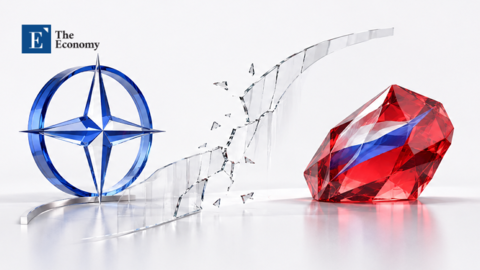
Criticism is mounting that U.S. President Donald Trump’s administration is offering terms overwhelmingly favorable to Russia in negotiations to end the war in Ukraine. A peace proposal involving sanctions relief for Russia and Ukrainian concessions on territory and troop strength has drawn opposition even in the U.S. Congress, while negotiations led by the president’s son-in-law and a close aide have exposed inadequate internal coordination and procedural shortcomings. In particular, Washington appears to be deepening its allies’ distrust by demanding that Europe shoulder postwar security burdens without securing its participation in the talks. Ahead of a U.S.-China-Russia summit, concerns are also emerging that the security of Ukraine and Europe could become entangled in deals among major powers that exclude the countries directly affected.
Trump’s Negotiating Team Under Fire for ‘Accepting Russia’s Demands First’
According to Polish security news outlet Defence24 on the 15th (all dates hereafter local time), Michael Carpenter, a former U.S. ambassador to the Organization for Security and Co-operation in Europe (OSCE) who served as an adviser on European affairs to former U.S. President Joe Biden, sharply criticized the Trump administration’s decision to discuss reshaping Europe’s security order with Russia. He said that simply accepting Russia’s demands as items on the negotiating agenda was an “entirely unnecessary concession” by Steve Witkoff, Trump’s Middle East envoy, and Jared Kushner, his eldest son-in-law. Citing Russia’s previous demands for a restructuring of European security in late 2021 and early 2022, just before its invasion of Ukraine, Carpenter warned of Moscow’s intention to extract concessions from the West. In his assessment, Russia is once again gauging what it can gain from the West without any intention of making concessions itself.
Carpenter also raised suspicions that the two negotiators were pursuing business gains from improved relations with Russia. In an interview with the Polish Press Agency (PAP), he argued that Witkoff and Kushner viewed normalization of U.S.-Russia relations as a business opportunity and that their interests conflicted with Ukraine’s interest in its own survival. As grounds for that claim, he offered his assessment that Russian figures, including President Vladimir Putin’s envoy Kirill Dmitriev, had likely promised the two men major business opportunities. In Carpenter’s view, the potential economic benefits of sanctions relief are influencing their negotiating stance.
Criticism also continued that Trump’s stance toward Russia was preventing concessions from Putin. Carpenter assessed that Putin had no reason to make substantial concessions as long as he regarded Trump as being on his side. He explained that even if European countries joined subsequent talks, the identities or ranks of those attending would not, by themselves, change the fundamental terms of the negotiations. He noted that European countries had no intention of abandoning their own security, and that Ukraine likewise would not surrender the parts of the Donbas it currently controls or allow Russia to determine its future. He added that Putin was seeking to pressure the Ukrainian government into concessions by attacking Ukraine’s infrastructure during winter to drive residents out and trigger a refugee crisis.
Peace Proposal That Bypassed Internal Review Incorporated Extensive Russian Demands
Complaints that Washington was undermining its own pressure on Russia also emerged in the U.S. Congress. On the 13th of last month, six Republican senators, including Mitch McConnell, and six Democratic senators sent Trump a letter urging him to scrap a deal involving Russian diesel. After Trump decided to lift sanctions on Russian diesel exports in the name of stabilizing oil prices, even lawmakers from his own party publicly pushed back. They described the deal as “a gift to an adversary and a betrayal of allies,” criticizing it for allowing diesel sales revenue to flow into Putin’s war chest and support attacks on Ukrainian civilians. The letter also called on Trump to exercise the sanctions authority Congress had provided to exert economic pressure on Russia and countries supporting its war.
Distrust of the negotiating team also stems from an earlier instance in which Kushner and Witkoff drew up a peace proposal with Russia without sufficient coordination within the U.S. government. In late October last year, the two met Dmitriev in Miami and drafted a 28-point peace proposal. According to people familiar with the negotiations at the time, many senior officials at the State Department and National Security Council (NSC) had not been briefed in advance. Even Keith Kellogg, the envoy who had been negotiating with Ukraine, was reportedly excluded from the discussions.
The resulting draft called for Ukrainian forces to withdraw from Ukrainian-controlled areas of Donetsk and for those areas to be recognized as Russian territory. The provision opened the way for Russia to secure through negotiations land it had failed to capture on the battlefield. Provisions limiting Ukraine’s forces to 600,000 personnel and requiring it to enshrine renunciation of NATO membership in its constitution also reflected Russia’s longstanding demands to reduce Ukraine’s military strength and block its integration into the Western military alliance. For Ukraine, the plan meant surrendering territory while also accepting restrictions on its ability to deploy forces against another invasion and choose its alliances. The inclusion of a phased lifting of sanctions on Russia, its return to the Group of Eight (G8), and long-term U.S.-Russia economic cooperation further invited criticism that the proposal guaranteed Russia both the territory it had seized through invasion and economic rewards.
Table 1. Key Controversies over U.S. Policy toward Russia and the Peace Proposal
| Category | Key Details | Issues and Criticism |
|---|---|---|
| Easing of diesel export sanctions | Push to lift sanctions on Russian diesel exports in the name of stabilizing oil prices | Six Republican and six Democratic senators urge withdrawal from the deal Criticism that sales revenue would flow into Russia’s war chest |
| Negotiating process | Kushner and Witkoff draft a 28-point peace proposal with envoy Dmitriev | Many senior State Department and NSC officials not briefed in advance Envoy Kellogg reportedly excluded from discussions |
| Territorial concessions | Withdrawal of Ukrainian forces from Ukrainian-controlled areas of Donetsk Recognition of those areas as Russian territory | Allows Russia to secure through negotiations even areas it has not occupied |
| Troop limits | Ceiling of 600,000 personnel for Ukraine’s forces | Restrictions on force deployment to prepare for another invasion |
| Renunciation of NATO membership | Renunciation of NATO membership to be enshrined in Ukraine’s constitution | Blocks integration into the Western military alliance Restricts Ukraine’s choice of alliances |
| Russia’s economic and diplomatic reintegration | Phased lifting of sanctions on Russia and return to the G8 Long-term U.S.-Russia economic cooperation | Criticism that Russia is guaranteed both territorial gains and economic rewards |
Peace Diplomacy Built on Leader-to-Leader Bargaining Exposes Basic Procedural Flaws
Alongside the proposal’s bias, an approach that relies on direct bargaining between leaders and economic rewards without adequately examining the war’s complex interests is also drawing criticism. In an interview with the Associated Press last month, negotiation expert Marty Latz said Trump was making the mistake of equating the authority of the presidency directly with negotiating leverage. Military superiority alone, he explained, makes it difficult to secure desired terms in a conflict involving multiple countries. In the actual negotiations, flaws emerged even in basic procedures for accurately understanding and recording the other country’s proposals. People involved in the talks also said that, ahead of last year’s U.S.-Russia summit in Alaska, Witkoff met Putin without a U.S. interpreter or stenographer, relied on a Russian interpreter, and misinterpreted Russia’s position on territory when relaying it to Trump. According to a U.S. official’s account at the time, Witkoff reported that Russia was willing to withdraw from some occupied areas of southern Ukraine, but Putin reportedly had not offered that concession.
The view that foreign engagement should be measured in terms of U.S. spending and direct benefits is also evident in public remarks by Trump’s family. At the Doha Forum in Qatar on December 7 last year, his eldest son, Donald Trump Jr., questioned the financial burden of foreign conflicts, saying the United States would no longer play the role of “the big idiot with the checkbook.” He argued that Americans were unwilling to shoulder costs for countries around the world without receiving direct benefits. In particular, he demanded that Europe take greater responsibility for the war in Ukraine and defended the threat of a U.S. aid cutoff as a commonsense response. Asked whether he thought his father would walk away from Ukraine, he acknowledged the possibility and cited Trump’s ability to keep others from predicting his next move as a strength. The remarks revealed a willingness by the United States, which is expected to guarantee postwar security, to use even the possibility of withdrawing support as negotiating pressure.
U.S. Envoys Announced Agreement on European Participation; Russia Remains Noncommittal
Frustration is also growing that the United States is demanding Europe shoulder greater security burdens while failing to secure it a seat in negotiations that will determine the terms for ending the war. During talks in Abu Dhabi on the 10th and 11th, European officials held separate consultations with the Ukrainian delegation but were unable to join the main negotiations involving the United States, Russia and Ukraine. After meeting Putin on the 12th, Kushner and Witkoff announced an agreement for Europe to participate from the next round of talks. The following day, however, Kremlin spokesman Dmitry Peskov drew a line, saying a decision on expanding the talks would come after assessing Europe’s intentions and willingness to contribute to the peace process. Even on European participation, which the U.S. negotiating team had presented as an achievement, Russia attached conditions and avoided a firm commitment.
Russia’s efforts to limit European participation appear to reflect a calculation that it should reduce the number of negotiating counterparts likely to oppose its demands. On the 13th, European Union foreign policy chief Kaja Kallas said Russia was reluctant to have her participate because it did not want a strong counterpart as it sought to push through its maximalist demands. She also warned that allowing Russia to choose who would represent Europe would give Moscow unnecessary negotiating leverage. Tatiana Kastoueva-Jean, director of the Russia/Eurasia Center at the French Institute of International Relations, likewise assessed that Russia was using Trump as a means to pressure Ukraine, exclude Europe and ease sanctions. In Abu Dhabi, the Russian delegation in fact refused to meet European and NATO representatives, concentrating instead on negotiations through the United States.
European Security on the Agenda, but Participation Requires Russia’s Approval First
Putting European security on the negotiating agenda while leaving Europe’s attendance subject to Russia’s consent risks provoking opposition from the countries directly affected. The changes to NATO military deployments that Russia is demanding directly affect the defensive capabilities of Eastern European member states, while postwar security guarantees for Ukraine will also require European troops and funding. If the United States and Russia set the terms first, however, Europe will be left shouldering the burdens of implementing an agreement while excluded from decisions affecting its own defense. Moreover, if negotiations also constrain the deployment of a European security assurance force in Ukraine, which Russia has opposed, Europe will find its means of preparing for renewed war restricted as well. Europe has reason to distrust a United States that demands it assume greater responsibility for defense while first discussing with Russia how it may fulfill that responsibility.
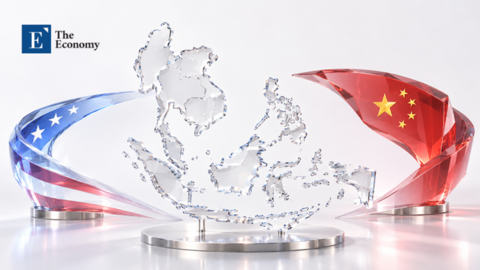
The U.S.-China-Russia summit scheduled for the 19th in Shenzhen, China, is also an unwelcome prospect for Ukraine and Europe. While the United States hopes for progress on nuclear arms reductions and Iran, Russia sees the summit as an opportunity to discuss terms favorable to itself for ending the war in Ukraine. If different issues are brought together in negotiations among the leaders, Ukraine’s territory and Europe’s security risk being treated as bargaining chips to secure cooperation on other matters. A U.S. official expressed opposition to including the Ukraine war on the trilateral summit’s agenda, saying it would be addressed in separate negotiations, and no trade-offs between issues have been confirmed so far. Even so, Russia’s attempt to place Ukraine on the agenda of the three major powers is considered sufficient to leave the country at war and its neighbors anxious about having to entrust their fate to others’ negotiations. While Russia gains a diplomatic platform on which to leverage its nuclear forces and relations with Iran, Ukraine and Europe face the added burden of watching for terms they have not agreed to being incorporated into plans to end the war.
Matthew Reuter is a senior economic correspondent at The Economy, where he covers global financial markets, emerging technologies, and cross-border trade dynamics. With over a decade of experience reporting from major financial hubs—including London, New York, and Hong Kong—Matthew has developed a reputation for breaking complex economic stories into sharp, accessible narratives. Before joining The Economy, he worked at a leading European financial daily, where his investigative reporting on post-crisis banking reforms earned him recognition from the European Press Association. A graduate of the London School of Economics, Matthew holds dual degrees in economics and international relations. He is particularly interested in how data science and AI are reshaping market analysis and policymaking, often blending quantitative insights into his articles. Outside journalism, Matthew frequently moderates panels at global finance summits and guest lectures on financial journalism at top universities.
- Previous “Information-Gathering Devices on Wheels”: Chinese Connected-Car Security Threats Materialize as Access Restrictions Spread from Military Facilities to Industrial Sites
- Next “From the Baltic Sea to the North Atlantic”: Rising Russia–NATO Military Tensions Put Europe's Deterrence to the Test
Similar Post