“China’s Export Control Reprieve Buys Time,” but EU Supply Chain Independence Faces a Dilemma as Costs, Regulation and Pricing Hinder Efforts to Reduce Reliance on China

Oliver Griffin is a policy and tech reporter at The Economy, focusing on the intersection of artificial intelligence, government regulation, and macroeconomic strategy. Based in Dublin, Oliver has reported extensively on European Union policy shifts and their ripple effects across global markets. Prior to joining The Economy, he covered technology policy for an international think tank, producing research cited by major institutions, including the OECD and IMF. Oliver studied political economy at Trinity College Dublin and later completed a master’s in data journalism at Columbia University. His reporting blends field interviews with rigorous statistical analysis, offering readers a nuanced understanding of how policy decisions shape industries and everyday lives. Beyond his newsroom work, Oliver contributes op-eds on ethics in AI and has been a guest commentator on BBC World and CNBC Europe.
Authored On
Modified
China further postpones rare earth export controls, but underlying supply chain instability persists
EU and major member states accelerate efforts to reduce reliance on China through mine development, expanded refining facilities and overseas investment
High production costs and permitting rules hamper progress, while price uncertainty complicates financing
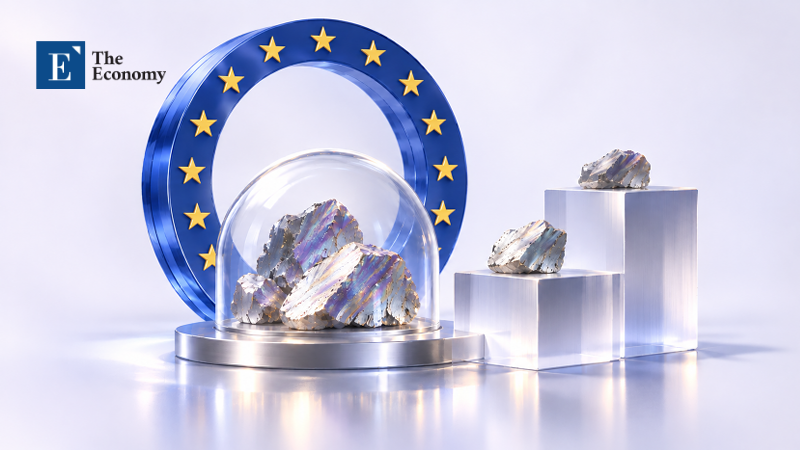
China has further postponed the implementation of its rare earth export controls, but analysts say the decision is merely a stopgap that delays supply chain instability. Easing US-China trade tensions have somewhat calmed near-term supply concerns, yet building a self-sufficient industrial ecosystem remains a key challenge for Europe and other regions heavily dependent on Chinese rare earths. The European Union (EU) and major member states have recently been trying to establish alternative supply chains by developing mines, expanding refining and recycling facilities, and investing in overseas resources. However, structural constraints—including high production costs, complex permitting procedures and opaque pricing systems—are making tangible results difficult to achieve.
A Brief Respite for Rare Earth Supply Chains
According to a report on the 10th by Hong Kong’s South China Morning Post (SCMP), China’s Ministry of Commerce announced on the 9th that it would extend the suspension of export controls on certain rare earths, related technologies, lithium batteries and artificial graphite anode materials by two months, until January 10, 2027. All dates are local time. China had previously placed seven rare earth elements—samarium, gadolinium, terbium, dysprosium, lutetium, scandium and yttrium—and related products under export controls in April last year as trade tensions with the United States intensified. On October 9 of the same year, it expanded the restrictions to five more rare earth elements—holmium, erbium, thulium, europium and ytterbium—as well as batteries, graphite and superhard materials. It also introduced measures requiring Chinese government export licenses for certain products manufactured overseas using Chinese rare earths.
The situation changed, however, when US President Donald Trump and Chinese President Xi Jinping agreed to ease trade tensions at a summit in October last year. On November 7 of that year, China’s Ministry of Commerce suspended six sets of export controls for roughly one year, setting the suspension period to run until November 10 this year. The latest extension covers holmium, erbium, thulium, europium and ytterbium; rare earth mining and processing equipment and related technologies; high-performance lithium-ion batteries; artificial graphite anode materials; and industrial superhard materials. Implementation of re-export restrictions on certain overseas-made products containing Chinese rare earths was also postponed. However, the existing export licensing system for samarium, gadolinium, terbium, dysprosium, lutetium, scandium and yttrium remains in place.
The EU’s Vision for Rare Earth Self-Sufficiency
Market observers nevertheless say China’s suspension of export controls is only a temporary fix. They argue that the measures merely ease short-term supply concerns and cannot resolve the structural vulnerabilities of countries lacking sufficient domestic capacity to mine, refine and process rare earths. The EU is a prime example. According to Eurostat, China accounted for 46.8% of the 15,100 tonnes of rare earths imported by the EU last year. In particular, the EU relies almost entirely on China for heavy rare earth supplies, while imports from China meet 98% of its demand for rare earth permanent magnets.
To minimize these risks, the EU is pursuing the RESourceEU action plan to diversify supply chains under the Critical Raw Materials Act (CRMA). The CRMA, which entered into force in May 2024, sets targets for the EU to mine at least 10%, process 40% and recycle 25% of its annual consumption of strategic raw materials within the bloc by 2030. It also aims to reduce dependence on any single non-EU country for raw material supplies to no more than 65%. Specific implementation measures set out in the RESourceEU action plan announced last December included joint purchasing and strategic stockpiling of rare earths and battery raw materials, faster permitting for mining, refining and recycling facilities within the bloc, and expanded supply chain cooperation with resource-rich countries overseas. As of last month, public financing secured since the launch of RESourceEU to support rare earth and battery raw material mining and the expansion of refining and recycling facilities had also exceeded EUR 2 billion.
Individual Member States Step Up Investment
Efforts by individual member states to achieve supply chain independence are also taking shape. Germany is investing in overseas rare earth mines while expanding domestic recycling facilities. In April, Germany’s Federal Ministry for Economic Affairs and Energy announced that it would invest up to EUR 50 million through the government’s raw materials fund in the Nolans project of Australian rare earth exploration and development company Arafura Rare Earths. The project involves building a rare earth mine and refining and separation facilities near Australia’s Northern Territory, with the aim of producing neodymium and praseodymium oxides, among other materials, that are essential inputs for permanent magnets used in electric vehicle motors and wind turbines. That same month, the French government signed a roadmap with Japan for cooperation on critical mineral supply chains and agreed to jointly support feedstock procurement for the Caremag rare earth refining and recycling plant under construction in Lacq, southwestern France.
Sweden is seeking to leverage its abundant mineral resources to become a European hub for rare earth mining. Swedish state-owned mining company LKAB announced in 2023 that it had discovered a large rare earth deposit in the northern Kiruna region. Subsequent exploration led it to estimate that the Per Geijer deposit contains approximately 2.2 million tonnes of rare earth oxides. In response, the Swedish government designated rare earth and critical mineral mining as activities of national security importance in July and announced a policy to streamline permitting for new mine development. Elsewhere, Australian mineral developer Osmond Resources has begun developing a polymetallic rare earth mine in the Jaén area of Sweden’s Andalusia region to secure neodymium, dysprosium and terbium, among other materials.
Table 1. Europe’s Efforts to Achieve Rare Earth Supply Chain Independence
| Entity | Area of Focus | Key Details |
|---|---|---|
| EU | Policy Framework and Targets | Increase the share of mining, processing and recycling within the EU through the CRMA, and reduce dependence on any single non-EU country to no more than 65% |
| Joint Action | Pursue joint raw material purchasing and stockpiling, faster facility permitting, cooperation with resource-rich countries and financial support under RESourceEU | |
| Germany | Securing Overseas Resources | Invest in Australian rare earth mining and refining projects through the government’s raw materials fund |
| France | Refining and Recycling | Cooperate with Japan to establish a feedstock supply network for the rare earth refining and recycling plant in La Rochelle |
| Sweden | Mining Within the EU | Streamline permitting procedures to develop domestic rare earth deposits, including Per Geijer |
High Regulatory and Cost Barriers
The EU’s plans for rare earth supply chain independence are nevertheless expected to face substantial obstacles before delivering tangible results. One major challenge is that environmental and social regulations governing mine development and raw material processing facilities vary among member states. Unlike China, which has systematically fostered the industry from rare earth mining through refining and processing under long-term central government plans, the EU must account separately for each country’s permitting procedures, environmental regulations and obligations to protect local residents’ rights. For example, development of the Per Geijer deposit has faced difficulties over concerns about environmental damage and infringement of the indigenous Sámi people’s reindeer grazing rights, despite its designation by the EU as a strategic project under the CRMA.
The production cost gap with China is another structural obstacle. China has secured price competitiveness through refining and separation expertise accumulated over many years, large-scale production facilities and low-cost raw material procurement networks. Europe, by contrast, is weighed down by the costs of building new facilities, high labor expenses and environmental compliance. According to global consultancy Bain & Company, there is a cost gap of approximately 20–40% between Chinese and European rare earth production and processing supply chains. Some Chinese products are reportedly as much as 60–70% cheaper than their European counterparts.
Continued Disruption Across the Industry Ecosystem
The lack of an independent pricing system for assessing investment profitability is also cited as a problem. In an interview with SCMP, Bernd Schäfer, CEO of EU-backed raw materials industry collaboration organization EIT RawMaterials, said, “Europe has not established reliable independent price benchmarks for around 14 major rare earth oxides and raw materials such as gallium and germanium.” He explained, “Reference prices quoted in Europe for some raw materials are currently 3–20 times those in China, but these are estimates derived from interviews with industry participants and surveys, rather than market prices established through actual transactions.” Stefan Bernstein, CEO of GreenRoc Strategic Materials, which is developing a graphite mine in Greenland, likewise said, “We are assessing the price competitiveness of our products against the European selling price of high-quality Chinese battery anode materials, but we are struggling to obtain up-to-date market prices.”
This price uncertainty also directly affects financial institutions’ loan assessments and efforts to attract private investment. It not only makes it harder for investors and financial institutions to estimate future raw material selling prices and expected revenue, but also complicates assessments of the profitability of new mines and refining facilities and the prospects for recouping investments. Financial instruments for hedging price volatility are also scarce. As a result, financial institutions are demanding high risk premiums on related loans, while project developers face a steadily growing financing burden. In September, Reuters reported that representatives of 23 of the 60 critical raw material strategic projects selected by the EU had requested emergency support, citing funding difficulties and investment delays.
Oliver Griffin is a policy and tech reporter at The Economy, focusing on the intersection of artificial intelligence, government regulation, and macroeconomic strategy. Based in Dublin, Oliver has reported extensively on European Union policy shifts and their ripple effects across global markets. Prior to joining The Economy, he covered technology policy for an international think tank, producing research cited by major institutions, including the OECD and IMF. Oliver studied political economy at Trinity College Dublin and later completed a master’s in data journalism at Columbia University. His reporting blends field interviews with rigorous statistical analysis, offering readers a nuanced understanding of how policy decisions shape industries and everyday lives. Beyond his newsroom work, Oliver contributes op-eds on ethics in AI and has been a guest commentator on BBC World and CNBC Europe.
Similar Post