“From the Baltic Sea to the North Atlantic”: Rising Russia–NATO Military Tensions Put Europe's Deterrence to the Test

As one of the youngest members of the team, Tyler Hansbrough is a rising star in financial journalism. His fresh perspective and analytical approach bring a modern edge to business reporting. Whether he’s covering stock market trends or dissecting corporate earnings, his sharp insights resonate with the new generation of investors.
Authored On
Modified
Russia warns NATO of nuclear weapons use, expands naval activity in the North Atlantic
NATO members including Estonia, the United Kingdom and Canada step up defense readiness
Effectiveness of European sanctions on Russia uncertain; Europe also “sidelined” in talks to end the war in Ukraine
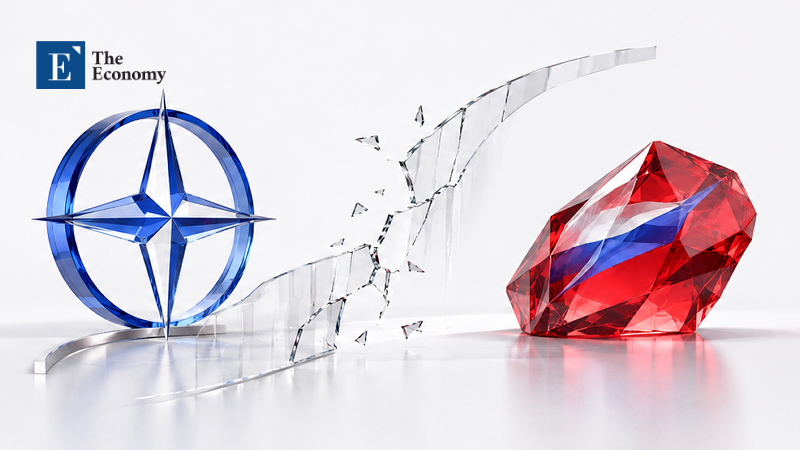
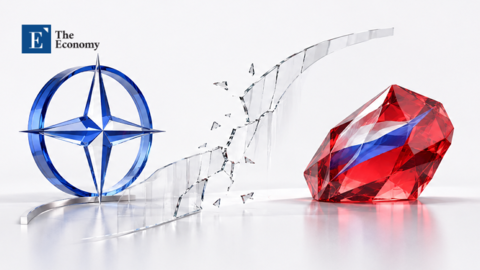
Military tensions between the North Atlantic Treaty Organization (NATO) and Russia are escalating rapidly. As Russia expands its naval and submarine operations in the Baltic Sea and North Atlantic and even raises the possibility of using nuclear weapons against NATO members, countries including Estonia, the United Kingdom and Canada are strengthening their military readiness in response to Russian threats. Some international observers, however, argue that Europe's current diplomatic and economic circumstances will limit NATO members' ability to effectively deter Russian military action.
Estonia to Close All Border Crossings with Russia
According to Reuters on the 15th (all dates hereafter are local time), Estonian Foreign Minister Margus Tsahkna announced that all border crossings with Russia would close starting December 1. The same day, Estonian Interior Minister Igor Taro also said he would propose to the government that pedestrian and vehicle traffic be suspended at all land border checkpoints. Three land border checkpoints—Narva, Luhamaa and Koidula—currently operate between Estonia and Russia, allowing pedestrians and freight trucks to cross. The duration of the border closures has not yet been determined.
The immediate trigger for the measure was an attempted arson attack targeting an Estonian defense company. On the 14th, eight Latvian residents were detained in Estonia on suspicion of attempting to set fire to a facility belonging to drone manufacturer Threod Systems in Viimsi, north of the capital, Tallinn. The suspects reportedly broke the building's windows and poured flammable liquid inside, attempting to cause a fire and explosion before being stopped by security personnel. There were no casualties or significant damage to production facilities. Estonia's Internal Security Service (KAPO) subsequently characterized the incident as sabotage directed by Russia's military intelligence agency, the GRU.
Overhauling Defenses amid Russian Threats
Estonia has been comprehensively overhauling its national defense strategy since early this year to prepare for military threats from Russia. In February, it began procurement procedures for 600 concrete bunkers to be installed along the Russian border. In April, it unveiled a new security strategy aimed at sustaining state functions for at least 30 days without outside assistance in the event of war or a major crisis. The plan calls for maintaining essential services—including energy, communications, food, fuel and medical care—even if all air, land and sea transport links are cut, while ensuring that individual citizens are prepared to survive for at least 7 days without external support. Its military strategy has also shifted from a focus on territorial defense to “Active Defence.” Rather than seeking to recapture territory after an enemy invasion, the approach aims to stop attacks at the border and, if necessary, strike military targets inside Russian territory.
Efforts to expand military facilities and bolster combat capabilities are also continuing. As of late June, a total of 28 bunkers and more than 10 km of anti-tank trenches had been built in southeastern Estonia near Russia. Late last month, work also began on installing concrete bunkers near the northeastern border city of Narva. The Estonian government plans to invest EUR 60 million to build 600 bunkers and anti-tank obstacles along the border, completing the defensive line by the end of next year. Estonia is also concentrating its forces on border defense by relocating its main combat brigade closer to the Russian border and building new military bases in Jõhvi and Narva.
Russia's Pressure Campaign against NATO
Russia, too, is maintaining a hard-line stance toward Estonia and other NATO members. In a diplomatic document delivered to NATO in September, the Russian government stressed that it was “prepared to use all military means, including nuclear weapons, if Kaliningrad, its exclave on the Baltic coast, is blockaded.” It also accused NATO of continuing “dangerous and reckless actions” that could lead to direct armed conflict, and raised the possibility of striking member states' decision-making centers from the outset of any clash. NATO Secretary General Mark Rutte criticized Russia's nuclear threats while assessing that Moscow was waging psychological warfare aimed at weakening cohesion among European members.
Russia's campaign of economic pressure against Ukraine is also heightening the sense of crisis in the region. Since June, Russian forces have intensified attacks on ports and civilian vessels along the Black Sea coast, including Odesa. Although no formal naval blockade has been declared, ships have avoided calling at Ukrainian ports for fear of being attacked, creating conditions approaching a de facto blockade. As a result, Ukraine's agricultural exports fell 23% month on month in July, while grain shipping costs surged by USD 50 per metric ton. Ukrainian investment firm Dragon Capital projected that, if the logistical disruptions continued, Ukraine could suffer economic losses equivalent to 1–1.5% of GDP by the end of the year.
Table 1. Forms of Russian Pressure on NATO and Ukraine
| Category | Target | Key Details |
|---|---|---|
| Military threats | Baltic Sea ·NATO | Warnings of possible nuclear weapons use and strikes on NATO member states' command centers if Kaliningrad is blockaded |
| Economic pressure | Ukraine · Black Sea | Attacks on ports and civilian vessels create a de facto naval blockade, disrupting agricultural exports and logistics |
| Maritime activity | North Sea · English Channel | Warships escort sanctioned shadow fleet vessels as operations expand in waters around neighboring countries |
| Undersea threats | North Atlantic | Special-purpose submarines and intelligence-gathering ships conduct reconnaissance of critical infrastructure, including undersea communications networks |
Russian Naval Activity in the North Atlantic Draws Attention
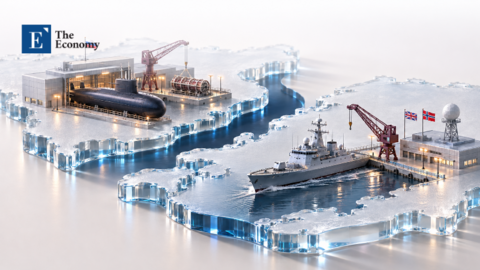
Russian naval activity in the North Atlantic has also been expanding recently. According to a report by Britain's Guardian on the 10th, UK Defence Minister Luke Pollard said Russian naval activity observed in waters around the United Kingdom from January through September this year increased 41% compared with the same period a year earlier. Russian forces were found to have used warships in the North Sea and English Channel to escort tankers and cargo vessels belonging to the so-called “shadow fleet” subject to international sanctions, while deploying intelligence-gathering ships and special-purpose submarines to conduct reconnaissance of critical infrastructure, including undersea communications cables.
For example, one Russian Akula-class attack submarine and two special-purpose submarines belonging to Russia's Main Directorate of Deep-Sea Research (GUGI) were confirmed to have operated for more than a month in the North Atlantic north of the United Kingdom in April. The UK Ministry of Defence warned that these special-purpose submarines could be used for sabotage in a crisis. British forces, alongside allies including Norway, deployed frigates and P-8 maritime patrol aircraft to track them around the clock. In September and October, the Russian intelligence-gathering ship Viktor Leonov was also spotted near the Outer Hebrides west of Scotland, prompting the Royal Navy to scramble an anti-submarine helicopter to monitor it.
“Limits” to Sanctions and Diplomatic Responses against Russia
As Russian threats intensify, NATO countries are accelerating efforts to expand their maritime operational capabilities. The UK government has pledged GBP 90 million to detect Russian submarines and protect undersea infrastructure. The investment is part of the “Atlantic Bastion” initiative, which combines crewed vessels with uncrewed capabilities. Its core aim is to establish a surveillance network linking uncrewed underwater vehicles, underwater sensors and artificial intelligence (AI) across the North Atlantic waters connecting Greenland, Iceland and the United Kingdom. Britain is also pursuing the formation of a joint fleet with Norway to operate at least 13 Type 26 frigates. Canada, too, has begun expanding underwater detection equipment and northern operational support hubs to monitor Russian submarine activity in the Arctic Ocean and North Atlantic. Meanwhile, the EU is strengthening the border defense capabilities of member states neighboring Russia while expanding military and financial support for Ukraine.
Despite these moves, questions persist over Europe's ability to effectively deter Russia. Dependence on Russian energy and conflicting interests among member states are singled out as factors undermining the effectiveness of sanctions against Moscow. Although Russia's share of EU gas imports fell from 45% before the war to 12% last year, some member states continue to import Russian energy actively. Diplomatic responses also face difficulties. Russia has maintained its position that European participation in negotiations to end the war in Ukraine should be restricted, leaving key European stakeholders unable to participate directly in talks that bear directly on their security. Indeed, during negotiations among the United States, Russia and Ukraine held in Abu Dhabi, United Arab Emirates (UAE), on the 10th and 11th, the Russian delegation refused to meet directly with European representatives. US special envoys Steve Witkoff and Jared Kushner subsequently said they had secured Russian President Vladimir Putin's agreement to European participation in the negotiations, but Russia promptly distanced itself from that claim as well.
As one of the youngest members of the team, Tyler Hansbrough is a rising star in financial journalism. His fresh perspective and analytical approach bring a modern edge to business reporting. Whether he’s covering stock market trends or dissecting corporate earnings, his sharp insights resonate with the new generation of investors.
Similar Post