“Overcoming trade restrictions through local investment”: Chinese automakers expand European production, but local labor rules pose an unexpected hurdle

As one of the youngest members of the team, Tyler Hansbrough is a rising star in financial journalism. His fresh perspective and analytical approach bring a modern edge to business reporting. Whether he’s covering stock market trends or dissecting corporate earnings, his sharp insights resonate with the new generation of investors.
Authored On
Modified
Chinese automakers establish European bases through factory acquisitions and joint ventures
EU trade barriers steadily rise, from tariffs to policies favoring locally made products
Labor rights controversies mount at Chinese automakers' overseas factories
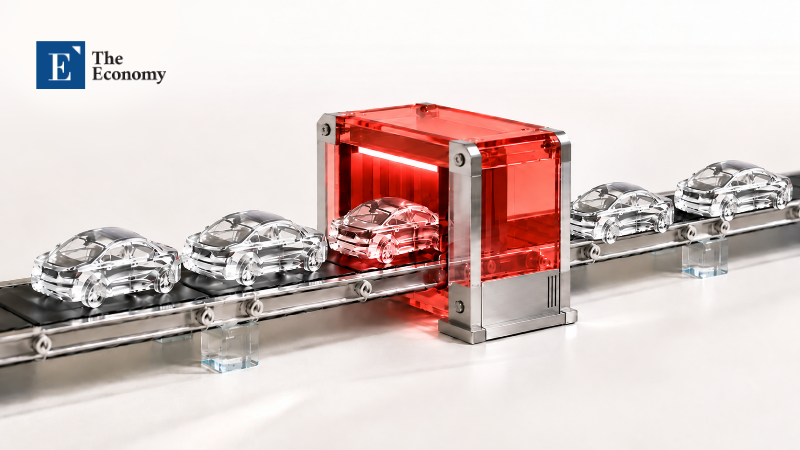
Chinese electric vehicle manufacturer BYD is moving to acquire a French car factory owned by British automaker Ineos Automotive. As the European Union (EU) raises trade barriers against Chinese-made vehicles, Chinese automakers are accelerating efforts to secure local production bases. However, some market observers warn that establishing local production will not necessarily translate into stable business expansion, given the substantial risk that China's long-hours work practices and subcontracting structures will clash with Europe's strict labor laws.
BYD expands its European production footprint
Reuters reported on the 24th (all dates hereafter local time) that BYD and Ineos Automotive had entered exclusive negotiations over the sale of the Hambach plant in France. Acquired by Ineos from Mercedes-Benz in 2020, the plant has an annual production capacity of up to 120,000 vehicles and currently employs around 900 people. According to French daily Le Monde, the sale could be completed as early as the first quarter of next year, and BYD is also considering investing EUR several hundred million to expand the plant's annual production capacity to 300,000 vehicles. The purchase price and models to be produced have not been disclosed.
BYD is also building a passenger vehicle production facility in Szeged, southern Hungary. The Szeged plant, whose construction plans were officially announced in December 2023, was originally scheduled to begin full-scale operations late last year. However, delays in preparations, including the installation of production equipment, have pushed mass production back by more than a year. BYD plans to begin vehicle assembly late this year and start mass production early next year, with a long-term goal of securing annual capacity of more than 150,000 vehicles. Models under consideration include the Dolphin Surf small electric hatchback and the Atto 2 small electric SUV.
Chinese automakers push into Europe
Alongside BYD, several major Chinese automakers are establishing production bases across Europe. Chery, for example, formed a joint venture with Spanish automaker EBRO in 2024 and secured a former Nissan plant in Barcelona. The two companies plan to begin local production of Chery-branded vehicles between late this year and the first quarter of next year, increasing annual output to 150,000 vehicles by 2029. SAIC Motor is pursuing the construction of an MG vehicle factory and logistics base in Ferrol, in Spain's northwestern region of Galicia, with an initial investment of EUR 200 million. Construction is targeted to begin next year, with operations starting in 2028. Annual capacity is expected to reach 120,000 vehicles once the second phase of expansion is completed.
More Chinese automakers are also sharing existing European manufacturers' production lines. Great Wall Motor (GWM) has signed a production agreement with Bulgarian vehicle manufacturer and contract producer Bulgarian Automotive Industry (BAI) to manufacture the Ora 5 small electric SUV at its Bahovitsa plant near Lovech starting in the first quarter of next year. The annual production capacity target is 50,000 vehicles. Great Wall Motor plans to raise its annual European output to around 300,000 vehicles by 2029 and capture a 3–5% share of the European market in 2030.
Table 1. Chinese automakers' progress in securing European production bases
| Company | Country | Location | Form of entry |
|---|---|---|---|
| BYD | France | Hambach | Exclusive negotiations to acquire Ineos's existing plant |
| Hungary | Szeged | Pursuing construction of a new passenger vehicle plant | |
| Chery | Spain | Barcelona | Joint venture with local company EBRO, using a former Nissan plant |
| SAIC Motor | Spain | Ferrol | Pursuing construction of a new MG vehicle factory and logistics base |
| Great Wall Motor | Bulgaria | Bahovitsa | Plans to produce the Ora 5 at local company BAI's plant |
| Leapmotor | Spain | Zaragoza | Vehicle production at an existing Stellantis plant |
| Spain | Villaverde, Madrid | Pursuing transfer of plant ownership to its joint venture with Stellantis and allocation of additional models for production | |
| Geely Auto | Spain | Valencia | Agreement with Ford to establish a joint venture to operate an existing plant |
| XPeng | Austria | Graz | Contract manufacturing at Magna's plant |
| GAC Group | Austria | Graz | Contract manufacturing at Magna's plant |
Extensive use of existing local production lines
Leapmotor also began producing the B10 electric SUV and batteries at Stellantis's Zaragoza plant in Spain on the 16th of last month, and plans to begin trial production of the B05 electric hatchback before the end of this year. Stellantis and Leapmotor are also pursuing plans to allocate additional models to the Villaverde plant in Madrid, Spain, and transfer ownership of the facility to the Spanish subsidiary of their joint venture, Leapmotor International. Geely Auto also agreed in July to establish a joint venture with U.S. automaker Ford to operate the Valencia plant in Spain. Ford and Geely Auto will hold stakes of 66% and 34%, respectively, in the venture, which plans to produce two Geely electric SUV models starting in 2028.
In Austria, XPeng and GAC Group are using contract automaker Magna's Graz plant. Since beginning local production in September last year, XPeng has been manufacturing the G6 and G9 electric SUVs and the P7+ electric sedan. On the 7th of last month, it completed trial production of its fourth locally produced model, the G9L large electric SUV. GAC Group also began mass production of the Aion V electric SUV at the Graz plant in November last year, expanding its lineup in March this year to include the Aion UT electric hatchback.
EU raises trade barriers against Chinese vehicles
EU trade restrictions are driving Chinese automakers to accelerate local production in Europe. Since October 2024, the EU has imposed countervailing duties of 7.8–35.3% on Chinese-made electric vehicles, on top of the existing 10% import tariff. Company-specific duty rates include 17% for BYD, 18.8% for Geely Auto and 35.3% for SAIC Motor. After Chinese companies increased hybrid vehicle exports to avoid the high tariffs on electric vehicles, additional import restrictions were introduced for hybrids as well. On the 24th, the European Commission announced that country-specific import quotas would apply to hybrid vehicles, including plug-in hybrid electric vehicles (PHEVs), for 200 days starting December 1. Imports of Chinese-made hybrid vehicles will therefore be capped at 191,780 during that period, with further imports prohibited once the quota is exhausted.
The EU is also fleshing out its “Made in Europe” policy, which concentrates government benefits on products manufactured within the bloc. The draft Industrial Accelerator Act (IAA), announced by the European Commission in March, stipulates that electric vehicles must undergo final assembly within the EU and source at least 70% of their total component value, excluding batteries, from within the bloc to qualify for public procurement and related tax benefits. Batteries would also be required to have at least 3 major components, including cells, produced within the EU. In addition, the EU is pursuing conditions on foreign direct investment above a certain size in strategic industries such as electric vehicles and batteries, including employing an EU workforce of at least 50%, sourcing components within the bloc, and undertaking technology transfers and research and development (R&D).
Could Chinese companies' labor practices hinder localization?
It remains uncertain, however, whether Chinese automakers' European localization strategies will proceed smoothly. China's long-hours work practices and complex, multilayered subcontracting structures could clash with Europe's strict labor laws and workplace culture. Similar controversies have already arisen during the construction of Chinese automakers' overseas production facilities. In December 2024, Brazilian labor authorities investigated a BYD plant under construction in Camaçari, Bahia, and concluded that 163 workers employed by Chinese construction subcontractor Jinjiang Group were working in conditions effectively equivalent to slavery. Jinjiang Group categorically denied the allegations, attributing them to cultural differences and misunderstandings during interpretation. However, Brazilian labor prosecutors subsequently raised the number of affected workers to 220 and filed a damages lawsuit against BYD and two subcontractors in May last year. Late last year, the companies agreed to pay a total of BRL 40 million (approximately USD 7 million) in compensation.
Similar problems have emerged in Europe. In May, U.S.-based labor rights organization China Labor Watch (CLW) released findings that Chinese migrant workers at the construction site of BYD's electric vehicle plant in Szeged, Hungary, had faced long working hours, unpaid wages and unfair employment practices. Some workers worked up to 14 hours a day, 7 days a week, without proper overtime pay, while some subcontractors reportedly withheld 20–30% of wages or delayed payment for up to 3 months. Cases were also identified in which visa, airfare and job placement costs were passed on to workers. Hungarian authorities conducted a total of 47 employment and occupational safety inspections at the construction site, imposing cumulative fines of HUF 139.2 million (approximately USD 430,769). They also temporarily halted work by 594 workers and the operation of 20 pieces of equipment over safety concerns.
As one of the youngest members of the team, Tyler Hansbrough is a rising star in financial journalism. His fresh perspective and analytical approach bring a modern edge to business reporting. Whether he’s covering stock market trends or dissecting corporate earnings, his sharp insights resonate with the new generation of investors.
Similar Post