China Wins Five Times South Korea’s Ship Orders and Targets High-Value Vessels, Reversing the Position of a Nation That Once Overtook Japan

Siobhán Delaney is a Dublin-based writer for The Economy, focusing on culture, education, and international affairs. With a background in media and communication from University College Dublin, she contributes to cross-regional coverage and translation-based commentary. Her work emphasizes clarity and balance, especially in contexts shaped by cultural difference and policy translation.
Authored On
Modified
Chinese shipbuilders expand docks amid ship order boom
Follow-up orders for large LNG carriers also go to China
KMTC places its first-ever container ship order in China
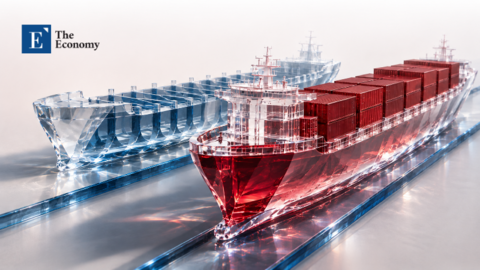
China’s shipbuilding industry, which has expanded construction capacity amid a global boom in ship orders, is narrowing the order gap with South Korea even in the market for large liquefied natural gas (LNG) carriers, a mainstay of Korean shipbuilders. Last month, China surpassed South Korea for the first time in monthly orders by vessel count after Malaysian shipping company MISC also entrusted Chinese yards with follow-up orders for LNG carriers to be deployed under long-term charter contracts. In the container ship market, even Korea Marine Transport Co. (KMTC), a longtime customer of domestic shipyards, ordered new vessels from a Chinese yard for the first time in its history. South Korean shipbuilders now face competition from China not only for foreign shipowners’ high-value vessel orders but also for the next orders from their longstanding domestic shipping customers.
Chinese Shipbuilders’ New Orders Reach 5.1 Times South Korea’s
According to British shipbuilding and shipping research firm Clarkson Research on the 24th local time, Chinese shipbuilders secured 5.1 times as much shipbuilding work as their South Korean counterparts from January through October this year. In compensated gross tonnage (CGT), which reflects vessel size and construction complexity, China captured 77% of global orders, while South Korea took 15%. By vessel count, the gap widens to 7.6 times, with China winning 2,238 ships and South Korea 296. In particular, China secured more than 2,000 of the vessels ordered worldwide during the first ten months of this year, expanding its future workload. At the end of October, Chinese shipyards held 68% of the global order backlog, four times South Korea’s 17%.
Among Chinese shipyards, Dalian-based Hengli Heavy Industry has been particularly successful in securing container ship and crude oil tanker orders. Refining and petrochemical giant Hengli Group acquired the former STX Dalian shipyard, which went bankrupt in 2022, and resumed shipbuilding there the following year. According to Italian shipbroker Banchero Costa, of the 276 vessels Hengli won orders for from January through September this year, 117 were container ships and 100 were crude oil tankers. Driven by orders for these two vessel types, Hengli’s share of new orders across seven major merchant vessel categories jumped from 9.4% last year to 23.4% in the first nine months of this year. Its ranking among individual shipyards by CGT also rose from fifth to first globally over the same period.
Chinese Shipyards Race to Expand Amid Global Ship Order Boom
As workloads grow, Chinese shipbuilders are expanding both docks for hull assembly and workshops for prefabricating components. More than half of Hengli’s secured work is scheduled for delivery to shipowners within the next two years. Of its backlog of 485 vessels at the end of September, 99 are scheduled for delivery next year and 199 in 2028. Given that it built 62 vessels from January through September this year, it must sharply increase annual output to meet delivery schedules. Parent company Songfa has allocated CNY 13.51 billion to expand the Dalian shipyard. More than CNY 10 billion will go toward docks and land-based production facilities, while workshops will also be expanded to fabricate blocks for curved hull sections and pre-install piping and other equipment in blocks.
Private shipbuilder Yangzijiang Shipbuilding has also begun operating a new shipyard as orders for large vessels increase. In the third quarter alone, it secured orders for 12 LNG dual-fuel container ships of 24,000 TEU and 10 bulk carriers of 210,000 tonnes. Its order backlog stood at a record 285 vessels at the end of October, with some deliveries scheduled for 2031. Yangzijiang has begun steel processing and hull component production at its Hongyuan shipyard, which is being built with an investment of CNY 3 billion. Singapore’s DBS projected that when the Hongyuan yard enters full operation early next year, Yangzijiang’s overall shipbuilding capacity will rise by 20%.
Demand for fleet renewal in the global shipping industry has helped drive Chinese shipbuilders’ race to expand. Shipping companies have been placing successive orders for LNG- or methanol-fueled vessels as they replace aging ships. In addition, the U.S.-Iran war has lengthened crude oil shipping distances, boosting orders for large tankers to serve long-haul routes. According to shipping analytics firm Signal Group, shipowners worldwide had ordered 217 very large crude carriers by mid-September this year, more than double last year’s full-year total of 93. Crude oil tanker orders have been particularly concentrated in China: Chinese yards secured 82% of this year’s global orders tallied in July by international shipping association BIMCO. According to BIMCO, Chinese shipyards are scheduled to deliver a total of 44 million CGT of vessels to shipowners in 2028 alone, 1.9 times last year’s actual deliveries of 22.7 million CGT.
Table 1. Chinese Shipyards’ Large LNG Carrier Orders and South Korean Shipping Companies’ Container Ship Orders
| Category | Timing / Customer | Key Details |
|---|---|---|
| Large LNG carrier orders | 2025 | China secured orders for 3 vessels |
| January–October 2026 | Of 76 vessels ordered worldwide, South Korea secured 44 and China 32 (42.1%) | |
| October 2026 | Of 7 vessels ordered worldwide, China secured 5 and South Korea 2. China surpassed South Korea in monthly vessel orders for the first time | |
| Hudong-Zhonghua Shipbuilding LNG carriers | Malaysia’s MISC | Ordered 10 vessels of 174,000 cubic meters (5 in the first half of 2026 and 5 in October) |
| Charterer Petronas | 20-year long-term charter contracts apply to the 10 vessels ordered by MISC | |
| Huangpu Wenchong Shipbuilding Container ships | Namsung Shipping / Dong Young Shipping | Ordered a combined 4 vessels in March 2026 |
| CK Line | Ordered 2 vessels in August 2026 and secured options for additional orders | |
| KMTC | Signed a contract for 6 container ships of 3,100 TEU on October 26, 2026. First newbuilding order placed in China in the company’s history | |
| South Korean shipping companies’ total | Firm contracts for 12 vessels in 2026 |
China Makes Inroads Even into South Korea’s Stronghold of Large LNG Carriers
China’s push is also threatening the high-value vessel market, where South Korea has held an advantage. In the large LNG carrier market in particular, Chinese shipyards are narrowing the gap with South Korea by securing follow-up orders from foreign shipping companies. According to Clarkson Research, Chinese shipyards won orders for just 3 large LNG carriers last year. This year, they secured 32 of the 76 vessels ordered worldwide from January through October, capturing a 42.1% share. South Korea retained the lead in cumulative orders with 44 vessels, but secured only 2 of the 7 vessels ordered in October. China took all of the remaining 5, surpassing South Korea in monthly orders by vessel count for the first time.
Another concern for South Korean shipbuilders is that foreign shipowners have begun entrusting follow-up orders to the same Chinese shipyards. All 5 vessels China secured in October were LNG carriers of 174,000 cubic meters ordered by Malaysian shipping company MISC from Hudong-Zhonghua Shipbuilding. MISC had also ordered 5 LNG carriers of the same size from the same yard in the first half of this year. The 10 vessels secured in the two rounds are tied to 20-year long-term charter contracts with Malaysian state-owned energy company Petronas. As Petronas secured additional vessels for long-term operation, Hudong-Zhonghua captured the entire follow-up construction order as well.
All 6 KMTC Container Ships Go to China’s Huangpu Wenchong
In the container ship market, even longtime customers of South Korean shipyards are turning to China for new vessels. KMTC, which mainly operates intra-Asian routes, signed a contract with China’s Huangpu Wenchong Shipbuilding on the 26th of last month to build 6 container ships of 3,100 TEU. It was the first time in its history that KMTC, which has mainly relied on domestic shipyards, had ordered newbuildings in China. Although the contract price and delivery schedule were not disclosed, Huangpu Wenchong modified its proprietary “Honghu” design, which has attracted repeat orders from multiple foreign shipowners, to reduce fuel consumption under KMTC’s operating conditions. Earlier, Namsung Shipping and Dong Young Shipping ordered 4 container ships from the yard in March, while CK Line ordered 2 in August and secured options for additional orders. Including KMTC’s vessels, Huangpu Wenchong alone has secured firm contracts for 12 container ships from South Korean shipping companies this year.
The shift of both foreign shipowners’ follow-up orders and domestic shipping companies’ new orders to China resembles the period when Japan lost its shipbuilding lead to South Korea. Japan was the world’s largest shipbuilding nation in the early 1990s, but continued to restrain capacity expansion even as vessel demand recovered. Meanwhile, South Korean shipbuilders used their large docks to capture orders from foreign shipowners. In 2000, South Korea won more than 35% of global new orders, and its completed vessels that year totaled 12.28 million gross tonnes, surpassing Japan’s 12.02 million. High-value vessels once provided South Korea with a springboard to catch up with Japan; now, they have become a market where it must compete with Chinese shipyards for its existing customers’ next orders.
Table 2. South Korea’s Three Major Shipbuilders’ Strategies to Secure New Work
| Company | Business Area | Key Projects | Progress |
|---|---|---|---|
| Hanwha | U.S. Navy vessel maintenance and construction | Hanwha Ocean’s Geoje shipyard completed hull and engine repairs on supply ship Wally Schirra | U.S. Philly Shipyard secured a firm order for 1 medium landing ship (USD 269 million), with options for up to 3 additional vessels |
| Samsung Heavy Industries | Considering establishing a shipbuilding base in India | Discussing local construction at Swan Defence’s Pipavav shipyard, with design and technical support for medium-sized product tankers | Considering an equity investment to build gas carriers and large container ships |
| HD Hyundai | Supplying vessel operation software | Avikus signed contracts to supply navigation assistance systems for 7 Hyundai Glovis car carriers and autonomous navigation systems for 40 HMM vessels | Signed a contract to equip 3 additional KMTC vessels; established a group-level unit dedicated to software-defined vessels (SDVs) |
South Korea’s Three Major Shipbuilders Turn to Overseas Construction and Navigation Technology
Facing competition from China even for high-value merchant ship orders, South Korean shipbuilders are seeking new work and construction bases overseas. Hanwha has focused on U.S. Navy vessel maintenance and construction. Hanwha Ocean built its maintenance, repair and overhaul (MRO) track record last year by completing hull and engine repairs on the U.S. Navy supply ship Wally Schirra at its Geoje shipyard. In the United States, Philly Shipyard, acquired in 2024, secured work last month to build a U.S. Navy medium landing ship. This followed the selection of Hanwha’s U.S. subsidiary, Hanwha Defense USA, as the first builder by TOTE Services, which manages the U.S. Navy’s vessel procurement program. The firm contract covers 1 vessel worth USD 269 million and includes options allowing the customer to order up to 3 more ships of the same type.
Samsung Heavy Industries is considering building vessels in India as its domestic docks are filled with three years of work. Its main domestic shipyard, which builds about 60 vessels annually, cannot readily deliver additional orders on shipowners’ preferred schedules. The company it is in talks with locally is Swan Defence, which operates Pipavav shipyard in the western Indian state of Gujarat. The two companies have been discussing an initial arrangement for medium-sized product tankers, under which Samsung Heavy Industries would provide design and technical support and Swan Defence would build them locally. More recently, an equity investment to enable the construction of gas carriers and large container ships at Pipavav has also come under consideration.
HD Hyundai is expanding its relationships with shipping companies by supplying software for vessels already in operation. Its autonomous navigation subsidiary Avikus signed a contract last year to install navigation assistance systems on 7 car carriers operated by Hyundai Glovis. In January this year, it agreed to supply autonomous navigation systems for 40 HMM vessels, and last month the group also established a unit dedicated to software-defined vessels (SDVs). KMTC, which ordered 6 container ships from China, is also a customer of HD Hyundai’s vessel operation software. After adopting Avikus’s navigation system last year, KMTC signed a contract this July to extend its use to 3 more vessels.
Siobhán Delaney is a Dublin-based writer for The Economy, focusing on culture, education, and international affairs. With a background in media and communication from University College Dublin, she contributes to cross-regional coverage and translation-based commentary. Her work emphasizes clarity and balance, especially in contexts shaped by cultural difference and policy translation.
Similar Post