Trump proposes 15% tariffs on allies, up to 40% on China: Can steep tariffs unlock rare earth supplies?

Matthew Reuter is a senior economic correspondent at The Economy, where he covers global financial markets, emerging technologies, and cross-border trade dynamics. With over a decade of experience reporting from major financial hubs—including London, New York, and Hong Kong—Matthew has developed a reputation for breaking complex economic stories into sharp, accessible narratives. Before joining The Economy, he worked at a leading European financial daily, where his investigative reporting on post-crisis banking reforms earned him recognition from the European Press Association. A graduate of the London School of Economics, Matthew holds dual degrees in economics and international relations. He is particularly interested in how data science and AI are reshaping market analysis and policymaking, often blending quantitative insights into his articles. Outside journalism, Matthew frequently moderates panels at global finance summits and guest lectures on financial journalism at top universities.
Authored On
Modified
Existing tariff rates for South Korea, Japan and the EU; additional tariffs proposed for China
China's expanding export markets in Asia and Europe limit the impact of tariffs
Is Washington using tariffs to press for more shipments ahead of a truce extension?
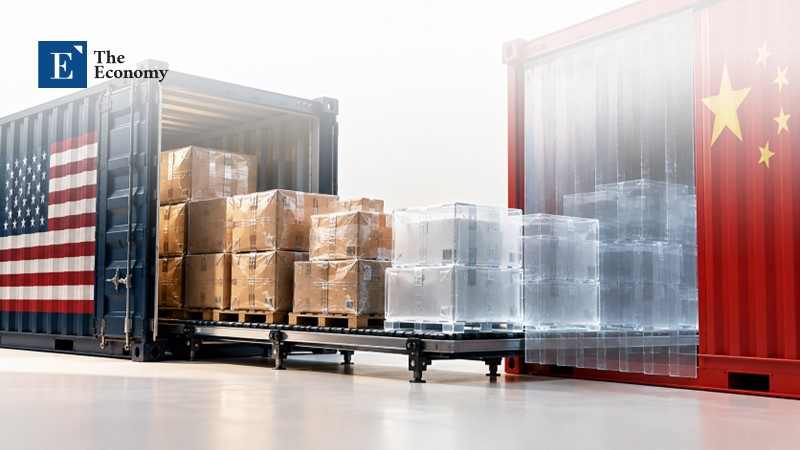
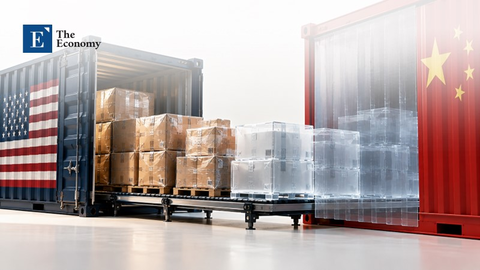
President Donald Trump's administration has proposed additional tariffs on Chinese goods under Section 301 of the Trade Act. While using tariff rates set in existing trade agreements as the baseline for South Korea, Japan and the European Union (EU), it left room to impose steep tariffs on all Chinese goods depending on the outcome of negotiations. Analysts say, however, that higher U.S. tariffs would inflict only limited damage on Chinese exporters, as China has expanded its markets in Asia and Europe. Washington also has limited room to push ahead with steep tariffs, since any delays in Chinese rare earth shipments would leave U.S. factories facing raw material shortages. Despite these risks, the U.S. threat of steep tariffs is seen as a move to secure increased Chinese supplies in negotiations to extend the trade truce, given America's difficulty in meeting its own rare earth needs.
Tariffs on allies kept within a 15% framework, with additional duties on China
According to the Associated Press on the 26th (all dates hereafter are local time), the Trump administration proposed using the agreed 15% tariff rate for South Korea, Japan and the EU as its baseline, while imposing additional tariffs of up to 20% on Chinese imports. It is reviving its tariff policy, which was blocked by a Supreme Court ruling in February, under Section 301 of the Trade Act of 1974. That provision authorizes the Office of the U.S. Trade Representative (USTR) to respond with tariffs and other measures when unfair practices by trading partners harm U.S. businesses. Following an eight-month investigation beginning in March, USTR concluded that industrial policies in 14 economies had encouraged manufacturing overcapacity and narrowed markets for U.S. companies. The country-specific tariff proposals released the previous day are to be finalized after public comments and hearings in January next year.
The 15% rate proposed for South Korea and Japan reflects terms negotiated last year in exchange for commitments to invest USD 350 billion and USD 550 billion, respectively, in the United States. Under the baseline proposal, new tariffs on goods from South Korea, Japan and the EU would equal 15% minus the most-favored-nation tariff and existing Section 301 tariffs applicable to each product. Section 301 tariffs imposed in July over forced labor would also be deducted. The approach is seen as an effort to soften resistance from allies that pledged U.S. investment and market opening as Washington steps up pressure on China.
For China, by contrast, the administration chose to layer new tariffs on top of the steep duties imposed since Trump's first term. Tariffs imposed over forced labor would be deducted, but the 25% tariffs applied to some Chinese goods since 2018 would remain. If the full additional 20% tariff were applied to those goods, the two duties alone would total 45%. Washington has also put forward, as a negotiating option, additional tariffs of up to 40% on all Chinese goods if talks with Beijing fail to produce measures sufficient to address overcapacity. The two proposals also differ substantially in scope: goods covered by the U.S.-China Trade Council agreement, which are exempt under the baseline proposal, would be subject to duties under the 40% option.
Table 1. Comparison of U.S. Section 301 tariff proposals
| Category | Tariff rate and schedule | Application |
|---|---|---|
| South Korea, Japan and the EU | Agreed tariff rate of 15% | Levy the difference between 15% and each product's most-favored-nation tariff plus existing Section 301 tariffs Section 301 tariffs related to forced labor also deducted |
| China | Baseline proposal Up to 20% additional tariffs | Existing 25% tariffs retained; forced labor-related tariffs deducted Adding 20% to goods already subject to 25% duties brings the combined tariff to 45% Goods covered by the U.S.-China Trade Council agreement exempt |
| Negotiating alternative Up to 40% additional tariffs | Tariffs on all Chinese goods under consideration if measures to address overcapacity are not forthcoming Includes goods covered by the U.S.-China Trade Council agreement | |
| Common procedure | January 2027 | Country-specific tariff proposals to be finalized after public comments and hearings |
Both Democratic and Republican administrations have used Section 301 to counter China
Section 301 of the Trade Act has also been a major sanctions tool in U.S. trade policy toward China under Democratic administrations. In March 2024, five industrial unions, including the United Steelworkers (USW), petitioned USTR to investigate, arguing that Chinese government efforts to develop its shipbuilding industry had harmed U.S. shipbuilders and workers. Democrats lent their support. Then-Senators Tammy Baldwin of Wisconsin and Bob Casey of Pennsylvania called for an investigation, joined by four other Democratic senators, including Elizabeth Warren. They asked then-U.S. Trade Representative Katherine Tai to investigate how Chinese government support had affected competitive conditions for U.S. businesses across shipbuilding, shipping and logistics. USTR launched its investigation on April 17 that year, just over a month after receiving the petition.
Democratic and Republican administrations took successive steps to turn the findings into sanctions. In January last year, near the end of the Joe Biden administration, USTR concluded that concentrated Chinese government support for domestic shipbuilders and shipping companies had taken business away from companies in competing countries. One figure it cited was China's share of global shipbuilding output. China's share by tonnage rose from less than 5% in 1999 to more than 50% in 2023. Based on the findings, the Biden administration determined that China's support for shipbuilding warranted action under Section 301, while the second Trump administration, which took office afterward, devised the actual sanctions. USTR's proposal last April to impose U.S. port entry fees on Chinese shipping companies and operators of Chinese-built vessels also stemmed from the investigation.
Biden also used steep tariffs on China to protect U.S. manufacturing
A Democratic administration has also directly raised Section 301 tariffs on Chinese goods. In September 2024, the Biden administration raised tariffs on Chinese electric vehicles from 25% to 100% and on solar cells from 25% to 50%. It did not, however, apply tariffs uniformly to equipment needed for U.S. production. Certain manufacturing equipment used by U.S. solar companies received temporary exemptions, as did port cranes that U.S. companies had already ordered before the tariff increases were announced. Since Democrats have also used tariffs on China to protect manufacturing, the U.S. debate over the Trump administration's latest proposal is expected to focus on the size of product-specific increases and the costs U.S. businesses would bear. USTR has again asked industry whether any raw materials should be exempted and which goods could face procurement disruptions from additional tariffs.
As Washington examines whether new tariffs could disrupt procurement for U.S. companies, Beijing is investigating the damage that existing U.S. export and investment restrictions have caused Chinese businesses. China's Ministry of Commerce launched its investigations on March 27, shortly after the United States initiated successive Section 301 investigations over overcapacity and forced labor. Under China's Foreign Trade Law, the ministry divided its inquiry into two parts. One concerns the effects of U.S. controls on advanced technology exports to China and investment restrictions in key industries on the supply chains of companies in both countries. The other covers U.S. government measures restricting Chinese green product exports to the United States and related technological cooperation. In September, the ministry extended the deadlines for both investigations by three months to December 27. On the 26th, ministry spokesperson He Yadong called on Washington to withdraw its new tariff proposal and return to bilateral consultations, but has yet to announce specific countermeasures or a timetable.
Table 2. Impact of the U.S. tariff proposal on Chinese exports and alternative markets
| Category | Item | Key details |
|---|---|---|
| Tariff impact | If the baseline proposal is applied | Tariff burden on Chinese goods expected to broadly return to early-2026 levels |
| Exemptions for agreed goods | U.S.-China mutual tariff reduction agreement covers USD 30 billion in goods from each country USTR representative plans broad exemptions for Chinese goods covered by the agreement | |
| Changes in export markets | United States and Asia | U.S. share of China's total exports: 14% in 2024 → 10.2% in January–September 2026 Growing shares for East Asia and Southeast Asia |
| Europe | Europe's imports from China rose 24.3% year on year in October 2026 | |
| Trade performance | China's trade surplus | USD 1.04 trillion in January–October 2026, exceeding USD 1 trillion for the second consecutive year |
China's expanding markets in Asia and Europe limit the impact of U.S. tariffs
Despite Beijing's objections, some analysts say the proposed tariffs would do little damage to Chinese exporters. Mark Williams, chief Asia economist at British research firm Capital Economics, said that even if Washington implemented its baseline proposal, the tariff burden on Chinese goods would broadly return to levels seen at the start of this year. He cited the fact that the increases had already been signaled to markets and that their actual scale was relatively modest. The goods covered by the two countries' recent agreement to lower tariffs on each other alone amount to USD 30 billion in U.S. products and USD 30 billion in Chinese products. Immediately after the tariff proposal was announced, U.S. Trade Representative Jamieson Greer also indicated that broad exemptions would be granted for the USD 30 billion in goods covered by the agreement with China.
China's expansion into markets outside the United States is also cited as a factor limiting the impact of tariffs. According to the European Commission, the U.S. share of China's total exports fell from 14% in 2024 to 10.2% in January–September this year, while the shares of East Asian and Southeast Asian markets grew. Europe's imports of Chinese goods also rose 24.3% last month from a year earlier. China's trade surplus reached USD 1.04 trillion in the first 10 months of this year, already exceeding USD 1 trillion for the second consecutive year. If China can again offset declining U.S. orders with sales in Asia and Europe next year, Chinese companies will have little incentive to cut production even if Washington raises tariffs.
Rare earth bottlenecks persist despite the U.S.-China tariff truce
For Washington, however, the potential damage to domestic manufacturing if China tightens rare earth exports again in response to higher tariffs remains a concern. After China imposed export controls on certain rare earths in April last year, Ford halted its Explorer production line at its Chicago plant for a week the following month because it could not obtain rare earth magnets in time. The export licenses China subsequently issued to suppliers of rare earths to the Big Three U.S. automakers were also temporary measures. China expanded the scope of its restrictions in October that year, but postponed implementation of the expanded measures for one year following the U.S.-China summit. An extension of the suspension announced by China's Ministry of Commerce on the 9th of this month bought U.S. companies more time, but the new deadline is only January 10 next year.
With China controlling rare earth export licensing, Washington's decision to use steep tariffs as a bargaining chip appears aimed at securing an actual increase in supplies before extending the truce. Even after the two countries' leaders reached an agreement in Busan last year, rare earth shipments to the United States showed little recovery. According to the U.S.-based Center for Strategic and International Studies (CSIS), U.S. imports of rare earth compounds and metals from China averaged 19.3 metric tons per month from November last year through September this year, about one-quarter of the monthly average of 76.8 metric tons in the 10 months immediately before China's export controls. In a Bloomberg TV interview on the 20th, Greer stressed that the United States had applied tariff rates below those permitted under the Busan agreement in recent months. His condition was that, for the truce to be extended as China wants, U.S. companies must also receive the supplies they need on time.
If Washington pushes ahead with tariff increases, however, China has room to pressure U.S. manufacturing without completely halting rare earth exports. In the 10 months immediately after the Busan agreement, China's global exports of rare earths subject to export controls fell 2.5% from the preceding 10 months, but shipments to the United States and Japan plunged 58%. Over the same period, shipments to markets other than those two countries actually rose 146%. With control over export licensing, China could supply other customers while delaying only U.S.-bound shipments. Every shipment delay forces U.S. manufacturers to adjust production schedules or stockpile more inventory than usual to meet delivery deadlines. As a result, U.S. costs for purchasing raw materials in advance would begin to rise even without China announcing separate retaliatory measures.
Matthew Reuter is a senior economic correspondent at The Economy, where he covers global financial markets, emerging technologies, and cross-border trade dynamics. With over a decade of experience reporting from major financial hubs—including London, New York, and Hong Kong—Matthew has developed a reputation for breaking complex economic stories into sharp, accessible narratives. Before joining The Economy, he worked at a leading European financial daily, where his investigative reporting on post-crisis banking reforms earned him recognition from the European Press Association. A graduate of the London School of Economics, Matthew holds dual degrees in economics and international relations. He is particularly interested in how data science and AI are reshaping market analysis and policymaking, often blending quantitative insights into his articles. Outside journalism, Matthew frequently moderates panels at global finance summits and guest lectures on financial journalism at top universities.
Similar Post