“Putting up barriers before fixing supply chains”: EU exclusion of Korean and Japanese EVs from subsidies could backfire on efforts to protect its home market

Matthew Reuter is a senior economic correspondent at The Economy, where he covers global financial markets, emerging technologies, and cross-border trade dynamics. With over a decade of experience reporting from major financial hubs—including London, New York, and Hong Kong—Matthew has developed a reputation for breaking complex economic stories into sharp, accessible narratives. Before joining The Economy, he worked at a leading European financial daily, where his investigative reporting on post-crisis banking reforms earned him recognition from the European Press Association. A graduate of the London School of Economics, Matthew holds dual degrees in economics and international relations. He is particularly interested in how data science and AI are reshaping market analysis and policymaking, often blending quantitative insights into his articles. Outside journalism, Matthew frequently moderates panels at global finance summits and guest lectures on financial journalism at top universities.
Authored On
Modified
Exceptions left open for Korean and Japanese parts, but finished vehicles excluded from preferential treatment
Maintaining exports from home countries would require discounts to offset the subsidy gap
European production still faces battery procurement difficulties and high labor and electricity costs
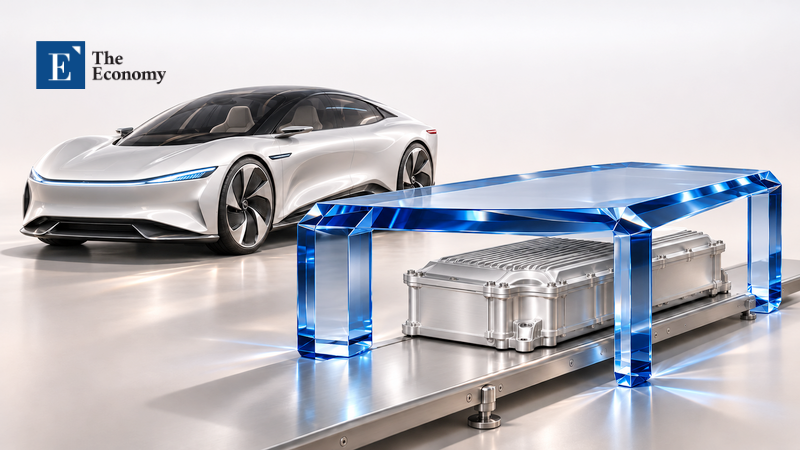
As the European Union (EU) pursues industrial protection legislation favoring electric vehicles produced within the bloc, EVs made in South Korea and Japan remain excluded from preferential treatment in the latest amendment. Measures aimed at low-cost Chinese EVs have spilled over to affect vehicles exported by both countries. If the amendment takes effect unchanged, Korean and Japanese automakers will have to lower prices on models exported to Europe or allocate more production to local factories. But with European automakers having already experienced vehicle shipment delays caused by late battery deliveries, and with high labor and electricity costs, expanding local production is unlikely to make it easy to secure price competitiveness.
Preferential treatment limited to the EU, EEA, Switzerland and UK
According to Reuters on the 24th (all dates hereafter are local time), EVs produced in South Korea and Japan remain excluded from preferential treatment under an amendment to the EU’s proposed Industrial Accelerator Act (IAA). This is the fourth compromise proposal, presented to member states the previous day by Ireland, which holds the rotating EU presidency. Ireland limited the eligible assembly locations for vehicles receiving member-state purchase subsidies or tax benefits to certain European countries. These include the EU’s 27 member states and European Economic Area (EEA) countries such as Norway, Iceland and Liechtenstein. Outside the EEA, the UK and Switzerland were included on the list.
EVs assembled in Europe must meet component-origin requirements to qualify for purchase support. The European Commission’s original proposal, released in March, required EU-made components to account for at least 70% of the value of parts used in an EV. This share is calculated using each component’s factory-gate price. Traction batteries, however, are subject to separate criteria and are excluded from both total component value and EU-made component value when calculating the share. For batteries, at least 3 major components, including cells, must be produced within the bloc.
For Korean and Japanese automakers, the change in this amendment concerns the treatment of parts supplied to their European factories. Ireland left room for Korean- and Japanese-made parts to count toward the regional content share. If adopted, the measure would allow the value of parts produced in Korea by domestic suppliers and supplied to a Korean automaker’s EU plant for EV assembly to count as regional content. This would make it easier for locally produced models to meet the component-content threshold required for subsidies. However, finished vehicles assembled in Korean factories and exported to Europe would remain ineligible for purchase subsidies and tax benefits because they fail the assembly-location requirement, even if their EU-made component share exceeds 70%.
Korean and Japanese hopes for EV “exemptions” fall short
The latest amendment has dashed Korean and Japanese hopes that their domestically produced vehicles would be exempted from EU industrial protection measures aimed at low-cost Chinese EVs. Their expectations were based on the precedent of EU countervailing duties on Chinese-made EVs. As exports of low-cost Chinese EVs to Europe surged, the European Commission announced in September 2023 that it would investigate Chinese government subsidies. The investigation also covered cases in which Chinese state-owned banks provided favorable loans to automakers or local governments offered factory land-use rights at low prices. The Commission concluded that government-supported Chinese EVs entering Europe at low prices threatened to harm the bloc’s auto industry.
The Commission introduced provisional countervailing duties on Chinese-made EVs in July of the following year, then finalized rates in October to apply for the next 5 years. Additional duties reflecting the scale of subsidies received by each manufacturer were imposed on top of the existing 10% import tariff. BYD was assigned a rate of 17%, Geely 18.8%, and SAIC Motor the highest rate of 35.3%. Among manufacturers without individually calculated rates, those that cooperated with the investigation were assigned 20.7%, while those that did not were assigned 35.3%. Even US automaker Tesla faced an additional 7.8% duty on vehicles produced at its Shanghai factory and exported to Europe. Because the EU limited the countervailing duties to Chinese-made vehicles, EVs produced in Korea and Japan and exported to Europe avoided the additional burden.
The Commission’s original IAA proposal, released in March, reinforced those expectations. It included a provision allowing products made in countries with free trade agreements (FTAs) with the EU to receive the same treatment as products made within the bloc. At the Korea-EU Trade Committee, the Korean government welcomed the provision but requested clarification on which products would qualify for equal treatment. Japan argued that its companies should not be excluded from industrial support, citing supply chains built jointly with Europe over many years. A joint economic security declaration adopted by the Japanese and German leaders on the 28th of last month also emphasized supply-chain cooperation between their companies and set out the principle that Japan and the EU would consider each other’s interests when supporting strategic industries.
Table 1. EU countervailing duties on Chinese-made EVs and treatment of Korea and Japan under the IAA amendment
| Category | Timing and scope | Key details |
|---|---|---|
| EV countervailing duties | Investigation and imposition timeline | Chinese subsidy investigation announced in September 2023; provisional duties introduced in July 2024; rates applicable for 5 years finalized in October |
| Basis for duties | Applies to Chinese-made EVs. Manufacturer-specific countervailing duties added to the existing 10% import tariff | |
| BYD and Geely | Countervailing duties of 17% and 18.8%, respectively | |
| SAIC Motor | Countervailing duty of 35.3% (highest rate) | |
| Manufacturers without individually calculated rates | 20.7% for manufacturers that cooperated with the investigation; 35.3% for those that did not | |
| Tesla | Countervailing duty of 7.8% on vehicles produced at its Shanghai factory | |
| Vehicles produced in Korea and Japan | Excluded from countervailing duties | |
| Key areas investigated | Preferential loans from Chinese state-owned banks and low-cost factory land-use rights provided by local governments | |
| Original IAA proposal and amendment | Original proposal, March 2026 | Allows products made in countries with EU free trade agreements (FTAs) to receive the same treatment as products made within the bloc |
| Korea | Requested clarification at the Korea-EU Trade Committee on which products would qualify for equal treatment | |
| Japan | Opposed exclusion from industrial support, citing supply-chain cooperation. The Japan-Germany joint economic security declaration specifies the principle of considering mutual interests when supporting strategic industries | |
| Amendment | EVs produced in Korea and Japan also subject to EU industrial protection measures |
Korean- and Japanese-made EVs lose price competitiveness
Korea and Japan have been caught in the fallout because the EU has also made European production a condition for EV purchase subsidies. For both countries, the key question was whether their trade agreements with the EU would apply to finished vehicles as well. At the Korea-France Industrial Cooperation Committee on the 4th of this month, the Korean government asked France to support Korea’s inclusion as a “trusted partner country” under the Industrial Accelerator Act. But in Ireland’s amendment, the only remaining scope for accommodating the two countries’ requests concerned components. It left open the possibility of recognizing Korean- and Japanese-made parts supplied to European factories as regional content, but omitted provisions extending preferential treatment to finished vehicles assembled in either country.
If the amendment takes effect unchanged, Korean and Japanese automakers will immediately face greater price competition from models produced in Europe. Even with identical factory-gate prices, the amount consumers actually pay will differ between subsidized vehicles and those imported from Korea and Japan. Bridging that gap through discounts would first require manufacturers to reduce their profit per vehicle. Maintaining existing prices would also be difficult, as consumers would be more likely to turn to competing models eligible for subsidies. Automakers from both countries seeking to expand European exports will have to weigh whether to lower prices on vehicles produced at home or allocate more production to European factories to meet subsidy requirements.
EU protection measures outpace supply-chain self-reliance
Even if Korean and Japanese automakers allocate more production to European factories, a challenge remains: whether they can procure batteries locally, on time, that meet subsidy requirements. European companies have also canceled contracts or postponed vehicle shipments because of delivery disruptions at battery suppliers within the bloc. Germany’s BMW ordered EUR 2 billion worth of EV battery cells from Sweden’s Northvolt, but canceled the contract in June 2024 after Northvolt failed to deliver cells meeting its quality standards on time. Swedish truckmaker Scania, which also sourced cells from Northvolt, was unable to ship thousands of electric trucks in 2023 because of delayed deliveries. Northvolt, which supplied batteries to both companies, was declared bankrupt in Sweden in March last year.
Beyond batteries, permanent magnets used in drive motors are another vulnerability for Europe’s auto industry. Because local component manufacturers rely on China for magnets, suppliers delivering motors to vehicle factories would be the first to suffer if China responded to the EU’s preferential treatment for regional products with export restrictions. A similar situation arose in April last year, when China began requiring official permits for exports of certain rare earths and permanent magnets. According to the European Association of Automotive Suppliers (CLEPA), European component manufacturers submitted hundreds of export permit applications, but only about one in four had been approved by early June. While waiting for approval, companies unable to obtain magnets on time had to halt production lines, and some suspended factory operations altogether.
EU-style subsidy competition could hit production for European exports first
Even if European component manufacturers secure alternative suppliers to replace Chinese materials, meeting required supply prices will not be easy. According to the German Association of the Automotive Industry (VDA), hourly labor costs in Germany’s auto industry were EUR 65 last year, the highest among the countries surveyed. The gap with the second-ranked Netherlands (EUR 63) was small, but Germany’s figure was 25% higher than third-ranked Austria’s (EUR 52). Electricity costs are also a substantial burden for components such as batteries, which require energy-intensive production. A comparison of battery-cell manufacturing costs in Germany and China by European transport and environmental group T&E found that German factories used more electricity to produce the same volume of cells and paid higher electricity rates. Even if purchase subsidies lower the effective price of European-made EVs, component manufacturers facing high labor and electricity costs have little room to lower their supply prices.
Moreover, Korea and Japan, which the EU has excluded from preferential treatment for finished vehicles, are export markets that Europe’s auto industry has worked hard to develop. Germany alone exported 119,770 passenger cars to Korea and 96,409 to Japan last year. If either country follows the EU’s approach and subsidizes only EVs assembled domestically, European-made EVs will be at a price disadvantage in that market. Yet shifting production of export models to those countries to meet subsidy requirements would also be difficult for European automakers. If European factories lose production volume, regional suppliers providing parts for those models would also have to absorb fewer orders. In other words, raising subsidy barriers without addressing high labor and electricity costs risks reducing work at the very European factories whose jobs the measures were intended to protect.
Matthew Reuter is a senior economic correspondent at The Economy, where he covers global financial markets, emerging technologies, and cross-border trade dynamics. With over a decade of experience reporting from major financial hubs—including London, New York, and Hong Kong—Matthew has developed a reputation for breaking complex economic stories into sharp, accessible narratives. Before joining The Economy, he worked at a leading European financial daily, where his investigative reporting on post-crisis banking reforms earned him recognition from the European Press Association. A graduate of the London School of Economics, Matthew holds dual degrees in economics and international relations. He is particularly interested in how data science and AI are reshaping market analysis and policymaking, often blending quantitative insights into his articles. Outside journalism, Matthew frequently moderates panels at global finance summits and guest lectures on financial journalism at top universities.
- Previous “Without US Technology, Even the Front Lines Falter”: SpaceX Satellite Communications Outage Exposes Limits of European Security, Testing Plans for Independent Space Infrastructure
- Next Europe’s Push for an “EU Version of Section 301”: Darkening Prospects for Chinese Exports as Trade Restrictions Expand
Similar Post