Romania Seeks Delay Penalties from Germany’s Rheinmetall as European Rearmament Boom Exposes Delivery Constraints

Anne-Marie Nicholson is a fearless reporter covering international markets and global economic shifts. With a background in international relations, she provides a nuanced perspective on trade policies, foreign investments, and macroeconomic developments. Quick-witted and always on the move, she delivers hard-hitting stories that connect the dots in an ever-changing global economy.
Authored On
Modified
Romania seeks delay penalties over late Rheinmetall anti-aircraft gun deliveries
Development delays also disrupt prototype deliveries of armored engineering vehicles for German military
Overseas production expansion offers limited scope for short-term output increases
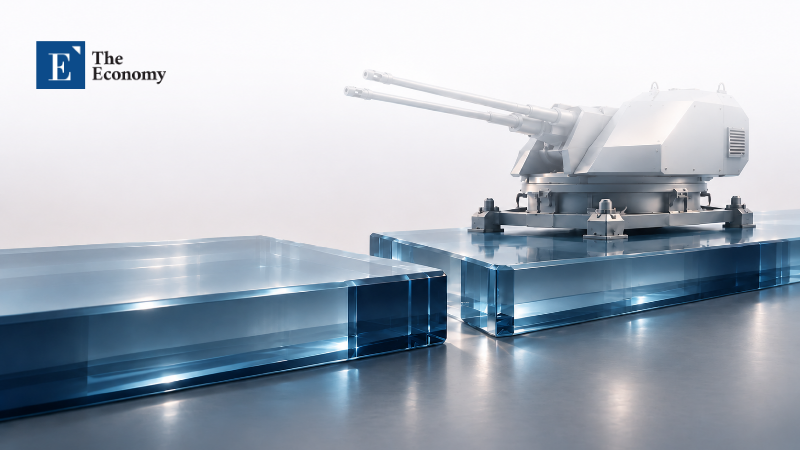
German defense contractor Rheinmetall, flooded with orders as Europe rearms, is repeatedly struggling to meet delivery deadlines. In Romania, anti-aircraft guns it was contracted to upgrade failed military acceptance tests, and the company also missed its promised deadline for remedial work, prompting the Defense Ministry to demand delay penalties. Artillery shells were not delivered on time even after production was completed because inspections ran late, while development delays meant that prototype armored engineering vehicles for the German military were delivered only in the year that series production was supposed to begin. With output at a new shell factory ramping up more slowly than initially expected and securing raw materials for propellant charges also taking time, expanding overseas production sites is unlikely to make it easy to clear the order backlog in the near term.
Two Anti-Aircraft Batteries Overdue; Penalty Claim Equals 5.2% of First Batch’s Value
According to Romanian news outlet Digi24 on the 18th (all dates local), Romania’s Defense Ministry has demanded EUR 8.7 million in delay penalties from German defense contractor Rheinmetall over late deliveries under an anti-aircraft gun modernization project. The ministry issued its first demand for payment on the 8th to Rheinmetall Landsysteme, the Rheinmetall subsidiary responsible for the project. The contract, signed in December 2023, covers the modernization of four Oerlikon GDF-103 anti-aircraft gun systems for the Romanian military, at a total cost of EUR 328 million. The penalties apply to two anti-aircraft gun systems that were due for delivery by April 15. The contract value of this first batch is EUR 166 million, making the initial penalty claim approximately 5.2% of its value.
The ministry has been calculating penalties daily since April 16, the day after the contractual delivery deadline. Rheinmetall initially proposed a revised schedule to deliver the first batch in September, but failed to hand over the equipment that month either. In an interview with Digi24, Romanian Defense Minister Ștefan-Radu Oprea said EUR 8.7 million was the ministry’s initial claim. He expected further claims to follow until the military actually accepted equipment meeting the contract specifications. Rheinmetall’s latest promised date for the first delivery is December, roughly eight months after the original deadline.
Acceptance of First Two Batteries Put on Hold as Some Equipment Falls Short of Performance Requirements
The first batch Rheinmetall has promised to deliver in December consists of 12 guns for two batteries, out of the 24 anti-aircraft guns the Romanian military commissioned it to upgrade. Romania sent its existing Oerlikon GDF-103 guns to Rheinmetall in early 2024 to strengthen its short-range air defenses against small drones. The upgrade proposed by Rheinmetall when the contract was signed would combine six GDF009 TREO twin-barrel 35 mm anti-aircraft guns equipped with automatic loaders in each battery with an X-TAR3D three-dimensional search radar and the Skymaster fire-control system. The guns within each battery would share radar-detected target information and engage small drones with 35 mm AHEAD airburst ammunition. Because the contract bundled several types of equipment, Rheinmetall had to ensure that the accompanying battery equipment also met contract specifications before handing over the upgraded guns to the military.
However, the two batteries Rheinmetall initially submitted for acceptance testing failed to meet these requirements. According to Defense Ministry documents obtained by Romanian outlet G4Media, the military found during testing that some equipment fell short of contractual performance standards and suspended acceptance. Rheinmetall then proposed September as a new delivery deadline, but failed to hand over the equipment that month either, leaving it open to criticism that it had allowed far too little time even for the remedial work. Notably, December, the company’s newly postponed delivery date, was originally the month when the remaining two batteries were also due. With some equipment failing to meet technical standards, neither of the two batteries initially scheduled for delivery received its upgraded equipment on time.
Rheinmetall attributed the repeated delays to shortages of military equipment, saying a surge in orders worldwide had made certain items difficult to procure on time. But criticism has mounted that this explanation fails to address why the equipment submitted for the first acceptance tests fell short of contract requirements. Moreover, September was a deadline Rheinmetall itself proposed after identifying which equipment needed replacing. Its failure to meet even that schedule raised questions about whether the company had properly assessed the time required for remedial work and the availability of components. With work on the first two batteries also pushing back delivery of the next two, it has become unclear whether Rheinmetall can fulfill its contractual commitment to deliver all 24 anti-aircraft guns by year-end.
Table 1. Rheinmetall’s European Defense Orders and Results
| Category | Item/Indicator | Key Details |
|---|---|---|
| Germany and Eastern Europe | Artillery shells and weapons systems | Orders increased following higher defense spending |
| Poland | Tank ammunition | Large-volume orders |
| Romania | Anti-aircraft guns and medium-caliber ammunition | Anti-aircraft gun deliveries delayed; medium-caliber ammunition ordered using the EU’s SAFE defense procurement financing program |
| Weapons and Ammunition division | Revenue, January–September 2026 | EUR 2.705 billion, up 34% year on year |
| Group-wide | Order backlog at the end of September 2026 | EUR 78 billion (including framework supply agreements), up EUR 21.3 billion year on year |
Shell Inspections Delayed, Engineering Vehicle Development Behind Schedule
The surge in European military demand that Rheinmetall cited to explain its delivery delays has also driven the company’s growth. As European countries increased defense spending following Russia’s invasion of Ukraine, large orders came in for artillery shells and weapons systems from Germany and Eastern Europe, and for tank ammunition from Poland. Romania, despite delays in its anti-aircraft gun deliveries, also ordered medium-caliber ammunition from Rheinmetall through SAFE, the European Union’s defense procurement financing program. Buoyed by rising orders, revenue at Rheinmetall’s Weapons and Ammunition division reached EUR 2.705 billion in January–September this year, up 34% from a year earlier. Across the group, the order backlog at the end of September, including framework supply agreements, stood at EUR 78 billion, an increase of EUR 21.3 billion over one year.
But even the shell business, where orders have piled up, is taking longer than expected. Rheinmetall failed to complete deliveries at the originally anticipated time despite having finished production. Although the shells had already been manufactured, final approval was delayed as each production batch underwent separate acceptance testing. In other words, the delivery schedule should have accounted from the outset for the time needed for the final batch to pass testing. Instead, management underestimated the inspection period, leaving even completed shells undelivered at the expected time. At an earnings presentation on the 5th of this month, management also faced criticism for repeatedly underestimating the same factor despite having experienced approval delays on several previous occasions.
There was an earlier precedent in the German military’s Kodiak armored engineering vehicle program, where Rheinmetall’s development delays pushed prototype deliveries into the first year of scheduled series production. When the contract was signed in 2021, the plan was to deliver one vehicle for validation in 2023 and another in 2024, followed by production vehicles from 2026. However, in a response submitted to the federal parliament last September, the German government said Rheinmetall’s system development had fallen behind and postponed the first delivery to this spring. Rheinmetall missed that deadline too, handing over the two prototypes to the military only in late August. Even the belatedly delivered vehicles did not fully match the specifications originally intended for testing. Both prototypes reviewed by Germany’s military procurement agency last month lacked the Natter remotely operated weapon station that Rheinmetall was supposed to develop in-house and install.
Rheinmetall’s Slow Production Ramp-Up Compounded by Propellant Charge Procurement Challenges
Rheinmetall’s repeated delivery delays are seen as largely stemming from its failure to build production capacity quickly enough to handle the surge in orders driven by European rearmament. Its 155 mm shell factory in Unterlüß, Germany, is a prime example. When Rheinmetall opened the factory last August, it announced plans to produce up to 350,000 rounds annually from 2027. But the production outlook management presented this March was for 140,000 rounds this year and 250,000 next year. On that forecast, even an increase of 110,000 rounds next year would leave output 100,000 rounds short of the maximum announced when the factory opened. This indicates that management initially allowed too little time to ramp up output after installing the facilities.
Beyond shell-body production, Rheinmetall’s ability to supply artillery ammunition is also constrained by the procurement of propellant charges. These charges are used to fire shells, and Rheinmetall has identified the propellant powder used to make them as a bottleneck preventing Europe’s ammunition industry from increasing output. Even if the Unterlüß factory reaches annual production of 350,000 shell bodies, the necessary supply of propellant charges will not automatically be secured. If powder shortages delay charge supplies, meeting shell-body production targets alone will not ensure on-time delivery of complete rounds. Rheinmetall, which needs to clear its order backlog, must therefore also increase powder supplies in step with its production ramp-up.
European Orders Could Go to South Korea
Rheinmetall is therefore trying to clear its backlog by expanding overseas production sites, but this is unlikely to provide immediate relief for deliveries. A powder factory it agreed last November to build with a subsidiary of Romanian state-owned defense company Romarm to secure raw materials for propellant charges will not begin production until 2028, even if it starts operating as planned. The four naval vessels it has been contracted to build in Romania also require a shipyard restart before construction can begin. Rheinmetall, together with Swiss shipping company MSC, won the bid for the Mangalia shipyard last month and paid the purchase price this month. But with the yard idle, the company says facilities must be refurbished and workers recruited before it can fulfill orders there. In Japan, Rheinmetall outlined a local production concept in June, but that too remains at the stage of considering a joint venture with a Japanese company to handle domestic and export orders.
Experts believe that if delivery delays continue while Rheinmetall expands its overseas production network, Asian defense contractors, including those from South Korea, will gain more opportunities to win European orders. The German Institute for International and Security Affairs (SWP) found that short delivery times have been a strength for South Korea’s defense industry as European countries rush to rearm against the Russian threat. Indeed, when Poland signed contracts for South Korean K2 tanks and K9 self-propelled howitzers in August 2022, it planned from the outset to deploy the first batch to frontline units before the end of that year. On December 6, just over three months after the contracts were signed, 10 K2 tanks and 24 K9 self-propelled howitzers arrived at the port of Gdynia. Three days later, the Polish military’s 20th Mechanized Brigade received its first tanks. A follow-on deal was also concluded last August, when Poland ordered another 180 K2 tanks from Hyundai Rotem. For Rheinmetall, whose equipment partly failed to meet performance standards in Romanian military acceptance tests and which then missed its promised September delivery following remedial work, the burden of proving the reliability of its delivery schedules in future European tenders has grown.
Anne-Marie Nicholson is a fearless reporter covering international markets and global economic shifts. With a background in international relations, she provides a nuanced perspective on trade policies, foreign investments, and macroeconomic developments. Quick-witted and always on the move, she delivers hard-hitting stories that connect the dots in an ever-changing global economy.
- Previous “Curbs on Foreign Nationals’ Stays Blocked”: Trump’s Hard-Line Policies Face Limits, With Clashes Expected to Widen as Democrats Control Congress
- Next “Development Succeeded, but Mass Production and Exports Face Hurdles”: KF-21’s Dependence on Foreign Technology Compounded by Chinese Pressure and KAI’s Financial Troubles
Similar Post