“Development Succeeded, but Mass Production and Exports Face Hurdles”: KF-21’s Dependence on Foreign Technology Compounded by Chinese Pressure and KAI’s Financial Troubles

Oliver Griffin is a policy and tech reporter at The Economy, focusing on the intersection of artificial intelligence, government regulation, and macroeconomic strategy. Based in Dublin, Oliver has reported extensively on European Union policy shifts and their ripple effects across global markets. Prior to joining The Economy, he covered technology policy for an international think tank, producing research cited by major institutions, including the OECD and IMF. Oliver studied political economy at Trinity College Dublin and later completed a master’s in data journalism at Columbia University. His reporting blends field interviews with rigorous statistical analysis, offering readers a nuanced understanding of how policy decisions shape industries and everyday lives. Beyond his newsroom work, Oliver contributes op-eds on ethics in AI and has been a guest commentator on BBC World and CNBC Europe.
Authored On
Modified
Delays in supplies of critical U.S.-made KF-21 components prompt adjustment to delivery target
Joint development and procurement cooperation with Indonesia also faces difficulties, increasing uncertainty over overseas sales
South Korean defense industry’s price- and delivery-driven competitiveness put to the test; KAI’s financial health raises alarm
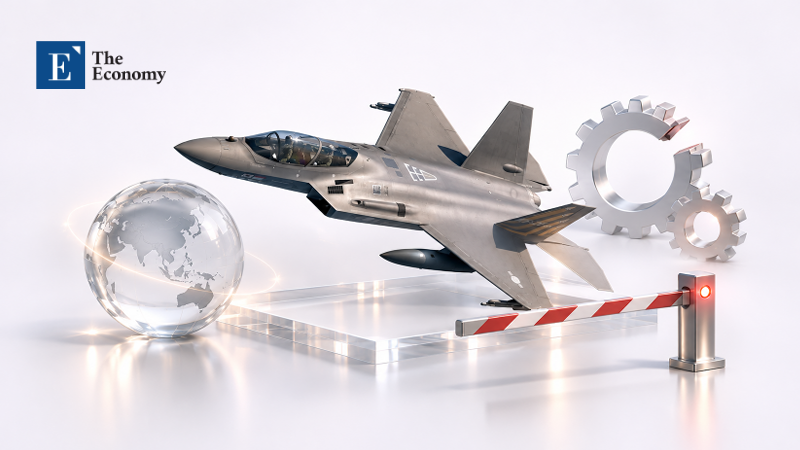
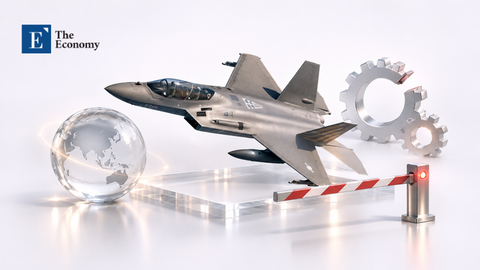
The delivery target for South Korea’s KF-21 Boramae supersonic fighter in the first quarter of next year has been reduced. Delays in obtaining critical engine components from the United States have disrupted the mass-production schedule. Market observers are concerned that the KF-21’s heavy dependence on foreign components is constraining not only its price and performance competitiveness but also its supply stability and export prospects. They say South Korea’s defense industry needs to move beyond its existing focus on exporting finished products and place greater emphasis on supply-chain self-reliance and localization capabilities.
KF-21 Faces Disruptions in U.S. Engine Component Supplies
According to foreign media reports compiled on the 19th, the KF-21’s mass-production schedule has been disrupted by delays in supplies of U.S.-made engine components. Developed by Korea Aerospace Industries (KAI), the KF-21 is a 4.5-generation fighter. Although South Korea has successfully localized major avionics systems, including its active electronically scanned array (AESA) radar and mission computer, critical components such as the engines still rely on U.S. technology. Hanwha Aerospace manufactures the F414 engines used in the KF-21 domestically under license, using technology from U.S.-based GE Aerospace. The domestic content of the F414 engine, including components supplied directly by GE, is reportedly only about 22%.
The component affected by the supply problems is reportedly an engine accelerator. The twin-engine KF-21 uses 2 F414 engines and a total of 2 accelerators per aircraft. South Korea originally planned to secure 40 accelerators for the initial production batch of 20 aircraft by September last year, but only 19 had actually arrived as of the 6th of this month. With 16 of those allocated to existing production, only 3 of the 28 accelerators required for the 14 aircraft scheduled for delivery next year were available. The Defense Acquisition Program Administration consequently lowered its projected KF-21 deliveries for the first quarter of 2027 from 4 aircraft to 1. Insufficient production capacity at the U.S. manufacturer and its policy of prioritizing domestic military requirements appear to be directly constraining South Korea’s fighter production schedule.
Cooperation with Indonesia Scaled Back
Market observers are concerned that the KF-21’s heavy dependence on foreign components could weigh not only on production but also on its export competitiveness. A prominent example is the scaling back of cooperation with Indonesia, a joint development partner. In 2015, Indonesia signed an agreement with South Korea to jointly develop the KF-21, agreeing to cover 20% (USD 1.23 billion) of the total development cost of approximately USD 6.23 billion in exchange for 1 fighter prototype and transfers of key technologies. Based on this arrangement, Indonesia also pursued plans to manufacture 48 KF-21 Block 1 fighters locally through state-owned aircraft manufacturer PTDI. However, the Indonesian government repeatedly postponed its contributions, citing financial pressures and other reasons, and in 2024 requested an extension of the payment deadline to 2034. The two countries subsequently signed a revised agreement in June last year, reducing Indonesia’s contribution to USD 462 million, roughly one-third of the original amount, while proportionately narrowing the scope of technology transfers.
In June, Yusuf Jauhari, head of Indonesia’s defense logistics agency, also said the country would purchase finished KF-21 aircraft directly from South Korea rather than jointly manufacture them domestically. Indonesia’s Defense Ministry likewise said that a reassessment of the overall program had revealed changes in the conditions surrounding technology acquisition, requiring an adjustment in the direction of cooperation. However, the two countries have yet to finalize procurement quantities or a purchase contract. At the South Korea–Indonesia Defense Industry Cooperation Committee meeting held in Jakarta on the 11th (all dates hereafter local time), KAI and PTDI merely agreed to continue cooperating on the production of 3 types of KF-21 components, including connecting structures for mounting air-to-air weapons and target-tracking equipment. No concrete agreement on purchasing finished aircraft was reached.
Table 1. How South Korea–Indonesia KF-21 Cooperation Has Been Scaled Back
| Period | Stage | Key Details | Changes in Scope of Cooperation |
|---|---|---|---|
| 2015 | Establishment of joint development framework | Framework agreement and cost-sharing and work-sharing contracts signed | Joint development and local production |
| 2017–2024 | Dispute over contributions | Indonesia repeatedly postpones contribution payments and requests reductions | Discussions on revising existing cooperation terms |
| June 2025 | Revised agreement signed | Contribution adjusted from USD 1.23 billion–USD 1.31 billion to USD 462 million | Scope of joint development and technology transfers reduced |
| June 2026 | Local production plan withdrawn | Indonesia announces its intention to purchase finished KF-21 aircraft | Shift from joint production to direct purchases |
| November 2026 | Parts cooperation maintained | KAI and PTDI continue follow-on production of 3 types of KF-21 connecting structures and simulator cooperation; no agreement reached on purchasing finished aircraft | Limited cooperation centered on component supplies maintained |
China’s Fighter Export Offensive
China, a competitor in the defense industry, is also moving to highlight the KF-21’s technical limitations. In April, Chinese state-run outlet CRI Online noted, “Although the KF-21 incorporates some stealth design features, it lacks an internal weapons bay and must carry missiles externally,” adding, “As a result, it has not achieved the low-observable performance required of a fifth-generation fighter.” It also assessed that the aircraft could face restrictions on supplies of critical U.S.-made components during export efforts, given its reliance on U.S. and European engines and much of its equipment. Wei Dongxu, a military commentator for China Media Group (CMG), also argued that the KF-21 could be at a disadvantage if it competed for orders against China’s J-35, which features an internal weapons bay and fifth-generation stealth design.
These efforts to keep the KF-21 in check come as Chinese and South Korean fighter export markets begin to overlap in Southeast Asia, the Middle East and elsewhere. China is seeking overseas markets for next-generation fighters, including the J-35, while expanding sales of existing models such as the J-10 in emerging markets by emphasizing competitive pricing and financing terms. Indonesia is considering purchasing Chinese-made J-10 fighters even as it discusses acquiring the KF-21, while Bangladesh is discussing a plan to budget for J-10CE purchases over the next 10 years.
Defense Industry Faces Demands for Technology Transfers and Localization
With the KF-21’s export competitiveness being tested, some observers say South Korea needs to review its broader defense export strategy. South Korean weapons have expanded their overseas presence on the strength of lower prices than Western products and the ability to deliver quickly. Recently, however, major buyers have been demanding cooperation in the form of “packages” that go beyond simple weapons purchases to include technology transfers, local production and the development of their own defense industries. Maintaining competitiveness through an export model focused solely on finished products has therefore become more difficult.
These pressures are clearly reflected in new orders at major South Korean defense companies. The combined order backlog of the 4 defense companies—Hanwha Aerospace, Hyundai Rotem, LIG Defense & Aerospace and KAI—stood at approximately USD 73.3 billion at the end of the third quarter this year, down more than USD 3.08 billion from USD 76.5 billion at the end of June. This reflects the relatively slow pace of securing new large contracts to replace existing orders as deliveries continue. KAI, in particular, secured only USD 1.7 billion in new orders from January through September, equivalent to 21.2% of its annual target of USD 8.03 billion.
KAI’s Financial Burden Grows, with Staff Retention Also a Challenge
KAI also faces clear pressures on its financial health. Its net operating cash outflow in the first half of this year reached approximately USD 292 million, while its debt-to-equity ratio stood at 456.2% and net borrowings totaled USD 2.27 billion at the end of the third quarter. Inventories also swelled approximately 2.3-fold, from USD 1.34 billion at the end of 2023 to USD 3.07 billion at the end of June. Upfront spending for mass production of the KF-21 and Light Armed Helicopter (LAH) lies behind this deterioration in its finances. Aircraft production typically requires substantial upfront funding for raw materials, component procurement and airframe manufacturing, with a considerable time lag before finished aircraft are delivered and final payments are collected.
Managing research personnel after the completion of large-scale development programs is also emerging as a concern. More than 1,000 researchers participated in the KF-21 system development program. Unless major research and development projects are secured in time to absorb these personnel, the company could face a large-scale exodus of skilled staff. There are also concerns that the absence of a permanent president for approximately 8 and a half months beginning in June last year undermined continuity in long-term investment and business strategy. Critics additionally argue that a governance structure subject to strong government influence could constrain independent investment decisions and the pursuit of new businesses. KAI’s largest shareholder is the state-run Export-Import Bank of Korea.
Oliver Griffin is a policy and tech reporter at The Economy, focusing on the intersection of artificial intelligence, government regulation, and macroeconomic strategy. Based in Dublin, Oliver has reported extensively on European Union policy shifts and their ripple effects across global markets. Prior to joining The Economy, he covered technology policy for an international think tank, producing research cited by major institutions, including the OECD and IMF. Oliver studied political economy at Trinity College Dublin and later completed a master’s in data journalism at Columbia University. His reporting blends field interviews with rigorous statistical analysis, offering readers a nuanced understanding of how policy decisions shape industries and everyday lives. Beyond his newsroom work, Oliver contributes op-eds on ethics in AI and has been a guest commentator on BBC World and CNBC Europe.
Similar Post