“Beyond Ukraine to European Security”: Europe Pushes Back Against U.S. Peace Negotiation Plans as Russian Military Threats and Defense Industry Constraints Heighten Anxiety

As one of the youngest members of the team, Tyler Hansbrough is a rising star in financial journalism. His fresh perspective and analytical approach bring a modern edge to business reporting. Whether he’s covering stock market trends or dissecting corporate earnings, his sharp insights resonate with the new generation of investors.
Authored On
Modified
U.S. proposal to reshape Europe’s security order fuels concerns over concessions to Russian demands
Russian pressure persists in the Baltic Sea as Estonia fortifies its border and moves to close crossings with Russia
Despite increased defense investment, Europe still lacks the capacity to sustain a prolonged war
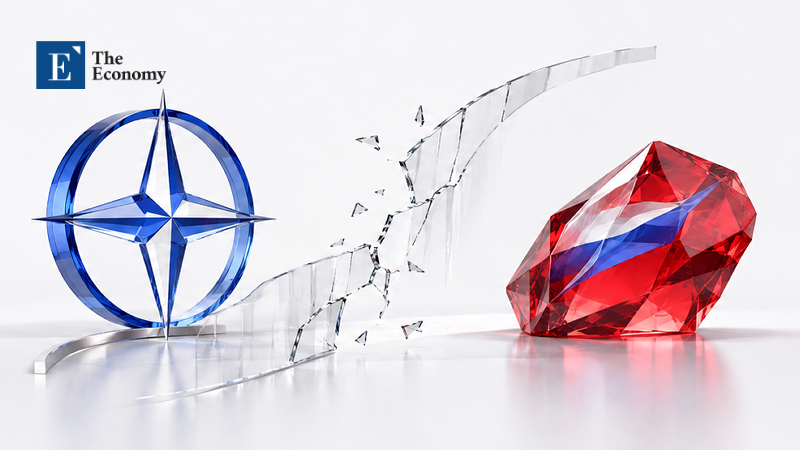
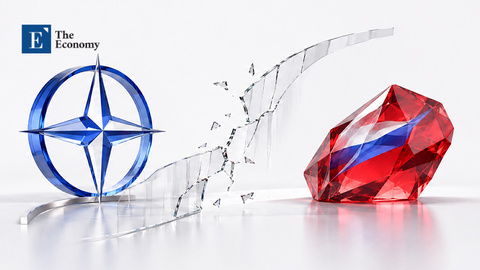
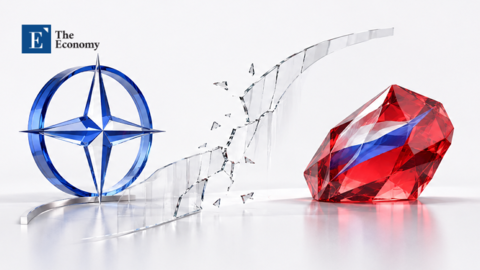
The United States has raised “reshaping the security order across Europe” as an agenda item in talks to end the war in Ukraine. This signals the possibility of negotiations extending beyond Ukraine to cover NATO’s military deployments in Eastern Europe and security relations with Russia. European countries have strongly objected, warning that matters directly affecting their own security could be discussed primarily between the United States and Russia. They argue that, with Russian military threats continuing in the Baltic Sea and elsewhere, it is inappropriate to build a new security framework around the demands of Russia, which has undermined the existing security order.
Europe Pushes Back Against U.S. Security Overhaul Proposal
According to foreign media reports compiled on the 17th (all dates hereafter are local time), major European countries are strongly opposing a proposal to reshape Europe’s security framework raised during U.S.-Russia negotiations to end the war in Ukraine. The controversy intensified after special envoy Jared Kushner, U.S. President Donald Trump’s son-in-law, said following trilateral talks among the United States, Russia and Ukraine in Abu Dhabi, United Arab Emirates (UAE), last week that Ukraine’s territorial issues and Europe’s postwar security framework should be discussed together. Kushner also proposed bringing European countries into the next round of negotiations to examine standing security consultations, crisis communication mechanisms, greater transparency in military activities and mutual de-escalation measures. After meeting Russian envoy Kirill Dmitriev at the White House on the 5th, Trump also raised the possibility of a sweeping agreement extending beyond Ukraine to encompass all of Europe.
European diplomats are concerned that such a plan could put Russia’s late-2021 demands, including a halt to NATO’s eastward expansion and reduced military deployments in Eastern Europe, back on the negotiating agenda. Kaja Kallas, the European Union’s (EU) high representative for foreign affairs and security policy, warned that the United States risked being drawn into Russia’s negotiating strategy, while German Foreign Minister Johann Wadephul said Europe’s existing security framework was sufficient. Lithuanian Foreign Minister Kęstutis Budrys emphasized that Russia had violated existing security norms, and Canadian Prime Minister Mark Carney said Europe’s security order should be determined by European countries and NATO, not Russia. Former Estonian President Toomas Hendrik Ilves also criticized Kushner and special envoy Steve Witkoff for failing to properly understand the historical context of Europe’s security framework.
Russian Threats Persist Across the Baltic Sea Region
Europe’s strong opposition appears to stem from Russia’s continuing military pressure and hostile actions. The confrontation between Russia and Estonia is a prominent example. Estonia, one of the three Baltic states, shares a border with Russia and is considered particularly vulnerable to Russian threats because of its geography. Its small, flat territory offers little military buffer, while the only land link between the Baltic states and other NATO members runs through the narrow Suwałki Gap between Poland and Lithuania. As a result, concerns have persisted in Europe that Estonia could become a target of pressure aimed at testing NATO’s commitment to collective defense.
Russia has in fact continued so-called “hybrid attacks” against Estonia, combining military threats with nonmilitary disruption. Russian interference with Global Positioning System (GPS) signals has repeatedly occurred across the Baltic Sea region, and in 2024 Russian border guards unilaterally removed border marker buoys from the Narva River. More recently, a series of arson operations has targeted Estonian defense industry facilities. In August, Milrem Robotics, a Tallinn-based military robotics developer, suffered an arson attack, and on the 14th of this month an attempted arson and bombing targeting drone manufacturer Threod Systems in Viimsi was uncovered. The Estonian Internal Security Service said the attacks had been carried out on the orders of Russia’s military intelligence agency, the GRU, and local investigators arrested 8 Latvian suspects.
Estonia Moves to Strengthen Its Defenses
Estonia has extensively overhauled its national defense strategy in response to this pressure. In February, it began procurement procedures for 600 concrete bunkers to be installed along its border with Russia. In April, it announced a new security strategy aimed at keeping the country functioning for at least 30 days without outside support in the event of war or a major crisis. The plan calls for independently sustaining essential services, including energy, communications, food, fuel and medical care, even if air, land and sea transport are all cut off, while preparing each citizen to survive for at least 7 days without outside assistance. Its military strategy has also shifted from a focus on territorial defense to “Active Defence,” strengthening its capacity for preemptive action so that it can strike military targets inside Russian territory if necessary.
Efforts to expand military facilities and bolster combat capabilities are also continuing. By late June, a total of 28 bunkers and more than 10 km of anti-tank trenches had been built in southeastern Estonia near Russia, and installation of concrete bunkers near the northeastern border city of Narva began late last month. The Estonian government plans to invest EUR 60 million to install 600 bunkers and anti-tank obstacles along the border, completing the defensive line by the end of next year. Estonia also plans to close all border crossings with Russia starting December 1. Three land border checkpoints—Narva, Luhamaa and Koidula—currently operate between Estonia and Russia, allowing pedestrians and freight trucks to cross.
Table 1. Estonia’s Efforts to Strengthen Its Defense Posture Against Russia
| Timing | Measure | Key Details |
|---|---|---|
| January 2024 | Baltic Defense Line initiative | Estonia, Latvia and Lithuania agree to build bunkers and anti-tank obstacles along their borders with Russia and Belarus |
| Second half of 2025 | Construction of defensive facilities begins | Excavation of anti-tank trenches and installation of the first bunkers begin along the southeastern border |
| February 2026 | Large-scale bunker procurement | Procurement procedures begin for up to 600 concrete bunkers along the eastern border, with a total project cost of approximately EUR 60 million |
| April–June 2026 | National security strategy overhaul | Introduction of the principle of 30 days of self-sufficiency for state functions and 7 days for individuals, along with the concept of “Active Defence” |
| June 2026 | Expansion of the southeastern defensive line | Construction of 28 bunkers and anti-tank trenches, with approximately 20,000 anti-tank obstacles placed in forward storage areas |
| October 2026 | Construction expands around Narva | Bunkers installed near Narva, extending defensive line construction to the northeast |
| December 2026 | Closure of the Russian border | Three land checkpoints connecting to Russia—Narva, Luhamaa and Koidula—scheduled to close starting December 1 |
Europe’s Defense Industry Capacity Lags Behind Russia’s
With tensions between Russia and Estonia visibly escalating, experts predict that an actual military clash would put Europe’s warfighting capabilities to the test. Russia is expanding its output of military supplies in response to the prolonged war in Ukraine. At the recent Atlantic Future Forum in Oslo, Norway, Ned Baker, UK managing director of German defense company Helsing, presented an assessment that Russia was producing approximately 4,000 jet-powered long-range strike weapons every month. In a report in March, Germany’s Kiel Institute for the World Economy also estimated that Russia’s annual artillery shell production was approximately 4 times Europe’s.
By contrast, major European countries have reduced defense spending and sharply cut troop numbers, major weapons inventories and military production facilities since the end of the Cold War. According to a report released by the European Commission in 2024, main battle tank inventories in 9 European countries, including France, Germany, Italy and Poland, plunged by approximately 80%, from 16,851 in 1992 to 3,383 in 2021, while their 152 mm and 155 mm artillery holdings fell by 64%, from 4,599 to 1,671. Over the same period, fighter and attack aircraft inventories declined by 58%, from 3,477 to 1,456, and multiple-launch rocket systems fell by 48%, from 884 to 465.
Limits Remain Despite Efforts to Strengthen Military Production
As shortages of military supplies became a reality following the outbreak of the war in Ukraine, major European countries began expanding production facilities and making large-scale investments. In 2024, the EU provided EUR 513 million for 31 projects to expand military production facilities under the Act in Support of Ammunition Production (ASAP), while defense companies across Europe accelerated the expansion of artillery shell and missile production lines. According to the International Institute for Strategic Studies (IISS), annual 155 mm artillery shell production capacity among European NATO members increased approximately 5-fold, from 300,000–400,000 rounds in 2022 to 1.6 million–1.8 million rounds in 2025. EU Commissioner for Defence and Space Andrius Kubilius also said in February that Europe’s annual artillery shell production capacity had exceeded 2 million rounds.
Despite these efforts, however, Europe’s supply of military materiel remains unstable. Supply chain bottlenecks for key components such as propellants, explosives and rocket motors persist, alongside shortages of skilled workers, while orders in some sectors are growing faster than production capacity. In addition, the United States’ heavy expenditure of Patriot interceptor missiles in its war with Iran has exacerbated shortages of advanced air defense weapons. European countries are therefore working to reduce their dependence on U.S.-made interceptor missiles and to develop and deploy interception systems that are relatively inexpensive and suitable for mass production.
As one of the youngest members of the team, Tyler Hansbrough is a rising star in financial journalism. His fresh perspective and analytical approach bring a modern edge to business reporting. Whether he’s covering stock market trends or dissecting corporate earnings, his sharp insights resonate with the new generation of investors.
- Previous “An End to the War Remains Deeply Uncertain”: U.S. and Iran Continue Armed Exchanges in Strait of Hormuz, With Talks Likely to Struggle as Iranian Hard-Liners Gain Ground
- Next Europe’s Push for an “EU Version of Section 301”: Darkening Prospects for Chinese Exports as Trade Restrictions Expand
Similar Post