Trump’s ‘Golden Fleet’ to Counter China Faces Shortages of Both Battleship Funding and Dock Space

Anne-Marie Nicholson is a fearless reporter covering international markets and global economic shifts. With a background in international relations, she provides a nuanced perspective on trade policies, foreign investments, and macroeconomic developments. Quick-witted and always on the move, she delivers hard-hitting stories that connect the dots in an ever-changing global economy.
Authored On
Modified
Trump’s ‘Golden Fleet’ initiative faces growing budget pressure from Iran war spending
Even with funding secured, skilled labor shortages hamper increased U.S. warship production
Congress divided over outsourcing frigates to allies such as South Korea

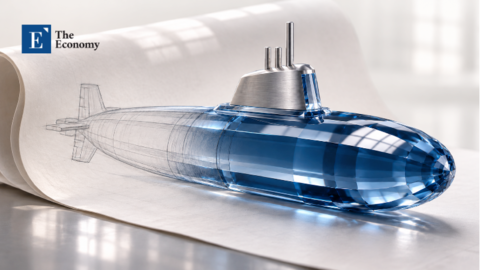
U.S. President Donald Trump’s “Golden Fleet” initiative, unveiled to counter China’s naval buildup, has run into obstacles posed by enormous construction costs and limited capacity at domestic shipyards. For Congress, which faces a massive fiscal deficit and must also replenish munitions expended in the Iran war, committing long-term funding to battleship construction is a heavy burden. Even if the budget clears Congress, the shipyards that would build the battleships are already behind on aircraft carrier and nuclear submarine deliveries, while shortages of skilled workers mean even destroyer builders cannot keep pace with the Navy’s orders. The U.S. Navy’s consideration of assigning initial production of its next frigate to allies such as South Korea also reflects its assessment that domestic shipyards alone cannot meet its fleet expansion schedule. But there are concerns that allowing even warship orders to go overseas would make rebuilding U.S. shipbuilding more difficult. A tug-of-war over the scope of overseas orders is therefore expected between the Trump administration and the Democrats, who will take control of both chambers of Congress early next year.
Launching the ‘Golden Fleet’ Requires More Than Doubling the Budget for Large Surface Warship Construction
According to global military and defense industry publication Army Recognition on the 21st, local time, the U.S. Congressional Budget Office (CBO) said in its recently released report, “Analysis of the Navy’s Fiscal Year 2027 Shipbuilding Plan,” that the U.S. Navy had scrapped its existing plan to acquire 28 DDG(X) destroyers. The Navy decided to increase planned purchases of the latest variant of the Arleigh Burke-class destroyer, currently under construction, from 23 to 57 and acquire 15 new Trump-class nuclear-powered battleships. This reflects President Trump’s “Golden Fleet” initiative to expand the large surface warship force in response to China’s naval buildup. The Navy plans to order the first battleship, Defiant, in fiscal 2028 and acquire 14 follow-on ships through fiscal 2056. The CBO estimated construction costs at USD 23.4 billion for the first battleship and an average of USD 18 billion for each follow-on ship, putting the cost of the 15 battleships alone at USD 275 billion in 2026 prices.
Under the new plan, the U.S. Navy’s required spending on large surface combatant construction would rise from an annual average of USD 6.9 billion to USD 15.2 billion. Although the Navy’s long-term plan includes 15 battleships, President Trump has set a target of 20–25. Senator Jeff Merkley, the ranking Democrat on the Senate Budget Committee, noted that building 25 would cost more than USD 455 billion. With the 15 ships in the Navy’s plan alone costing USD 275 billion, meeting the upper end of Trump’s target would require more than USD 180 billion in additional spending.
Moreover, when allocating funding for new battleships, Congress must also consider the cost of replacing munitions and equipment already expended on the battlefield. According to the Congressional Research Service (CRS), munitions expenditures alone accounted for USD 22.3 billion of the USD 33.4 billion spent on military operations against Iran through the end of June. As Congress seeks funding both to replenish munitions expended in the Iran war and to build new battleships, the federal fiscal deficit, which reached USD 2 trillion in fiscal 2026, is another burden.
Even With Construction Funding, Space to Assemble Battleships Is Scarce
Even if construction funding is secured, there are few suitable places to build the battleships. Newport News Shipbuilding in Virginia is the only U.S. yard with experience building nuclear-powered surface ships. It is solely responsible for building the U.S. Navy’s nuclear-powered aircraft carriers and shares nuclear submarine construction work with Electric Boat. Orders the two companies received last July alone totaled nine Virginia-class attack submarines and five Columbia-class nuclear-powered ballistic missile submarines. With carrier and submarine deliveries already delayed, adding battleship orders would mean dividing limited skilled labor and facilities among three programs. In particular, Dry Dock 12 at Newport News, which the Navy has designated for final battleship assembly, is currently used for carrier construction. Construction space is already so constrained that the Navy has pushed back delivery of the Ford-class carrier Doris Miller by two years, from February 2032 to February 2034.
Other shipyards have little spare capacity either, as the U.S. Navy is seeking to increase production of Arleigh Burke-class destroyers alongside its battleship orders. According to the CRS, the Navy has ordered two to three destroyers annually since fiscal 2016, but deliveries from the two shipyards combined have averaged fewer than two a year. As backlogs accumulated, the Navy’s estimated time to complete a destroyer under construction rose from an average of nine years in its fiscal 2026 budget proposal to 11 years in the following year’s proposal. On top of this, the Navy plans to increase purchases of the latest Arleigh Burke variant from 23 to 57. The CBO estimates that, with increased destroyer production and the battleships to be built at Newport News, the annual tonnage of large surface combatants U.S. shipbuilders must build around 2035 will be more than double the current level.
Declining Commercial Orders Also Weaken Capacity to Increase Warship Production
The loss of the commercial shipbuilding base is a major reason U.S. shipbuilders struggle to meet the Navy’s demands for increased production. In 1981, the Ronald Reagan administration abolished subsidies that covered the construction cost gap between U.S. and foreign shipyards. The judgment was that Navy warship orders alone could sustain domestic yards. Indeed, increased warship orders during the military buildup of the 1980s partially offset the decline in commercial vessel orders. But by the time Navy orders also declined with the end of the Cold War, the commercial ship market that could have filled the gap in shipyards’ workloads had already shrunk substantially.
As commercial vessel work declined, shipyards’ investment in facilities and hiring also became dependent on the Navy’s ordering schedule. The Navy’s annual 30-year shipbuilding plan specifies the number of ships it intends to acquire and when it will order them, but that work is not guaranteed for shipyards until contracts are signed. If yards expand facilities and staffing in advance based on the plan and orders are then delayed, they must continue paying wages even while the new facilities sit idle. In fact, five of the seven major shipbuilders surveyed by the U.S. Government Accountability Office (GAO) cited contracted work or order backlogs as the basis for assessing future workloads. Although this was a way for shipyards to limit losses, it left them facing the burden of expanding facilities and hiring skilled workers only after receiving orders when the Navy increased procurement.
The infrastructure for training skilled workers, weakened during periods of sparse orders, proved difficult to rebuild even after work returned. All seven companies responding to the GAO survey identified difficulties securing workers or insufficient skill levels as factors disrupting ship deliveries. In welding and electrical work in particular, experienced workers were reaching retirement while fewer people from the next generation were learning the trades. Low pay relative to demanding working conditions made even newly hired employees difficult to retain. Data one company submitted to the GAO showed that new employees need three to five years to acquire the skills to perform their jobs proficiently. During that period, experienced workers still on the shop floor must handle their own tasks while checking junior employees’ work, making it difficult for output to rise in proportion to hiring.
Table 1. Factors Hindering Increased U.S. Navy Ship Production
| Category | Key Background | Impact on Shipbuilding |
|---|---|---|
| Shrinking commercial shipbuilding base | Abolition in 1981 of subsidies covering commercial ship construction cost differences Increased warship orders in the 1980s partially offset declining commercial vessel orders | Insufficient commercial vessel work to offset declining Navy orders after the Cold War |
| Delayed investment in facilities and personnel | Even quantities included in the Navy’s 30-year shipbuilding plan remain unconfirmed until contracts are signed Five of seven shipbuilders forecast workloads based on contracted quantities and order backlogs | Expanding facilities and hiring skilled workers only after winning orders makes it difficult to respond immediately to increased procurement |
| Skilled labor shortages | Retirement of skilled welders and electricians, with fewer workers entering the trades At one company, new employees take three to five years to become proficient | Experienced workers must also check new employees’ work, limiting short-term production increases All seven companies surveyed cited staffing and skill issues as factors disrupting delivery schedules |
| Construction begun before designs were finalized | Construction of the Constellation-class frigate approved in August 2022 based on an assessment that design work was 88% complete Key technical requirements remained under discussion even after construction began | Basic and functional design work 70% complete in December 2024 Construction of the lead ship effectively halted, with expected delivery delayed by more than three years |
U.S. Navy Looks Even to Allied Shipyards
The Navy’s practice of ordering ships before their designs were finalized from shipyards already short of skilled workers also delayed deliveries. The Constellation-class frigate is a prime example. The program was intended to shorten development by using an existing ship design. In August 2022, the Navy approved construction of the lead ship after assessing design work as 88% complete. But key technical requirements remained unsettled even when construction began, and discussions between the Navy and the shipyard continued after work started. In December 2024, more than two years after construction began, the Navy reported that basic and functional design work was only 70% complete, below its initial assessment. Design delays effectively halted construction of the lead ship and pushed its expected delivery back by more than three years from the original schedule.
The construction problems ultimately led to a reduction in the Constellation-class program. With the lead ship delayed and follow-on quantities also cut, the Navy was left needing to make up its frigate shortfall with another design. Before even taking delivery of the lead ship, the U.S. Navy canceled some follow-on orders and reviewed ships designed by South Korea, Japan and Türkiye as candidates for its next frigate. During that process, the possibility of building the first one or two ships at shipyards in the country responsible for the design was also raised. If a South Korean design is selected, a South Korean yard with experience building that ship would handle the initial batch, with U.S. yards taking over from the follow-on ships. The discussion of where to build even the lead ship appears to reflect lessons from the earlier program. The U.S. Navy also adopted a foreign design for the Constellation class, but missed delivery schedules after failing to finalize key specifications even after construction had begun in the United States. The proposal to entrust even initial production of the next frigate to allies thus reflects the Navy’s difficulty in getting domestic yards to complete ships on time, even with a proven design.
Guaranteeing Work for U.S. Shipyards Is Key to Overseas Procurement Talks
But before the U.S. Navy can entrust initial frigate production to allies, it must first clear Congress. In the fiscal 2026 appropriations law, Congress prohibited the use of the Navy’s shipbuilding budget at foreign shipyards. The House’s fiscal 2027 National Defense Authorization Act bill also includes a provision blocking the acquisition of foreign-built ships. Opposing that provision last July, the White House pointed out that major U.S. shipyards already faced backlogs across six naval ship programs. It asked Congress to allow overseas orders for two surface combatants and two noncombatant support ships while U.S. yards worked through their backlogs. The obstacle is concern in Congress that allowing Navy work to go overseas would make rebuilding domestic shipbuilding more difficult. Democratic Senator Mark Kelly, a Navy veteran, also opposed overseas orders at a Senate Armed Services Committee hearing last May and called for investment in U.S. shipyards and their workforces.
To ease these concerns, the White House last August made overseas orders conditional on investment in U.S. shipyards and training of local workers. Contractors would establish facilities and a workforce in the United States while building up to two initial ships in their home countries, then build follow-on vessels at U.S. yards. Under these conditions, the Navy would receive its initial ships sooner, while U.S. shipyards would secure follow-on work. When the Democrats, who won the latest midterm elections, become the majority in both chambers next January, the administration and Congress are expected to find common ground on allowing initial orders overseas on the condition that follow-on ships are built in the United States. Still, entrusting initial production to allies does not guarantee on-time delivery of follow-on ships from U.S. yards. Given that newly hired skilled workers take years to become fully proficient, expanding U.S. construction volumes too early carries a significant risk that, even if the first ship arrives sooner, delivery delays will return from the next vessel onward. Future budget deliberations are therefore expected to focus not only on how many ships to assign to allies but also on when U.S. yards should begin building the follow-on vessels.
Anne-Marie Nicholson is a fearless reporter covering international markets and global economic shifts. With a background in international relations, she provides a nuanced perspective on trade policies, foreign investments, and macroeconomic developments. Quick-witted and always on the move, she delivers hard-hitting stories that connect the dots in an ever-changing global economy.
Similar Post