“Beyond Arms Exports to Production and Technology Cooperation”: South Korea’s Defense Industry Expands Its Middle East Push, Accelerating a Shift in Global Defense Competition

Oliver Griffin is a policy and tech reporter at The Economy, focusing on the intersection of artificial intelligence, government regulation, and macroeconomic strategy. Based in Dublin, Oliver has reported extensively on European Union policy shifts and their ripple effects across global markets. Prior to joining The Economy, he covered technology policy for an international think tank, producing research cited by major institutions, including the OECD and IMF. Oliver studied political economy at Trinity College Dublin and later completed a master’s in data journalism at Columbia University. His reporting blends field interviews with rigorous statistical analysis, offering readers a nuanced understanding of how policy decisions shape industries and everyday lives. Beyond his newsroom work, Oliver contributes op-eds on ethics in AI and has been a guest commentator on BBC World and CNBC Europe.
Authored On
Modified
Hanwha Aerospace targets the Middle East with major export negotiations and an expanded regional presence
LIG Nex1 and KAI also expand into the Middle East, strengthening local production and technology cooperation
Traditional structures break down in the global defense market as weapons procurement and production models diversify
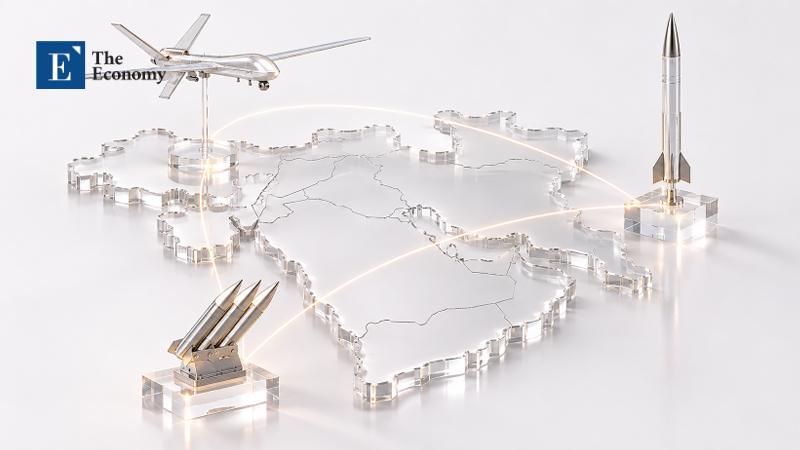
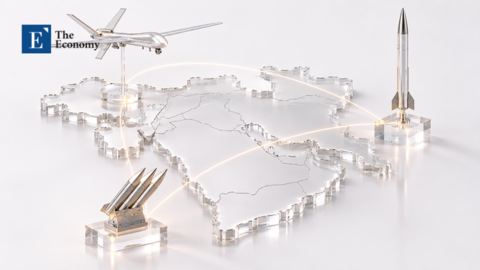
Hanwha Aerospace is accelerating its push into Saudi Arabia’s defense market. By pursuing large-scale exports of ground weapons, including self-propelled howitzers and armored vehicles, as well as local production, the company is building a foundation for long-term industrial cooperation. Other major South Korean defense companies, including LIG Nex1 and Korea Aerospace Industries (KAI), are also expanding package deals combining local production, technology transfers, and maintenance and support, particularly in the United Arab Emirates (UAE) and Iraq.
Hanwha Aerospace Accelerates Its Saudi Push
According to foreign media reports compiled on the 20th, Hanwha Aerospace has rapidly expanded its business footprint in Saudi Arabia’s defense market in recent years. It exported Chunmoo multiple-launch rocket systems to Saudi Arabia in 2022 and also participated in the Cheongung-II supply project that LIG Nex1 secured in Saudi Arabia in November 2023, providing launchers and launch tubes for the weapon system. The contracts Hanwha Aerospace signed with LIG Nex1 in 2024 for mass production of launchers and the supply of launch tubes and guided-missile components for the project totaled nearly USD 728 million.
The company has also steadily expanded its local business organization. In September last year, Hanwha Aerospace opened its Middle East and North Africa (MENA) regional headquarters (RHQ) in Riyadh, Saudi Arabia. The entity serves as a hub for managing existing operations and identifying new contract opportunities not only in Saudi Arabia but also elsewhere in the Middle East, including the United Arab Emirates (UAE) and Egypt. In the first half of this year, Hanwha Defense Arabia, wholly owned by Hanwha Aerospace, was separately established in Riyadh. Hanwha Defense Arabia was created to respond directly to Saudi defense demand and strengthen efforts to secure contracts.
Discussions on Package Exports
The scope of cooperation has broadened further this year. Hanwha Aerospace, Hanwha Systems, and Hanwha Ocean participated in the World Defense Show (WDS 2026) in Riyadh in February, presenting an integrated defense export package spanning land, sea, air, and space. Hanwha Aerospace exhibited the K9A1 self-propelled howitzer, equipped with a South Korean-made 1,000-horsepower-class STX engine suited to Saudi Arabia’s desert environment, and the Tigon wheeled armored vehicle. It also unveiled its loitering precision-guided weapon (L-PGW), which uses artificial intelligence (AI) to detect and identify targets before striking them with suicide drones, for the first time. Hanwha Systems presented its multi-mission radar (MMR) for detecting drones, aircraft, and rockets; the Cheongwang Block-I laser air-defense weapon; an AI-based naval combat system; and satellite imagery analysis solutions. Hanwha Ocean introduced the Jangbogo-III Batch-II submarine and surface vessels. In addition, in line with the Saudi government’s defense localization policy under “Vision 2030,” Hanwha proposed industrial cooperation covering local production of weapon systems, technology transfers, and the training of specialized personnel.
These efforts have recently led to negotiations on a large-scale ground weapons acquisition. According to a report on the 18th by the Greek military and aviation publication Flight, Hanwha Aerospace is currently discussing a ground weapons export package worth USD 11 billion with Saudi Arabia’s Ministry of National Guard (MNG). All dates are local time. The potential purchase comprises 1,500 vehicles, including 500 K9A1 self-propelled howitzers and 1,000 Tigon wheeled armored vehicles. The possibility of acquiring an artillery operating system incorporating K10 ammunition resupply vehicles, which automatically replenish ammunition for the K9A1, has also been raised. However, the specific number of K10s, the Tigon variants, unit prices for each type of equipment, and the share of local production reportedly remain undecided.
Table 1. Hanwha Group’s Defense Business Expansion in Saudi Arabia
| Company | Timing | Project | Key Details |
|---|---|---|---|
| Hanwha Aerospace | 2022 | Chunmoo exports | Supply of Chunmoo multiple-launch rocket systems to Saudi Arabia |
| 2023–2024 | Participation in the Cheongung-II project | Supply of launchers, launch tubes, and guided-missile components for LIG Nex1’s Saudi export project | |
| September 2025–first half of 2026 | Expansion of local organization | Establishment in Riyadh of a MENA regional headquarters and Hanwha Defense Arabia, a dedicated Saudi entity | |
| February 2026 | Ground weapons and drone business proposals | Presentation of the K9A1 self-propelled howitzer, Tigon armored vehicle, and loitering precision-guided weapon at WDS 2026, with proposals for cooperation including local production and technology transfers | |
| November 2026 | Large-scale ground weapons export negotiations | Negotiations with Saudi Arabia’s Ministry of National Guard on a USD 11 billion package including 500 K9A1s and 1,000 Tigons | |
| Hanwha Systems | February 2026 | Proposals for air-defense, naval, and space solutions | Presentation at WDS 2026 of a multi-mission radar, the Cheongwang Block-I laser air-defense weapon, a naval combat system, and satellite imagery analysis solutions |
| Hanwha Ocean | February 2026 | Naval vessel export proposal | Presentation at WDS 2026 of a maritime defense package including the Jangbogo-III Batch-II submarine and surface vessels |
Expanding Its Footprint in Egypt, the UAE, and Beyond
Hanwha’s push into the Middle Eastern market is extending beyond Saudi Arabia to other countries in the region, including the UAE, Iraq, and Egypt. In 2022, Hanwha Aerospace signed a USD 1.6 billion contract with Egypt to supply K9 self-propelled howitzers, K10 ammunition resupply vehicles, and K11 fire direction control vehicles. Late last year, it began local production of K9 self-propelled howitzers at the state-owned Military Factory 200 outside Cairo. At the Eurosatory 2026 defense exhibition in Paris, France, in June, the company also signed a cooperation agreement with UAE defense and technology company Generation 5 Holding for local production and sales of K9 self-propelled howitzers in the Middle East. Generation 5 Holding plans to support Hanwha Aerospace in establishing its production system and entering the market, while pursuing maintenance and support services and technology cooperation.
Hanwha Systems is using the UAE as a base to enter the integrated air-defense network business. In 2022, it supplied multi-function radars, a core component of the Cheongung-II systems acquired by the UAE. Building on that track record, it signed a term sheet with the local state-owned defense company EDGE Group in September. The agreement provides for considering cooperation on the Long-range Surface-to-Air Missile (L-SAM) system, Cheongung-II, and Chunmoo multiple-launch rocket systems. Following approvals and consultations with both governments, the two companies plan to flesh out arrangements for establishing a local joint venture, technology cooperation, and the phased development of local production and maintenance capabilities.
South Korean Defense Companies Turn to the Middle East
South Korean defense companies other than Hanwha are also strengthening their footholds in the Middle East. For example, after signing a USD 3.5 billion contract with the UAE in 2022 to supply Cheongung-II systems, LIG Nex1 signed a USD 2.8 billion Cheongung-II export contract with Iraq’s Ministry of Defense in September 2024. At the Unmanned Systems Exhibition (UMEX 2026) in Abu Dhabi, UAE, in January, the company announced plans to expand joint development and production cooperation with local companies. In May, it also signed a memorandum of understanding (MOU) with Tawazun, the UAE’s defense industry support organization, covering the establishment of a local entity, joint research and development, maintenance and support, and supply chain integration.
KAI is increasing its engagement with Middle Eastern countries, focusing on air capabilities such as fighter jets and unmanned aerial vehicles. A notable example was its signing of an MOU for strategic aerospace cooperation with Platforms & Systems, part of the UAE’s EDGE Group, at the Dubai Airshow in November last year. The two companies agreed to explore opportunities for technology cooperation, joint research and development, and exports to third countries in fixed-wing aircraft, rotary-wing aircraft, unmanned aerial vehicles, and maintenance and support. In January this year, Saudi air force commander Turki bin Bandar visited KAI’s headquarters in Sacheon, South Gyeongsang Province, where he toured KF-21 development and production facilities and watched a flight demonstration. KAI presented the Saudi air force with cooperation proposals combining the KF-21, next-generation air combat systems, maintenance, and training. It is reportedly seeking to participate in Saudi Arabia’s next-generation fighter acquisition program.
Structural Changes in the Global Defense Market
Market observers are watching how the overseas expansion of these South Korean defense companies will affect the competitive landscape. The global defense industry has recently been gradually moving away from its traditional structure centered on major weapons manufacturers, driven by an influx of startups and private investors with capabilities in AI, autonomous driving, robotics, and space technology. According to market research firm PitchBook, venture capital (VC) investment in global defense startups reached nearly USD 40.8 billion in the first half of this year. That was a 56% increase from the same period a year earlier and the highest half-year total in the past 10 years. Governments in major countries are also responding to this industrial restructuring. For example, the Japanese government is considering establishing a dedicated entity to connect startups, financial institutions, and universities with existing defense companies as part of efforts to develop the defense industry into a core pillar of its national growth strategy. Japanese Defense Minister Shinjiro Koizumi also called for participation by emerging technology companies and financial support from the banking sector, saying, “The established major defense companies alone cannot adequately secure the equipment the Self-Defense Forces require.”
This trend is leading to the separation of functions within the defense ecosystem, including design and development, production and assembly, and operations and maintenance. Rather than a single company exclusively handling the entire process, cooperation models that combine the technological expertise and production capabilities of different companies and countries are spreading. As a result, arms-buying countries have a wider choice of suppliers and production and procurement methods. Their selection criteria are also shifting toward a comprehensive assessment of factors such as rapid delivery capabilities, local production, technology transfers, and long-term maintenance and spare-parts supply.
Oliver Griffin is a policy and tech reporter at The Economy, focusing on the intersection of artificial intelligence, government regulation, and macroeconomic strategy. Based in Dublin, Oliver has reported extensively on European Union policy shifts and their ripple effects across global markets. Prior to joining The Economy, he covered technology policy for an international think tank, producing research cited by major institutions, including the OECD and IMF. Oliver studied political economy at Trinity College Dublin and later completed a master’s in data journalism at Columbia University. His reporting blends field interviews with rigorous statistical analysis, offering readers a nuanced understanding of how policy decisions shape industries and everyday lives. Beyond his newsroom work, Oliver contributes op-eds on ethics in AI and has been a guest commentator on BBC World and CNBC Europe.
- Previous “Beyond Ukraine to European Security”: Europe Pushes Back Against U.S. Peace Negotiation Plans as Russian Military Threats and Defense Industry Constraints Heighten Anxiety
- Next Europe’s Push for an “EU Version of Section 301”: Darkening Prospects for Chinese Exports as Trade Restrictions Expand
Similar Post