“We Must Break Free of China’s Monopoly”: Japan Mobilizes Public and Private Sectors to Revive Rare Earth Ecosystem as U.S. Accelerates Supply Chain Shift Away from China

Aoife Brennan is a contributing writer for The Economy, with a focus on education, youth, and societal change. Based in Limerick, she holds a degree in political communication from Queen’s University Belfast. Aoife’s work draws connections between cultural narratives and public discourse in Europe and Asia.
Authored On
Modified
Japan pursues rare earth self-sufficiency by expanding production capacity and diversifying overseas sources
China’s overwhelming market dominance threatens production in Japan’s key industries, including automobiles and semiconductors
“We Will Catch Up with China”: U.S. also expands investment in rare earth production and recycling
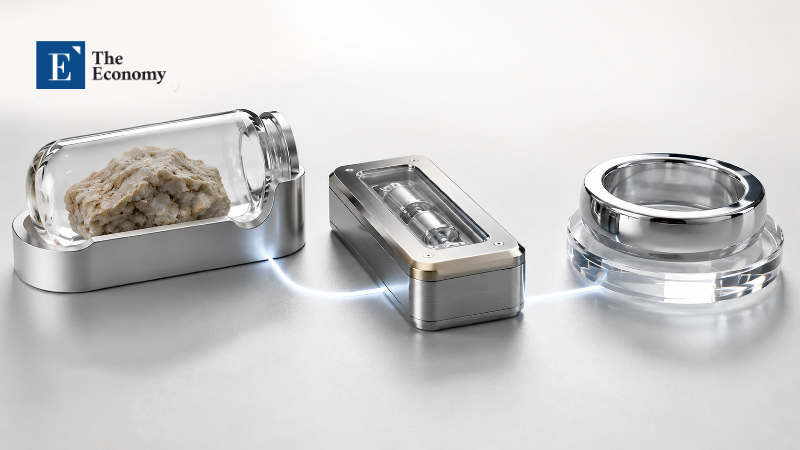
Japan’s leading materials and nonferrous metals companies are going all out to rebuild an independent rare earth ecosystem. As China uses its overwhelming dominance in rare earth refining and processing to pressure global supply chains, Japanese companies are accelerating efforts to reduce their dependence on China by expanding refining facilities, developing recycling technologies and investing in overseas mines. The Japanese government is also supporting supply chain diversification with substantial subsidies and expanded cooperation with partners including the United States, Australia and India.
Japan Steps Up Efforts to Rebuild Rare Earth Supply Chains
Nikkei Asia reported on the 22nd (all dates hereafter are local time) that major Japanese materials companies are working to rebuild the country’s rare earth ecosystem. Shin-Etsu Chemical, for example, plans to invest at least JPY 35 billion to build its third rare earth refinery in Fukui Prefecture, with JPY 17.5 billion of that amount provided by the government. Under the Economic Security Promotion Act, the Japanese government subsidizes up to 50% of capital expenditure to secure stable supplies of critical minerals, helping companies expand production capacity. In July, Santoku, a subsidiary of metals manufacturer Proterial, was also selected for subsidies. Santoku plans to spend at least JPY 1.6 billion to build a new rare earth refining facility in Japan, with government support totaling about JPY 800 million.
Sumitomo Metal Mining also plans to expand scandium production capacity at its Hyogo Prefecture plant by about 20% during fiscal 2026 (April 2026–March 2027). The expansion is intended to address rapidly growing demand for solid oxide fuel cells (SOFCs), which are increasingly used to power data centers, and the rising importance of scandium as a key raw material. Since 2018, Sumitomo Metal Mining has recovered scandium generated during nickel production at a nickel smelting facility on the Philippine island of Mindanao. It currently supplies scandium for fuel cells primarily to the United States.
Rare Earth Recycling and Supply Procurement Gain Pace
The rare earth recycling market is also gathering momentum. In March, Mitsubishi Materials agreed to acquire preferred shares in U.S. rare earth recycling company ReElement Technologies and signed a memorandum of understanding (MOU) to cooperate on rare earth and rare metal recycling. ReElement’s chromatography-based separation and refining technology can extract rare earths and rare metals with a purity of at least 99.5% from discarded magnets, spent batteries and mine waste. The two companies plan to cooperate on feedstock procurement and toll refining in the United States while conducting a feasibility study on establishing a recycling joint venture in Japan. Mitsui Mining & Smelting also established the Kyushu Advanced Materials Development Center in Omuta, Fukuoka Prefecture, in April and began developing rare earth and rare metal refining and recycling technologies.
Companies are also actively securing overseas mine development rights and refining bases. Japanese trading house Sojitz signed an exclusive agreement in 2011 to sell light rare earths from Australian rare earth company Lynas in Japan and has steadily expanded its range of sourced materials since then. In March 2023, Sojitz and the Japan Organization for Metals and Energy Security (JOGMEC) jointly invested an additional AUD 200 million (approximately USD 137 million) in Lynas, securing supply rights to up to 65% of its dysprosium and terbium production. Imports began in October last year. In March this year, Sojitz revised its long-term supply agreement to purchase up to 75% of Lynas’s medium and heavy rare earth production, adding samarium, yttrium, lutetium and gadolinium to its procurement portfolio. Toyota Tsusho also joined the Lofdal heavy rare earth mine development project in Namibia, Africa, in March, a project JOGMEC had been advancing. In July, JOGMEC agreed to invest up to JPY 5.5 billion in a special-purpose company for the project. A final decision on whether to commercialize the project is expected within the current fiscal year.
Table 1. Japanese Companies’ Progress in Rebuilding Rare Earth Supply Chains
| Sector | Company | Timing | Key Details |
|---|---|---|---|
| Refining and Production | Shin-Etsu Chemical | Planning Stage | Construction of a third refinery in Fukui Prefecture |
| Santoku | Planning Stage | Construction of a new rare earth refining facility in Japan | |
| Sumitomo Metal Mining | Fiscal 2026 | Expansion of scandium production capacity at a Hyogo Prefecture plant by about 20% | |
| Recycling | Mitsubishi Materials | March 2026 | Development of rare earth recycling operations with U.S.-based ReElement; consideration of a joint venture |
| Mitsui Mining & Smelting | April 2026 | Establishment of the Kyushu Advanced Materials Development Center and development of refining and recycling technologies | |
| Overseas Procurement | Sojitz | 2011–2026 | Continued investment in Australia’s Lynas and expansion of long-term heavy rare earth supply rights |
| Toyota Tsusho | March 2026 | Participation in development of the Lofdal heavy rare earth mine in Namibia |
International Cooperation on Critical Mineral Supply Chains Strengthens
Government-level cooperation on critical mineral supply chains is also strengthening. In May, the Quad, a security grouping comprising the United States, Japan, Australia and India, announced a detailed cooperation framework for its Critical Minerals Initiative and set a goal of mobilizing up to USD 20 billion in public and private funding for mineral mining, refining and recycling projects. Last month, the four countries also held a separate foreign ministers’ meeting on the sidelines of the Group of 20 (G20) foreign ministers’ meeting in Atlanta, Georgia, to discuss ways to diversify critical mineral supply chains. In a joint statement, they expressed concern over arbitrary export restrictions, overproduction and economic coercion by certain countries, and pledged to expand cooperation in areas including recycling projects to recover critical minerals from waste.
Bilateral cooperation is also becoming more firmly established. The United States and Japan set up a separate cooperation framework to secure critical mineral and rare earth supply chains in October last year. In March, they announced an action plan centered on introducing joint trade policies, including minimum prices for critical mineral imports; investing in mines and refineries in both countries and third countries; and jointly stockpiling critical minerals. In May, Japanese Prime Minister Sanae Takaichi and Australian Prime Minister Anthony Albanese issued a joint statement on strengthening critical mineral cooperation at their bilateral summit. Building on their critical minerals partnership signed in 2022, Japan and Australia agreed to increase joint investment across the supply chain, including mine development, refining and processing, and advanced materials manufacturing. They also agreed to support related projects through JOGMEC and Australia’s critical minerals strategic reserve framework.
China’s Moves to Weaponize Rare Earths
China’s overwhelming market dominance underlies Japan’s push to achieve greater independence in rare earth supply chains. According to the International Energy Agency (IEA), in 2024 China accounted for 60% of global mining output, 91% of refined production and 94% of sintered permanent magnet production for rare earths used in permanent magnets—neodymium, praseodymium, dysprosium and terbium. Its influence is even stronger in heavy rare earths. In its April World Economic Outlook, the International Monetary Fund (IMF) estimated that China controls 98% of global heavy rare earth mining output, including material mined in Myanmar, and accounts for 97% of oxide separation and 95% of metal refining. Japan has sought to diversify its import sources since experiencing Chinese rare earth export restrictions during the 2010 territorial dispute over the Senkaku Islands (known as Diaoyu Dao in China), but it remains heavily dependent on Chinese raw materials.
The problem is that China’s moves to weaponize rare earths directly disrupt production in Japan’s key manufacturing industries. After China imposed export controls on seven types of heavy rare earths and related products in April last year, Japanese automaker Suzuki temporarily suspended production of its flagship compact car, the Swift, starting in May that year because of component shortages. Supply chain uncertainty increased further after diplomatic tensions deepened following Japanese Prime Minister Sanae Takaichi’s remarks last November about a potential Taiwan contingency. According to China’s General Administration of Customs, Chinese exports to Japan of dysprosium and terbium metals and oxides were all zero from January through August this year. Yttrium oxide exports also plunged 98.3% year on year to just 14.1 metric tons. Supplies to Japan of rare earth raw materials subject to export controls have reportedly remained extremely limited since then.
U.S. Accelerates Push for Supply Chain Self-Sufficiency
Japan is not the only country pursuing critical mineral self-sufficiency in response to supply chain risks originating in China. According to Bloomberg, U.S. President Donald Trump told reporters ahead of the Quad summit in Manila, the Philippines, on the 17th, “We are producing rare earths at levels never seen before,” adding, “We will catch up with China within 10 months.” He continued, “Japan and India are also expanding rare earth production,” and stressed that “we will be able to secure all the rare earths the United States needs within 10 months.” The market, however, remains doubtful about the feasibility of that goal. According to the IEA, U.S. annual production capacity for neodymium-iron-boron (NdFeB) permanent magnets last year was about 4,500 metric tons, just 2.1% of China’s approximately 210,000 metric tons.
The U.S. government is also supporting the development of a rare earth recycling industry using discarded electronics. On the 10th, the U.S. Department of Energy (DOE) launched ASCEND, a collaborative critical mineral recovery and recycling project involving Idaho National Laboratory (INL), Rockies National Laboratory (NLR) and Oak Ridge National Laboratory (ORNL). The project aims to build a domestic supply chain spanning the collection of discarded products such as mobile phones, laptops and hard drives through the separation and refining of critical minerals. Momentum Technologies, a U.S. critical mineral refining company participating in the project, plans to recover neodymium, dysprosium and terbium from spent batteries and discarded magnets using membrane solvent extraction (MSX) technology jointly developed with the Department of Energy and Oak Ridge National Laboratory.
Aoife Brennan is a contributing writer for The Economy, with a focus on education, youth, and societal change. Based in Limerick, she holds a degree in political communication from Queen’s University Belfast. Aoife’s work draws connections between cultural narratives and public discourse in Europe and Asia.
Similar Post