Demanding a Shared Defense Burden While Restricting Allied Contacts: The Paradox of U.S.-Canada Defense Cooperation

Matthew Reuter is a senior economic correspondent at The Economy, where he covers global financial markets, emerging technologies, and cross-border trade dynamics. With over a decade of experience reporting from major financial hubs—including London, New York, and Hong Kong—Matthew has developed a reputation for breaking complex economic stories into sharp, accessible narratives. Before joining The Economy, he worked at a leading European financial daily, where his investigative reporting on post-crisis banking reforms earned him recognition from the European Press Association. A graduate of the London School of Economics, Matthew holds dual degrees in economics and international relations. He is particularly interested in how data science and AI are reshaping market analysis and policymaking, often blending quantitative insights into his articles. Outside journalism, Matthew frequently moderates panels at global finance summits and guest lectures on financial journalism at top universities.
Authored On
Modified
U.S. frustration grows over Canada's delayed defense investment
Washington cites air force aircraft availability of 41.9% as evidence of insufficient contributions to North American defense
Pressure to increase defense spending now extends to restrictions on social gatherings between the two countries' service members
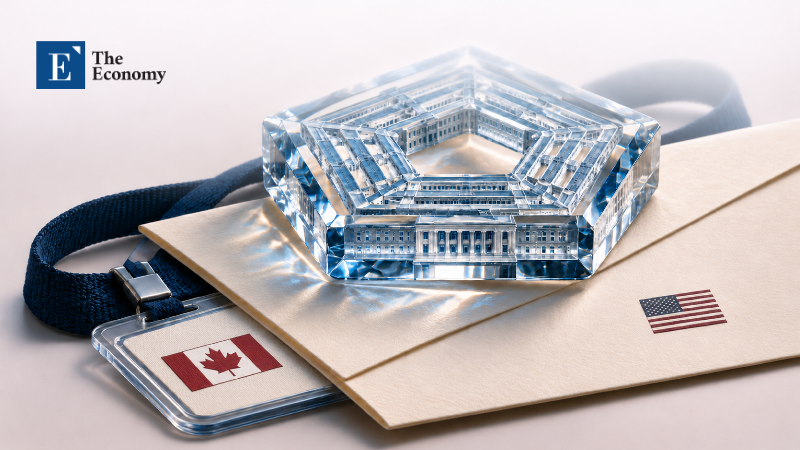
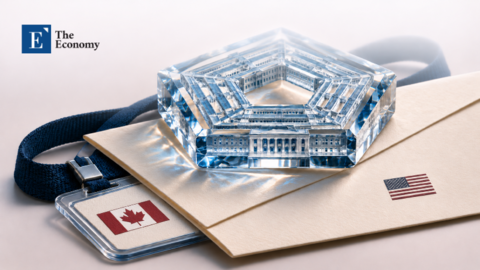
The U.S. Department of Defense has issued a classified directive restricting informal exchanges between American and Canadian troops, who jointly defend North American airspace. The Pentagon's stated reason is that Canada has failed to do its share in North American defense, delaying military investment to the point that fewer than half of its air force aircraft are operational. The two countries have already clashed over U.S. President Donald Trump's remarks about annexing Canada, his imposition of tariffs, and Canada's subsequent review of plans to acquire American-made F-35 fighter jets. Even as both countries scramble fighters together when Chinese and Russian bombers approach Alaska, Washington is demanding that Canada shoulder greater defense responsibilities while reducing opportunities for their military personnel to meet.
Pentagon Restricts Informal Exchanges With Canadian Forces
According to The Washington Post on the 23rd (all dates local), U.S. Defense Secretary Pete Hegseth signed a classified directive on the 20th restricting informal exchanges between American and Canadian troops. A draft was prepared several months ago, but the secretary only recently signed it and circulated it within the Pentagon. Specific examples of its application emerged through a U.S. Senate delegation attending the Halifax International Security Forum in Canada the following day. Republican Senator Mike Rounds, who was briefed by a Pentagon liaison, said the directive called for curtailing some social gatherings and obtaining advance permission to attend Canadian think tank events. He added, however, that senators were still determining exactly which gatherings would be subject to restrictions.
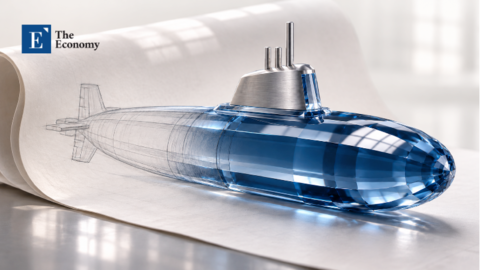
The Pentagon based the restrictions on its assessment that Canada lacks the military capabilities to fulfill its share of North American defense responsibilities. In explanatory materials, it criticized Canada for postponing decisions needed to become a “credible partner” in the joint defense of North America. According to the Pentagon, only 41.9% of Canadian air force aircraft were operational in fiscal 2025–2026. Its assessment was that aging equipment and personnel shortages were limiting the aircraft available to defend North American airspace. Naval vessel availability stood at 53.9% over the same period, and the Pentagon concluded that Canada's navy also faced difficulties monitoring ships approaching North America. In particular, only one of its four aging Victoria-class submarines could put to sea at any given time. The army's operational readiness rate was also just 48%.
U.S. and Canada at Odds Over Everything From Defense Spending Timelines to F-35 Purchases
The Pentagon viewed Canada's capability shortfalls as the result of prolonged delays in defense investment. Canada pledged alongside other North Atlantic Treaty Organization (NATO) members in 2006 to spend 2% of gross domestic product (GDP) on defense, but Canadian Prime Minister Mark Carney did not announce until March this year that defense spending for fiscal 2025–2026 had reached 2% of GDP. In the meantime, NATO members agreed to allocate 3.5% of GDP to core defense spending and 1.5% to defense- and security-related infrastructure and other areas by 2035. The Canadian government projected that defense and security spending would reach 4.1% of GDP in fiscal 2027–2028, but the Pentagon pointed out that Canada had postponed its largest spending increases until after the 2029 general election.
The two countries also disagree over where defense funds should go. Canada initially planned to acquire 88 American-made F-35 fighter jets. But after U.S. President Donald Trump repeatedly spoke of incorporating Canada as America's “51st state” and imposed tariffs on Canadian products, Carney ordered a review of the F-35 acquisition plan in March last year. Sweden's Saab Gripen emerged as an alternative, with the Canadian government focusing on the potential to create more defense industry jobs by producing the Gripen domestically. The Pentagon countered that operating both F-35s and Gripens would force Canada's air force to divide its already insufficient personnel between two aircraft types. In its assessment, Canada's emphasis on domestic industrial interests in selecting fighter jets had also increased uncertainty over the capabilities available for the North American Aerospace Defense Command's (NORAD) air defense mission.
Canadian Resentment Grows Over Trump Administration's Treatment of Allies
Underlying the dispute over fighter acquisitions, however, is deep Canadian resentment toward the Trump administration's treatment of its allies. Canada is a member of the Five Eyes intelligence-sharing alliance alongside the United States, Britain, Australia and New Zealand. Yet controversy erupted in Canada in August over allegations that the U.S. defense secretary had mocked a teenager participating in military training. It began when Hegseth posted a photograph on X of a Canadian cadet receiving an award from an instructor, writing “This is real” beside a Canadian flag. Critics in Canada accused him of disparaging the country's military by mocking the appearance of the two people. Following Carney, Canadian Defense Minister David McGuinty also criticized the conduct as unbecoming of a U.S. defense secretary.
Hegseth's words and actions are not the only things that have stirred resentment in Canada. Trump's treatment of Canada as an American state and his talk of annexation became fodder for satire at the Canadian Parliamentary Press Gallery dinner in Ottawa on the 21st. Standing beside Carney, two comedians dressed as Trump and Carney staged a meeting between the two leaders. Mark Critch, playing Trump, confidently declared that the two countries would reach a great deal before saying, “There's just one obstacle. Me. Because I'm crazy.” The biggest laugh from the audience came when he mocked Trump's use of the title “governor” for Canada's prime minister. With Carney watching beside him, Critch said, “I don't call Carney governor to his face because I'm a coward.”
Table 1. Canada's Retaliatory Tariffs on U.S. Products
| Category | Applicable Tariff Rate | Key Details |
|---|---|---|
| Overall Coverage | 15%·25%·50% | About 700 product categories, with annual imports totaling CAD 27.6 billion Announced August 25, effective September 8 |
| Steel and Aluminum | 25% → 50% | Tariff increases on some products |
| Automobiles | Existing tariff rates maintained | Proposal to withdraw retaliatory tariffs falls through |
| Furniture and Clothing | 50% | Highest tariff rate applied |
| Dairy Products | 25% | Applied to U.S. dairy products, including cheese |
From Tariff Reduction Talks to Retaliatory Tariffs
The portrayal of Trump as an “obstacle to a deal” at the dinner stemmed from bilateral trade negotiations that collapsed at the last minute in August. At the time, Canada proposed withdrawing its retaliatory tariffs on American steel, aluminum and automobiles if the United States substantially reduced tariffs on the same Canadian products. It even indicated that, if an agreement were reached, it would recommend that provincial governments that had halted sales of American alcoholic beverages resume them. But when Washington demanded greater access to Canada's dairy market, Ottawa drew a line, saying it had no intention of changing import quotas or tariffs on American dairy products. Ultimately, on the night of August 21, just hours after Trump expressed confidence in progress in the negotiations, Carney instructed the negotiating team he had sent to Washington to return home. The following day, the United States imposed 50% tariffs on Canadian products, scuttling the tariff reductions the two countries had been discussing. Asked at a news conference that day whether the countries had entered a trade war, Carney replied, “If you're under attack, you're at war. We have been attacked.”
The response Carney had promised took shape with the announcement of retaliatory tariffs on August 25, three days after the U.S. tariffs were imposed. To protect Canadian businesses hurt by American tariffs, the Canadian government targeted U.S. products competing with those businesses in the Canadian market. The measures covered about 700 product categories with annual imports totaling CAD 27.6 billion, matching the value of Canadian products subject to the U.S. 50% tariff. The rates, which took effect on September 8, were set at 15%, 25% or 50%, depending on the product. Retaliatory tariffs on American steel and aluminum, which Canada had offered to withdraw during negotiations, were raised from 25% to 50% for some products, while retaliatory tariffs on automobiles remained in place. Furniture and clothing were subject to the highest rate of 50%. Notably, in the dairy market, where Washington had demanded greater access, Canada imposed a 25% tariff on American dairy products, including cheese.
Declining U.S.-Canada Exchanges Spill Over Into Joint North American Defense
As trade tensions deepened, travel between the two countries also fell noticeably. According to Canada's foreign ministry, Canadian visits to the United States from April last year through March this year declined 25% from the previous fiscal year. Over the same period, new consular assistance cases received by the ministry involving Canadians arrested or detained in the United States rose nearly 60%, from 361 to 577. The United States accounted for 63% of the increase in arrest and detention cases reported to Canadian diplomatic missions worldwide. The ministry did not identify a specific reason for the surge in U.S. cases, but local immigration lawyer Len Saunders said anxiety over immigration status had grown even among Canadian permanent residents who had settled and were working in the United States.
With travel between the two countries already dwindling, opportunities to discuss defense issues have also diminished. In May, the Pentagon suspended its participation in the Permanent Joint Board on Defense, citing Canada's slow progress in fulfilling its defense investment commitments. The body has served as a forum for bilateral consultations on North American defense since 1940, during World War II. Coincidentally, that same month, the Canadian and Chinese foreign ministers met in Ottawa and agreed to resume political and security consultations between their ministries. Then, on September 4, defense officials from the two countries held a Defense Coordination Dialogue in Ottawa for the first time in eight years. China's Defense Ministry announced that both sides had expressed a willingness to expand military exchanges, while Canada's Defense Department described the meeting as working-level consultations to facilitate direct communication between their military authorities.
Just as Canada has reopened a channel for military dialogue with China after eight years, the United States is reducing contact with the Canadian forces that help defend North American airspace. Foreign affairs experts broadly view the move as contradictory, given that Chinese-Russian military cooperation has extended as far as the waters off Alaska. When two Chinese H-6 bombers and two Russian Tu-95 bombers entered Alaska's Air Defense Identification Zone in July 2024, Canadian air force CF-18s scrambled alongside U.S. fighter jets. It was the first time Chinese and Russian military aircraft had been detected together in the zone, and American and Canadian fighters escorted the four bombers through international airspace until they left the zone. The Pentagon said the new directive would leave NORAD's joint operations unchanged. Yet while expecting Canadian pilots to fly alongside U.S. forces if Chinese and Russian bombers approach again, it has made even attendance by the two countries' military officials at the same security forum subject to prior approval in peacetime. In effect, Washington, which has demanded greater defense responsibilities from Canada, has begun by restricting contact with the ally expected to share those responsibilities.
Matthew Reuter is a senior economic correspondent at The Economy, where he covers global financial markets, emerging technologies, and cross-border trade dynamics. With over a decade of experience reporting from major financial hubs—including London, New York, and Hong Kong—Matthew has developed a reputation for breaking complex economic stories into sharp, accessible narratives. Before joining The Economy, he worked at a leading European financial daily, where his investigative reporting on post-crisis banking reforms earned him recognition from the European Press Association. A graduate of the London School of Economics, Matthew holds dual degrees in economics and international relations. He is particularly interested in how data science and AI are reshaping market analysis and policymaking, often blending quantitative insights into his articles. Outside journalism, Matthew frequently moderates panels at global finance summits and guest lectures on financial journalism at top universities.
- Previous “We Must Break Free of China’s Monopoly”: Japan Mobilizes Public and Private Sectors to Revive Rare Earth Ecosystem as U.S. Accelerates Supply Chain Shift Away from China
- Next Europe’s Push for an “EU Version of Section 301”: Darkening Prospects for Chinese Exports as Trade Restrictions Expand
Similar Post