China’s Semiconductor Drive Strikes Back: Self-Sufficiency Efforts Deliver Results, but Quality Competitiveness Remains a Constraint

Matthew Reuter is a senior economic correspondent at The Economy, where he covers global financial markets, emerging technologies, and cross-border trade dynamics. With over a decade of experience reporting from major financial hubs—including London, New York, and Hong Kong—Matthew has developed a reputation for breaking complex economic stories into sharp, accessible narratives. Before joining The Economy, he worked at a leading European financial daily, where his investigative reporting on post-crisis banking reforms earned him recognition from the European Press Association. A graduate of the London School of Economics, Matthew holds dual degrees in economics and international relations. He is particularly interested in how data science and AI are reshaping market analysis and policymaking, often blending quantitative insights into his articles. Outside journalism, Matthew frequently moderates panels at global finance summits and guest lectures on financial journalism at top universities.
Authored On
Modified
Rapid growth of Chinese equipment makers fueled by state industrial policy
Japanese, U.S., and European firms face mounting pressure on market share
Long road still lies ahead before full technological independence is achieved
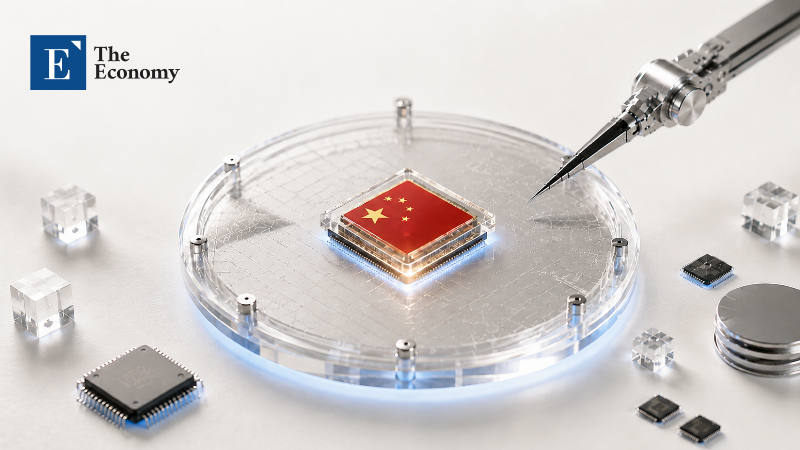
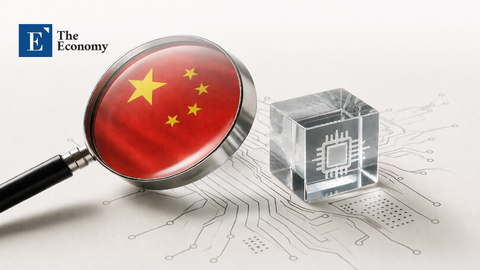
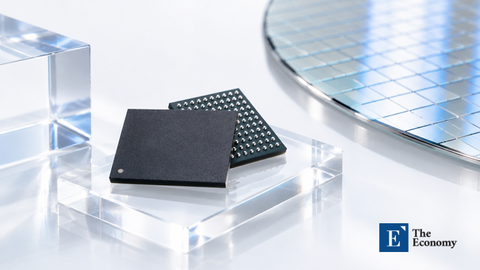
The localization of semiconductor manufacturing equipment is gaining momentum in China. The combined China revenue of five major Japanese semiconductor equipment manufacturers declined year-over-year for the first time as of March this year, while U.S. and European suppliers are also struggling to maintain their foothold in the Chinese market. Government policies aimed at strengthening supply-chain self-sufficiency are beginning to bear fruit, allowing domestic firms to rapidly absorb market share from foreign competitors. However, despite the rapid pace of expansion, profitability, process stability, and yield competitiveness are expected to require considerably more time to achieve.
Revenue of Japan’s Five Major Front-End Equipment Suppliers Falls 10% in China; ASML and Applied Materials Also Lose Market Share
According to Nikkei Asia on June 22, the combined revenue generated in China during the last fiscal year, which ended on March 31, 2026, by Japan’s five leading semiconductor equipment manufacturers—Tokyo Electron (TEL), Advantest, Screen Holdings, Disco, and Kokusai Electric—totaled approximately $9.8 billion. The figure represented a decline of roughly 10% to 12% from the previous year, marking the first time Japan’s core equipment suppliers collectively posted an annual revenue contraction in the Chinese market.
The steepest decline was recorded by industry leader Tokyo Electron. During the January–March quarter, China accounted for 27% of the company’s total revenue, down 7 percentage points from a year earlier. The drop is particularly striking given that China represented nearly 50% of Tokyo Electron’s revenue in the April–June quarter of 2024, meaning the contribution has effectively been cut in half within just two years. Suppliers specializing in front-end manufacturing equipment used to etch microscopic circuitry onto silicon wafers suffered the most severe impact. Combined front-end equipment revenue in China for Tokyo Electron, Screen Holdings, and Kokusai Electric plunged nearly 20% year-over-year.
The challenges extend well beyond Japanese companies. Top-tier Western equipment suppliers, including Dutch lithography giant ASML as well as U.S.-based Applied Materials (AMAT) and KLA, are facing unprecedented difficulties in China. ASML’s China revenue contribution fell to 19% in the first quarter, down 8 percentage points from the previous year.
According to SEMI, China, which accounts for 37% of the global semiconductor equipment market, maintained an overall market size of approximately $49.3 billion last year, virtually unchanged from $49.6 billion a year earlier. The fact that foreign suppliers suffered simultaneous revenue declines despite a stable market size indicates that Chinese manufacturers have rapidly absorbed the resulting market share.
U.S. Sanctions Fuel China’s Semiconductor Ambitions
Industry observers largely view the developments as the materialization of risks that had been building for years. China continues to accelerate its pursuit of advanced technological self-sufficiency despite mounting trade restrictions from Washington. In 2022, the United States implemented the CHIPS and Science Act, effectively blocking exports to China of extreme ultraviolet (EUV) lithography systems exclusively produced by ASML. Because EUV systems are indispensable for manufacturing advanced semiconductors at 7-nanometer nodes and below, the restrictions were designed to slow China’s progress in cutting-edge chip production.
Instead, the measures appear to have strengthened Beijing’s determination to localize semiconductor technologies. China’s efforts to develop its domestic semiconductor industry began as early as 2014, but U.S. sanctions acted as a catalyst that accelerated tangible progress. Today, China’s push for semiconductor independence extends across the entire industrial chain, supported by extensive government funding. Beijing has elevated semiconductor equipment localization to a national priority and is encouraging domestic chipmakers to prioritize Chinese-made equipment purchases.
According to a Chinese manufacturing research institution, the localization rate of semiconductor manufacturing equipment in China reached 21% for front-end equipment last year, up significantly from 10% in 2021. Localization of back-end equipment used for assembly and testing rose from 19% to 36% over the same period. The Center for Strategic and International Studies (CSIS) estimates that approximately $150 billion in public-sector funding had been directed toward China’s semiconductor industry through the first half of this year.
Massive government support has strengthened competitiveness across equipment, materials, and chip-design segments. According to Nikkei, as of February this year, three Chinese companies—Naura Technology Group, Advanced Micro-Fabrication Equipment Inc. China (AMEC), and Shanghai Micro Electronics Equipment (SMEE)—had entered the global top 20 semiconductor equipment manufacturers. In electronic design automation (EDA) software, firms such as Empyrean have recorded rapid growth. Shanghai Silicon Industry Group is expanding its presence in wafer manufacturing. On the demand side, rapidly growing domestic industries—including artificial intelligence, electric vehicles, electronics, and telecommunications—are reinforcing demand for Chinese-made semiconductors.
Localization progress has also become increasingly visible in etching equipment. Etching is a critical process that removes unwanted material from silicon wafers to create microscopic transistor patterns. China’s largest semiconductor equipment manufacturer, Naura, is reportedly testing its proprietary etching systems on a 7-nanometer production line operated by leading foundry Semiconductor Manufacturing International Corp. (SMIC). The development follows the successful deployment of the company’s equipment in 14-nanometer production processes. Naura is also supplying etching systems for memory chips with more than 300 stacked layers and has reportedly developed its own electrostatic chuck—a device used to secure wafers during manufacturing—to replace wear components previously supplied for Lam Research equipment, support for which became unavailable following sanctions imposed in 2023.

Entrenched Low-Margin Structure and Persistent Quality Risks
Despite their rapid expansion, Chinese equipment manufacturers have struggled to translate growth into stronger profitability. Naura generated approximately $3.8 billion in revenue during the first three quarters of last year, roughly 3.5 times higher than its 2020 revenue of about $840 million. AMEC recorded revenue of approximately $1.3 billion during the same period, roughly triple its 2020 level. ACM Research reported revenue of around $940 million, representing a 5.8-fold increase from 2020, while Piotech generated approximately $570 million, an increase of 8.4 times.
However, gross profit margins have declined across the board. Naura’s gross margin fell from 43.8% in 2022 to 41.4% in 2025. AMEC’s margin declined from 45.83% in 2023 to 39.17% in 2025. ACM Research’s margin fell from 51.9% in 2023 to 48.3% in 2025, while Piotech experienced a particularly sharp decline from 49.3% in 2022 to 33.3% in 2025.
The industry is increasingly exhibiting a high-growth, low-profit structure, largely due to intensifying price competition among Chinese suppliers. Government directives aimed at increasing adoption rates of domestic equipment in new fabs and capacity expansion projects have boosted short-term sales, but they have also fueled overlapping investment and aggressive discount-driven competition. As a result, the expansion of Chinese equipment usage is lowering barriers to market entry while simultaneously shifting validation burdens onto both manufacturers and customers. Some suppliers have reportedly gone as far as offering steep discounts or even providing equipment free of charge in order to secure customers.
Quality and process stability remain even more significant bottlenecks. In semiconductor equipment, competitiveness depends not only on individual machine performance but also on overall process yields, repeatability, and maintenance capabilities. Although Chinese companies have made progress in areas such as etching and deposition, Western suppliers continue to dominate advanced lithography, metrology, inspection, and process-control technologies. This dependence helps explain why China’s advanced semiconductor manufacturing capacity remains constrained despite the rapid pace of equipment localization.
Trade patterns further demonstrate that China has not yet achieved complete technological independence. Last year, China’s direct imports of U.S.-made semiconductor equipment declined 34% to approximately $2.0 billion, but equipment inflows through Singapore and Malaysia increased to about $5.7 billion and $3.4 billion, respectively. U.S. equipment suppliers such as Applied Materials, Lam Research, and KLA also continue to derive substantial revenue from China-related business. The figures suggest that, regardless of the pace of localization, China remains dependent on foreign suppliers for critical components, process equipment, and service networks.
Matthew Reuter is a senior economic correspondent at The Economy, where he covers global financial markets, emerging technologies, and cross-border trade dynamics. With over a decade of experience reporting from major financial hubs—including London, New York, and Hong Kong—Matthew has developed a reputation for breaking complex economic stories into sharp, accessible narratives. Before joining The Economy, he worked at a leading European financial daily, where his investigative reporting on post-crisis banking reforms earned him recognition from the European Press Association. A graduate of the London School of Economics, Matthew holds dual degrees in economics and international relations. He is particularly interested in how data science and AI are reshaping market analysis and policymaking, often blending quantitative insights into his articles. Outside journalism, Matthew frequently moderates panels at global finance summits and guest lectures on financial journalism at top universities.
Similar Post