Qatar LNG Hub Hit by Another Explosion During Post-Iran Strike Recovery, Undermining Energy Price Stabilization Amid Supplier-Dominated Market

Anne-Marie Nicholson is a fearless reporter covering international markets and global economic shifts. With a background in international relations, she provides a nuanced perspective on trade policies, foreign investments, and macroeconomic developments. Quick-witted and always on the move, she delivers hard-hitting stories that connect the dots in an ever-changing global economy.
Authored On
Modified
Qatari government: “Explosion occurred during restart operations, a technical accident”
Ras Laffan complex suspended operations in early March immediately after the outbreak of war
LNG supply chain warning signals intensify global energy uncertainty

Fresh clouds have gathered over the global energy market, which had been anticipating a reduction in Middle East geopolitical risks. A major explosion occurred during the restart process at a Qatari industrial complex where production had been halted by the Iran war, creating new obstacles to the recovery of global liquefied natural gas (LNG) supplies. Market participants had expected the LNG market to shift toward oversupply after 2027, but a prolonged supply disruption from Qatar could further delay the anticipated decline in LNG prices.
‘Technical Failure’ Explosion at Barzan Facility
According to international media outlets including the Associated Press on June 22, a major explosion occurred at Ras Laffan Industrial City, Qatar’s largest energy hub. The incident took place at the Barzan gas supply facility, leaving at least 13 people dead and 66 injured. Qatari authorities said the victims included workers from India and Pakistan. The Indian government and local diplomatic officials confirmed that at least 12 Indian nationals were killed. The injured were also reported to include workers from Qatar and multiple countries across Asia and Africa.
The Qatari government classified the incident as an industrial accident. Energy Minister Saad Sherida Al-Kaabi stated during a press conference that the explosion was “unrelated to sabotage or hostile activity.” Authorities are investigating whether a technical malfunction was responsible and said that no evidence of external attacks or deliberate acts of destruction has been identified thus far.
The explosion occurred while QatarEnergy was conducting start-up operations at the facility. The Barzan gas plant serves as a critical installation supplying natural gas for domestic consumption in Qatar, processing gas delivered to power generation and desalination facilities. QatarEnergy activated emergency response procedures immediately after confirming the explosion and subsequent fire and deployed firefighting personnel and equipment to contain the blaze.
Following the explosion, the Qatari government stated that the fire remained under control and that no gas leaks affecting public safety or the environment had been detected. Authorities also said there had been no direct disruption to the nation’s gas export capacity or domestic supply system at this stage. However, the full extent of the damage and the timeline for repairs have yet to be determined, and additional investigations are underway.
Concerns Over Global Energy Market Disruptions
Because the accident occurred in Qatar, one of the world’s leading LNG producers alongside the United States, Australia, and Russia, it is expected to create turbulence across global energy markets. Prior to the incident, the Qatari government had aimed to restore 80% of Ras Laffan’s production facilities within two months following the secure reopening of the Strait of Hormuz after the end of the Iran war. The latest explosion has made revisions to that plan unavoidable.
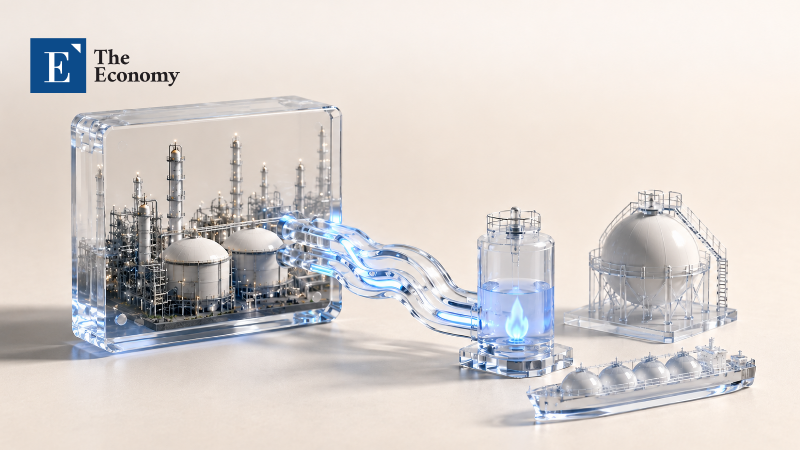
Covering 295 square kilometers, Ras Laffan Industrial City is the world’s largest LNG hub, liquefying gas extracted from nearby offshore fields for export to global markets. The complex accounts for approximately 20% of global LNG supply, with roughly 90% of its output destined for Asia. The Barzan facility involved in the accident has the capacity to produce approximately 1.4 billion standard cubic feet of sales gas per day, enough to fuel more than one million midsize vehicles continuously for a month.
Earlier, Ras Laffan suffered substantial damage from Iranian drone attacks during the Middle East conflict, forcing the suspension of LNG production beginning in March. At the time, Qatari authorities said the attack reduced the country’s LNG export capacity by approximately 17% and declared force majeure, estimating that repairs would require three to five years. Force majeure is a contractual provision that exempts parties from liability for nonperformance caused by uncontrollable events such as war or natural disasters. According to QatarEnergy, two of the complex’s 14 LNG production trains and one gas-to-liquids (GTL) facility were damaged. The disruption was expected to affect approximately 12.8 million tons of annual production.
The latest explosion occurred just as Qatar was moving toward production normalization, creating a new variable for global supply recovery prospects. A substantial volume of LNG had already been removed from the market following the force majeure declaration, and the additional accident during restart operations has increased uncertainty surrounding the overall recovery schedule. Delays at Ras Laffan are likely to raise procurement burdens across Asian markets while slowing the pace of LNG price declines. Concerns are already emerging on Wall Street and in European energy trading markets. The Dutch natural gas benchmark, one of the world’s key gas indicators, rose immediately on the morning of June 22 following news of the accident, reflecting growing anxiety among market participants.
Retreat of LNG Market Optimism
Only a few months ago, expectations for a shift toward oversupply dominated the global LNG market. New liquefaction projects in the United States, Canada, and Africa were scheduled to come online sequentially, leading to forecasts that LNG supply growth in 2026 would expand at its fastest pace since 2019. The International Energy Agency (IEA) projected that global LNG production this year would increase by 7% year over year, equivalent to approximately $40 billion, and argued that the supply expansion would help drive global gas demand to a record high. The Oxford Institute for Energy Studies likewise forecast that new supply capacity in 2026 and 2027 would exceed baseline demand growth, creating downward pressure on prices.
However, the Iran war that erupted in late February and the recent Ras Laffan explosion have significantly undermined those assumptions. The IEA reported that global LNG production in March declined 8% from a year earlier. Export losses from Qatar and the United Arab Emirates were not fully offset by increased production from new projects in North America and Africa. In April, LNG delivery volumes declined even further, extending the supply shock from production facilities into transportation and procurement networks.
Expectations for price stabilization have also weakened. Market participants had anticipated that the influx of new supply after 2027 would erode the leverage of producers, but the prolonged supply gap from Qatar has once again increased procurement pressures for buyers. Europe continues to raise its LNG import dependence as it reduces reliance on Russian gas, while Asia remains locked in competition for long-term contracts, particularly among price-sensitive consumers such as China and India. The longer supply recovery is delayed, the more bargaining power in the spot market will tilt toward producing nations and commodity traders.
The delayed decline in LNG prices also has direct implications for inflation. Natural gas affects electricity generation costs, industrial energy expenses, and residential gas rates simultaneously. If energy costs remain elevated, the pace of moderation in electricity prices, manufacturing costs, and logistics expenses will inevitably slow. Even if expectations surrounding the end of the war ease anxiety in oil markets, price stabilization in the LNG market is likely to remain limited until facility repairs and shipping operations are fully restored. Moreover, if Qatar’s supply disruption persists before the full benefits of new liquefaction projects materialize, importing nations that had anticipated lower energy costs after 2027 will be forced to revise those projections. With delayed supply recovery, rising spot-market procurement burdens, and persistent inflationary pressures converging, tensions in the LNG market are expected to continue for the foreseeable future.
Anne-Marie Nicholson is a fearless reporter covering international markets and global economic shifts. With a background in international relations, she provides a nuanced perspective on trade policies, foreign investments, and macroeconomic developments. Quick-witted and always on the move, she delivers hard-hitting stories that connect the dots in an ever-changing global economy.
Similar Post