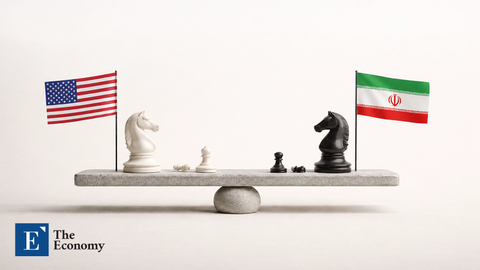
U.S. Opens the Door to Iranian Oil Exports, Seeking Both Lower Oil Prices and Greater Leverage Against China

Siobhán Delaney is a Dublin-based writer for The Economy, focusing on culture, education, and international affairs. With a background in media and communication from University College Dublin, she contributes to cross-regional coverage and translation-based commentary. Her work emphasizes clarity and balance, especially in contexts shaped by cultural difference and policy translation.
Authored On
Modified
Iranian Crude Emerges From the Shadows After Eight Years
Global Oil Prices Fall to Four-Month Lows on Prospects of Iranian Supply Return
Massive Dollar Inflows Offer Relief to Iran’s Economic Strains
Washington Also Stands to Reinforce the Reach of the Petrodollar

The United States has, for the first time in decades, allowed Iran to sell its domestically produced crude oil in U.S. dollars. The move is widely viewed as a confidence-building measure by the Donald Trump administration after Tehran agreed to readmit inspectors from the International Atomic Energy Agency (IAEA) for the first time in a year, prompting Washington to respond with broad sanctions relief. The decision also appears to carry a strategic objective: reopening dollar-based settlement channels to counter China’s efforts to expand yuan-denominated oil trading while reinforcing the dollar’s dominance in global energy markets.
Temporary 60-Day Authorization, Settlements in Dollars
According to Reuters and CNBC on June 23, the United States and Iran agreed during high-level talks held over the weekend at the Bürgenstock Resort near Lucerne, Switzerland, on a phased roadmap aimed at reaching a permanent peace agreement within the next 60 days. The meeting marked the first senior-level negotiations since the two countries signed a provisional peace memorandum of understanding (MOU) on June 17. At the time, both sides agreed in principle to halt hostilities and pursue a lasting settlement through follow-up negotiations. Concerns quickly emerged that the agreement could collapse, however, after fighting intensified again on the Lebanese front and Iran declared the closure of the Strait of Hormuz.
Tensions did in fact escalate sharply over the weekend. Iran announced a renewed closure of the Strait of Hormuz, citing continued Israeli airstrikes in southern Lebanon. President Trump warned that any actual blockade of the waterway could trigger renewed military action. International oil prices surged, while energy market anxiety spread as crude tankers hesitated to enter the strait.
Nevertheless, negotiations proceeded as planned and produced a more positive outcome than many had anticipated. Vice President J.D. Vance told reporters after the talks that “a very good foundation has been established for a successful final agreement,” adding that “there were threats and frustrations over the weekend, but dialogue continued and substantial progress was achieved.” According to Vance, Iran pledged to guarantee free and open navigation through the Strait of Hormuz and to permit the return of IAEA inspection teams. Both sides will continue technical negotiations over the next 60 days to draft a comprehensive peace accord covering nuclear issues, sanctions relief, frozen assets, and ceasefire monitoring mechanisms.
As an initial reward for the progress made in negotiations, Washington moved immediately to ease sanctions. Treasury Secretary Scott Bessent announced on June 22 that the U.S. Treasury Department had issued a 60-day general license authorizing the production, delivery, and sale of Iranian crude oil and petroleum-related products. The license effectively allows Iran to sell crude oil, petroleum products, and related derivatives on international markets without sanctions restrictions during the 60-day negotiation period. As a result, Iran will be free to export crude oil and petrochemical products and receive payment through 12:01 a.m. on August 21.
The measure represents the first major sanctions relief since Washington effectively blocked Iran’s ports and crude export network in April. Earlier, in March, the U.S. temporarily allowed the sale of Iranian crude already stranded at sea in an effort to stabilize oil markets after prices surged during the Iran conflict. That authorization did not permit settlement in dollars. This time, dollar-denominated transactions have also been approved.
Economic Breathing Room for Iran, Potential Relief for South Korea’s Refining Sector
The sanctions relief carries significant economic implications for Iran. For years, U.S. sanctions severely restricted the country’s ability to export crude oil and petroleum products. In 2015, the Barack Obama administration signed the Joint Comprehensive Plan of Action (JCPOA), lifting economic sanctions in exchange for Iran halting its nuclear development activities. The first Trump administration withdrew from the accord in 2018, calling it “the worst deal ever negotiated,” and imposed a comprehensive ban on Iranian oil transactions. Washington also implemented secondary sanctions targeting third-country companies and financial institutions involved in Iranian crude purchases. As a result, Iran faced severe obstacles in international finance, shipping, and insurance, making it difficult to secure oil revenues through normal channels.
With Washington now permitting oil sales for 60 days, Iran has secured a temporary avenue for both exports and payment collection. Richard Nephew, an Iran specialist at Columbia University, estimated that Iran could generate approximately $8 billion in revenue during the 60-day period. On an annualized basis, that would equate to roughly $60 billion. Tehran has also responded positively to the sanctions reprieve. Iranian Foreign Minister Abbas Araghchi stated last week that Iran had already begun benefiting financially from the agreement.
The measure is also expected to contribute significantly to stabilizing international oil prices, which had surged during the Iran conflict. Signs of market easing have already emerged. On June 23, Brent crude futures for August delivery settled at $77.08 per barrel on the ICE Futures Europe exchange, down 1.05% from the previous session. July West Texas Intermediate (WTI) futures settled at $73.21 per barrel on the New York Mercantile Exchange, down 0.88%. Brent prices reached their lowest level since February 27, the day before the outbreak of war between the United States and Iran, while WTI touched its lowest point since March 2. The decline reflects growing expectations of successful negotiations and increased Iranian oil supply, fueling concerns over short-term oversupply.
The potential return of Iranian crude could also improve profitability and operational efficiency across South Korea’s refining and petrochemical sectors. Prior to 2019, domestic refiners built extensive processing capacity tailored to Iranian heavy crude, which was abundant and competitively priced. Between 2015 and 2019, the average import cost of Iranian crude stood at $52.14 per barrel, lower than comparable grades from Iraq ($53.56), Kuwait ($55.82), Qatar ($57.77), the United Arab Emirates ($58.32), and Saudi Arabia ($57.42). Renewed access to such feedstock could enhance refining margins and plant utilization rates. Moreover, as Iranian crude previously monopolized by Chinese buyers returns to global markets, China’s aggressive pricing strategies in petrochemicals may lose some momentum.
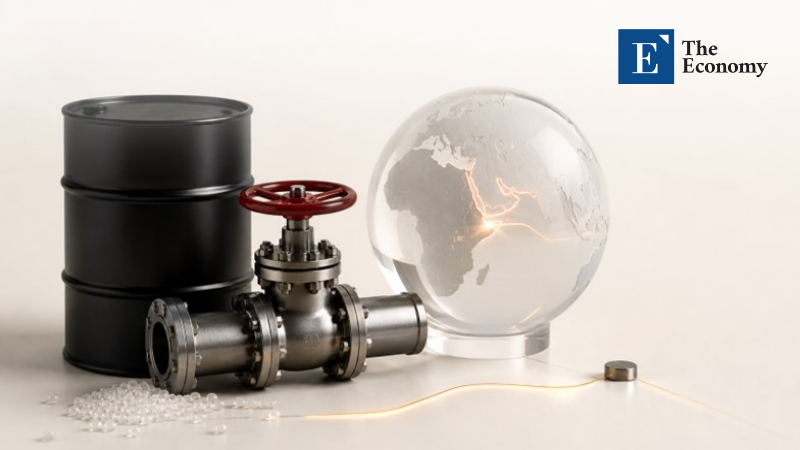
A Strategic Bid to Curtail China’s Access to Discounted Iranian Crude
The Trump administration’s decision to permit dollar-based settlement for Iranian oil sales is widely interpreted as part of a broader effort to shift from isolating Iran toward managing and influencing its integration into global energy markets. The measure effectively returns Iranian crude—previously confined largely to sanctions-driven trade channels—into a market dominated by the petrodollar system. During the conflict, Iran announced that only tankers from countries settling oil transactions in Chinese yuan would be permitted passage through the Strait of Hormuz, fueling speculation that the petrodollar could weaken while a “petroyuan” system gained influence.
Washington may also view sanctions relief as a means of creating distance between Iran and China. Currently, an estimated 80% to 90% of Iranian crude exports are shipped to China, reflecting an extremely narrow customer base. Analysts argue that allowing dollar-based transactions is intended, at least in part, to undermine China’s privileged access to discounted Iranian energy supplies.
From Washington’s perspective, the move could also enhance its influence over the output of a major oil-producing nation. The Trump administration has pursued an “energy dominance” strategy aimed at preserving the United States’ position as the world’s largest oil producer and liquefied natural gas (LNG) exporter. The European Union, having largely severed its dependence on Russian natural gas following the Russia-Ukraine war, has become the largest importer of U.S. LNG. The conflict with Iran also ultimately expanded opportunities for U.S. oil and LNG exports. The administration’s unprecedented operation in January to seize control of Venezuelan oil assets through the removal of President Nicolás Maduro was driven by a similar strategic calculation, reflecting interest in developing Venezuela’s vast estimated reserves of roughly 300 billion barrels.
Indeed, throughout the conflict President Trump repeatedly threatened to cut off Iran’s oil exports while simultaneously signaling a desire to bring Iranian crude production under greater influence. Direct development of Iranian oil resources remains unrealistic under the current political environment, but dollar-denominated trade could gradually strengthen U.S. leverage over Iranian oil flows and create future opportunities. Iran’s ruling establishment also stands to benefit, potentially earning far greater revenues than it previously generated through discounted sales conducted via its so-called shadow fleet. Increased revenues could help stabilize domestic sentiment. For China, however, the shift could translate into higher import costs for crude oil.
Siobhán Delaney is a Dublin-based writer for The Economy, focusing on culture, education, and international affairs. With a background in media and communication from University College Dublin, she contributes to cross-regional coverage and translation-based commentary. Her work emphasizes clarity and balance, especially in contexts shaped by cultural difference and policy translation.
- Previous “Another Labeling Dispute” Chobani and Danone Head to Court Over Yogurt Protein Content Claims
- Next “Power Plants Are Expanding, but the Grid Is Standing Still” Hanwha’s Spanish Solar Project Halted on the Verge of Construction, With Total Investment Costs Set to Surge 40% if Alternative Transmission Infrastructure Is Built
Similar Post