“Scale, Profitability and Digital Capabilities”: Spain’s Santander Reprises M&A Strategy That Powered Past US and UK Growth with Webster Acquisition

As one of the youngest members of the team, Tyler Hansbrough is a rising star in financial journalism. His fresh perspective and analytical approach bring a modern edge to business reporting. Whether he’s covering stock market trends or dissecting corporate earnings, his sharp insights resonate with the new generation of investors.
Authored On
Modified
Spain’s Santander Nears Completion of US-Based Webster Acquisition
Bank Has Steadily Expanded Through M&A in US and UK Since Early 2000s
M&A Drive Regains Momentum with Acquisitions of UK-Based TSB and Webster
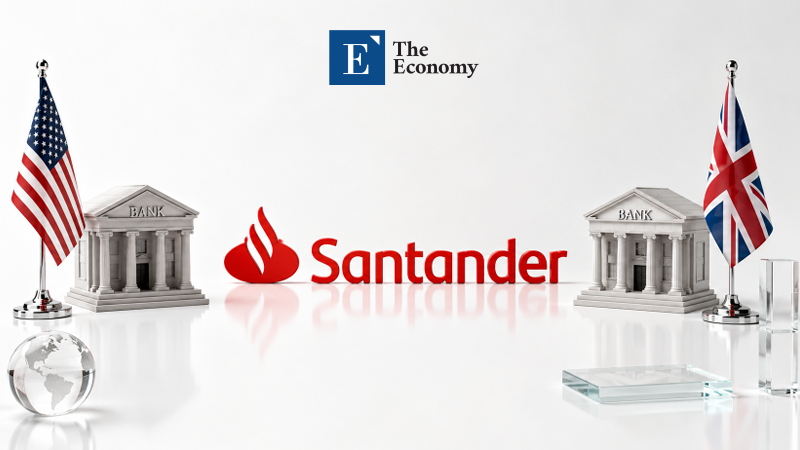
Banco Santander, Spain’s largest financial group, is completing its acquisition of US commercial bank Webster Financial. By reviving the growth strategy that expanded its operating footprint through local bank acquisitions in the UK and US, Santander is seeking both economies of scale and stronger profitability across key developed markets. The Webster acquisition is expected to stabilise Santander’s local funding structure and sharpen its competitive edge through the integration of Webster’s established digital and artificial intelligence infrastructure.
Webster Joins Santander
Spanish regional media outlet Valencia Plaza reported on August 16, local time, that Santander would finalise its merger with Webster Financial this week after securing approval from the US Federal Reserve and the European Central Bank (ECB). Discussions over Santander’s acquisition of Webster began when senior executives from the two companies made initial contact in 2023. Webster’s management held talks with Santander in December last year to explore a potential transaction, advancing the negotiations, while Santander submitted an initial offer of approximately $73 per share that same month. Discussions subsequently continued over the price and the respective proportions of cash and stock consideration, followed by due diligence and negotiations on the definitive agreement from January this year.
The two companies formally announced the acquisition in February following a period of negotiations. Santander agreed to acquire Webster for $12.2 billion, with the consideration to be paid in cash and Santander shares. The regulatory approval process subsequently proceeded at a relatively brisk pace. Webster shareholders approved the transaction at a general meeting in late May, while the Office of the Comptroller of the Currency (OCC), an agency under the US Department of the Treasury, authorised the banking-unit merger in June. The ECB granted its approval on July 21, and the Fed, which represented the transaction’s principal regulatory hurdle, approved the deal earlier this month. The transaction has consequently entered its final stage. Santander expects the merger to take legal effect on August 20 once the remaining conditions have been satisfied.
Santander’s M&A Rush
Santander has steadily expanded its operations in developed markets including the US and UK for several decades. A prominent example was its 2004 acquisition of Abbey National, then the UK’s sixth-largest bank, for approximately $12.1 billion. Abbey National had already established a substantial customer base in the UK mortgage and deposit markets. The acquisition gave Santander an immediate foothold in British retail banking by bringing a major local lender under its control.
Santander subsequently used the global financial crisis as an opportunity to expand its UK operations. In 2008, it acquired Alliance & Leicester, which had been struggling amid the credit crunch, for approximately $1.7 billion. In September of the same year, it also acquired the retail banking operations of Bradford & Bingley. After the UK government nationalised Bradford & Bingley and sold its assets separately, Santander took control of approximately $27.2 billion in deposits, 2.7 million customers and 197 branches. Santander later combined the branch networks of Abbey National, Alliance & Leicester and Bradford & Bingley and began operating them under the single Santander UK brand in 2010, establishing itself as one of the country’s leading retail banks.
US M&A Precedent
Santander pursued a similar expansion strategy in the US. In 2005, the group agreed to invest in Sovereign Bancorp, which operated primarily across the northeastern US, and increased its stake to approximately 24.9% by the following year. The investment totalled $3.3 billion. Santander used a local lender with an established customer and operating base in states including Pennsylvania and Massachusetts as its platform for growth.
When the global financial crisis struck, Santander shifted towards securing full control of Sovereign Bancorp and acquired an additional 75.65% stake for $1.9 billion in 2009. After joining Santander, Sovereign Bancorp was renamed Santander Bank in 2013 and became the group’s principal US hub for retail and commercial banking. Santander subsequently concentrated on restructuring its cost base and reorganising its business portfolio amid tighter capital requirements and profitability pressures.
Table 1. Santander’s M&A Activity in the US and UK
| Year | Country | Acquisition Target | Transaction Value |
|---|---|---|---|
| 2004 | UK | Abbey National | $12.1 billion |
| 2005–2006 | US | 24.9% stake in Sovereign Bancorp | $3.3 billion |
| 2008 | UK | Alliance & Leicester | $1.7 billion |
| 2008 | UK | Bradford & Bingley’s retail banking operations | $1.1 billion |
| 2009 | US | Remaining 75.65% stake in Sovereign Bancorp | $1.9 billion |
| 2025 | UK | TSB | $3.6 billion |
| 2026 | US | Webster Financial | $12.2 billion |
TSB Acquisition Restarts M&A Drive
Santander began accelerating its merger and acquisition activity in these markets again last year. In July 2025, Santander agreed to acquire UK retail bank TSB from Banco Sabadell for approximately $3.6 billion. The transaction was designed to improve profitability through greater scale. Santander projected annual cost synergies of at least $544 million by integrating the two banks’ overlapping expenses, IT systems and operating structures. It also outlined plans to raise Santander UK’s return on tangible equity (ROTE) from 11% in 2024 to 16% by 2028.
Experts view the transaction as particularly significant because it followed speculation that Santander could withdraw from the UK market. “At the time, Santander was under pressure to improve the profitability of its UK operations amid tighter post-financial-crisis regulations, a high cost base and liabilities stemming from the car-finance commission scandal,” one market expert said. “The bank chose to acquire TSB and secure economies of scale while maintaining its presence in the UK.” Santander completed the acquisition in April after securing approval from the Prudential Regulation Authority (PRA) and the ECB. It plans to integrate TSB into Santander UK and consolidate the businesses under a single brand.
Expected Benefits of the Webster Acquisition
The Webster acquisition, pursued over a similar period, is viewed as a strategic step towards expanding Santander’s US business. Founded in 1935, Webster has spent approximately 90 years building its presence across the northeastern US. Its 2022 merger with New York-based Sterling Bancorp expanded its network into the New York metropolitan area. The Financial Times assessed that the acquisition would enable Santander to concentrate its branch network across Connecticut, Massachusetts and New York while diversifying its balance sheet and securing access to lower-cost deposit funding. Once Webster’s deposit base is incorporated, the loan-to-deposit ratio of Santander’s US operations is expected to fall from 109% to approximately 100%.
Webster’s recent acceleration of its digital transformation and adoption of artificial intelligence has also attracted market attention. The bank established its first AI working group in 2024 and elevated it last year into an AI governance committee involving the chief information officer’s organisation as well as its risk and legal divisions. Webster also introduced a dedicated AI policy and internal control procedures based on the AI Risk Management Framework developed by the US National Institute of Standards and Technology (NIST), while expanding the use of AI across day-to-day operations. Last year, the bank deployed an in-house secure AI assistant to improve employee productivity and operational efficiency and made generative AI training mandatory for all employees. Some business units and departments are also reported to be using separate AI applications. Santander could integrate Webster’s digital and AI infrastructure and personnel to accelerate digitalisation across its US operations.
As one of the youngest members of the team, Tyler Hansbrough is a rising star in financial journalism. His fresh perspective and analytical approach bring a modern edge to business reporting. Whether he’s covering stock market trends or dissecting corporate earnings, his sharp insights resonate with the new generation of investors.
Similar Post