Iran Turns to Russia via the Caspian to Bypass U.S. Blockade, but Northern Ports Fall Short of Replacing Southern Gateways

As one of the youngest members of the team, Tyler Hansbrough is a rising star in financial journalism. His fresh perspective and analytical approach bring a modern edge to business reporting. Whether he’s covering stock market trends or dissecting corporate earnings, his sharp insights resonate with the new generation of investors.
Authored On
Modified
U.S. naval blockade constricts trade routes along Iran’s southern coast
Northern Caspian route provides access to Russian grain and military supplies
Mounting attacks by wartime adversaries and limited capacity constrain the alternative
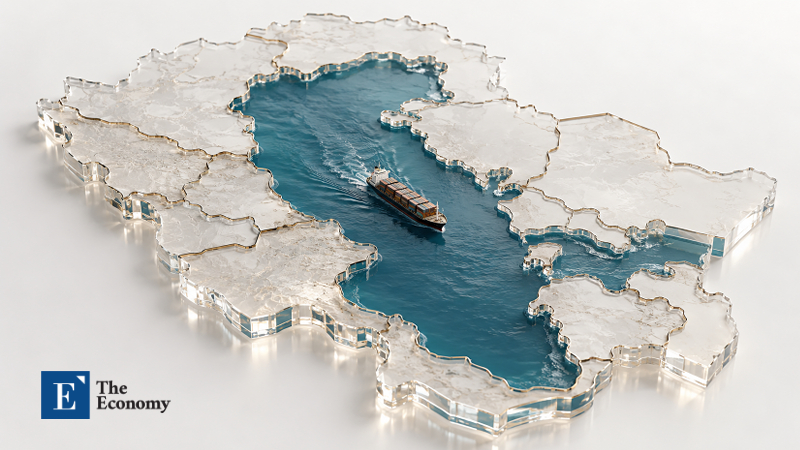
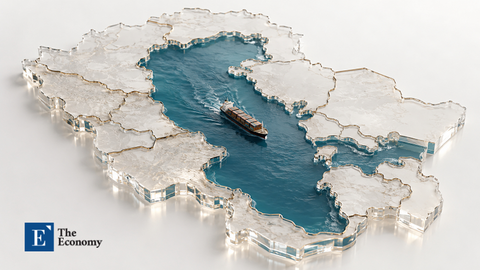
Iran is turning its attention to a northern transport route connecting it to Russia across the Caspian Sea. With a U.S. naval blockade effectively cutting off trade through its southern ports, Iran is using the Caspian, where direct U.S. Navy control is difficult, to import Russian grain and military supplies. However, northern ports lag far behind their southern counterparts in cargo-handling capacity, vessel size and rail connectivity, making it highly unlikely that the Caspian can fully replace the country’s existing trade network.
Mounting Constraints on Iran’s Transport Network
On September 28 (all dates local), shipping publication The Maritime Executive reported that U.S. naval controls were achieving a blockade effectiveness rate approaching 100% at Iran’s major southern ports. Since April, the United States has been ordering vessels bound for or departing from Iranian ports along the Persian Gulf and Gulf of Oman, including Bandar Abbas, to change course. Ships refusing to comply have faced boarding and inspection, as well as forcible disabling operations involving air and naval forces. These measures have severely disrupted the southern coastal transport network, which handled 80% of Iran’s total trade before the war, sharply narrowing the country’s external trade routes.
More recently, the disruption has extended from maritime transport to the air cargo network. Most international flights to and from Iran have been suspended over the past week, with only some military aircraft and a handful of flights serving Russia, China and other destinations reportedly still operating. This appears to reflect increased U.S. pressure since September 23, including the threat of secondary sanctions against foreign businesses providing refueling, maintenance and other services to Iranian aircraft. Land border crossings are also struggling to accommodate the surge in freight. According to a September 27 report by Qatar-based Al Jazeera, as many as 1,800 trucks were waiting for days to enter Iran at the Norduz border crossing between Iran and Armenia. Conditions are similar along the route through Türkiye, another critical overland corridor. The Associated Press reported that the number of trucks at Gürbulak–Bazargan, the largest land crossing between the two countries, had risen from roughly 200 under normal conditions to 1,200. Truck waiting times have increased more than fourfold compared with prewar levels.
The Caspian’s Emergence as an Alternative Transport Network
Against this backdrop, the Caspian Sea to Iran’s north is attracting attention as effectively the country’s only remaining route for transporting large volumes of cargo. The world’s largest inland body of water, the Caspian borders just five countries: Iran, Russia, Azerbaijan, Turkmenistan and Kazakhstan. The Convention on the Legal Status of the Caspian Sea, signed by these states in 2018, prohibits the presence of armed forces from non-littoral states and, in principle, limits entry and navigation to vessels flying the flags of the five coastal countries. This makes it difficult for the U.S. Navy and other Western forces to seize vessels or blockade shipping routes directly in the Caspian.
Establishing exactly what is happening in the Caspian from outside the region is also difficult. Analysis by maritime data platform Lloyd’s List Intelligence found that vessels traveling between Russia and Iran across the Caspian repeatedly switch off their automatic identification system (AIS) signals, engaging in so-called “dark activity.” During periods when AIS is switched off, continuously tracking a vessel’s actual location, route and port calls is difficult without separate evidence, such as commercial satellite imagery and port records. There are also concerns that the U.S. security apparatus does not treat the Caspian as a single “strategic space.” Hudson Institute fellow Luke Coffey has described the region as a “geopolitical black hole” in U.S. policymaking, noting that the Caspian is barely mentioned in major U.S. national security and military strategy documents.
Table 1. Strategic Features of the Caspian Sea
| Category | Key Features |
|---|---|
| Enclosed geography | The world’s largest inland body of water, bordered only by Iran, Russia, Azerbaijan, Turkmenistan and Kazakhstan |
| Limits on Western intervention | Military presence by non-littoral states is prohibited; navigation is generally restricted to vessels flagged in the coastal states |
| Large-volume cargo transport | Effectively the only large-scale transport route connecting Iran and Russia that can bypass the U.S. naval blockade of Iran’s southern coast |
| Vessel-tracking constraints | Russian and Iranian vessels switch off automatic identification system signals, making their locations, routes and port calls difficult to establish |
| Monitoring and policy gaps | The region’s relatively low profile in U.S. security strategy complicates efforts to counter sanctions evasion |
Continued Russia–Iran Trade
Russia and Iran have used these geographical and structural advantages to maintain trade across the Caspian since the war began. The clearest example is food. According to Russian grain consultancy ProZerno, Russia supplied Iran with 913,700 metric tons of grain between July 1, the start of the 2026–27 crop year, and September 8. The shipments comprised 498,100 metric tons of corn, 292,500 metric tons of barley and 123,100 metric tons of wheat. Even in August, when Russia’s overall seaborne grain exports contracted, exports through the Caspian route, primarily destined for Iran, rose 13.4% year on year to 311,700 metric tons.
The Caspian serves not only as a civilian trade route but also as part of the two countries’ military supply network. Citing European government documents and Western officials, NBC News reported in August that Russia had supplied Iran with drone components, ammunition and TNT explosives through the Caspian. The documents stated that, by July, around 20 Russian vessels had crossed the Caspian to deliver these supplies to Amirabad port in Iran’s Mazandaran province. They characterized the shipments as an effort to replenish Iran’s missile- and drone-related inventories depleted by U.S. and Israeli airstrikes.
Israeli and Ukrainian Attacks
Parties to the wars have also launched direct attacks in the Caspian region to disrupt military cooperation between Russia and Iran. A prominent example was Israel’s airstrike on Bandar Anzali port in March. Israeli fighter jets attacked the port, on the Caspian coast of Iran’s Gilan province, and the Iranian Navy’s Fourth Naval District. According to the Israeli military, the targets included naval facilities where dozens of warships were moored, a port command center, and ship repair and maintenance facilities. The Israeli military said it destroyed four missile boats and one corvette, among other assets. The Wall Street Journal (WSJ) subsequently cited officials as saying that the strike had targeted the Caspian supply route between Russia and Iran.
In July, Ukraine attacked Russian warships and cargo vessels in the Caspian. Ukrainian President Volodymyr Zelenskyy said long-range strikes had hit Russian warships and vessels used to transport military supplies linked to Iran. The Security Service of Ukraine (SBU) said the targets included the Russian-flagged general cargo ships Port Olya 2 and Begey. Port Olya 2 is subject to U.S. and Ukrainian sanctions, and Ukraine’s Defense Intelligence has identified the vessel as involved in transporting military cargo from Iran to Russia. Begey is also subject to British and Canadian sanctions. Ukrainian authorities have alleged that it transported ammunition, artillery shells, body armor and helmets from Iran to Russia while its AIS was switched off.
Limits to Replacing Southern Transport Routes
Despite growing interest in the Caspian, experts consider a complete replacement of Iran’s southern ports highly unlikely. The biggest obstacle is sheer cargo-handling capacity. According to Iran’s Ports and Maritime Organization (PMO), the country’s ports have a combined nominal capacity of around 300 million metric tons a year, but northern ports such as Anzali, Amirabad and Nowshahr account for only about 10% of that total. PMO head Mohammad Shakibi-Nasab has said that a single large vessel operating at a southern port can carry as much cargo as approximately 20 Caspian vessels. Even this limited capacity is being steadily eroded by falling water levels. United Nations Environment Programme (UNEP) data show that the Caspian’s water level has fallen by around 2 meters since the 1990s and has been declining by more than 20 centimeters annually over the past two to three years.
Connections for moving cargo inland from the ports are also insufficient. Iran is connected to Turkmenistan, Kazakhstan and China through the railway network along the eastern Caspian, but gaps remain in the western rail network toward the South Caucasus. In particular, the roughly 160-kilometer Rasht–Astara railway, a key section of the International North–South Transport Corridor (INSTC) jointly pursued by Russia and Iran, remains unfinished. As a result, a substantial share of freight moving to and from Russia and Azerbaijan must still rely on road transport rather than rail. The range of goods that can be transported is also constrained. Crude oil, petroleum products and iron ore, major sources of foreign exchange for Iran, require high-volume bulk transport and therefore depend heavily on large southern ports and oil terminals. The main imports currently entering through northern ports are food and essential goods, including barley, corn, wheat and oilseeds, while exports are concentrated in relatively light products such as processed foods and packaging materials.
As one of the youngest members of the team, Tyler Hansbrough is a rising star in financial journalism. His fresh perspective and analytical approach bring a modern edge to business reporting. Whether he’s covering stock market trends or dissecting corporate earnings, his sharp insights resonate with the new generation of investors.
Similar Post