“Domestic Demand Saturation” Pushes CXMT to Production Capacity Limits, While Technology Gap and Doubts Over Proprietary Know-How Stall Global Expansion

Oliver Griffin is a policy and tech reporter at The Economy, focusing on the intersection of artificial intelligence, government regulation, and macroeconomic strategy. Based in Dublin, Oliver has reported extensively on European Union policy shifts and their ripple effects across global markets. Prior to joining The Economy, he covered technology policy for an international think tank, producing research cited by major institutions, including the OECD and IMF. Oliver studied political economy at Trinity College Dublin and later completed a master’s in data journalism at Columbia University. His reporting blends field interviews with rigorous statistical analysis, offering readers a nuanced understanding of how policy decisions shape industries and everyday lives. Beyond his newsroom work, Oliver contributes op-eds on ethics in AI and has been a guest commentator on BBC World and CNBC Europe.
Authored On
Modified
CXMT Exhausts Supply Capacity as Domestic Demand Absorbs Output
Technology Gap With Big Three Memory Chipmakers Persists, While Proprietary Capabilities Remain in Question
Apple, Which Had Been Eyeing CXMT Amid Memory Shortages, Expected to Cut Shipments
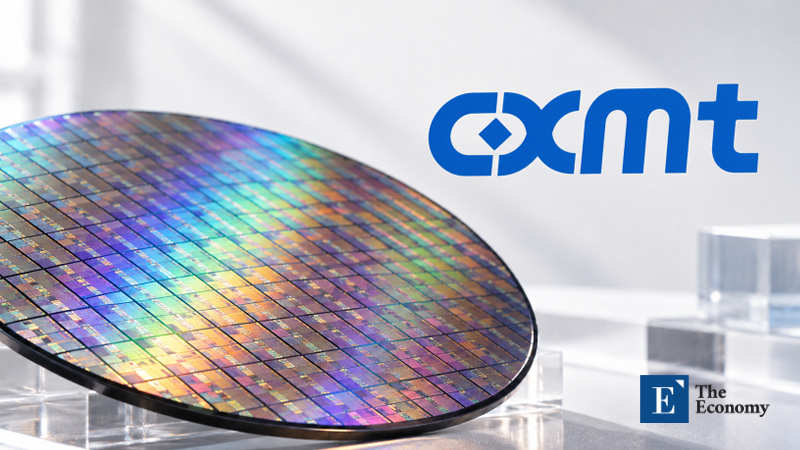
Chinese chipmaker ChangXin Memory Technologies (CXMT) has reached the limits of its memory semiconductor production capacity. Existing facilities are effectively operating at full capacity as China’s domestic market rapidly absorbs available output, while capital expenditure has struggled to keep pace with demand. The market, however, sees little prospect that this domestically driven growth will translate directly into a stronger global presence for CXMT. Its process technology still lags that of industry leaders, while uncertain yields and quality consistency could become major barriers to entry into the supply chains of large customers.
Chinese Memory Demand Converges on CXMT
On the 24th, U.S. technology outlet Wccftech reported that virtually all of CXMT’s production output had already been booked through the end of 2027. Despite rapidly increasing factory utilization, CXMT has seen its available supply capacity quickly depleted as Chinese memory demand has surged. According to documents filed with the Shanghai Stock Exchange, CXMT’s utilization rate rose from 87.06% in 2023 to 92.46% in 2024 and 95.73% last year. This leaves little room to secure additional output by further extending operating hours at existing production lines.
The pace of capacity expansion is also failing to keep up with market demand. According to global investment bank UBS, CXMT’s DRAM production capacity stood at 240,000 wafers per month at the end of last year and is estimated to increase to 382,000 wafers per month by the end of 2027. That would amount to nearly 50% of Samsung Electronics’ projected output of 737,000 wafers over the same period. Another global investment bank, Goldman Sachs, similarly estimated that CXMT’s memory production would increase to approximately 10 billion gigabytes (GB) by 2028, but it also projected that China’s total memory demand could grow to around 20 billion GB. Even if CXMT expands capacity as planned, it would still fall short of supporting the broader domestic market.
Supply Shortages Persist at the Big Three Memory Chipmakers
The same supply shortage is evident at the world’s three leading memory chipmakers—SK hynix, Samsung Electronics and Micron. Citing industry sources earlier this month, Taiwanese semiconductor publication DigiTimes reported that the three companies had already completed negotiations over the allocation of their 2027 DRAM and high-bandwidth memory (HBM) capacity, leaving almost no uncommitted supply. Major artificial intelligence (AI) and cloud service providers have rapidly secured capacity by signing a succession of long-term contracts spanning the next three to five years. Many of the new facilities currently under construction by the three chipmakers to meet AI demand are not expected to make a meaningful contribution to supply until after 2027.
The companies themselves have also begun openly acknowledging their supply constraints. SK hynix Chief Executive Officer (CEO) Kwak Noh-jung said in an interview with Reuters last month that “2027 will be the most challenging year on the supply side in the industry’s history.” Global memory demand could outstrip production capacity through 2030 and beyond. Samsung Electronics also said during its earnings announcement in April that all of its HBM capacity for this year had already been booked and that it was accepting advance orders for 2027 output. The company also projected that the supply-demand gap for HBM would widen further in 2027 compared with this year.
CXMT’s Technological Limitations
The global memory shortage could provide Chinese latecomers with an opportunity to expand their market share. The prevailing view in the market, however, is that CXMT will struggle to fill the supply gap left by the big three memory chipmakers in the short term. Beyond its insufficient production capacity, the company still faces a substantial technology gap with industry leaders. According to an analysis of CXMT’s 16-gigabit (Gb) DDR5 product by semiconductor research firm TechInsights, the chip was manufactured using a 16-nanometer-class process. Given that the three leading memory chipmakers are producing DDR5 using 12- to 14-nanometer processes, CXMT remains considerably behind. TechInsights assessed CXMT’s DDR5 technology, commercialized in late 2024, as comparable to the generation that leading manufacturers began mass-producing in 2021, placing its technology roughly three years behind.
The barriers to entry are even higher at the most advanced process nodes. U.S. restrictions have prevented CXMT from importing advanced extreme ultraviolet (EUV) lithography equipment, which is effectively produced exclusively by Dutch company ASML. CXMT is instead pursuing process miniaturization through multipatterning, which uses existing deep ultraviolet (DUV) equipment to expose the same circuit several times. This strategy carries significant disadvantages in both yield and cost. The gap in HBM technology has likewise shown little sign of narrowing. While CXMT has struggled to commercialize fourth-generation HBM, or HBM3, the big three memory chipmakers are already expanding supplies of fifth-generation HBM, or HBM3E, and shifting the competitive frontier toward sixth-generation HBM, or HBM4. When production scale, yield and the broader ecosystem—including customer qualification—are taken into account, CXMT’s practical influence on the market remains marginal.
Table 1. CXMT’s Technological Limitations
| Category | Limitation |
|---|---|
| DDR5 process | Uses process technology approximately three years behind that of industry leaders |
| Advanced equipment | Unable to import EUV equipment and therefore reliant on DUV multipatterning, which is disadvantageous in terms of yield and cost |
| HBM technology | Struggling to commercialize HBM3 while industry leaders transition to HBM3E and HBM4 |
| Mass-production ecosystem | Lacks sufficient production scale, yield performance and customer qualification experience |
Growth Built on Samsung Electronics Technology
Questions over CXMT’s proprietary technological capabilities also persist. In January 2024, the Seoul Central District Prosecutors’ Office indicted and detained a former Samsung Electronics department head, identified by his surname Kim, on charges of stealing Samsung Electronics’ 18-nanometer DRAM process technology and using it to develop CXMT products. In May last year, prosecutors additionally indicted a former Samsung Electronics researcher, identified by his surname Jeon, on similar charges. According to prosecutors, Kim joined CXMT as head of development shortly after the company was established in 2016 with support from a Chinese local government. He then led efforts to secure the relevant technology by recruiting additional personnel from Samsung Electronics and South Korean semiconductor equipment companies. Jeon reportedly copied by hand and removed information covering hundreds of stages of Samsung Electronics’ DRAM manufacturing process while moving to CXMT.
The subsequent investigation also uncovered evidence that SK hynix’s DRAM process technology had flowed to CXMT through a supplier employing former SK hynix personnel. Prosecutors concluded that CXMT rapidly established DRAM mass-production capabilities by using Samsung Electronics’ core process technology as its foundation and supplementing it with related technology obtained from other South Korean companies. Courts have likewise repeatedly recognized that Samsung Electronics’ core technology was leaked to CXMT. In April, the Seoul Central District Court sentenced Jeon to seven years in prison, ruling that he had transferred information developed by Samsung Electronics at enormous expense to a foreign company, inflicting losses not only on the company but also on the country. That same month, the Seoul High Court sentenced Kim to six years and four months in prison and imposed a fine of approximately $144,000 in a retrial following remand.
Can CXMT Expand Its Global Presence?
The industry believes CXMT’s technological and production-capacity limitations could become decisive obstacles as the company seeks to expand its presence in the global market. Unless it can meet the performance, yield and quality-consistency requirements of major customers, securing actual supply contracts will remain difficult. Some analysts also argue that Apple’s recently reported discussions over adopting CXMT memory—which drew widespread attention—are unlikely to produce meaningful results. On the 9th, The Wall Street Journal (WSJ), citing multiple people familiar with the matter, reported that Apple was testing CXMT memory across several product lines, including the iPhone and MacBook. Apple was also reportedly engaged in preliminary discussions about using CXMT components in selected devices sold in China.
Apple’s move reflects the capacity constraints facing its existing suppliers of customized memory: the three leading global memory chipmakers. Its strategy is to diversify its supply chain through Chinese-made memory while stabilizing supply volumes and improving cost competitiveness. If talks to purchase CXMT memory collapse, Apple will likely be forced to reduce actual product shipments because of memory supply constraints. Apple analyst Ming-Chi Kuo recently wrote on social media that “checks indicate it is true that Apple has scaled back its hardware shipment plans for this year due to memory shortages.” Products that could face shipment reductions include the iPhone 18 Pro series scheduled for release this year and the iPhone Ultra, Apple’s first foldable smartphone.
Oliver Griffin is a policy and tech reporter at The Economy, focusing on the intersection of artificial intelligence, government regulation, and macroeconomic strategy. Based in Dublin, Oliver has reported extensively on European Union policy shifts and their ripple effects across global markets. Prior to joining The Economy, he covered technology policy for an international think tank, producing research cited by major institutions, including the OECD and IMF. Oliver studied political economy at Trinity College Dublin and later completed a master’s in data journalism at Columbia University. His reporting blends field interviews with rigorous statistical analysis, offering readers a nuanced understanding of how policy decisions shape industries and everyday lives. Beyond his newsroom work, Oliver contributes op-eds on ethics in AI and has been a guest commentator on BBC World and CNBC Europe.
Similar Post