“Limited Hand Dexterity, Snowballing Production Costs”: The Paradox of China’s Humanoid Robot Boom, Where Sales Outpace Commercial Viability

Anne-Marie Nicholson is a fearless reporter covering international markets and global economic shifts. With a background in international relations, she provides a nuanced perspective on trade policies, foreign investments, and macroeconomic developments. Quick-witted and always on the move, she delivers hard-hitting stories that connect the dots in an ever-changing global economy.
Authored On
Modified
Robot hands without muscles or tendons cannot be perfected through data training alone
Restricted hardware range of motion also limits the execution of new movements
Chinese humanoids lead only in sales volume, while monetization remains uncertain
China has showcased its ambitions to become a robotics powerhouse by touting its technological capabilities and production capacity in humanoid robots, but the market’s assessment is growing increasingly skeptical. Shares of Unitree, China’s flagship humanoid robotics company, plunged 45% from their intraday high on the first day of trading, while UBTech has fallen nearly 40% since the beginning of the year. Despite dazzling demonstrations and mass-production capabilities, robotic hands—critical to the precise manipulation of objects—have yet to overcome structural and durability constraints, while battery life remains limited to just two to four hours. With operating range and runtime constrained and the costs of charging infrastructure and maintenance mounting, full-scale monetization is likely to remain years away.
Unitree, China’s Leading Robotics Stock, Sees IPO Fervor Cool in Just Four Days
According to Reuters and other foreign media outlets on August 26, the World Humanoid Robot Games, which opened in Beijing on August 22, concluded on August 24 after events including the freestyle combat final and the five-on-five soccer final. China’s humanoid robots were credited with demonstrating advanced technological capabilities, breaking the human record in a running event and delivering strong performances in tennis, table tennis and other sports.
Investor enthusiasm for robotics stocks, however, has cooled. Unitree, the Chinese humanoid robotics company that listed on the Shanghai Stock Exchange on August 19, surged 460% on its first day to close at $125. It subsequently moved downhill, ending August 25 at $89. Although the stock remains above its $22 offering price, a wave of selling prevented it from sustaining its rally.
Based on its August 25 closing price, the stock had plunged about 45% from its first-day intraday peak of $163. In a matter of days, the share price of a company once hailed as a symbol of China’s rise as a robotics powerhouse had effectively been cut nearly in half. Its market capitalization also shrank from $65.9 billion to $35.5 billion, wiping out $30.5 billion in value. Shares of UBTech Robotics, another Chinese humanoid robotics company, have also fallen nearly 40% since the beginning of the year.
The decline has fueled concerns that investment fervor surrounding Chinese robotics stocks may have peaked. U.S. technology publication TechCrunch noted that, if the development of robotic artificial intelligence is compared with the evolution of large language models, the technology currently remains at the “GPT-2 stage.” TechCrunch argued that Unitree’s near-halving in value had brought this reality into sharper relief. British weekly The Economist likewise assessed China’s robotics push as having “a long way to go on monetization.” Although China leads in hardware and production capacity, it still lacks sufficiently advanced software to deploy robots effectively in the workplace.
Table 1. Technical Limitations of Chinese Humanoid Robotic Hands
| Category | Technical Challenge | Cause | Primary Impact |
|---|---|---|---|
| Structural complexity | Replicating the intricate structure of a human hand | The functions of 34 muscles, 27 joints and more than 100 tendons and ligaments must be replaced with motors, reduction gears, sensors and other components | Concentrating components within a confined space increases manufacturing complexity and costs |
| Precision control | Adjusting the force and angle of each finger according to the object | Contact area and gripping force must be altered in real time according to an object's weight, size, shape and material | Difficulty handling fragile objects such as glassware or objects with irregular shapes |
| Range of motion | Restricted movement of finger joints and the wrist | Mechanical joints struggle to move as flexibly as human muscles and tendons or absorb impact | Even with more training data, it is difficult to execute new movements beyond the hardware's physical range |
| Weight and power consumption | The hand becomes heavier as the number of joints and movements increases | Each independently actuated joint requires additional motors, reduction gears, cables and sensors | Greater power consumption and inertia reduce the speed and efficiency of movement |
| Actuator placement | Trade-off between force and precision on the one hand and lightweight design on the other | Placing motors inside the hand increases weight and heat generation, while moving them to the forearm causes friction and tension losses in the cables | Changes in posture amplify transmission errors and control instability |
| Durability | Component wear and failure caused by repetitive movement | Repeated bending and impact accumulate fatigue in cables, bearings and joints | Reduced operating accuracy and continuous runtime, alongside a heavier maintenance burden |
The Robotic-Hand Barrier Impeding Commercialization
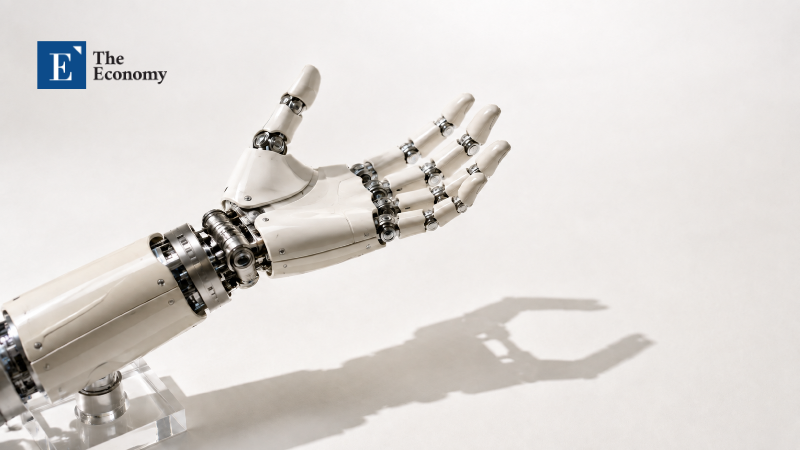
The hand is considered the single greatest technical obstacle to China’s ambitions in robotics. Large whole-body movements such as running or combat can be executed by rapidly repeating predetermined trajectories. Picking up, rotating and setting down an object, however, requires finely controlled movements that vary the force and angle of each finger. Humans can handle both heavy objects and delicate glassware with the same hand because muscles, tendons and joints adjust force and contact area to suit the object.
According to the Massachusetts Institute of Technology, the human hand comprises 34 muscles, 27 joints and more than 100 tendons and ligaments. A robotic hand must replace these functions with motors, reduction gears, bearings, joints and tactile sensors, all packed into the confined space of the palm and fingers. This is why Tesla CEO Elon Musk has said that most of the engineering challenges involved in humanoid robots are concentrated in the hands. Zhou Yong, founder of Chinese robotic-hand manufacturer Linkbot, has similarly said that although the hand occupies only one-tenth the volume of other body parts, it requires 10 times the dexterity, likening its manufacturing difficulty to 100 times that of the humanoid body itself.
Structural and Durability Constraints That Training Cannot Easily Overcome
These problems cannot be solved simply by increasing the volume of training data. More data can improve the accuracy of predefined movements and enable multiple actions to be linked together, but data alone cannot create new movements if finger joints cannot bend to the required angles or the wrist has a restricted rotational range. Human muscles and tendons absorb impacts and distribute force, while joints make minute adjustments to hand shape and contact area according to an object’s size and form. A recent study published in Scientific Reports also found that existing robotic hands remain limited in their ability to replicate both the form and functionality of the human hand.
Expanding the range of movements also comes at the cost of reduced durability. Increasing the number of independently moving joints requires additional motors, reduction gears, cables and sensors, adding to the hand’s weight, power consumption and potential points of failure. Placing the actuators inside the hand makes it easier to secure force and precision, but concentrating components near the fingertips increases weight and inertia while heightening vulnerability to heat and impact. Moving the motors to the forearm to mitigate those problems causes friction and tension losses in the tendon-like cables and can amplify transmission errors whenever the arm changes position. When repeated bending and impact are added to the equation, wear accumulates in cables, bearings and joints, ultimately reducing both operating accuracy and runtime.
Charging Infrastructure and BMS Costs Snowball
Short battery life presents another problem. According to market research firm TrendForce, most humanoids currently carry batteries with capacities of less than two kilowatt-hours, allowing them to operate for only about two to four hours on a single charge. This is because dozens of joint motors, sensors and onboard computers run simultaneously during walking, posture control and object grasping, resulting in heavy power consumption. Specifications released by U.S. robotics company Boston Dynamics for its Atlas robot likewise list battery life at four hours for general tasks and two hours for repetitive heavy-load work.
Compensating for the short runtime requires either increasing battery capacity or frequently swapping out depleted batteries. Larger batteries, however, make the robot heavier and increase power consumption by its joint motors, while also reducing its payload capacity. Opting for replaceable batteries to alleviate this weight burden requires additional battery packs, charging infrastructure and a separate battery management system. Atlas can replace its own depleted battery in three minutes, but a full charge reportedly takes 90 minutes. If dozens of robots are deployed on a production line, operators must secure battery inventories and charging facilities proportionate to the number of robots, making higher operating costs difficult to avoid.
All-solid-state batteries, which replace liquid electrolytes with solid materials to improve energy density and safety, have been proposed as a way to reduce the frequency of battery replacement and the charging burden. The technology, however, entered the engineering-performance validation stage only this year, and even leading companies remain focused on small-scale pilot production. Moreover, mass-production yields and variations in product quality have yet to be sufficiently validated, meaning that rushing to adopt the technology in humanoids would likely drive up production costs. Although the price of lithium sulfide, a critical raw material, has fallen by more than 50% over the past six months, it still stood at $219 per kilogram last month.
Government Training Centers Inflate ‘Artificial Demand’
Despite the mounting technical challenges, shipments by Chinese humanoid manufacturers are rising rapidly. This is largely attributable to bulk purchases by local government-backed training centers even before orders from private companies have begun in earnest. According to the Financial Times, more than 90 robot training centers had either been established or were under construction across China as of June. These centers purchase robots, use teleoperation to generate movement data and then sell the data back to manufacturers. Robot sales are booked as revenue by the manufacturers, while the centers generate income from selling the data.
In the process, training centers have become the largest customers for some companies. Supplies to training centers accounted for 45% of Leju Robotics’ flagship humanoid sales last year. UBTech secured $20.7 million in orders from government-backed centers. Unitree also generated about three-quarters of its humanoid revenue from universities and other education and research customers between January and September last year. Leju Robotics, meanwhile, holds a stake of about 38% in the operator of Beijing’s largest training center, where roughly 100 humanoids have been deployed.
The data produced by training centers, however, is considered severely mispriced relative to its practical utility. One vendor interviewed by the Financial Times said five minutes of robotic dance-movement data could sell for as much as $148,000. At one center in northern China, by contrast, only two to three hours of data collected over an eight-hour period was usable for actual training on average. Data formats also vary by company, making it difficult to apply one manufacturer’s data to another company’s robots, while only a limited amount has been sold to outside manufacturers such as automakers. Nor is there any guarantee that movements repeated in controlled training centers will deliver the same performance in factories and warehouses filled with unpredictable variables. Public-sector purchases are supporting shipment volumes, but there has yet to be a single proven case of humanoids improving productivity or reducing costs in a private-sector factory. A Chinese investor cited by the Financial Times predicted that investors would begin reassessing the valuations of Chinese robotics companies within the next year unless the industry could demonstrate large-scale factory deployments.
Anne-Marie Nicholson is a fearless reporter covering international markets and global economic shifts. With a background in international relations, she provides a nuanced perspective on trade policies, foreign investments, and macroeconomic developments. Quick-witted and always on the move, she delivers hard-hitting stories that connect the dots in an ever-changing global economy.
- Previous “Domestic Demand Saturation” Pushes CXMT to Production Capacity Limits, While Technology Gap and Doubts Over Proprietary Know-How Stall Global Expansion
- Next “Workers Replaced by AI vs. Skilled Workers Boosting Their Market Value With AI”: How the Automation of Standardized Tasks Is Widening Income Inequality
Similar Post