“Wave of Izakaya Bankruptcies”: Japan Drinks Less as Shrinking Wallets, Fading Nominication Culture and Shifting Consumer Trends Deliver a Triple Blow

As one of the youngest members of the team, Tyler Hansbrough is a rising star in financial journalism. His fresh perspective and analytical approach bring a modern edge to business reporting. Whether he’s covering stock market trends or dissecting corporate earnings, his sharp insights resonate with the new generation of investors.
Authored On
Modified
Japanese izakaya closures surge as drinking declines and operating costs soar
Alcohol demand plunges amid weakening household purchasing power and widespread price increases
“You Don’t Need Alcohol to Have Fun”: Drinking culture shifts among younger generations
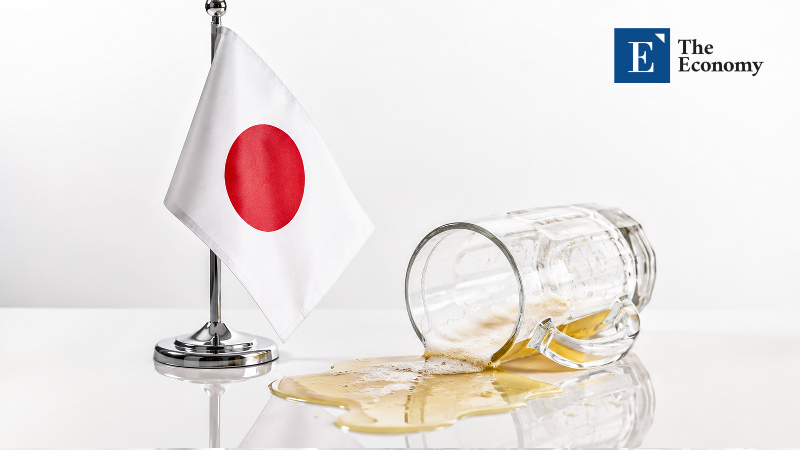
Japan’s iconic drinking establishments, known as izakaya, are going bankrupt in rapid succession. Costs for ingredients, rent and utilities have risen sharply, while weakening household purchasing power and declining alcohol consumption have constrained both price increases and revenue growth. The waning influence of the workplace drinking culture known as “nominication”—a portmanteau of the Japanese verb nomu, meaning “to drink,” and “communication”—and the growing emphasis younger consumers place on health and personal time are also eroding the traditional demand base that has long sustained the izakaya industry.
Izakaya Squeezed Out of the Market
The number of bankruptcies among Japanese izakaya operators reached 118 in the first half of this year, the Nikkei reported on August 11, citing data compiled by Japanese credit research firm Tokyo Shoko Research (TSR). This marked the highest first-half total since the organization began compiling the relevant statistics in 1989. TSR said more than 90% of the bankrupt businesses were small operators with fewer than 10 employees and projected that the annual number of izakaya bankruptcies could also climb to an all-time high this year.
Rising costs have emerged as a leading cause of the wave of izakaya bankruptcies. Prices for raw materials, utilities and rent have all continued to rise, pushing small operators into financial distress because concerns over customer attrition have prevented them from fully passing higher costs on through menu prices. Prime Minister Sanae Takaichi’s policy of reducing the consumption tax on food is also expected to create an additional headwind for the industry. The Takaichi administration plans to lower the consumption tax rate on food from the current 8% to 1% for two years beginning next April. If implemented, the measure is expected to encourage more consumers to buy prepared food from supermarkets and drink at home instead of visiting izakaya.
Japan’s Alcohol Consumption in Decline
Falling alcohol consumption represents another severe blow. According to Japan’s National Tax Agency, alcohol sales and consumption totaled 7.73 million kiloliters in fiscal 2024, down 1.1% from the previous year and 7.2% from 2014. The trend was also evident in last year’s household statistics. A survey by Japan’s Ministry of Internal Affairs and Communications showed that alcohol spending by households with two or more members rose 1.0% in nominal terms from the previous year but fell 2.1% after adjusting for inflation. Total household consumption expenditure increased 0.9% in real terms during the same year.
Japan’s drinking population is also shrinking. According to last year’s Comprehensive Survey of Living Conditions conducted by the Ministry of Health, Labour and Welfare, only 13.27 million people, or 14.6%, of Japan’s 90.65 million residents aged 20 or older drank alcohol every day. In the same survey, 32.91 million respondents said they either did not drink or could not drink, while 16.82 million said they rarely drank. The market has also entered a phase in which sustaining growth has become increasingly difficult. Market research firm Yano Research Institute forecasts that the value of Japan’s alcoholic beverage market, measured by manufacturers’ shipments, will contract 2.6% year on year in fiscal 2025. Price increases helped maintain market expansion through fiscal 2024, but an outright contraction is expected to become visible beginning in fiscal 2025.
Japanese Households Tighten Their Purse Strings
The deterioration in household purchasing power lies behind these developments. Japan has emerged from its prolonged deflationary period and entered a phase of simultaneous price and wage growth, yet the recovery in real income felt by households remains sluggish. Rising prices for essentials such as food and energy have constrained discretionary spending. Japan’s Engel coefficient—the proportion of household expenditure allocated to food—rose to 30.7% in December last year, its highest level in 25 years. When households must devote more money to essentials, products such as alcoholic beverages, whose volume and frequency of consumption can be adjusted more readily, naturally fall lower on spending priorities.
Higher alcohol prices have added to the pressure. Major Japanese beverage producers have successively raised prices in response to increases in raw material, logistics and energy costs, further weakening consumer appetite for alcoholic drinks. Kirin Brewery, for example, raised producer prices last April for beer products including Kirin Ichiban Shibori, Tanrei Green Label and Honkirin, as well as selected ready-to-drink products such as Hyoketsu. Ready-to-drink beverages are premixed alcoholic or nonalcoholic products made for convenient consumption. Suntory also raised prices that same day for products including The Premium Malt’s, Suntory Nama Beer and Kin-Mugi, along with ready-to-drink beverages and domestically produced wines.
Growing Aversion to After-Work Drinking
Social attitudes toward drinking gatherings are also changing. The term “nominication” has long been widely used in Japan. It refers to the practice of employees maintaining relationships within an organization by discussing matters over drinks that would be difficult to raise during working hours. “In Japan, nominication culture often led to drinking gatherings being treated as an effective extension of work,” one market expert said. “Japan’s traditional drinking culture was built around the workplace, and izakaya in particular were widely regarded as a representative venue where junior employees and their supervisors socialized after work.”
Younger employees increasingly see little value in such gatherings. According to a survey conducted last year by Japanese staffing company Recruit among employees in the Tokyo metropolitan, Kansai and Tokai regions, 36.3% of respondents expressed negative views of workplace drinking gatherings because they “could not relax due to the need to remain mindful of others.” Another 29.2% said the gatherings increased their stress, while 28.5% said they reduced their personal time. Aversion to intoxication itself is also spreading. A survey of 7,500 corporate employees nationwide conducted last year by the Japan Drinking Science Association and Kyushu University researchers identified noise and disruptive behavior by intoxicated people as the greatest source of stress at workplace drinking gatherings. Conduct once accepted as a routine part of drinking occasions has increasingly come to be viewed as overtly discourteous.
Table 1. Factors Driving Changes in Drinking Attitudes Among Young Japanese
| Factor | Key Details |
|---|---|
| Changing workplace culture | Drinking gatherings are perceived as an extension of work instead of a venue for building organizational relationships |
| Increased stress | Growing aversion to having to remain mindful of supervisors and colleagues while also tolerating noise and disruptive behavior from intoxicated participants |
| Priority on personal time | Personal life and rest take precedence over after-work drinking gatherings |
| Spread of wellness culture | Lifestyles centered on reducing or avoiding alcohol to manage health, weight and sleep have become established |
| Use of obesity medications | GLP-1 drugs may reduce the desire to drink and alcohol cravings |
Shifting Lifestyle Trends Among Younger Generations
The growing emphasis on wellness, including health, weight management and sleep quality, has also accelerated the decline in alcohol consumption. Abstinence has become a natural lifestyle choice independent of any particular health condition or personal belief. The rapidly expanding use of obesity medications has emerged as another variable because GLP-1 drugs—including semaglutide, the active ingredient in Wegovy, and tirzepatide, the active ingredient in Mounjaro—may affect the desire to drink. An early-stage clinical trial published last year in the Journal of the American Medical Association’s JAMA Psychiatry found that 48 adults with alcohol use disorder who received semaglutide showed greater reductions in alcohol consumption and cravings than those given a placebo.
Some alcohol industry executives caution against overestimating the influence of obesity medications. Atsushi Katsuki, chief executive officer of Asahi Group Holdings, said in an interview with the Financial Times last year that the company had “not yet observed such an impact,” referring to predictions that obesity drugs would weaken demand for alcoholic beverages. He argued that the expansion of digital entertainment—including gaming, video streaming and social media—has had a greater effect on declining alcohol consumption among younger generations than health concerns. Katsuki said alcohol once accounted for a much larger share of people’s leisure and enjoyment, but the explosive growth of content available to consumers over the past decade has reduced alcohol’s own “share of the leisure market.” Every form of content competing for consumers’ leisure time has effectively emerged as a rival to alcohol.
As one of the youngest members of the team, Tyler Hansbrough is a rising star in financial journalism. His fresh perspective and analytical approach bring a modern edge to business reporting. Whether he’s covering stock market trends or dissecting corporate earnings, his sharp insights resonate with the new generation of investors.
Similar Post