[Howie Chang Series] Is AI in Cybersecurity a Blessing or a Curse?

Deeply committed to shaping sustainable talent pipelines, Howie has trained and mentored hundreds of professionals in AI, Product Management, UI/UX, and emerging technologies. As a certified HRD Corp trainer, he has delivered high-impact learning experiences for clients such as Dell, Clarivate, Micron, and Keysight. He has also lectured at Republic Polytechnic and Singapore Polytechnic, bringing practical relevance into the classroom.
Before returning to Penang to make a homegrown impact, Howie spent over a decade immersed in Southeast Asia’s startup and innovation ecosystems. His career reflects a rare blend of product thinking, user experience, and entrepreneurial grit, fuelling his drive to help others adapt, learn, and evolve.
In recognition of his contributions to the tech and innovation ecosystem, Howie was awarded the Pingat Jasa Kebaktian (PJK) by the Penang State Government.
Authored On
Modified
AI lowers costs for cyber defenders and attackers alike
Defenders win where verification can be automated
Attackers win where humans must judge voices and faces
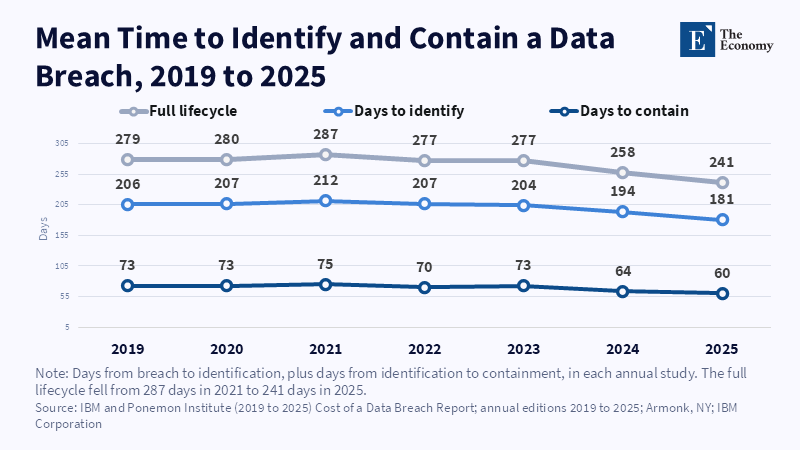
In 2025, the average cost of a data breach worldwide fell to $4.44 million, the first decrease in five years, according to the annual report by IBM and the Ponemon Institute, which attributed the improvement mainly to faster detection with the help of artificial intelligence and automation. At the same time, Verizon recorded that text generated by language models in malicious emails had doubled in two years. The two metrics describe the same technology making defense and attack cheaper at the same time and this is the context in which AI in cybersecurity is judged today. It is important to remember that these numbers only refer to what was officially recorded. The actual number of incidents is certainly higher because many breaches are never reported, as organizations fear damage to their reputation, some do not have the know-how to understand that an incident occurred and many individuals simply ignore or overlook suspicious activity.
Why AI Cuts Both Ways in Cybersecurity
The growing exposure follows the increasing reliance on digital services, from online banking and e-commerce to cloud business systems and the adoption of Industry 4.0. High-tech manufacturing and semiconductor hubs are at the center of this transformation, with factories increasingly running on connected robotic systems, IoT sensors, AI-powered automation and unified supply chain software. Every digital link improves efficiency, but every link adds potential vulnerabilities. A single cyberattack on a unit in the semiconductor chain doesn't just hit one company; it can spill over into entire global supply chains, as seen in February 2023, when a ransomware attack on supplier MKS Instruments led Applied Materials to warn of a loss of about $250 million from the following quarter's sales.
Against this background, AI appears both as a strong defender and as a potential threat. The big question of whether AI in cybersecurity is a blessing or a curse does not have a simple answer. Like most technologies that profoundly change human behavior, it brings significant benefits and opens up new areas of danger at the same time and because it reduces costs for both sides, the most useful question is where the advantage lies when defenders and attackers have access to increasingly capable models. The evidence supports neither the view that AI will solve cybersecurity nor the view that it only makes threats worse and it shows that the outcome depends on governance, human judgment and how the technology is deployed.
AI is changing the way digital security works in a way that goes beyond just upgrading tools. Traditional cybersecurity relied primarily on familiar patterns, such as malware signatures, predefined rules, blacklists and set limits, which worked in a world where threats evolved slowly and attackers were limited by technical barriers. That world is disappearing quickly. Today threats move too fast, mutate too often and touch too many interconnected systems for humans to detect by hand and AI has become the nervous system of modern cybersecurity operations. However, it is not a magic shield. Attackers use it to make their attacks more precise, more creative and more scalable and this parallel evolution means that it strengthens defenders and attackers at the same time.
AI in Cybersecurity Gives Defenders Speed and Scale
Cybersecurity has always suffered from one key limitation: people are slow and threats are fast. It can take an attacker a few minutes to breach a system, while organizations sometimes take hours or days to figure out that something is wrong. AI systems are constantly analyzing network traffic, user behavior and logs, learning what "normal" looks like and immediately identifying discrepancies, so if an employee account suddenly starts downloading unusually large amounts of data at midnight, or if a machine in a factory starts sending commands it has never sent before, the tool flags it on the spot. IBM measured the value of this speed in 2025, as organizations that used artificial intelligence and automation extensively in security paid an average of $1.9 million less per breach and contained breaches 80 days sooner. In manufacturing, where shutdowns are expensive, factories depend on connected industrial control systems such as robotic arms, automated inspection tools and complex assembly lines, which if breached can halt production or cause physical damage and AI monitors them at a scale impossible for human teams.
Another advantage is that AI allows for more proactive cybersecurity. By studying long-term trends, historical attack data and global threat intelligence, models can predict which vulnerabilities are most likely to be targeted and the cost of this search is quickly falling. In the final of the AI Cyber Challenge competition, organized by DARPA and ARPA-H in August 2025, autonomous systems from seven teams scanned 54 million lines of code, identified 54 of the 63 intentionally planted vulnerabilities and fixed 43, at an average cost of about $152 per task, while also finding 18 real flaws that no one had planted. In July 2025, Google announced that its Big Sleep agent had detected the CVE-2025-6965 vulnerability in the SQLite database, which was only known to malicious actors and called it the first case where an AI agent directly foiled an exploitation attempt in the wild. The transition from response to prevention is of particular importance for smaller organizations, which do not have their own security teams and rely on managed service providers.
AI is already built into the way organizations are protected. Banks are using it to analyze spending patterns and flag fraud within seconds so that a suspicious one-dollar test charge from a foreign website can be blocked before larger purchases are attempted. Telecom providers are analyzing traffic to detect denial-of-service attacks attempting to flood their networks, e-commerce platforms are detecting fake listings, reviews from bots and suspicious seller behavior and cloud providers are integrating threat monitoring into their services, giving small businesses access to enterprise-grade tools they might not otherwise be able to purchase. Defenders also have a structural advantage that is easily overlooked, since they know their own network and a model trained on their own data sees deviations that an external attacker cannot fully predict. In short, AI is already embedded in how organizations defend themselves, and without it many, especially smaller ones, would struggle to keep up.
Attacks Grow Smarter and Cheaper
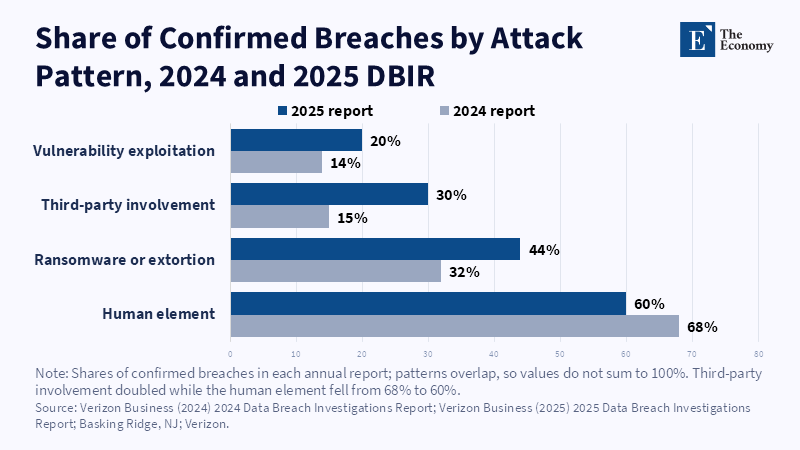
The same tools that help defenders help attackers. Criminals are now using AI to write highly personalized phishing emails in fluent, natural language, without the broken English that once made scams easily identifiable. They can collect information from social media profiles, learn a victim's job, interests and circle of acquaintances and produce messages that are more likely to be believed and Verizon found in its 2025 Data Breach Investigations Report that the human element was involved in about 60 percent of the breaches it examined. Fake voices are already causing concern, as scammers clone the voices of family members, often from a few seconds of audio circulating online and victims receive calls from what sounds like their child or spouse asking for urgent financial assistance. These scams are extremely convincing because they bypass the emotional cues that people rely on to identify who is calling them.
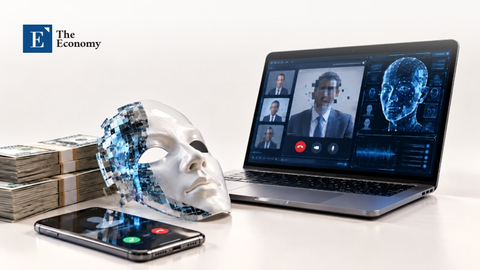
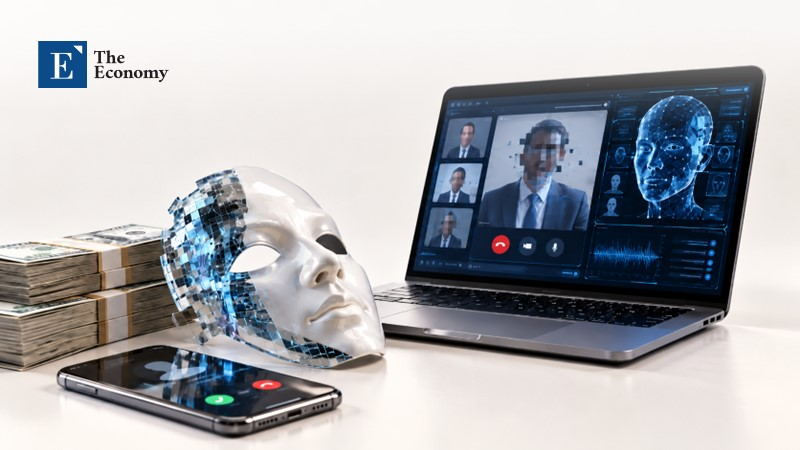
Fake videos followed and the most expensive known incident to date occurred in Hong Kong. In January 2024, an employee at the Hong Kong office of the engineering firm Arup participated in a video call where the chief financial officer and several colleagues were all digital constructions, built from public footage of their voices and faces and made 15 transfers totaling HK$200 million, about US$25.6 million, to five accounts. Arup stated that no internal system was compromised, so no intrusion detection tool had anything to point out. Attackers no longer need advanced skills to create such content. Artificial intelligence democratizes the ability to deceive.
AI can also automatically scan thousands of websites or devices for vulnerabilities and in 2025 this capability moved from assistance to automation. Anthropic reported in November 2025 that a group it assessed with high confidence as backed by the Chinese state, dubbed GTG-1002, manipulated the Claude Code tool to act as an autonomous agent against about 30 organizations, including technology companies, financial institutions, chemical manufacturers and government agencies. In the company's estimation, the model performed 80 to 90 percent of the tactical work, including target reconnaissance, vulnerability discovery and data extraction, at a request rate that no human team could achieve, although only a few intrusions succeeded. Researchers have also documented malware that changes its code every time it replicates, escaping signature-based detection. An operation that once required many experienced operators may now be run by a few supervisors and this changes the cost of the attack as well as its complexity.
In high-value industrial environments such techniques are particularly worrying. Industrial control systems have historically been isolated from the internet, while today digitalisation and remote access tools link them to wider networks and cheaper target identification makes it economically advantageous to attack smaller links in the chain. The attack on Jaguar Land Rover in 2025 shut down its British factories for about five weeks and the Cyber Monitoring Centre estimated the cost to the British economy at £1.9 billion, with more than 5,000 organisations affected mainly through lost production. The attack has not been attributed to artificial intelligence, but it does show where losses accumulate when a node in an interconnected chain falls.
Over-Reliance on AI Creates New Blind Spots
While AI does a lot of things extremely well, it's still prone to error. Every system relies on statistical models trained on historical data and recognizes patterns because it's seen something similar in the past, but attackers evolve quickly and when they introduce a tactic, behavior, or sequence of events outside of the system's training experience, it may simply not detect it. This is where the promise of AI meets its limit, since it can't predict what it hasn't learned. There's also the opposite problem, as the system can overreact, flag innocent behavior as suspicious, isolate systems unnecessarily, or trigger false alarms and in a pressurized security operations center constant false alerts delay teams and lead to fatigue, where real threats are buried under the noise. Generative models add a third weakness. Anthropic noted that in the GTG-1002 campaign, the model often exaggerated its findings and at times fabricated data, while maintainers of curl, one of the most widely used data transfer tools on the internet, shut down its bug bounty programme in January 2026 after drowning in vulnerability reports written by language models that turned out to be baseless.
Over-reliance on automated systems also creates complacency. When organizations believe AI will catch everything, alertness drops and security teams may ignore subtle anomalies, assume an incident is a false alarm, or leave the judgment to the model rather than investigate further, while cyberthreats often hinge on human factors, such as the tone of a voice, the unusual wording of a message, cultural cues and the context of behavior within a team, which machines have difficulty interpreting correctly. Governance gaps compound the risk. IBM found that 97 percent of organizations that reported an AI-related security incident did not have proper access controls in place, only 37 percent had policies in place to manage AI or to detect shadow use and those with high levels of shadow use paid an average of $670,000 more per breach. Human judgment remains irreplaceable, as analysts bring intuition, experience and an understanding of context that no model fully replicates and stronger strategies treat AI as an augmentation tool, with humans making sense of blurred situations, asking the right questions and connecting the dots when something feels off.
Privacy Is the Price of Constant Monitoring
As organizations adopt AI-powered security systems, a new set of privacy questions emerges, social and ethical as well as technical. These tools often need broad visibility into user behavior to work effectively, such as login locations, device fingerprints, communication metadata, typing timings, browsing patterns and subtle behavioral signals that help models distinguish between normal and suspicious. This data allows for more timely and accurate threat detection, but it inevitably raises the question of how much surveillance is legitimate in a modern workplace or digital service. The collected data is itself a target, as IBM found that breaches linked to shadow AI exposed personal information in 65 percent of cases, compared to 53 percent on average.
These concerns run directly into data protection laws, which define how organizations collect, process and store personal information. Most were written before the widespread use of AI-powered monitoring and even the strictest ones, such as the European Union's General Data Protection Regulation, which requires notification to the supervisory authority within 72 hours of a breach, leave organizations with complex interpretive issues. How much behavioral data is excessive? Do users need to be informed every time surveillance is extended? How do companies ensure that data collected for security purposes is not used for purposes that users did not consent to, for example to evaluate the performance of employees themselves?
The questions become more urgent as the move to the cloud accelerates, because when data crosses borders and is stored on servers in other countries, responsibility becomes even harder to define. Organizations must balance continuous oversight with transparent governance, access controls and clear limits on how long data can be retained. Without these safeguards, cybersecurity tools risk becoming mechanisms of overreach that erode the trust they are supposed to protect and stronger monitoring implemented carelessly can disrupt operations and strain customer relationships as much as it protects them.
Humans and AI Must Share the Security Team
If read together, the evidence does not support either extreme. AI will not solve cybersecurity on its own, nor does it simply hand over the advantage to criminals. At the level of code and telemetry, defenders win, because that's where verification can be automated, since a patch passes or fails the tests and an anomaly is compared to months of history. At the level of human trust, the scales tip to the other side, as a cloned voice or a fake video costs little to its creator, while all the burden of verification falls on whoever receives it, often under time pressure. The advantage goes where verification costs less and organizations can move those costs through the way they deploy the technology.
That's why AI needs to be implemented as part of a broader cybersecurity ecosystem, with clear governance, continuous monitoring, robust access controls, systematic training and regular audits. Even the most advanced tools need skilled analysts to interpret alerts, investigate incidents and make decisions and the UK's National Cyber Strategy 2022 invested in people and skills part of its first pillar. The practical steps are specific: confirming every major or confidential transfer by calling a known number, a second approval that no video call bypasses and training that pays off measurably, as Verizon found that users with recent training reported phishing messages at a rate of around 21 percent, compared to a baseline rate of 5 percent. For large manufacturers, supplier security is now a matter of continuity of production and shared monitoring centers or binding security terms in procurement contracts can extend defensive AI to businesses too small to operate it on their own.
At the everyday level, citizens also need to evolve their digital literacy. Old signs of fraud, such as grammatical errors, unknown numbers and suspicious email addresses, are no longer reliable, so verifying information through more than one channel, exercising caution with phone calls asking for money,updating passwords more regularly and accepting that a convincing message or video is not necessarily true are becoming part of the cybersecurity equation. Cybersecurity literacy will become just as essential as financial literacy in the coming years.
Artificial intelligence offers great power to strengthen cybersecurity, helping to detect threats earlier, react faster, predict future risks and manage the enormous scale of modern digital environments. But it also amplifies risks, allowing criminals to make more convincing scams, write malware that is constantly adapting and detect vulnerabilities on an unprecedented scale. The two numbers from which this analysis began already show where the paths diverge, since the $1.9 million saved by organizations in IBM's sample applies to those that deployed AI with security teams and governance behind it, while the doubling of synthetic text in the phishing messages Verizon tracked falls mainly on people who open the message on their own. Whether artificial intelligence becomes a force for protection or exploitation will be decided by the choices made today much more than by the technology itself.
The views expressed in this article are those of the author(s) and do not necessarily reflect the official position of The Economy or its affiliates.
References
Anthropic (2025) Disrupting the First Reported AI-Orchestrated Cyber Espionage Campaign. San Francisco: Anthropic.
ARPA-H (2025) 'Challenge showcases AI's power to secure America's health care', Advanced Research Projects Agency for Health, August.
Bloomberg (2023) 'Applied Materials' sales shortfall linked to cyberattack at MKS Instruments', The Edge Singapore, February.
European Parliament and Council of the European Union (2016) Regulation (EU) 2016/679 (General Data Protection Regulation). Brussels: Official Journal of the European Union.
HM Government (2022) National Cyber Strategy 2022. London: Cabinet Office.
IBM and Ponemon Institute (2025) Cost of a Data Breach Report 2025. Armonk, NY: IBM.
South China Morning Post (2024) 'Arup confirmed as victim of HK$200 million deepfake scam', South China Morning Post, 17 May.
Stenberg, Daniel (2026) 'The end of the curl bug bounty', daniel.haxx.se, 26 January.
TechInformed (2025) 'Jaguar Land Rover cyberattack to cost estimated £1.9bn', TechInformed, October.
Verizon Business (2024) 2024 Data Breach Investigations Report. Basking Ridge, NJ: Verizon.
Verizon Business (2025) 2025 Data Breach Investigations Report. Basking Ridge, NJ: Verizon.
Walker, Kent (2025) 'A summer of security: empowering cyber defenders with AI', The Keyword, 15 July.
Deeply committed to shaping sustainable talent pipelines, Howie has trained and mentored hundreds of professionals in AI, Product Management, UI/UX, and emerging technologies. As a certified HRD Corp trainer, he has delivered high-impact learning experiences for clients such as Dell, Clarivate, Micron, and Keysight. He has also lectured at Republic Polytechnic and Singapore Polytechnic, bringing practical relevance into the classroom.
Before returning to Penang to make a homegrown impact, Howie spent over a decade immersed in Southeast Asia’s startup and innovation ecosystems. His career reflects a rare blend of product thinking, user experience, and entrepreneurial grit, fuelling his drive to help others adapt, learn, and evolve.
In recognition of his contributions to the tech and innovation ecosystem, Howie was awarded the Pingat Jasa Kebaktian (PJK) by the Penang State Government.
Similar Post