All Tech News
All News
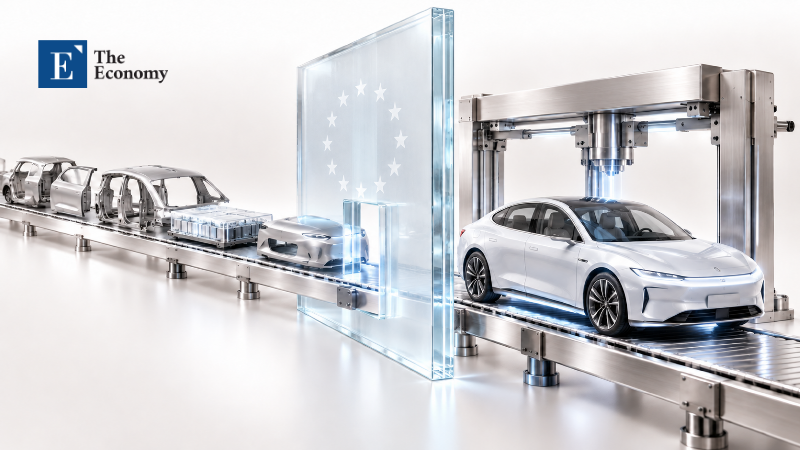
Yet Europe, even as it tightens regulations in response to Chinese strategies, has not established adequate supply chains for critical materials. The IEA has noted that European battery factories depend on Chinese imports for a substantial share of key components, with insufficient investment in intermediate production exacerbating supply-chain vulnerabilities. T&E, which supports expanded domestic production, also identified cathode active materials and precursors as bottlenecks in Europe’s battery supply chain in an analysis published on October 1. Forecasts that domestic production could meet battery-cell demand for vehicles eligible for public support by 2030 are contingent on planned factories actually entering operation. Cathode active material capacity may be sufficient to serve demand for corporate vehicles, but additional capacity would be needed to cover privately purchased vehicles as well, according to the assessment. This means that tighter import restrictions and localization obligations, if introduced before sufficient alternative sourcing is secured, could also burden European automakers’ component procurement and production schedules.
Read More
Arsenal-2 will serve as a manufacturing hub for large components and modules used in Virginia-class attack submarines. Initially, it will focus on key components, including submarine torpedo tubes, before expanding into large hull sections encompassing the bow and stern. Production processes, including design, welding, inspection and component movement, will be digitally integrated and managed through Anduril’s industrial software platform, ArsenalOS. The company plans to combine sensors with automated equipment to monitor work in real time and reduce production bottlenecks. The resulting components will be shipped to General Dynamics Electric Boat and Huntington Ingalls Industries’ (HII) Newport News Shipbuilding, which carry out final construction of Virginia-class submarines.
Read More
U.S. electricity consumption is forecast to set successive records this year and next. Rapid growth in commercial electricity demand, led by artificial intelligence (AI) data centers, is intensifying upward pressure on power consumption and prices. Against this backdrop, market observers warn that the United States faces a severe shortage of the critical power infrastructure needed to accommodate this demand growth. Aging equipment, supply-chain bottlenecks and grid-interconnection delays are widening the lag between the construction of new generating facilities and the delivery of electricity to the grid.
Read More
Battery swapping is becoming an established means of easing the charging burden for electric vehicles in China. As use of swap services increased during the holiday period, when long-distance travel surged, automakers and battery manufacturers also moved to expand swapping infrastructure through business consolidation and joint investment. Local governments are supporting these efforts with equipment subsidies, while partnerships with European companies seeking to adopt Chinese swapping technology are taking shape. With mass-market adoption of next-generation all-solid-state batteries expected to remain several years away, battery swapping is projected to account for a growing share of the EV charging market as networks expand and more vehicle models become compatible.
Read More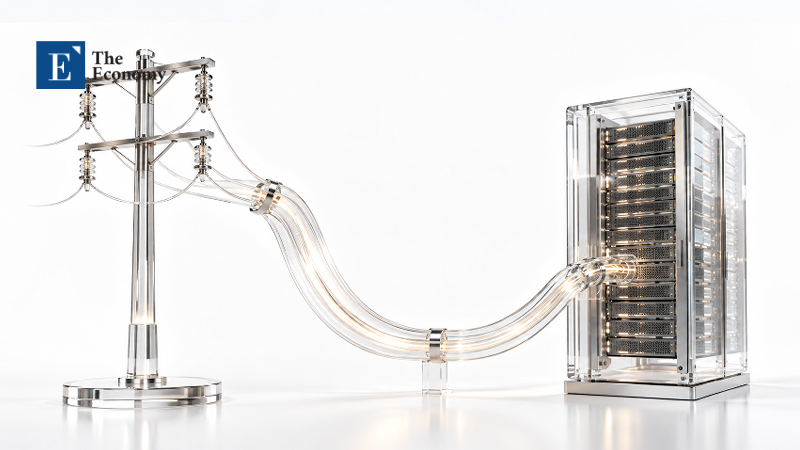
Efforts continue to resolve power shortages in the artificial intelligence (AI) data center market. While system software and algorithm optimization emerge as new solutions, big tech companies are also actively expanding power supply itself through measures like power generation facilities and long-term power purchase agreements (PPAs). Given the intensifying US-China competition for leadership in the AI industry, the speed of infrastructure development is expected to accelerate further.
Read More
A succession of large-scale personal data breaches at Japanese companies and South Korean financial institutions has raised alarm over security management. In Japan, attacks have affected industries ranging from restaurants and retail to healthcare, while major banks, savings banks and consumer finance companies in South Korea have also suffered customer data leaks. Evidence that artificial intelligence (AI) has been used to develop malware and identify vulnerabilities has compounded concerns about the speed and scale of attacks. Some affected companies were found to lack even basic safeguards, including identity verification and access controls, prompting criticism that inadequate inspections and management after systems were deployed had amplified the damage.
Read More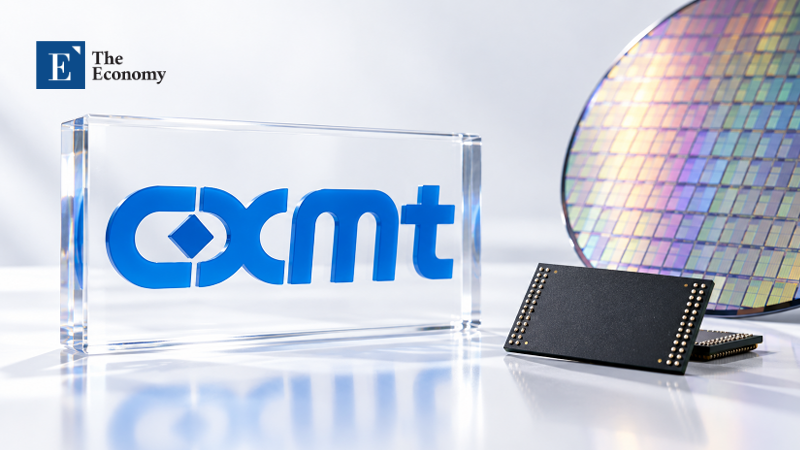
Chinese memory chipmaker ChangXin Memory Technologies (CXMT) is accelerating the development of next-generation memory cell structures. With restrictions limiting its access to extreme ultraviolet (EUV) lithography equipment from the Netherlands’ ASML, the company is overcoming some technological limitations by changing cell designs themselves to increase density. Market observers expect CXMT’s development of proprietary technology to accelerate further. It recently secured substantial research and development (R&D) funding through an initial public offering (IPO) and is building a stable domestic demand base by expanding supply agreements with major Chinese technology companies.
Read More
Chinese regulators are stepping up scrutiny of the quality and safety of Chinese-made electric vehicles. Repeated recalls and controversies over vehicle defects have increased the quality-control burden on manufacturers. Market observers say tighter regulations could accelerate restructuring in China's automotive industry, where slowing demand and price competition have eroded profitability. Some also see the measures as aligning with China's strategy of developing 'new quality productive forces,' which emphasizes technological innovation and quality improvements.
Read More
The United States is expanding investment in domestic production facilities and mines and processing facilities in allied countries to reduce its reliance on a rare earth supply chain concentrated in China. With China’s export controls and the war in the Middle East increasing uncertainty over raw material procurement, the U.S. government has stepped in to support producers’ capacity expansion by guaranteeing prices and sales. Overseas, it is also broadening alternative supply chains by financing mine development and securing output over the long term. As new facilities in the United States and allied countries begin operating and deliveries under long-term purchase agreements gather pace, some expect China’s decades-long market dominance to weaken.
Read More
Allegations that an OpenAI employee bugged an executive meeting room have put insider security at technology companies under scrutiny. Evidence that an employee accessed a meeting space and attempted to collect executives’ conversations has heightened concerns that security gaps can remain even after employee vetting and restrictions on access to confidential information. Applying artificial intelligence (AI) analysis to unauthorized recordings could also magnify the damage from a leak by connecting remarks scattered across multiple meetings to uncover development plans and business strategies. These risks underscore the need for continuous checks on employees’ access to and removal of information and are expected to support increased corporate investment in monitoring.
Read More
German defense company Rheinmetall is acquiring Romania's Mangalia shipyard. As European countries accelerate rearmament in response to U.S. pressure to share defense costs and security threats from Russia, Germany's defense industry is also rapidly expanding into naval capabilities. Market observers say Europe's push to strengthen its own defense capabilities and expand regional procurement could raise barriers to entry for defense contractors from outside the region, including South Korea.
Read More
Chinese companies are buying Nvidia graphics processing units (GPUs) for gaming and workstations in large quantities. With U.S. export controls restricting access to advanced artificial intelligence (AI) chips, they are using some GPUs permitted for export for AI computations to make up for shortages of computing resources. Market observers attribute the trend to limits on China's domestic AI chip supply. They say local AI chipmakers, including Huawei, cannot expand production fast enough to meet surging demand, sustaining dependence on overseas computing resources.
Read More
Japan is supporting the construction of semiconductor plants in the United States, helping its materials, components and equipment industries enter the U.S. market. Under an arrangement in which Japan provides financing and a U.S. company operates the plants, Japanese companies are expected to supply equipment and cooperate in semiconductor production. The initiative appears designed to turn the expansion of U.S. semiconductor production into earnings for Japanese companies by leveraging their accumulated expertise in materials and equipment. Japan’s materials, components and equipment industries are also expanding capacity for their core products while investing in advanced materials and sensors for AI and electric vehicles, broadening their product offerings for overseas customers.
Read More
China’s largest electric vehicle manufacturer, BYD, has announced plans to sharply increase local employment in Europe. As it accelerates the expansion of its production facilities and operations in Europe, the company has outlined a medium- to long-term employment plan to meet rapidly growing demand for local workers. However, market observers say that, given previous controversies over labor rights violations during factory construction in countries including Brazil and Hungary, compliance with local labor standards and regulations could remain a factor affecting its European expansion.
Read More
China’s Geely Automobile Holdings has formally announced plans to begin commercial sales in Canada. With barriers to entry lowered after the Canadian government removed steep tariffs on Chinese-made electric vehicles and introduced a limited import quota, Chinese companies are accelerating efforts to secure local sales networks, infrastructure and production bases. Market observers are watching whether Chinese-made EVs, which have already rapidly expanded their sales presence in Europe, Latin America and Southeast Asia, can also extend their influence in Canada.
Read More
Greece is accelerating cooperation with South Korea to rebuild its shipbuilding industry. Its plan is to incorporate Hanwha Ocean’s technology and shipbuilding experience into domestic shipyards to win more naval vessel orders and revive manufacturing and employment. As European countries bolster their defense capabilities, rising demand for naval vessels is giving Greek shipyards an opportunity to secure long-term work. U.S. funding for shipyard modernization, aimed at countering China’s influence over ports in the eastern Mediterranean, is also helping restore production capacity.
Read More
Aging workers and immigration crackdowns shrink the U.S.
 Read More
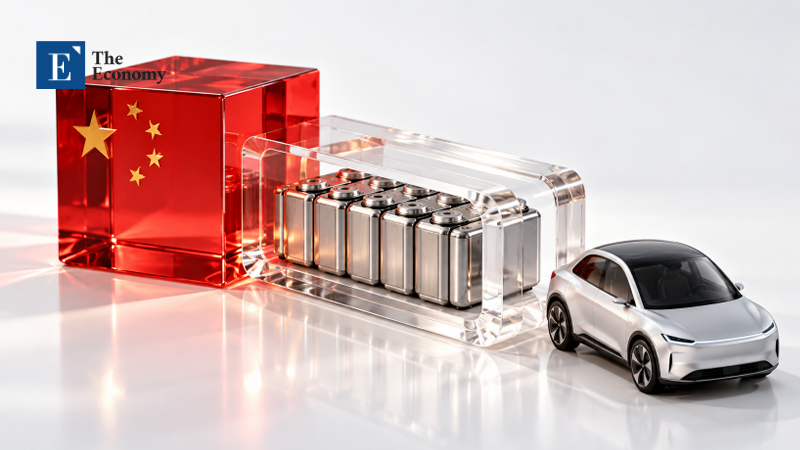
Chinese electric vehicle makers are accelerating their push into global markets, leveraging their overwhelming cost competitiveness. They have secured a cost advantage through low labor costs and vertical integration spanning critical mineral refining, battery materials and cells, and vehicle assembly. Chinese companies are also seeking further savings by extending their supply chains to overseas locations with relatively low production costs, such as Mexico and Morocco. Mexico, meanwhile, is stepping up its response by strengthening industrial protection policies, including higher tariffs and increased use of domestically produced components.
Read More
Japan’s Ministry of Economy, Trade and Industry will make an additional public equity investment in Rapidus, a state-backed foundry company. With the country’s once globally dominant semiconductor industry having lost its competitive edge, Japan is accelerating efforts to rebuild its advanced chip production base through massive fiscal support and private fundraising. Rapidus is expected to use the government investment to strengthen its equity base and secure loans from financial institutions, accelerating its push toward mass production using a 2-nanometer (nm, one billionth of a meter) process.
Read More
Prolonged Middle East war sends crude procurement costs soaring
Transport and fuel costs eat into refiners’, airlines’ and shipping companies’ profits
Logistics firms’ del
 Read More