“South Korea Is the World’s Craziest Stock Market”: Cars, Steel and Chemicals Lose Ground to China as Semiconductors Race Ahead Alone

Authored on
Modified
KOSPI triples in one year, then plunges 40% in six weeks
AI hedge fund loses 67% as retail investor losses mount
South Korea’s semiconductor concentration magnifies the impact of market shocks
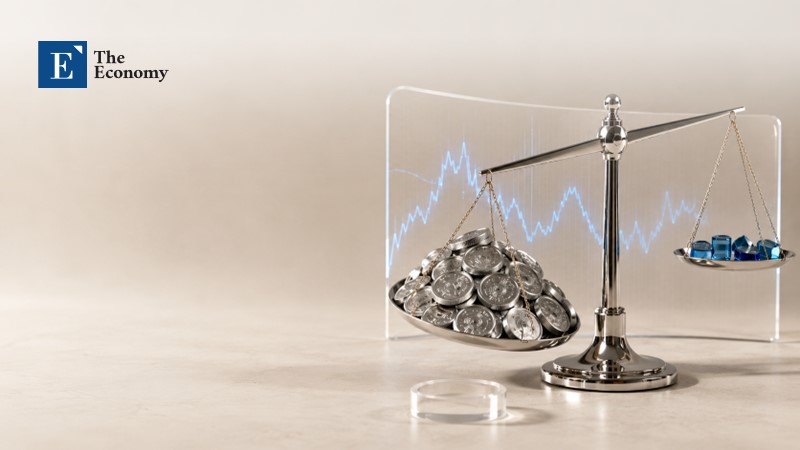
The Wall Street Journal (WSJ) has described South Korea’s stock market as “the world's craziest stock market.” What drew the newspaper’s attention was an overheated market fueled by the concentration of market capitalization in Samsung Electronics and SK Hynix, single-stock leveraged exchange-traded funds (ETFs), and trading flows dominated by retail investors. The fact that these two stocks exert more than half of the influence over the index reflects an industrial structure in which the South Korean economy’s growth engine is concentrated in a single sector: semiconductors. While semiconductors have assumed an increasingly dominant role in underpinning exports, capital expenditure and economic growth, the competitiveness of other core industries—including automobiles, chemicals and steel—has weakened, leaving the KOSPI fully exposed to the semiconductor cycle’s volatility.
WSJ : Korean retail investors learn a bitter lesson on the ‘roller-KOSPI’
On the 24th (all dates local time), the WSJ spotlighted the extreme volatility of South Korea’s stock market in an article titled “The World’s Craziest Stock Market Has Turned Into a Fright Ride.” The KOSPI rose 76% last year, delivering the world’s highest return, as semiconductor stocks including Samsung Electronics and SK Hynix surged amid the AI boom and propelled the rally. The KOSPI, however, plunged about 40% over six weeks in June and July, wiping out $2.5 trillion in market capitalization.
The KOSPI has since rebounded about 20% from its low, but the WSJ noted that roller-coaster volatility persists. It highlighted particularly heavy losses among retail investors. South Korean individuals account for as much as 60–70% of the KOSPI’s daily trading volume, and the WSJ said they piled into the market on the strength of their conviction that Samsung Electronics and SK Hynix would continue to rise.
The WSJ identified single-stock leveraged ETFs, first introduced in South Korea in May, as one of the factors that amplified both the market’s overheating and the losses that followed. Citing the case of a 25-year-old investor, the newspaper reported that the investor began with $14,000 in savings and cryptocurrency profits but lost the entire amount after putting it into SK Hynix and leveraged ETFs. Single-stock leveraged ETFs are designed to deliver a multiple of a particular stock’s price movement. If the stock rises 5% in a day, a two-times leveraged product gains 10%; conversely, a 5% decline in the stock produces a 10% loss.
“When the party ends, only retail investors will be left—it could become a Squid Game”
This was not the WSJ’s first warning about South Korea’s stock market. On the 6th of last month, the newspaper examined the market’s overheating in a column titled “World’s Hottest Market Risks Becoming a Squid Game.” The WSJ argued that such extreme volatility was itself drawing retail investors into the South Korean market. Maxence Bissot, founder of macroeconomic and quantitative hedge fund Archevium Capital, told the WSJ, “Volatility itself appeals to retail investors who want action,” adding, “It is rare to see a market where investment behavior is so sharply polarized.”
The WSJ noted in particular that volatility in South Korea’s stock market was concentrated in the two semiconductor heavyweights, Samsung Electronics and SK Hynix. The two companies command an overwhelming share of the KOSPI, while leveraged products magnify the scale of gains and losses through repeated mechanical trading. Before single-stock leveraged ETFs were permitted in South Korea in May, domestic investors had flocked to overseas-listed products, and a Hong Kong-listed two-times leveraged SK Hynix ETF grew into the world’s largest single-stock leveraged ETF.
Foreign investors, by contrast, have been withdrawing capital from the South Korean market, according to the newspaper. Foreign outflows exceeded $100 billion in the first half of this year, including $30 billion in June alone. The WSJ explained that overseas investors were diversifying across regions and assets because South Korea and Taiwan carry substantial weight in major emerging-market equity indices. Bissot warned that “when the party is over, the losses are ultimately likely to fall on domestic retail investors.” The WSJ likewise observed that although South Korea, a country of 51 million people, has developed one of the world’s largest stock markets, there are limits to sustaining a rally on retail buying alone.
Semiconductor concentration overturns the conventional large-cap volatility formula
Behind these repeated warnings lies a market in which even the conventional rules of volatility have been turned on their head. Small- and mid-cap stocks with limited market capitalization and shallow liquidity are generally more sensitive to shifts in supply and demand, while liquid large-cap stocks tend to move more gradually. This year, however, the daily-return volatility of Samsung Electronics and SK Hynix reached 4.9% and 5.6%, respectively, roughly doubling from 2.2% and 3.4% last year. KOSPI 200 volatility also reached 3.8%, far exceeding the 2.9% recorded by the KOSPI 200 excluding the two stocks and the 2.3% registered by stocks outside the KOSPI 200. The traditional structure in which large-cap stocks absorbed market shocks has given way to sharp swings in the two semiconductor megacaps.
The decisive factor shifting the center of volatility toward large-cap stocks is the KOSPI’s semiconductor concentration. The combined share of Samsung Electronics and SK Hynix in the KOSPI’s market capitalization soared from 23% at the beginning of last year to 55% at the end of June this year, while the correlation coefficient between the two stocks’ returns reached 0.82. Over the same period, the KOSPI 200 rose 331%, but the index excluding the two companies gained 145%, while stocks outside the KOSPI 200 advanced just 43%. As the rest of the market failed to keep pace with the two semiconductor stocks, the KOSPI became structurally tethered to expectations for global AI investment and the outlook for the memory-chip cycle.
Table 1. Big Tech’s expanding AI capital expenditure and mounting financial burden
| Category | Companies or segment | Forecast or change | Key details |
|---|---|---|---|
| Capital expenditure | Amazon, Microsoft, Google and Meta | Approximately $725 billion in 2026 | Up $75 billion from the February forecast of $650 billion |
| Memory prices | Conventional DRAM | Up 93–98% quarter on quarter in the first quarter | Forecast to rise by approximately 60% in the second quarter |
| Cash flow | Amazon | Projected cash generation of $180 billion Projected capital expenditure of $200 billion | Capital expenditure is expected to exceed projected cash generation, resulting in negative free cash flow |
| Capital expenditure | Oracle | Up to $95 billion over the next year | Shares fell more than 10% following the upward revision |
Big Tech AI capital expenditure reaches $725 billion
The overheating of AI investment by US Big Tech companies is cited as the most immediate variable triggering sharp swings in semiconductor stocks. Semiconductors are an industry in which profitability fluctuates dramatically according to supply-and-demand cycles. More recently, large-scale construction of AI data centers by Google and other Big Tech companies has left semiconductor supply struggling to keep pace with demand. The combined capital expenditure forecast for this year by the four major hyperscalers—Amazon, Microsoft (MS), Google and Meta—is approximately $725 billion. Factoring in higher memory prices, the figure is $75 billion above the February forecast of $650 billion. The semiconductor industry’s profitability has consequently surged on the back of excess demand from Big Tech. According to market research firm TrendForce, contract prices for conventional DRAM rose 93–98% quarter on quarter in the first quarter and are projected to climb by nearly 60% in the second quarter. In effect, profits from selling the same product would nearly triple within six months.
Recent moves by Big Tech companies to issue shares and pursue other financing measures to cover surging capital expenditure, however, point to a potential shift. Doubts are mounting over whether they can continue investing in semiconductors while tolerating losses. Amazon is estimated to generate approximately $180 billion in cash this year. After deducting its projected capital expenditure of $200 billion, its free cash flow (FCF) would be negative. Oracle raised its capital expenditure forecast for the coming year to as much as $95 billion on June 10, after which its share price fell by more than 10%.
AI spending erodes cash flow as reliance on corporate bonds surges
As AI investment consumes cash flow, Big Tech has increasingly shifted its funding base toward the corporate bond market. According to a Reuters analysis of data from financial information provider LSEG, Amazon, Alphabet, Meta and Oracle issued $194 billion in corporate bonds through July 7 this year, up 79% from the $108 billion issued over the entirety of last year. Goldman Sachs projected that bond issuance by the five leading hyperscalers, including MS, would reach $250 billion this year and $400 billion next year. It also estimated that corporate bond funding would cover approximately one-third of their capital expenditure this year.
As borrowing has grown rapidly, bond investors have begun assessing whether AI infrastructure investment can generate sufficient returns to service the resulting principal and interest obligations. The subscription multiple for hyperscaler corporate bonds fell from around five times in February to below two times in July, while the multiple for Amazon’s dollar-denominated bonds declined from 3.4 times in March to 1.6 times in July. Of the 91 hyperscaler bonds issued this year for which comparable pricing is available, 78 were trading in the secondary market at the end of July at higher yields than at issuance. The median new-issue concession added to yields on outstanding bonds when new corporate debt is sold also jumped from 2.25 basis points last year to 12 basis points this year (1 basis point equals 0.01 percentage point). Such concerns also underpinned the 7.9% plunge in the Philadelphia Semiconductor Index on June 23 and the approximately 13% declines in Micron and SanDisk. Doubts that intensified in the US market were immediately reflected in the share prices of Samsung Electronics and SK Hynix.
South Korea’s semiconductor concentration deepens across exports, investment and growth
Semiconductor stocks also fluctuate with the AI investment outlook in global markets including the United States and Taiwan, but the repercussions of the same shock are considered far greater in South Korea because its exports, capital expenditure and economic growth all depend heavily on the semiconductor boom. According to the Ministry of Trade, Industry and Energy, exports in the first half of this year rose 48.4% from a year earlier to a record $496.7 billion, while non-semiconductor exports increased 16%. Semiconductor exports, however, surged 162.6% to $192.4 billion, meaning that a single product category accounted for 38.7% of total exports and more than 70% of the overall increase. By individual segment, automobile exports declined 1.1%, while petrochemical exports rose 5.2% in value terms as unit prices tracked higher international oil prices despite a decrease in shipment volume. Steel exports did not return to growth until June, ending a 14-month contraction.
The semiconductor concentration of South Korean exports has deepened in tandem with the declining competitiveness of other core industries. The Korea International Trade Association compared the export competitiveness of South Korea, China and Japan in semiconductors, automobiles, chemicals, machinery and steel between 2019 and 2024 and found that semiconductors were the only category in which South Korea retained the top position. China enhanced the price competitiveness of steel and chemicals through large-scale capacity expansion and cost reductions, while gaining the upper hand in automobiles and machinery by expanding environmentally friendly vehicle production and upgrading its industrial base. The gap that emerged in traditional manufacturing is now extending into advanced industries. An assessment by the Korea Institute for Industrial Economics and Trade likewise found that China was ahead of South Korea in robotics, electric vehicles, batteries and autonomous vehicles across research and development (R&D), supply chains, production, services, and domestic and overseas markets. South Korea’s comparative advantage remained concentrated in memory-oriented semiconductors.
Short-term growth propelled by the semiconductor boom and the South Korean economy’s long-term growth potential have followed different trajectories. The Bank of Korea has rejected the view that the current semiconductor upcycle has produced productivity gains large enough to raise the potential growth rate substantially. Estimates by the Organisation for Economic Co-operation and Development (OECD) likewise show the potential growth rate declining from 1.66% this year to 1.52% next year and falling to 1.46% in the fourth quarter of next year. In an industrial landscape where automobile, chemical and steel stocks are ill-equipped to offset a semiconductor correction, the KOSPI remains fully exposed to the volatility of Samsung Electronics and SK Hynix.
Similar Post