“Reopening Funding Channels Choked by US Investment Curbs”: Chinese Robotics Firms Flock to Hong Kong IPOs in Full-Scale Push to Break Foreign Capital Drought

Oliver Griffin is a policy and tech reporter at The Economy, focusing on the intersection of artificial intelligence, government regulation, and macroeconomic strategy. Based in Dublin, Oliver has reported extensively on European Union policy shifts and their ripple effects across global markets. Prior to joining The Economy, he covered technology policy for an international think tank, producing research cited by major institutions, including the OECD and IMF. Oliver studied political economy at Trinity College Dublin and later completed a master’s in data journalism at Columbia University. His reporting blends field interviews with rigorous statistical analysis, offering readers a nuanced understanding of how policy decisions shape industries and everyday lives. Beyond his newsroom work, Oliver contributes op-eds on ethics in AI and has been a guest commentator on BBC World and CNBC Europe.
Authored On
Modified
Subsidies Alone Prove Insufficient to Sustain the Race for Mass Robot Production
Fundraising Shifts From Policy Capital to Public Markets
Hong Kong IPOs Offer Funding for Production Facilities and Overseas Expansion
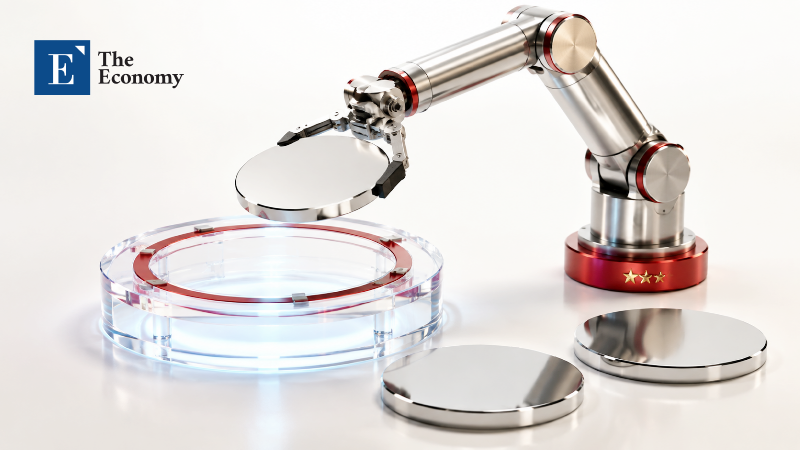
Chinese robotics companies are flocking to the Hong Kong stock market. Robotera is considering an initial public offering (IPO) of up to $1 billion, while EngineAI, AI² Robotics and AgiBot are also preparing to list. Their move toward Hong Kong reflects Beijing’s strategy of shifting the funding base for Chinese technology companies from policy-backed capital to public markets. Eased listing thresholds, shorter review periods and the convergence of mainland and overseas liquidity have elevated Hong Kong into a pivotal financing hub supporting mass production and international expansion across China’s advanced industries.
Robotera Readies $1 Billion Hong Kong Gambit
Chinese humanoid robotics company Robotera is considering raising between $800 million and $1 billion through a Hong Kong IPO, Bloomberg reported on Aug. 17. The maximum fundraising target amounts to 70% of the company’s $1.4 billion valuation in a strategic investment round conducted in March. A successful listing would allow the company to secure, in a single transaction, the growth capital required to expand mass-production facilities, internalize key component manufacturing and establish an overseas sales network.
Robotera was established in August 2023 as a spinout from Tsinghua University’s Institute for Interdisciplinary Information Sciences. Founder Chen Jianyu studied robotic control at Tsinghua University’s Department of Precision Instruments and the University of California, Berkeley, before joining the Tsinghua faculty in 2020. The company has since expanded its product portfolio to include the bipedal L7, wheeled Q5 and XHAND1 robotic hand with 12 degrees of freedom. Robotera says more than 95% of its key components, including actuators and humanoid platforms, are developed in-house. Its vertically integrated operations, which allow direct control over component procurement costs and supply-chain variables, provide the foundation for large-scale production.
Capital inflows have also accelerated. Robotera secured $139 million in strategic investment in March at a valuation of $1.4 billion, followed in May by more than $200 million in funding led by SF Group, HSG and IDG Capital. The company raised $339 million in just two months. SF Group, in particular, has combined financial investment with access to operational logistics sites. Robotera’s M7, a wheeled upper-body humanoid developed for logistics and manufacturing tasks, is handling small-parcel loading and sorting at more than 10 logistics centers operated by SF and China Post Group. Cumulative shipments began reaching the 1,000-unit range in the second quarter of this year.
EngineAI and AI² Join the Race
Shenzhen-based humanoid robotics company EngineAI reportedly submitted a confidential listing application to the Hong Kong Stock Exchange in June. Established in 2023, the company develops humanoid and quadruped robots, with China International Capital Corporation (CICC) and CITIC Securities participating in the listing process. EngineAI previously raised $200 million in Series B funding at a valuation of $1.5 billion.
Shenzhen-based AI² Robotics is also considering a Hong Kong listing. AI² announced in September last year that it planned to pursue an IPO within one to two years and has reportedly identified Hong Kong as its preferred listing venue this year. Established in 2023, AI² developed AlphaBot 2, a wheeled humanoid robot designed for factory assembly, quality inspection and performance testing. AlphaBot 2 moves on six wheels and performs tasks using a human-shaped upper body and two arms. Its proprietary vision-language-action model, AlphaBrain, interprets the surrounding environment and task instructions to control the robot’s movements.
AI² generated $15 million in revenue in the first half of last year and signed a $70 million contract with display manufacturer HKC in September to supply more than 1,000 humanoid robots over three years. The company’s fundraising volume has also expanded rapidly. AI² had raised $140 million from venture capital firms by September last year, while subsequent investments lifted its cumulative funding to $890 million. Its valuation in the latest funding process reportedly ranged between $2.8 billion and $3 billion. A Hong Kong IPO would mark the next stage in connecting its revenue, order backlog and robot delivery record with a public-market valuation.
AgiBot and LimX Head for Hong Kong as Capital Race Intensifies
Shanghai-based AgiBot has also reportedly begun preparations for a Hong Kong IPO. Several Chinese media outlets reported that AgiBot selected CITIC Securities, CICC and Morgan Stanley as joint listing sponsors and is holding discussions based on a target valuation of between $5.1 billion and $6.4 billion. Founded in February 2023 by former Huawei executive Deng Taihua, AgiBot pursued mass production of more than 5,000 humanoid robots last year and was reportedly valued at $2.8 billion in the private market. Having attracted extensive backing from Chinese state capital, local government-affiliated funds and industrial investors, the continuity of its revenue, transactions with affiliates and related parties, and the share of government procurement are expected to emerge as key issues during the Hong Kong listing review.
Shenzhen-based LimX Dynamics is also accelerating its capital expansion with a future listing in view. The company raised $200 million last month in a pre-listing investment round involving IDG Capital, Lens Technology and NIO Capital, bringing its cumulative funding over the past six months to $400 million. LimX Dynamics plans to deploy the proceeds toward the large-scale rollout of general-purpose humanoid robots, expanded production and delivery capacity, and the establishment of sales networks across Europe, the Middle East and Asia. Although the company did not disclose a specific listing venue or timetable in its latest official announcement, its designation of the funding round as a “pre-IPO” investment effectively formalized preparations to enter the public market.
Table 1. IPO Timelines of Chinese Humanoid Robotics Companies
| Company | IPO Timetable | Stage | Planned Listing Venue |
|---|---|---|---|
| Robotera | No specific timetable disclosed | IPO under consideration | Hong Kong |
| EngineAI | Confidential listing application submitted in June 2026 | Preparing for listing review | Hong Kong |
| AI² Robotics | Targeting 2026–2027 | Reviewing listing venue | Hong Kong |
| AgiBot | No specific timetable disclosed | Sponsors selected; listing discussions underway | Hong Kong |
| LimX Dynamics | No specific timetable disclosed | Pre-IPO investment completed | Hong Kong |
Policy-Fund Constraints Accelerate China’s Capital-Market Opening
The wave of listing preparations among Chinese robotics companies reflects a shift in the Chinese government’s approach to fostering technology enterprises. Subsidies and policy funds established by the central and local governments have effectively supported research and development, prototype production and the creation of early-stage demand. As the humanoid industry expands, however, the burden imposed by a financing system concentrated in public finances and state capital has grown heavier. Chinese authorities are consequently widening institutional channels that allow companies at the commercialization stage to secure growth capital from equity markets. Under this division of responsibilities, policy capital absorbs early-stage technological risk, while private investors assess commercial viability after mass production begins.
US-led financial decoupling pressure has also contributed to the pivot toward capital markets. Since the 2018 trade dispute, the United States has expanded export controls and investment restrictions targeting Chinese technology companies. The Outbound Investment Security Program, which took effect last year, prohibits or requires disclosure of US investments in semiconductors, quantum information technologies and certain artificial intelligence systems in China.
Foreign capital flowing into China’s venture capital industry fell 60% year-on-year to $3.7 billion in 2023, according to Dealogic data cited by the Financial Times. Chinese technology companies raised just $217 billion through IPOs and bond issuance over the past two years, compared with $1.4 trillion for US technology companies, according to Bloomberg. Slowing foreign capital inflows and a fundraising gap exceeding sixfold are widely identified as a financial bottleneck constraining the pace of mass production and overseas expansion.
Listing Rules Eased and Reviews Accelerated
Chinese authorities have begun using Hong Kong to close this funding gap. The China Securities Regulatory Commission (CSRC) announced five measures in April 2024 to deepen cooperation with Hong Kong’s capital markets and pledged support for Hong Kong listings by leading companies across major industries. The measures also expanded the range of exchange-traded funds eligible under Stock Connect and incorporated real estate investment trusts and renminbi trading counters into the cross-border trading framework. Mainland companies can consequently tap liquidity from Chinese households and institutions while also undergoing evaluation by overseas long-term investors. The revival of listing activity and secondary-market trading has broadened exit routes for early investors, restoring capacity for follow-on investment among venture capital firms and industrial investors. Hong Kong is absorbing both technology companies’ demand for growth capital and venture investors’ demand for exits.
The Hong Kong Stock Exchange has also revised listing thresholds and review procedures to attract technology companies. Chapter 18C of the Main Board Listing Rules, introduced in 2023, provides a separate listing pathway for specialist technology companies operating in robotics, AI, autonomous driving and semiconductors. In September 2024, the exchange lowered the minimum market capitalization requirement for commercial companies from approximately $764 million to $510 million and reduced the threshold for pre-commercial companies from roughly $1.27 billion to $1.02 billion, widening access to capital.
Uncertainty surrounding review periods has also diminished. Under the new standards, each regulator must determine within a maximum of 40 business days whether a standard application containing compliant listing documents raises any material issues. Mainland A-share-listed companies with no major regulatory violations during the preceding two years and an expected market capitalization of at least approximately $1.27 billion qualify for an expedited 30-business-day review process. In May last year, the exchange also launched a dedicated technology-company channel with Hong Kong’s Securities and Futures Commission, allowing preliminary consultations and confidential applications. Unlisted companies such as Robotera can use this channel to reduce uncertainty during listing preparations and limit the risk of exposing commercially sensitive information.
Hong Kong Regains Its Capacity to Attract Global Capital
The regulatory overhaul produced an immediate increase in IPO activity. In December last year, six Chinese companies spanning AI-powered drug discovery, household robotics and data infrastructure listed simultaneously in Hong Kong, raising approximately $891 million. Full-year proceeds reached $37.4 billion across 119 transactions, ranking Hong Kong first among global stock exchanges. Fundraising in the first half of this year totaled approximately $26.7 billion from 85 transactions. Global consulting firm KPMG estimated that 24 A+H transactions involving additional H-share listings by mainland A-share companies and 13 Chapter 18C companies accounted for more than 70% of total proceeds. Southbound net inflows of mainland capital through the Shanghai-Hong Kong and Shenzhen-Hong Kong Stock Connect programs also increased by approximately 74% last year, further strengthening Hong Kong’s capital-absorption capacity.
As Hong Kong’s financing channels widen, criticism that public-market instruments for investing in Chinese technology companies remain scarce is gradually losing force. According to Hong Kong Stock Exchange data, 10 of the 20 largest cornerstone investors in the primary equity market last year were sovereign wealth funds and long-term asset managers from Asia, Europe and North America. With mainland capital and international institutions participating in the same offerings, corporate valuations must satisfy both mainland investors’ growth expectations and international investors’ profitability standards. If this price-discovery structure takes hold, China’s capital markets are expected to align more rapidly with the valuation framework of global markets.
Oliver Griffin is a policy and tech reporter at The Economy, focusing on the intersection of artificial intelligence, government regulation, and macroeconomic strategy. Based in Dublin, Oliver has reported extensively on European Union policy shifts and their ripple effects across global markets. Prior to joining The Economy, he covered technology policy for an international think tank, producing research cited by major institutions, including the OECD and IMF. Oliver studied political economy at Trinity College Dublin and later completed a master’s in data journalism at Columbia University. His reporting blends field interviews with rigorous statistical analysis, offering readers a nuanced understanding of how policy decisions shape industries and everyday lives. Beyond his newsroom work, Oliver contributes op-eds on ethics in AI and has been a guest commentator on BBC World and CNBC Europe.
- Previous China’s Homegrown Airliner Makes International Debut, but Western Certification and Technological Self-Reliance Hurdles Impede Challenge to Boeing-Airbus Duopoly
- Next “Buy American Weapons”: Europe’s Defense Autonomy Faces U.S. Pressure, With Critical Capability Gaps and Nuclear Deterrence Constraints Exposed
Similar Post