Drug licensing exports grow 54-fold in 10 years as China's biotech sector advances on research talent and cost competitiveness

Siobhán Delaney is a Dublin-based writer for The Economy, focusing on culture, education, and international affairs. With a background in media and communication from University College Dublin, she contributes to cross-regional coverage and translation-based commentary. Her work emphasizes clarity and balance, especially in contexts shaped by cultural difference and policy translation.
Authored on
Modified
Low development costs and faster clinical trial approvals strengthen incentives to partner with China
Major licensing deals increase amid competition to secure promising drug candidates
Global pharmaceutical partners handling further development also help expand overseas operations
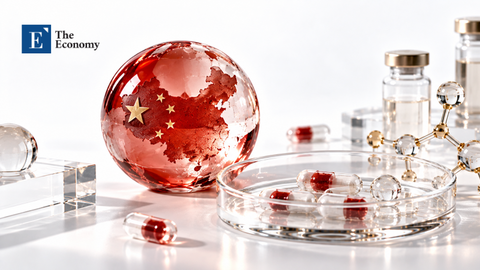
China is emerging as a key source of new drugs for the global pharmaceutical industry. Chinese companies' accumulated research capabilities, combined with low development and production costs and policy support that shortens clinical trial approval times, have made them attractive partners for securing promising drug candidates. A succession of major licensing deals for cancer drugs and treatments for obesity and autoimmune diseases pushed China's overseas licensing exports this year past last year's full-year total in October. With global pharmaceutical partners taking over overseas trials, regulatory approvals and sales, Chinese-developed drugs are also entering global markets at a faster pace.
China emerges as a source of next-generation drugs for global pharmaceutical companies
According to Nikkei Asia on the 10th (local time), Chinese pharmaceutical companies signed overseas licensing deals worth USD 136 billion last year, a 54-fold increase over 10 years. With major deals continuing this year, the total had already surpassed last year's full-year figure in October. This was driven largely by global pharmaceutical companies, including Pfizer, AstraZeneca, GSK and Roche, seeking new drugs in China to succeed their flagship medicines as their patents approach expiration. Once patent-protected market exclusivity ends, competing products enter and erode sales, creating an urgent need to secure drug candidates to fill the gap.
In oncology in particular, Chinese companies have signed a succession of major overseas licensing deals bundling multiple drug candidates. In May this year, Innovent Biologics signed a licensing agreement with Pfizer covering 12 early-stage oncology programs. The upfront payment is USD 650 million, with the total potentially reaching USD 10.5 billion including additional payments tied to development and commercialization milestones. That same month, Hengrui Pharmaceuticals signed an agreement licensing 13 early-stage programs in oncology, hematology and immunology to Bristol Myers Squibb (BMS). Worth up to USD 15.2 billion, including an upfront payment of USD 600 million, the deal brought numerous drug candidates into a global pharmaceutical company's development pipeline at once. Last month, Hansoh Pharmaceutical joined the ranks of major licensing exporters by signing an agreement with Roche for antibody-drug conjugate (ADC) candidates, with an upfront payment of USD 400 million and a total value exceeding USD 15 billion.
Biotech licensing exports diversify
Licensing exports are also expanding into treatments for obesity and autoimmune diseases. On the 2nd of last month, China's Abogen Biosciences signed a USD 7.8 billion agreement with Novartis covering messenger RNA (mRNA)-based therapies. The lead candidate is ABO2203, which is being developed to treat autoimmune diseases. The agreement also gives Novartis options to acquire rights to follow-on programs using Abogen's RNA technology. Abogen will receive USD 575 million upfront and up to an additional USD 7.2 billion depending on the exercise of options across the programs and the achievement of development, regulatory and sales milestones. In the same month, Rona Therapeutics also signed an agreement licensing RNA interference (RNAi) drug candidates for obesity and metabolic diseases to Roche, securing an upfront payment of USD 100 million and additional payments tied to future milestones.
As major deals accumulate across multiple therapeutic areas, Chinese pharmaceutical companies' licensing exports have grown sharply. According to Deloitte China, licensing deals for innovative Chinese drugs totaled USD 99.7 billion in the first half of this year. In just six months, companies concluded deals worth roughly twice the full-year total for 2024 and more than 70% of last year's total. Notably, Chinese companies were involved in eight of the global pharmaceutical industry's 10 largest deals during the same period.
Major deals have also covered core technologies used to discover individual drug candidates. An agreement worth up to USD 18.5 billion signed in January this year between China's CSPC Pharmaceutical and AstraZeneca included rights to drug delivery technology designed to prolong drug effects and artificial intelligence (AI)-based peptide discovery technology. Overseas pharmaceutical companies' interest in acquiring technologies that can support the development of multiple follow-on drugs has helped increase deal values.
China accounts for 53.1% of major licensing deals in September
Licensing exports continued into the second half, with Chinese companies accounting for more than half the value of major drug deals in September. Of the 24 major licensing and partnership agreements disclosed by the Korea Drug Development Fund (KDDF), nine involved Chinese companies licensing out technology. Upfront payments and milestone payments tied to future development, regulatory approvals and sales totaled USD 14.29 billion. This represented 53.1% of the USD 26.889 billion total value of the 18 deals whose financial terms were disclosed.
Counterparties included a broad range of major US and European pharmaceutical companies, including Eli Lilly, Roche, US-based Merck (MSD), GSK and Novo Nordisk. In particular, MSD signed an agreement worth up to USD 2.13 billion, including an upfront payment of USD 400 million, to secure rights to SPR2015, an oncology candidate being developed by China's Sichuan Sibranch Therapeutics. At the time of the agreement, the candidate was in preclinical development, before entering human trials, and was being developed to target cancers with a specific genetic mutation.
Table 1. Major global drug development licensing and partnership deals in September 2026
| Licensee | Agreement date · Licensor | Asset/platform and mechanism of action | Therapeutic area/indication | Development stage | Deal value (USD million) |
|---|---|---|---|---|---|
| Roche | 9/1 Simcere Zaiming (Simcere Zaiming) | SIM0660 CD79a × CD19 × CD3 T-cell-engaging antibody | Immunology · Oncology B-cell-mediated diseases | Preclinical | 1,530 |
| Joancure Therapeutics | 9/1 STYX Biotechnologies (Styx Biotechnologies) | Undisclosed asset Antibody-drug conjugate (ADC) | Oncology Solid tumors | Preclinical | Undisclosed |
| Novartis | 9/2 Alteogen | ALT-B4 Hybrozyme platform-based recombinant human hyaluronidase | - | - | 3,223 |
| Evotec | 9/2 Flextonic (Plectonic) | Evotec BiTco CD2 costimulatory bispecific platform · Flextonic LOGIBODY platform Next-generation T-cell discovery platform | Oncology Solid tumors | Discovery | Undisclosed |
| GSK | 9/3 HUTCHMED (Hutchmed) | HMPL-A830 EGFR-targeted KRASi antibody-drug conjugate (ATTC) | Oncology Solid tumors | Phase 1 | 1,295 |
| Menarini Group | 9/3 Gan & Lee Pharmaceuticals (Gan & Lee Pharmaceuticals) | Bofanglutide GLP-1R agonist | Metabolic diseases Obesity · Type 2 diabetes | Phase 3 | 843 |
| Medicus Pharma | 9/7 Pfizer | CD228V(PF-08046031) CD228 antibody-drug conjugate (ADC) | Oncology Solid tumors | Phase 1 | 1,000+ |
| Aceso Therapeutics | 9/7 Apta Pharma (Aptar Pharma) | ACT-101 CFTR mRNA-stabilizing antisense oligonucleotide (ASO) | Respiratory diseases Cystic fibrosis | Preclinical | Undisclosed |
| Eli Lilly | 9/15 Curecan Therapeutics (QurCan Therapeutics) | TERP™ platform Lipid nanoparticle (LNP)-based nucleic acid delivery platform | Neurological diseases Central and peripheral nervous system diseases | Discovery | 237+ |
| GSK | 9/15 Chimagen Biosciences (Chimagen Biosciences) | Undisclosed asset Trispecific T-cell engager (TCE) | Oncology Multiple myeloma | Preclinical | 750 |
| Novo Nordisk | 9/16 Anthropic | Claude Science platform AI-based scientific reasoning platform for drug development | - | Discovery | Undisclosed |
| Novo Nordisk | 9/17 Orbis Medicines (Orbis Medicines) | nGen platform AI-based macrocyclic compound discovery platform | Metabolic and cardiovascular diseases Indication - | Discovery | 1,400 |
| Roche | 9/17 Dualitas Therapeutics (Dualitas Therapeutics) | DualScreen™ platform Proximity-based bispecific antibody discovery platform | Immunology Indication - | Discovery | 1,000 |
| Novo Nordisk | 9/21 Calliope (Kallyope) | K-554 Non-incretin peptide | Metabolic diseases Obesity | Preclinical | Undisclosed |
| Boehringer Ingelheim | 9/22 Envisagenics (Envisagenics) | SpliceCore platform AI-based RNA splicing target discovery platform | Oncology Undisclosed indication | Discovery | 1,000 |
| Novartis | 9/22 BoomRay Pharmaceuticals (BoomRay Pharmaceuticals) | Undisclosed asset Radiopharmaceutical therapy (RPT) | Oncology Undisclosed indication | Preclinical | 900 |
| Roche | 9/24 Atavistik Bio (Atavistik Bio) | AMPS platform Allosteric small-molecule discovery platform | Cardiovascular, renal and metabolic diseases (CVRM) Undisclosed indication | Discovery | 1,970 |
| Eli Lilly | 9/24 InnoCare Pharma (InnoCare Pharma) | Undisclosed asset Compounds targeting up to 5 undisclosed targets | Undisclosed | Discovery | 3,250+ |
| Genentech (Roche) | 9/25 Earendil Labs (Earendil Labs) | Undisclosed asset AI-based bispecific antibody discovery platform | Oncology Undisclosed indication | Discovery | 1,555 |
| Shanghai Henlius Biotech | 9/25 Amberstone Biosciences (Amberstone Biosciences) | T-MATE platform Up to 2 pH-sensitive T-cell engager programs | Oncology Solid tumors | Preclinical | 880 |
| Novo Nordisk | 9/25 Nanexa (Nanexa) | PharmaShell platform ALD-based long-acting injectable delivery platform | Metabolic diseases Obesity · Type 2 diabetes · Other cardiometabolic diseases | Discovery | 1,326 |
| MSD | 9/28 Sibranch Therapeutics (SciBrunch Therapeutics) | SPR2015 KRAS G12D(ON) inhibitor | Oncology KRAS G12D-mutant cancers | Preclinical | 2,130 |
| Novo Nordisk | 9/29 Hengrui Pharmaceuticals (Hengrui Pharma) | HRS-1596 GLP-1/GIP dual receptor agonist | Metabolic diseases Obesity · Type 2 diabetes | Clinical trial application approved (China) | 2,600 |
| Novasenta | 9/29 Corner Therapeutics (Corner Therapeutics) | StarX platform: mRNA-based induction of Th17 cell death T Deplete platform: antibody-based depletion of pathogenic Th17 cells | Immunology Autoimmune diseases | Preclinical | Undisclosed |
Source: Korea Drug Development Fund (KDDF)
Drug development competitiveness built on investment in basic science
Investment in basic science and an expanded research workforce have underpinned the rise of Chinese biotech companies. According to China's National Bureau of Statistics, spending on basic research rose 13.3% last year from the previous year. While expanding its research infrastructure, the Chinese government also encouraged researchers working overseas to return by providing research funding and laboratories. As a result, researchers who had earned doctorates or worked as professors in the United States joined the development of key therapies at companies such as BeiGene and Junshi Biosciences, translating increased investment into drug development achievements. Boston Consulting Group (BCG) found that returnees from overseas research institutions and multinational pharmaceutical companies had strengthened Chinese biotech companies' research and development (R&D) capabilities, while domestically trained talent has more recently also contributed to their growth.
Low production costs have further attracted overseas pharmaceutical companies seeking partners. According to an analysis published in the Australian policy outlet The Policymaker, production costs at Chinese contract development and manufacturing organizations (CDMOs) are typically 30–40% lower than in the United States and Europe. This means clients can achieve greater cost savings as production volumes grow, from clinical trial supplies to commercial products. Chinese companies' large-scale manufacturing facilities and continued capacity expansion also help attract overseas clients. Pharmaceutical companies that successfully develop new drugs have more scope to reduce the investment burden of building their own factories and secure commercial production through existing contractors.
By contrast, there is still a shortage of specialists needed to obtain overseas approvals for newly developed drugs and bring them to market. Hengrui Pharmaceuticals Chairman Sun Piaoyang said the company was struggling to recruit experienced professionals to lead multinational clinical trials, overseas regulatory approvals and commercialization. Indeed, IQVIA data show that 88% of the trials conducted last year by China-headquartered sponsors took place exclusively within China.
Against this backdrop, licensing agreements with overseas pharmaceutical companies offer a way to supplement limited global development capabilities. Under this model, Chinese companies handle candidate discovery and early development, while overseas pharmaceutical companies license the candidates and take responsibility for additional trials, regulatory approvals and sales required in markets such as the United States and Europe. This reduces the burden of in-house development for global pharmaceutical companies while giving Chinese firms opportunities to export research results before establishing full overseas business operations. In the agreement between Hansoh Pharmaceutical and Roche, for example, Hansoh will lead development through global Phase 1a trials, while Roche will handle subsequent development and commercialization outside Greater China.
Government expands biotech support, from clinical trial reviews to manufacturing investment
Policies that shorten the time needed to launch clinical trials have also supported partnerships in which early development is conducted in China. In September last year, China's National Medical Products Administration (NMPA) introduced a procedure to complete clinical trial reviews for qualifying innovative drugs within 30 working days of application acceptance. This halved the previous 60-working-day review period, with international joint development and multinational clinical trials also eligible for support. Applicants were required to pursue hospital research project registration and ethics reviews in parallel and begin trials within 12 weeks of approval. The measure links administrative procedures before and after approval to shorten the interval between securing a drug candidate and actually starting clinical trials.
China is also pursuing policies to increase hospital participation in clinical trials. In clinical research support guidelines implemented in 2024, Shanghai encouraged major hospitals to allocate 10% of their beds to research. The guidelines also included provisions to incorporate innovative drug and medical device trial performance into hospital evaluations and provide financial support to medical institutions conducting research. They additionally called for training dedicated research physicians, nurses and support staff and expanding joint research among hospitals, universities and research institutions. The aim appears to be not only to accelerate the processing of pharmaceutical companies' trial applications but also to increase the capacity of clinical sites to recruit patients and run trials.
Such government support is leading to foreign companies' participation in local production. In last year's action plan to stabilize foreign investment, China's Ministry of Commerce and National Development and Reform Commission included measures to support eligible foreign companies' participation in pilot programs for split-site biopharmaceutical manufacturing. The measures called for expediting pilot program reviews and quality management plan assessments needed when production processes are divided across sites, while relevant ministries would coordinate efforts to resolve companies' difficulties. The plan also proposed assigning dedicated teams to foreign investment projects in biotechnology to help bring investments under discussion to fruition. This links administrative support to efforts to enable overseas companies engaged in R&D partnerships to use China's manufacturing base as well.
Siobhán Delaney is a Dublin-based writer for The Economy, focusing on culture, education, and international affairs. With a background in media and communication from University College Dublin, she contributes to cross-regional coverage and translation-based commentary. Her work emphasizes clarity and balance, especially in contexts shaped by cultural difference and policy translation.
Similar Post