South Korean Defense Groups Shift to European Production

Working across research, policy, and data-driven analysis, the Editorial Board ensures that published pieces reflect a consistent institutional perspective grounded in quantitative reasoning and long-term structural assessment.
Authored On
Modified
South Korean defense groups are moving production into European plants
EU funding rules reward local content, control and design authority
Local lines mature around 2030, as SAFE lending closes
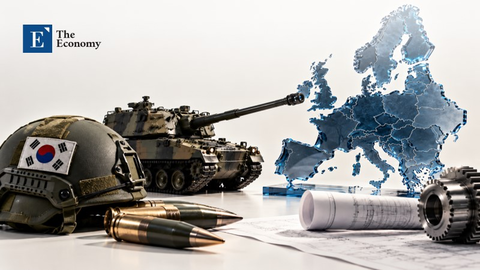
Europe’s military spending increased by 14% in 2025 to $864 billion, according to the Stockholm International Peace Research Institute and some of that demand that would have been hard to predict a decade ago ended up in the Changwon assembly lines. South Korea’s Defense Acquisition Program Administration recorded exports of $15.4 billion for the same year, with Poland accounting for more than 40% of the total. South Korean defense groups gained this position because they were delivering tanks and self-propelled guns at a time when European production lines were carrying years of backlogs. The advantage of speed is waning as Brussels ties the new common funds to European content and European control. For Hanwha Aerospace and Hyundai Rotem, the question now shifts to how much industry they are willing to install on European soil and whether their finances will hold up when the current boom in orders weakens.
Readiness 2030, SAFE and EDIP Rewrite the Rules for Non-EU Suppliers
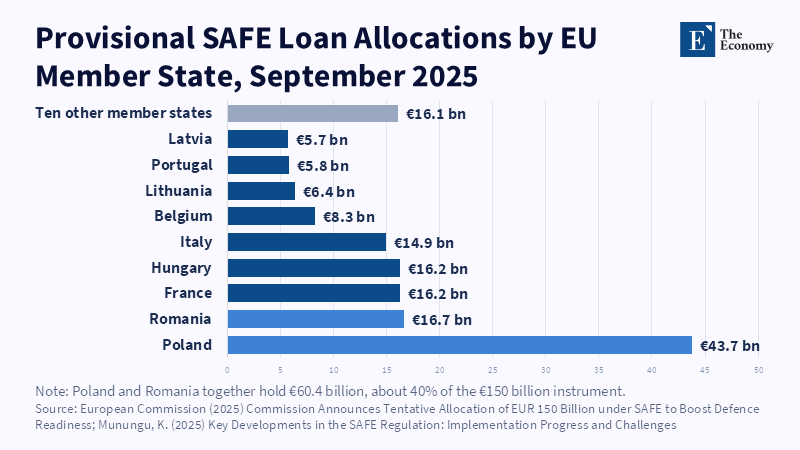
The White Paper on European Defence, known as Readiness 2030, was presented by the European Commission in March 2025 together with the ReArm Europe plan, which aims to mobilise up to €800 billion. Most of this amount comes from the activation of the national escape clause of the Stability and Growth Pact, i.e. from national budgets that gain fiscal space. The second strand is SAFE, a €150 billion loan instrument established by Council Regulation 2025/1106 on 27 May 2025. Poland received the highest allocation, €43.7 billion and Romania the second, €16.68 billion, with the Romanian loan agreement signed on May 12, 2026, i.e. these are the two markets where Korean companies have invested the most. The third tool is the European Defence Industry Programme, the EDIP, established by Regulation 2025/2643 in December 2025 with a budget of €1.5 billion, of which over €700 million is directed, according to the work programme adopted by the Commission on 30 March 2026, to increasing European production.
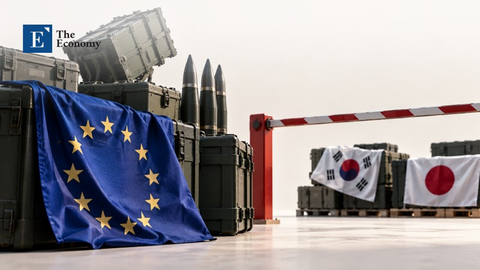
Article 16 of SAFE stipulates that contractors and subcontractors must be established in the Union, in an EEA EFTA State or in Ukraine, have their executive management there and not be controlled by a third country, with the possibility of derogation where the entity has passed a foreign direct investment screening or when the State of establishment confirms security guarantees. The often misinterpreted threshold of 35% does not refer to the contract value. It measures the cost of components sourced from outside the eligible territories as a percentage of the estimated cost of the final product components, which makes the origin of the fire control system or power unit much more important than the place of final assembly. The regulation allows bilateral agreements with countries that have a Security and Defence Partnership with the Union and Canada became the first non-European country to secure such an agreement, with Member States’ endorsement in December 2025. South Korea signed its own Partnership in November 2024, however the EU-Korea summit in Brussels in June 2026 resulted in the opening of negotiations on a classified information security agreement rather than participation in SAFE.
The EDIP also explicitly sets out a design authority requirement. Beyond the corresponding 35% threshold in Article 10, the beneficiary must be able to modify the product and replace components throughout its lifecycle without a third-country veto, with the possibility of a legally binding commitment to full autonomy by 31 December 2033. National procurement with national funds is left out of both regimes, so the image of a Europe that collectively excludes Korean weapons is inaccurate. A K9 that Warsaw buys with its own money is not judged by the rules of SAFE, while the same K9, if financed by a SAFE loan, must pass the criteria of origin and control and if it claims support from the EDIP it must also prove that Seoul does not hold a key in its design. The three channels are not interchangeable and this explains why local production has become a matter of access to specific sources of financing for Korean groups.
Hanwha Aerospace Moves Production to Romania and Poland
Romania signed a contract with Hanwha Aerospace in July 2024 for 54 K9 self-propelled guns and 36 K10 ammunition resupply vehicles, thus becoming the sixth NATO member state to use the K9. Nineteen months later, on February 12, 2026, the subsidiary Hanwha Aerospace Romania, founded in 2025 as a Romanian company, laid the foundation stone of the Hanwha Armoured Vehicle Centre of Excellence Europe in Petrești, Dâmbovița County. The facility will cover approximately 181,055 square meters, with assembly lines, test facilities, a 1,751-meter driving track and research and development laboratories. The company presents it as its first production base in Europe, initially focused on assembly, integration, testing, and lifecycle support for the K9 and K10, to localize up to 80% through Romanian industry. According to the company, cooperation with more than 30 Romanian partners has already begun.
In Poland the format is different. On September 3, 2025, the first day of the MSPO exhibition in Kielce, Hanwha Aerospace and the Polish group WB Group signed an agreement for a joint venture that will locally produce the CGR-080 guided missile, with a range of about 80 kilometers, for the Polish army’s Homar-K multiple launcher system. The agreement provides for a gradual transfer of technology, about 250 positions of specialized personnel and serial production that will reach an advanced stage before the end of 2028. Four months later, on December 29, 2025, the Polish Armaments Agency signed an executive contract worth about 14 billion zlotys, close to $4 billion, with a consortium led by the Hanwha WB Advanced System joint venture. The missiles will be manufactured in a special unit within Poland and deliveries will begin in 2030.
The two schemes share a logic that goes beyond assembly. Ammunition is being consumed and a guided missile factory in Poland is securing revenue for as long as the Polish military is training and replenishing stockpiles, while a lifecycle center in Romania is turning maintenance, upgrades and spare parts into local infrastructure, which a competitor would struggle to displace after a decade of operation with Romanian personnel and Romanian suppliers. One detail in the text of the Polish agreement stands out, as the roadmap for new types of missiles will be drafted in accordance with both Polish defense procurement rules and the Republic of Korea’s export control regime. The joint venture has a Polish base and a Polish co-owner; the relevant announcements did not disclose each side's percentage of participation and the technology transfer continues to follow licenses issued in Seoul.
Hyundai Rotem’s K2PL Localizes Assembly but Keeps Design Control in Korea
Hyundai Rotem took a different route in the same country. The framework agreement approved in Warsaw on July 27, 2022 concerns a total of 1,000 K2 tanks and their Polonised version, the K2PL, along with support vehicles, training and technology transfer. The first executive contract of August 2022, with a net value of $3.37 billion, covered 180 K2 tanks made in Korea and the last batch of 20 tanks arrived in Poland on November 13, 2025. The second contract, signed on August 1, 2025 at the Bumar-Łabędy plant in Gliwice, is valued at around $6.5 billion and provides for another 180 tanks. Of these, 116 in the K2GF configuration are delivered from 2026 to 2027 and 64 in the K2PL configuration from 2028 to 2030, with the first three K2PLs being built in Korea for testing and the remaining 61 in Gliwice. The contract also includes 31 armoured recovery vehicles, 25 engineering vehicles and 25 bridge-laying vehicles, with delivery from 2029 to 2031.
The technology transfer outlined by the Polish Ministry of National Defense for the second contract is specific and delimited: the possibility of final assembly in Polish companies and the ability to fully maintain and operate the tanks. Hyundai Rotem undertakes to equip Bumar-Łabędy with tools and machinery for the K2PL line and the accompanying vehicles. On April 27, 2026, the two companies signed the agreement regulating production, with Bumar-Łabędy assembling 61 K2PL tanks and 72 support vehicles as a subcontractor, while Hyundai Rotem remains the main contractor of the program and with the first K2PL coming off the Gliwice line in 2028. In relation to the K2GF, the K2PL acquires an active vehicle protection system, a drone-countering system and additional armor, while it will be able to use programmable ammunition of other origins and a Polish 12.7mm heavy machine gun.
The comparison with Hanwha Aerospace is mainly about who raises the capital and who holds the control. Hanwha Aerospace invests in its own European entities, a Romanian subsidiary and a Polish joint venture, taking on the risk of facilities that need to be filled with orders. Hyundai Rotem installs a line in a Polish state-owned company of the PGZ group and retains the position of main contractor and designer, with much less exposure to fixed assets. The second model fits more easily into the establishment and control criterion of Article 16, since the manufacturer is Polish, but leaves open the origin of the components and the design authority, which remain largely Korean. The leadership of the Polish Ministry of National Defense has stated that it wants K2PL to become an export success for Łabędy, an ambition that presupposes an agreement on who has the right to sell to third parties a tank designed in Korea and assembled in Silesia.
Hanwha’s Group-Wide Offer Has Not Yet Become European Production
Hanwha Group presents its industrial base as a single one, with ground systems, ammunition and guided missiles at Hanwha Aerospace, defense electronics, radar and command and control at Hanwha Systems and shipbuilding at Hanwha Ocean. A part of this picture has already taken tangible form in Poland. At MSPO 2026, held from September 8 to 11 in Kielce, Hanwha Aerospace and Hanwha Systems shared a joint booth and presented multi-layered air defense connecting the L-SAM launcher, the H-SHORAD short-range system and the H-Shield drone counter system to Hanwha Systems’ command and control network. The Striker-S unmanned surface vessel with a Chunmoo launcher, adapted to the needs of the Baltic, was on display at the same stand, while Hanwha Aerospace confirmed that it continues to bid for the third executive contract for K9 in Poland. This is a documented cooperation between subsidiaries at the level of a commercial proposal.
The transition from the joint proposal to a joint industrial presence in Europe has not yet happened. Hanwha Ocean bid for the Polish Orka submarine program with the KSS-III Batch-II, accompanied by memoranda with the PGZ Naval Shipyard and Nauta shipyards for the transfer of maintenance capabilities and by a financing package, but in November 2025 Warsaw chose the Swedish Saab to build three submarines. The group’s largest shipbuilding investment in the West, the acquisition of Philly Shipyard in 2024 by Hanwha Systems and Hanwha Ocean, is located in the United States. In a strategy analysis published in May 2026, the group describes as a long-term goal to operate in allied markets as it operates in Korea, as a main defense contractor in land, sea and autonomous systems, a formulation of intent that is not accompanied by corresponding European factories. To date, the European production footprint is limited to Hanwha Aerospace’s land systems and ammunition and the group’s published announcements do not identify a commitment by Hanwha Systems to produce on European soil.
The advantage of the integrated proposal also has the opposite side. The roadmap for defence readiness presented by the Commission in October 2025 calls on member states to form capability coalitions in nine areas, with air defence and missile defence at the top of the list, i.e. exactly where Hanwha is pushing its package. The more radars, electronics and command software a Korean proposal includes, the larger the share of components outside Europe in the 35% account, unless these subsystems start being manufactured locally. In a national tender with national money, the group’s range counts in its favor, while in a joint procurement with a European loan the same range multiplies the points where the origin must be proven.
Sourcing, Licenses and Costs Still Limit South Korean Defense Groups in Europe
The localization of 80% in Petrești is formulated as a goal with no published timetable and the value that is most difficult to transfer to a self-propelled gun or tank is concentrated in the high-tech subsystems. Because the limit of SAFE is measured in the cost of components, any fire control system or power unit that still comes from Korea weighs on the bill disproportionately, even if the assembly is entirely done in Romania or Silesia. The Polish missile plant is expected to reach advanced serial production before the end of 2028 and deliveries from the $4 billion contract begin in 2030, so Korean-origin components will weigh on the SAFE calculation for several more years.
The issue of intellectual property is more subtle. The EDIP design authority requirement means that a European entity must be able to modify the product without a third-country license, no later than 2033. Korean technology transfer agreements, as made public, provide for gradual transfer, assembly and maintenance and in the case of CGR-080, explicit compliance with Korean export control. This stance is to be expected from Seoul’s point of view, but it clashes with the European criterion and the negotiation for an information security agreement that began in June 2026 concerns the exchange of classified material without answering who owns the design of a system produced on European soil.
A reasonable objection to all this analysis is that member states will continue to purchase Korean systems with national funds, so the SAFE and EDIP rules will have a marginal effect. The events of 2026 do not support it. Hanwha Aerospace’s announcement for Petrești linked a possible expansion of the plant, with up to 2,000 direct and indirect jobs, to the Romanian infantry fighting vehicle program. On May 29, 2026, the Romanian Directorate General of Armaments awarded Rheinmetall, under SAFE, a €5.7 billion package that includes 298 Lynx vehicles, with the Romanian government stating that more than 50% of production will be done in Romania or in cooperation with local companies. Orka went to Saab. Warsaw of course continues to sign large Korean contracts with national money, but both the second K2 contract and the CGR-080 contract came tied to production on Polish soil, which shows that national funds are now also asking for local industry as a condition.
The arithmetic remains. The Petrești plant, of more than 180,000 square meters, starts with a Romanian order of 90 vehicles in total and the Gliwice line will build 61 tanks in three years. Small runs in new facilities mean higher unit costs compared to Korea’s mature lines and viability depends on subsequent orders, such as the third Polish contract for K9, on exports starting from European soil and on whether Korean licenses will be issued frictionlessly. Norway’s first contract for Chunmoo in February 2026 and the Estonian contract of €250 million in December 2025 show that there is demand beyond Poland and Romania, without clarity on which production line will serve it.
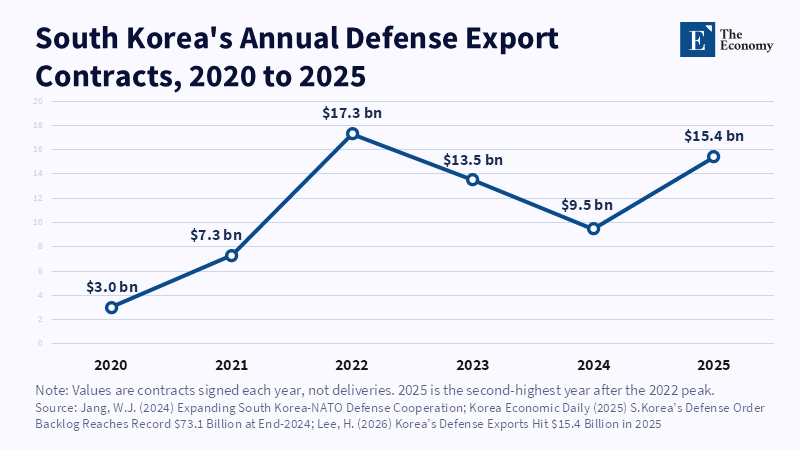
The 14% increase in European spending and $15.4 billion in exports in 2025 describe a circumstance that favored anyone who could deliver quickly. South Korean defense groups responded to the rule change with a groundbreaking at Petrești, a joint venture with WB Group and an assembly line in Gliwice, moves that turn the supplier into an established industrial partner, at least on paper. The timetables, however, do not easily match the European ones. The first K2PL from Gliwice is expected in 2028, the first Polish-made CGR-080 missiles are delivered in 2030 and the availability period of the Romanian SAFE loan expires on December 31, 2030. The local production of Korean groups will mature around the time the borrowing window of the instrument that imposed it closes and whether this will prove to be a delay or timely positioning for the next round of European funds depends on decisions that have not yet been taken in Brussels or Seoul.
The views expressed in this article are those of the author(s) and do not necessarily reflect the official position of The Economy or its affiliates.
References
Council of the European Union (2025) Council Regulation (EU) 2025/1106 of 27 May 2025 establishing the Security Action for Europe (SAFE) through the Reinforcement of the European Defence Industry Instrument. Brussels: Council of the European Union.
European Commission (2025) White Paper for European Defence: Readiness 2030. Brussels: European Commission.
European Commission, Directorate-General for Defence Industry and Space (2026) EDIP Work Programme Adopted. Brussels: European Commission.
European Parliament and Council of the European Union (2025) Regulation (EU) 2025/2643 of 16 December 2025 establishing the European Defence Industry Programme. Brussels: European Union.
Hanwha Aerospace (2025a) Hanwha and WB Group Sign Agreement for Guided Missile Production in Poland. Seoul: Hanwha.
Hanwha Aerospace (2025b) Hanwha Aerospace Signs Contract to Produce Chunmoo Missile in Poland. Seoul: Hanwha.
Hanwha Aerospace (2026) Hanwha Aerospace Breaks Ground on K9 Production Facility in Romania. Seoul: Hanwha.
Hanwha Aerospace and Hanwha Systems (2026) Hanwha to Showcase Multi-Layered Air Defense Solutions and Unmanned Systems at MSPO 2026. Seoul: Hanwha.
Hanwha Group (2026) Envisioning the Future with Hanwha Group Global CSO Alex Wong. Seoul: Hanwha.
Lee, Hyun-ho (2026) ‘Korea’s Defense Exports Hit $15.4 Billion in 2025, Set to Grow Further’, Seoul Economic Daily, 25 March.
Ministry of National Defence of the Republic of Poland (2025) Czołgi K2 [K2 Tanks]. Warsaw: Ministry of National Defence.
Notes from Poland (2026) ‘Poland Signs Agreement to Produce South Korean K2 Tanks Domestically’, Notes from Poland, 29 April.
Rheinmetall AG (2026) Major Historic International Contract for Rheinmetall: Romania Orders Lynx Combat Vehicles, Vessels and Air Defence Systems Worth a Total of €5.7 Billion. Düsseldorf: Rheinmetall AG.
Stockholm International Peace Research Institute (2026) Trends in World Military Expenditure, 2025. Stockholm: SIPRI.
Working across research, policy, and data-driven analysis, the Editorial Board ensures that published pieces reflect a consistent institutional perspective grounded in quantitative reasoning and long-term structural assessment.