From Obesity Drugs to Cancer Treatments, Chinese Biotech Expands Its Role in AI-Driven Drug Discovery

Siobhán Delaney is a Dublin-based writer for The Economy, focusing on culture, education, and international affairs. With a background in media and communication from University College Dublin, she contributes to cross-regional coverage and translation-based commentary. Her work emphasizes clarity and balance, especially in contexts shaped by cultural difference and policy translation.
Authored on
Modified
Chinese biotech firms discover obesity and cancer drug candidates with AI and validate them in animal studies
Pulmonary fibrosis candidate enters clinical trials; oral anticancer candidate secures overseas licensing deal
Drug design capabilities help win candidate discovery contracts from U.S. and European pharmaceutical companies
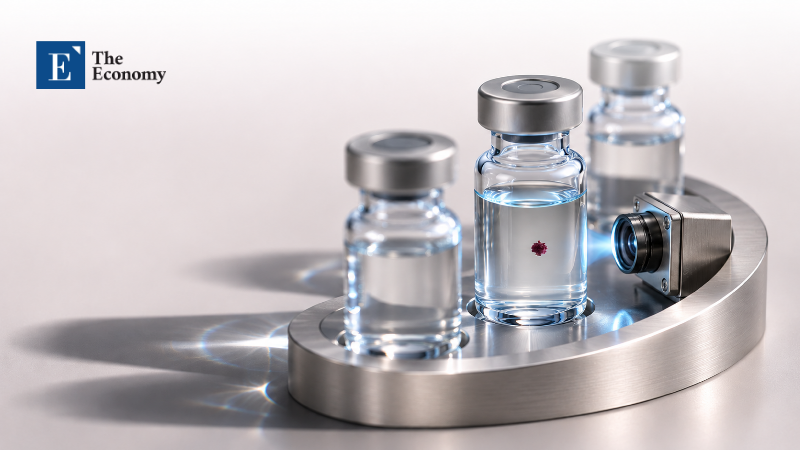
China’s biotech industry is licensing AI-designed drug candidates to overseas pharmaceutical companies and taking on candidate discovery, the first stage of drug development. A joint research team involving China’s Tencent used an AI-designed obesity drug candidate to achieve greater weight loss in mice at a lower dose than the active ingredient in Wegovy. An anticancer candidate discovered using the same AI also suppressed tumor growth in mice. Some projects have already advanced to clinical trials and overseas licensing deals. Insilico Medicine has brought an AI-designed pulmonary fibrosis drug candidate into patient trials in China and licensed an oral anticancer drug candidate to a U.S. pharmaceutical company. Joint research agreements are also becoming increasingly common in which U.S. and European drugmakers select therapeutic targets and Chinese companies use AI to design drug candidates and screen them through experiments.
Chinese Researchers Develop AI Platform for Designing Dual-Target Peptides
According to the international journal Nature on the 25th (all dates hereafter are local time), an obesity drug candidate designed using AI by a joint research team involving China’s Tencent produced greater weight loss in mice at one-tenth the dose of semaglutide, the active ingredient in Wegovy. Doses were compared based on the number of drug molecules administered. The team’s AI, ORIDTP, designs a single peptide—a short chain of amino acids—to act on two targets in the body simultaneously. Although research on peptides acting on individual targets has accumulated, identifying candidates with strong activity at both targets has been difficult. The researchers adopted an approach in which the AI combines what it has learned about each target to propose candidates, experiments verify their activity, and the results inform the next round of design.
To find candidates for treating obesity and diabetes, the researchers selected the glucagon-like peptide-1 (GLP-1) receptor and the glucagon receptor as targets. The GLP-1 receptor is involved in suppressing appetite and promoting insulin secretion. The idea is to regulate blood sugar and reduce weight by also stimulating the glucagon receptor, which increases energy expenditure. The researchers selected 15 promising candidates from 5,000 proposed by the AI and tested their activity at both receptors. After repeated rounds of design and validation, six peptides showed greater activity than the natural hormones at each of the two receptors.
Table 1. Test Results for AI-Designed Obesity, Diabetes and Cancer Immunotherapy Candidates
| Category | Targets and Testing Stage | Key Results |
|---|---|---|
| Obesity and diabetes drug candidates | GLP-1 and glucagon receptors Candidate screening | 15 selected from 5,000 AI-proposed candidates Six showed greater activity than the natural hormones at each of the two receptors |
| GA-Dual.R5.S3 Mouse studies | Greater weight loss at one-tenth the dose of semaglutide (based on the number of molecules) Greater weight loss than with mazdutide, with improved blood sugar regulation and insulin resistance Effects may last for a shorter time in humans than those of semaglutide | |
| Cancer immunotherapy candidates | PD-1·CTLA-4 Candidate screening | Eight of the 15 candidates initially proposed by AI inhibited both targets Three suppressed tumor growth in mouse studies |
| IC-Dual.P3 Mouse and human immune cell studies | Tumor volume in mice was 94.2% smaller than in the control group Increased attacks on lung cancer and melanoma cells in experiments using human immune cells |
Tencent’s AI Drug Candidates Reduce Weight and Suppress Tumor Growth in Mice
To examine the effects of one of these candidates, GA-Dual.R5.S3, on body weight and blood sugar, the researchers used mice made obese by 12 weeks on a high-fat, high-sugar diet. They divided the mice into groups and administered the candidate, semaglutide or mazdutide—an existing obesity drug that acts on both receptors—every other day for three weeks. Mice given the candidate lost more weight than those given either existing drug, and also showed improvements in blood sugar regulation and insulin resistance. A separate experiment using mice genetically predisposed to diabetes also showed improved blood sugar levels. However, the researchers explained that because the candidate had not been chemically modified to prolong its effects, its activity in the human body might last for a shorter time than that of semaglutide.
When designing cancer immunotherapy candidates with the same AI, the researchers targeted PD-1 and CTLA-4, proteins that suppress immune cell attacks. The aim was to release both proteins’ brakes on the immune response, allowing immune cells to attack cancer cells. This time, they tested the 15 peptides initially proposed by the AI without revising the designs based on experimental results. Eight inhibited both targets, and three suppressed tumor growth in mice engineered to express human immune checkpoint proteins. Tumor volume in mice given the most effective candidate, IC-Dual.P3, was 94.2% smaller than in the control group. In experiments using human immune cells, treatment with this candidate also increased the cells’ ability to attack lung cancer and melanoma cells.
Obesity Drug Research Expands in China, From Improved Dosing to Supporting Cancer Treatment
Mazdutide, which Tencent used to compare the efficacy of its obesity drug candidate, is also being studied in China as an adjunct treatment for patients with early-stage endometrial cancer. Researchers at Tongji Hospital in Wuhan, China, designed a Phase 2 trial to determine whether adding mazdutide improves the effectiveness of hormone therapy in patients who wish to preserve their uterus to become pregnant. The recruitment target is 128 overweight or obese premenopausal women. Eligible participants include patients with early-stage endometrial cancer and those with atypical endometrial hyperplasia, a precancerous condition. Both groups will receive treatment using a hormone-releasing intrauterine device, with one group also receiving mazdutide once a week and the other a placebo. The primary endpoint is the proportion of patients whose endometrial lesions have disappeared on biopsy after 24 weeks.
Before GLP-1 drugs reached clinical trials involving cancer patients in China, they first gained a foothold in diabetes and obesity treatment. China’s National Medical Products Administration approved Ozempic, which contains semaglutide, for type 2 diabetes in April 2021, and approved Wegovy, which contains the same ingredient, for weight management in June 2024. When Chinese researchers tested mazdutide’s weight-loss effects, they paid particular attention to the starting dose and the subsequent pace of dose escalation. This was because gastrointestinal adverse reactions were more frequent in early trials among groups with higher starting doses and shorter intervals between dose increases. In a subsequent Phase 3 trial, even participants assigned to receive 4 mg weekly began at half that dose, 2 mg, for the first four weeks before increasing to 4 mg from week 5.
China’s pharmaceutical industry has also sought ways to reduce muscle loss during obesity drug treatment. Shanghai-based biotech company Rona Therapeutics focused on ALK7, a protein that regulates fat metabolism in fat cells. Rona’s candidate uses RNA interference technology to reduce production of this protein in fat cells. The goal is to reduce visceral fat while preserving lean tissue, including muscle, with potential use alongside existing GLP-1 obesity drugs also in mind. Last October, Rona granted Switzerland’s Roche exclusive worldwide rights to the candidate. Upfront and early-stage payments total up to USD 100 million, with Rona eligible for up to an additional USD 1.06 billion upon reaching development, regulatory and sales milestones.
Table 2. Trends in Licensing Deals for Chinese Biotech Drug Candidates
| Category | Number of Deals | Share of Deals | Total Upfront Payments | Share of Upfront Payments |
|---|---|---|---|---|
| 2023 | 9 deals | 18% | USD 957 million (approximately USD 987 million) | — |
| 2024 | 11 deals | 26% | USD 3.3 billion (approximately USD 3.40 billion) | — |
| 2025 | 19 deals | 39% | USD 5.1 billion (approximately USD 5.26 billion) | 36% |
| January–September 2026 | 18 deals | 51% | Exceeded the full-year 2025 total (USD 5.1 billion) | 65% |
Source: J.P. Morgan
Chinese Drug Candidates Account for Half of Big Pharma’s Major Deals
Deals to license drug candidates from Chinese biotech companies account for a growing share of the global pharmaceutical industry each year. According to J.P. Morgan’s tally of in-licensing agreements with upfront payments of at least USD 50 million in cash and equity combined, nine deals were signed with Chinese companies in 2023, accounting for 18% of the total. The following year, the number rose to 11 and the share to 26%. Last year, the tally reached 19, meaning roughly four in every 10 major deals (39%) involved drug candidates discovered in China. As deals increased, the upfront payments secured by Chinese companies also grew substantially. Upfront payments rose more than fivefold in two years, from USD 957 million in 2023 to USD 3.3 billion in 2024 and USD 5.1 billion last year.
By the end of September this year, upfront payments received by Chinese companies had already exceeded last year’s full-year total. Although the 18 deals signed with Chinese companies during this period were one fewer than last year, higher upfront payments per deal pushed the total higher. The share of major deals involving candidates discovered in China also rose from 39% last year to 51% in January–September this year, exceeding half for the first time. Over the same period, Chinese companies’ share of upfront payments jumped from 36% to 65%. In particular, the upfront payments global pharmaceutical giants spent licensing drug candidates from China exceeded their combined payments to companies in all other countries.
AI Identifies Pulmonary Fibrosis Target and Helps License Oral Cancer Drug Candidate to U.S. Firm
To secure drug candidates for overseas licensing, Chinese biotech companies are applying AI to therapeutic target discovery, the first stage of drug development. Hong Kong-listed Insilico Medicine used AI to identify TNIK, a protein involved in fibrosis, while researching idiopathic pulmonary fibrosis, a condition in which lung tissue becomes scarred and stiff. It then used generative AI to design a compound that inhibits the protein’s activity, producing a candidate called rentosertib. According to the company, it took less than 18 months from formulating the research hypothesis to selecting a preclinical candidate. Rentosertib subsequently entered an early Phase 2 trial involving 71 patients in China, and results from 12 weeks of treatment were published last year in the international journal Nature Medicine.
The AI-discovered candidate Insilico licensed to a U.S. pharmaceutical company is the oral anticancer drug ISM3091. The researchers targeted cancer cells whose ability to repair damaged DNA had been weakened by BRCA gene mutations. They designed the candidate to also inhibit USP1, an enzyme cancer cells use to repair DNA, and observed anticancer activity in tumor models carrying those mutations. In 2023, U.S.-based Exelixis secured exclusive worldwide development and commercialization rights to compounds targeting USP1, including ISM3091, and paid Insilico an upfront payment of USD 80 million. The following year, further development reached the first clinical milestone specified in the agreement, earning Insilico an additional USD 10 million milestone payment.
Insilico’s role expanded further in an agreement signed this year with U.S.-based Eli Lilly. In March, Eli Lilly secured exclusive worldwide rights to develop, manufacture and commercialize an oral drug candidate that Insilico was developing at the preclinical stage. The agreement also included joint research using Insilico’s AI to identify new candidates for multiple targets selected by Eli Lilly. Eli Lilly committed to an upfront payment of USD 115 million, with the total deal value reaching USD 2.75 billion if all development, regulatory and sales milestones are met. Insilico is also entitled to separate sales-based royalties if drugs resulting from the joint research reach the market.
U.S. and French Drugmakers Find Research Partners in China for Candidate Discovery
Among the Chinese companies undertaking early-stage research for overseas pharmaceutical firms is Shenzhen-based XtalPi, which combines AI design with robotic experiments. When XtalPi’s AI proposes molecular structures suited to a therapeutic target, robots synthesize the compounds and measure their activity against that target. The measurements then inform the next round of design to refine molecular structures and select promising candidates. In 2023, Eli Lilly signed an agreement worth up to USD 250 million with XtalPi to discover small-molecule drug candidates. Under the agreement, XtalPi would select candidates, while Lilly would take responsibility for subsequent clinical development and commercialization. Last November, the partnership expanded to bispecific antibodies when Lilly signed a follow-up agreement with XtalPi subsidiary Ailux. Under the deal, worth up to USD 345 million, Lilly designates a pair of targets and Ailux designs antibodies that bind to both simultaneously.
On the 9th of this month, XtalPi also agreed to jointly discover anticancer drug candidates with French pharmaceutical company Pierre Fabre. The companies’ initial focus is on cancer treatment targets that have been difficult to address with existing drugs. XtalPi will design and test new small-molecule compounds for each target, while Pierre Fabre’s researchers will draw on their disease research and clinical development experience to jointly select promising candidates. Pierre Fabre’s aim in adopting XtalPi’s AI across multiple cancer research programs is also to shorten the time needed to identify candidates for clinical trials for each target. Pierre Fabre will handle subsequent clinical development and commercialization of the selected candidates. The companies also left room to expand their joint research beyond cancer drugs to treatments for skin conditions and rare diseases.
Siobhán Delaney is a Dublin-based writer for The Economy, focusing on culture, education, and international affairs. With a background in media and communication from University College Dublin, she contributes to cross-regional coverage and translation-based commentary. Her work emphasizes clarity and balance, especially in contexts shaped by cultural difference and policy translation.
Similar Post