

Data centers create construction jobs, few permanent ones Labor shortages, not automation, are the real bottleneck Incentives should reward construction, fund trade training A hyperscale campus in Lebanon, Indiana w
Read More
Alpha School scales AI-powered teaching toward a billion children Fragile knowledge forms when instruction skips genuine questioning Science exposes AI tutoring's sharpest limits under scrutiny Fifty campaigns, twenty-seven
Read More
Retractions rose fourteen-fold since 2013 with almost no consequence A few repeat journals drive most paper-mill retractions Retraction thresholds, not embarrassment, should trigger public review Publishers issued more than
Read More
AI now writes a fifth of research papers Paper mills concentrate in a few weak-review journals Accreditation must weight citation impact over raw volume By late 2024, roughly one in five computer science paper
Read More
Australia raised student visa fees while persistent skills shortages remain unresolved Chinese demand is weakening, but India is not replacing the lost pipeline Migration policy should reward skilled pathways instead of relying on higher fees
Read More







Research impact, not paper volume, should be the core measure in university rankings Collaboration should count only when it builds real capability, not just co-authorship Students increasingly choose schools by prestige and payoff, not ranking methodology details
Read More
GLP-1 treatment cuts long sickness absence and creates wider public savings Public coverage works best when governments negotiate prices and target clinical need Competition and changing diets are widening the economic effects of obesity drugs
Read More
Downturns can push households to work more as income and security weaken Monetary tightening may trigger the shock without uniquely causing the labor response Policy should separate rate effects from broader household self-insurance during recessions
Read More
Routine jobs can disappear while labor’s aggregate income share stays stable AI may raise output while concentrating wages among fewer workers Policy should track headcount, pay and productivity alongside labour share <
Read More
Media coverage volume shapes inflation expectations, mainly among politically neutral viewers Partisan viewers barely shift; their channels already discuss inflation nonstop Repetition matters most once personal experience stops predicting prices
Read More

Markets already price a startup's future U.S. expansion, rewarding CEOs with multinational track records European founders now treat U.S.
Read More
More new PhDs enter industry than academia, but employer screening is narrowing Recruiters often see university pedigree before the research behind a doctorate Closing the gap requires better corporate roles, evaluation methods and career paths
Read More
Japan doubled defense spending in three years; Europe still argues over percentages Germany faces the same China shock Japan absorbed decades ago, only slower Japan's soft power now outpaces France's, a shift Europe has barely noticed
Read More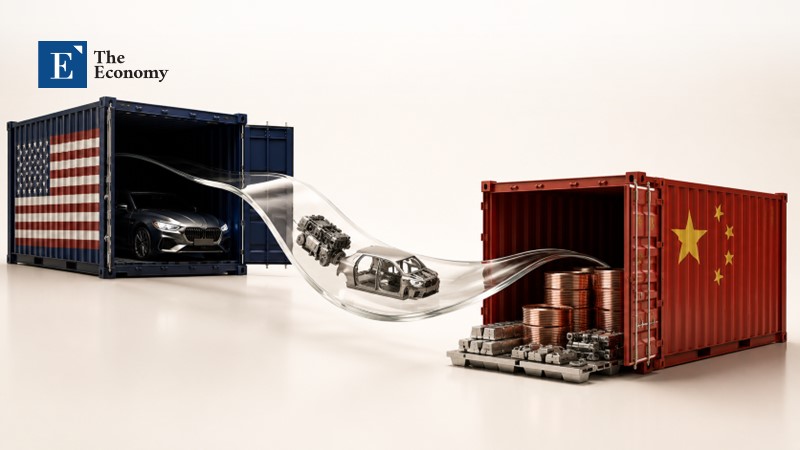
The EU got Japan's tariff rate in 2025, ranking it a managed market, not an equal Chinese EV tariffs failed; car exports rose 26% the next year anyway Japan's faster defense buildup is a playbook Europe hasn't seriously adopted yet
Read More
QE saved 2008 without inflation but fueled a 40-year high in 2021 The difference was the regime: deep slack in 2008, near-full employment in 2021 Supply shocks plus unspent savings turned overheating risk into a real inflation surge
Read More

Lower birth rates predict higher GDP per worker, not decline Labor scarcity drives technology, not economic shrinkage AI and robots may be repeating that pattern now, starting with China A one-percentage-point drop in a country
Read More
Lower switching costs make deposit rates respond faster to central-bank moves The same digital convenience can accelerate deposit flight during stress Bank supervision must now operate in hours, not weeks On March 9, 2023,
Read More
China’s export-first strategy delivered a record $992 billion surplus in 2024 Heavy subsidies helped Chinese industries, especially EVs, outpace Western competitors China and the West are now managing rivalry, not pursuing convergence
Read More
Student AI use is already the baseline Institutional policy and staff capability still lag Better assessment design turns AI into learning The share of UK undergraduates who told the
Read More
Public trust in AI is falling even as use rises, and marketing isn't why Rushed rollouts, low-friction tools, and narrower hiring are the real causes Better deployment and real entry paths, not ad rules, will rebuild trust
Read More